Exhaust System Components Guide
An exhaust system components guide should identify 6 to 10 main parts, in flow order from exhaust manifold to tailpipe, then match each one to its job, failure signs, and exact inspection point. Guess wrong and you can burn hundreds on parts while fumes, noise, heat, or emissions problems keep getting worse. I have seen that happen more than once. This guide maps every common exhaust part, where it sits, what it does, how it fails, and how to tell one bad component from another before you buy anything.
Exhaust system layout at a glance
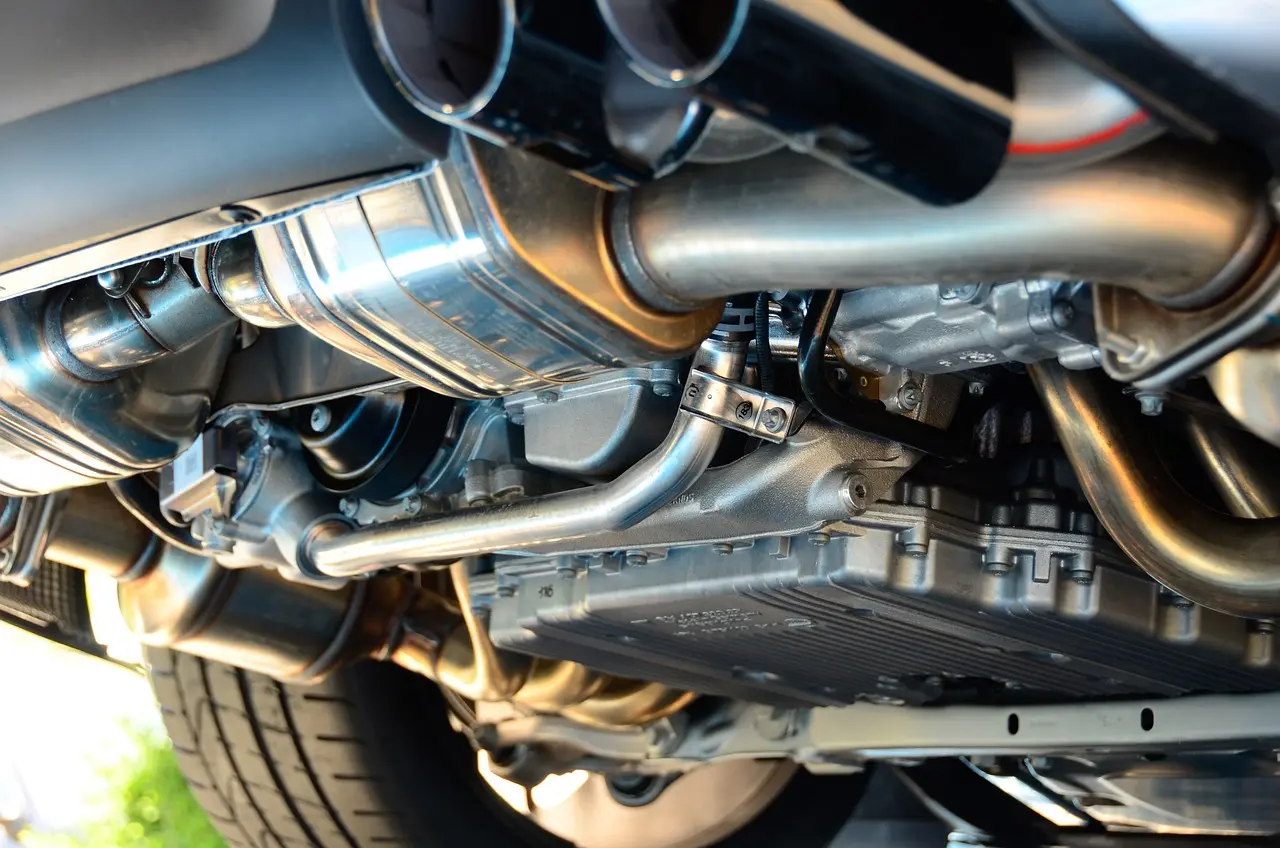


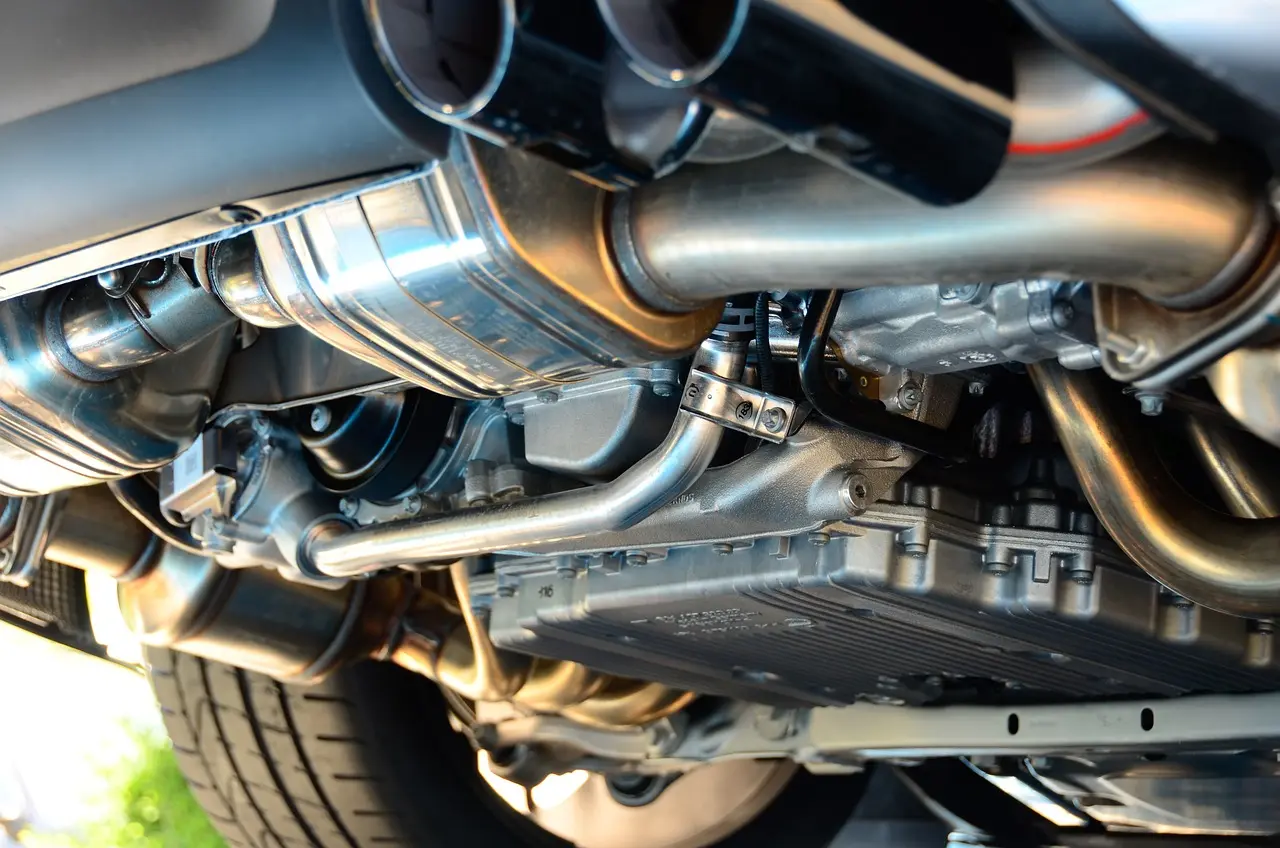
An exhaust system carries hot spent gases away from the exhaust ports, routes them through emissions and noise-control parts, and uses one or more exhaust pipes to move that flow to the rear of the vehicle. A typical exhaust system can include an exhaust manifold, catalytic converter, and muffler. In flow order, the path usually runs from the engine exhaust ports to the manifold, through sensors and emissions parts, into pipes, through resonator or muffler sections, and out the tailpipe. (en.wikipedia.org)
The flow path from manifold to tailpipe
Start at the cylinder head. The exhaust manifold bolts to the engine and collects exhaust from the cylinders. On some engines that piece is a cast iron manifold. On others it is a tubular header with separate runners merging into one outlet.
After the manifold, many vehicles place an upstream oxygen sensor near the first catalytic converter. The oxygen sensor measures oxygen levels in exhaust emissions and sends that signal to the engine control module for air-fuel correction. Modern packaging often puts the first catalytic converter close to the engine so it heats quickly.
Farther back, the system may route exhaust gas through a catalytic converter, where an internal coated core helps convert some pollutants into less harmful exhaust gases. Some vehicles may also have a second underfloor catalytic converter. Then come the connecting pipes, a flex pipe on many front-engine cars, sometimes a resonator, then the muffler or silencer, and finally the tailpipe at the rear exit.
Why some vehicles have extra sensors, cats, or resonators
Modern exhaust systems can include four main parts such as tail pipe, oxygen sensor, catalytic converter, and muffler, but many layouts carry more than that. Turbocharged engines may place the catalytic converter close to the turbo. Some cars use both upstream and downstream oxygen sensors. Some add a resonator to cut cabin drone at steady speed.
Not every vehicle has the same count or arrangement. A compact car may have one small rear muffler and one resonator. A truck may use a longer intermediate pipe and a larger muffler. A motorcycle may route a full system as a 4-2-1 or 4-1 layout.
Common naming differences
Names change by layout and catalog. One shop may call a section the front pipe, another the intermediate pipe, center pipe, or mid-pipe. Rear section usually means the muffler and tailpipe area. That naming mismatch causes plenty of wrong-part orders.
What are the main components of an exhaust system?
Main exhaust parts often include the manifold, gasket, oxygen sensors, catalytic converter, flex pipe, connecting pipes, resonator if present, muffler, tailpipe, and supporting hardware such as hangers, flanges, gaskets, clamps, and heat shields. The exact count changes with engine layout, emissions package, and body style.
Engine-side parts
- Exhaust manifold or header: Bolts to the engine and collects exhaust gas from each cylinder.
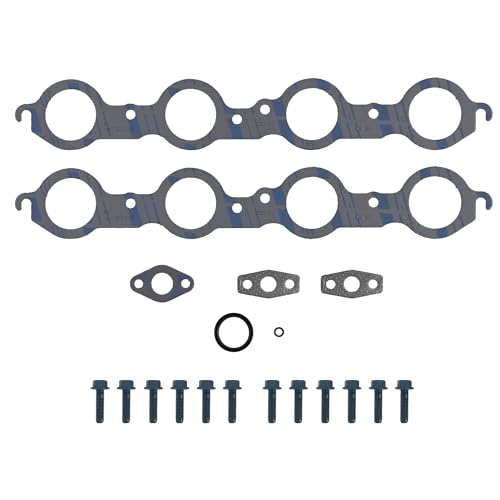
- Manifold gasket: Seals the manifold to the cylinder head.
- Upstream oxygen sensor: Usually mounted near the manifold outlet or first catalytic converter.
Mid-system parts
- Catalytic converter: Emissions-control device that uses precious metals like palladium or platinum.
- Flex pipe: Absorbs engine movement and helps isolate vibration.
- Front pipe, mid-pipe, center pipe, or intermediate pipe: Connect major sections.
- Resonator: Sound-tuning chamber used on many vehicles, but not all.
- Downstream oxygen sensor: Commonly placed after the catalytic converter.
Rear-system parts
- Muffler or silencer: Rear noise-control unit.
- Tailpipe: Final outlet at the rear of the vehicle.
- Hangers: Rubber or metal supports that carry system weight and reduce vibration transfer.
- Flanges, clamps, and gaskets: Connect and seal pipe sections.
- Heat shields: Protect the floorpan, tank, wiring, and nearby parts from exhaust heat.

What does each exhaust system part do?
Each exhaust part has one job that points to a certain failure pattern. The manifold gathers hot gas, gaskets and flanges seal it, the catalytic converter cleans it, oxygen sensors report it, pipes route it, the resonator shapes tone, the muffler cuts noise, the tailpipe exits it, and hangers and shields keep the whole assembly stable and safe.
Gas collection and sealing
The exhaust manifold is the first hard part in the chain. It collects exhaust from the cylinders and directs it into one outlet. Cast manifolds resist heat cycling well, while tubular headers flow differently but can crack at welds or runners. Exhaust manifold issues can produce a burning smell from the engine bay.
Gaskets and flanges are the seals between sections. When they fail, the sound is often a ticking, puffing, or hissing leak rather than a deep boom. Black soot around a flange usually points to escaping gas.
Emissions and control
The catalytic converter cuts harmful tailpipe emissions by forcing exhaust through a catalyst-coated honeycomb, where chemical reactions reduce carbon monoxide, hydrocarbons, and nitrogen oxides. It uses a precious metal catalyst, which is one reason replacement is expensive. Upstream placement near the engine is common, but some systems also use downstream underfloor converters.
Oxygen sensors report exhaust oxygen content to the engine control module. Upstream sensors help control fueling. Downstream sensors help monitor catalytic converter operation. When a sensor reading goes wrong, the result is often a check-engine light, poor fuel trim control, or a converter-efficiency code rather than obvious loudness.
Noise, routing, and support
Exhaust pipes link the manifold, converter, resonator, muffler, and tailpipe sections, carrying gas from one stage to the next through welded runs or separate pieces joined by flanges or clamps. They may be one long run or several sections joined by flanges or clamps. V-layout engines often use Y-pipes. Some dual systems use an X-pipe to balance flow and change sound character.
A resonator reduces drone and tunes sound frequency. It is not always present. A muffler or silencer is used to reduce noise, and the muffler’s primary purpose is to minimize the noise produced by the exhaust system. The tailpipe is simply the final outlet, but soot, moisture marks, or impact damage there can still say a lot.
Hangers support the system weight. Rubber mounts reduce vibration transfer into the body. Heat shields keep radiant heat off the floor, fuel tank, brake lines, wiring, and plastic undertrays. Those support parts fail often before the expensive parts do.
Single vs. dual exhaust components: what changes
If you are deciding between a single and dual setup, the key difference is not just the number of tailpipes—it is how the whole system is routed, supported, and equipped. The supporting article breaks down what changes in the pipe path, catalytic converters, resonators, mufflers, hangers, and sensors, then explains how those choices affect sound, backpressure, fitment, and maintenance. It also shows when dual components can make sense on higher-output engines and when they only add cost and clearance headaches. That matters because the wrong layout can create drone, uneven flow, or repair expense without a real performance gain. For a side-by-side component comparison, see single exhaust components.
Choosing Exhaust Parts for Towing and Heavy Loads
For tow vehicles, the best exhaust parts are the ones that keep low-rpm torque usable, control cabin drone, and resist corrosion under long hours of heat and road spray. The most practical setup is usually a mandrel-bent cat-back, stainless tubing, and a muffler tuned for quiet, steady flow; a resonator can help if highway drone is a concern. This towing exhaust guide explains how pipe size, muffler design, and material choice affect towing comfort and durability so you can avoid parts that sound good on paper but hurt loaded driving.
Tuning exhaust flow for heavy loads
Towing alters exhaust flow dynamics, making part selection critical for maintaining low-rpm torque and cabin quietness. The supporting guide details a specific configuration, recommending mandrel-bent cat-back systems with stainless tubing sized between 2.5 and 3 inches, paired with large straight-through mufflers to balance airflow and noise. exhaust parts for towing
This resource compares options specifically for corrosion resistance and drone reduction, helping you avoid common mistakes that dull towing response or accelerate rust. It provides a decision matrix for selecting components that optimize highway comfort without sacrificing necessary backpressure for geared drivetrains under heavy strain.
Component-by-component inspection matrix
Use the matrix by matching a symptom to a location before buying parts. A quick diagnosis often starts with a few checks: listening on a cold start, scanning the underbody, checking hanger movement, and looking for soot around joints. I still use that sequence because it catches the common failures fast. Urgency matters too, because fumes and heat leaks near the cabin or fuel tank deserve immediate attention.
Inspection matrix for primary components
| Component | Usual location | Job | Most likely failure sound, smell, or vibration | Fastest visual check | Urgency |
|---|---|---|---|---|---|
| Exhaust manifold | Bolted to engine at exhaust ports | Collects exhaust from cylinders | Cold-start ticking, engine-bay fumes, burning smell | Look for cracks, soot at ports, missing studs, warped shield area | Immediate if fumes enter cabin |
| Manifold gasket | Between cylinder head and manifold | Seals manifold to engine | Sharp ticking that softens as metal heats | Check for soot tracing at manifold flange | Soon to immediate |
| Upstream oxygen sensor | Near manifold outlet or first catalytic converter | Measures oxygen for fuel control | Check-engine light, drivability change, fuel-trim issues | Inspect wiring damage, loose sensor, rusted bung area | Soon |
| Catalytic converter | Near engine or underfloor downstream | Emissions control | Rattle if substrate breaks, sulfur smell on some failures, power loss if restricted | Look for impact dents, blueing from heat, broken shields, glowing after hard use | Immediate if overheating or severe power loss |
| Flex pipe | Front pipe area on many transverse-engine cars | Allows engine movement and isolates vibration | Hiss under load, raspy leak, floor vibration | Check braid for fraying, split bellows, soot around cracks | Soon to immediate |
| Intermediate or mid-pipe | Between catalytic converter and rear sections | Routes exhaust rearward | Increased engine sounds and strange knocking sounds | Look for rust holes, crushed sections, black streaks at joints | Soon |
| Resonator | Mid to rear section, if fitted | Reduces drone and tunes tone | Boom at highway speed, tinny change in tone if rusted through | Check shell seams, drain points, and weld ends for rust | Monitor to soon |
| Muffler | Rear exhaust section | Reduces noise | Deep loud exhaust, rear boom, internal rattle | Look for rust holes, split seams, loose baffles, soot at shell seams | Soon |
| Tailpipe | Rear exit | Final outlet | Visible blow-by, contact rattle if misaligned | Check alignment, dents, loose tip, heavy soot, fresh impact marks | Monitor unless dragging or contacting body |
Inspection matrix for support hardware and heat management
| Component | Usual location | Job | Most likely failure sound, smell, or vibration | Fastest visual check | Urgency |
|---|---|---|---|---|---|
| Exhaust hangers | Along full system, often at resonator and muffler areas | Support weight and isolate movement | Thump over bumps, tailpipe droop, floor vibration | Check torn rubber, stretched mount holes, metal-to-metal contact | Soon to immediate if dragging |
| Flanges and flange gaskets | At bolted pipe joints | Connect and seal sections | Puffing leak, ticking, soot smell outside car | Look for broken bolts, uneven gap, soot rings | Soon |
| Clamps | At slip joints | Hold sections together | Leak hiss or section movement | Check clamp rust, loose hardware, pipe slip marks | Soon |
| Heat shields | Above manifold, converter, and underbody sections | Protect nearby parts from heat | Light metallic rattle at idle or low rpm | Tap shield by hand when cool; look for cracked spot welds or missing fasteners | Monitor to soon |
Which part is causing the noise, smell, or vibration?
Loud exhaust, drone, metallic rattle, cabin fumes, and floor vibration point to different sections of the system. Loud sharp ticking near the engine usually means manifold or gasket trouble. Rear boom usually means muffler or resonator issues. Metallic buzz often means a heat shield. Floor shake often starts with a flex pipe or failed hanger.
Loud exhaust versus drone versus metallic rattle
If the car is suddenly loud at startup and near the front, suspect a manifold crack, manifold gasket, or flex pipe. If the sound is deeper and comes from the rear, suspect a muffler shell failure or a broken rear pipe. What part of the exhaust system makes it loud? Often it is a leak before the muffler, a rusted muffler, or a missing resonator or muffler.
Drone is different. It is a steady low-frequency boom in the cabin, usually worst at cruise. That points more toward a resonator issue, a changed pipe layout, or a muffler whose internal chambers have failed. A heat shield almost never causes drone by itself.
A metallic rattle at idle, especially one that changes when the exhaust is tapped, usually comes from a loose heat shield, loose converter shield, broken hanger bracket, or broken material inside a catalytic converter or muffler.
Exhaust smell in the cabin versus outside the car
Cabin fumes deserve prompt attention. Smell inside the cabin with the blower on often points to a front-side leak: manifold, manifold gasket, close-coupled converter flange, or front flex pipe. Smell only outside the car, especially near the middle or rear, more often points to rust holes, flange leaks, or exhaust pipe rust. Exhaust pipe rust can create noticeable smells.
Burning smell from the engine bay leans toward manifold leakage or hot gases hitting nearby insulation, wiring cover, or oil residue. Rotten or sulfur-like odor can appear during converter trouble, but smell alone is not enough to condemn the converter.
Vibration through the floor, seat, or steering wheel
Vibration through the floor or seat commonly starts with a failed hanger, torn rubber mount, sagging pipe touching the body, or a cracked flex pipe that no longer isolates engine motion. Steering wheel vibration is less often the exhaust itself, unless a front pipe or manifold leak is severe enough to affect engine running.
How to identify leaks and failures by component
Bad exhaust manifold, manifold gasket, or cracked header signs
Hot-engine ticking near the cylinder head, strongest on cold start, usually points to the manifold or manifold gasket. A cracked tubular header may also leave a faint soot line along a weld. A cast manifold tends to crack at stress points or near the outlet. Loose studs and warped flanges can mimic the same sound.
What are the signs of a bad exhaust manifold or exhaust pipe? Manifold faults usually make a sharp front-of-engine tick, can produce a burning smell from the engine bay, and may send fumes toward the cabin. Exhaust pipe faults more often create underbody hiss, louder overall engine sound, knocks from movement, or visible rust holes farther back.
Flex pipe, flange gasket, and pipe leak signs
The flex pipe is a common divider between noise and vibration complaints. When its braid frays or the bellows crack, the leak often shows up under load instead of at idle. Listen during a gentle throttle blip. Look for soot around the flex section and around nearby joints.
Flange gasket leaks make more of a puffing or chuffing sound. Pipe leaks from corrosion tend to sound broader and rougher. If a pipe hole is near the rear, the car may be loud without much ticking. If the leak is under the cabin, fumes matter more than noise.
Catalytic converter, resonator, muffler, and heat shield failure signs
A catalytic converter with broken internal material may rattle when tapped lightly from underneath after cooling. A restricted converter can cause loss of power and excess heat. Because it contains precious metals like palladium or platinum, replacement cost is often far higher than for a muffler or center pipe.
A resonator that fails usually changes tone before it gets truly loud. A muffler that fails usually gets loud first. That is the practical difference between a resonator and a muffler: the resonator tunes boom and frequency, while the muffler is the main noise reducer in the rear section.
Loose heat shields make a thin metallic buzz or rattle, often at a narrow rpm band. They can sound dramatic while being cheaper and simpler to fix than most pipe or converter failures.
Broken hangers and sagging exhaust symptoms
When hangers tear, the system sags, twists, or bumps the body over rough roads. The tailpipe may sit off-center in the bumper cutout. A sagging system can also stress the flex pipe, flange joints, and converter shell, so a cheap hanger fault sometimes starts a more expensive chain of failures.
What is included in a complete exhaust system?
A complete exhaust system usually includes the manifold or header, oxygen sensors, catalytic converter, connecting pipes, resonator if used, muffler, tailpipe, and the hardware that keeps it sealed and supported. On newer vehicles, a complete layout may also include multiple catalytic converters, multiple sensors, flex sections, heat shields, and several flanged joints.
Base gasoline-car system
On a basic naturally aspirated gasoline car, the order is usually simple:
- Exhaust ports in the cylinder head
- Exhaust manifold or header
- Upstream oxygen sensor
- Close-coupled catalytic converter or front converter section
- Flex pipe or front pipe
- Mid-pipe or center pipe
- Resonator if fitted
- Muffler
- Tailpipe
Turbo and modern emissions layouts
Turbocharged engines often package the first converter right after the turbocharger. Some use a second underfloor converter. Many have upstream and downstream oxygen sensors around one or both converter stages. That means a check-engine light after converter work can be a sensor, wiring, sealing, or converter-efficiency issue, not automatically a bad new part.
How cars, trucks, and motorcycles differ
Cars usually tuck the exhaust tight to the floor for ground clearance. Trucks often have longer pipe runs, larger mufflers, and more space around the rear axle area, though rust at hanger and flange points is common. Motorcycles package tightly around the engine and swingarm, and full systems may be sold as a 4-2-1 or 4-1 layout.
What is the pipe between the catalytic converter and muffler called?
The pipe between the catalytic converter and muffler has no single universal name. Depending on the vehicle and parts catalog, it may be called the intermediate pipe, mid-pipe, center pipe, or resonated section. The right name depends on where the converter sits, whether a resonator is built into that section, and how many pipe pieces the system uses.
Why the name changes by layout
If the converter is close to the engine, the next long section back is often the mid-pipe or center pipe. If the resonator is welded into that section, some catalogs list the whole piece as a resonator assembly. On trucks or dual systems, there may be separate left and right intermediate pipes.
How to identify it under the vehicle
Find the catalytic converter first. It is the larger emissions canister, often ahead of the midpoint of the vehicle. Then follow the pipe rearward. The next straight or gently bent section before the muffler is usually the intermediate pipe or mid-pipe. If it has a larger chamber in the middle, that section likely includes the resonator.
Which exhaust parts fail first and how urgent are they?
The first failures are often the support and sealing parts rather than the expensive emissions parts. Hangers tear, flange hardware rusts, gaskets leak, heat shields loosen, and flex pipes crack. Urgency depends on fumes, heat, and physical support: cabin fumes, dragging exhaust, or a glowing converter need immediate action, while a small shield buzz can wait briefly.
High-urgency issues
- Exhaust fumes entering the cabin
- Dragging exhaust or a pipe contacting the road
- Converter overheating, glowing, or causing severe power loss
- Front leaks aimed at wiring, hoses, steering boots, or the floor
Medium-urgency issues
- Cracked flex pipe
- Broken hanger with fresh contact marks
- Flange gasket leak under the cabin
- Muffler shell rust-through that has turned the car loud
Lower-urgency issues
- Minor loose heat shield rattle with no heat exposure problem
- Cosmetic tailpipe damage with no leak or contact issue
- Small rear-section leak that stays outside the cabin and away from sensitive parts
Deciding between OEM and aftermarket exhaust parts
Replacing exhaust components requires balancing cost against the risk of fitment issues, drone, or failed emissions inspections. OEM vs aftermarket parts clarifies which exhaust parts benefit from direct-equivalent quality. Hangers, clamps, and mufflers often work well as aftermarket options, saving money without sacrificing performance. However, oxygen sensors, catalytic converters, and flex pipes tied to vehicle calibration or emissions standards generally require OEM specifications. Using the wrong part can trigger check-engine lights and force you to pay labor twice. Understanding these distinctions helps you select the right component for each specific stage of the exhaust system layout, ensuring reliable long-term durability and proper fitment.
What to prioritize for a track-ready exhaust
If your goal is lap-time reliability, the supporting guide focuses on the parts that matter most: mandrel-bent tubing for smoother flow, a straight-through resonator for tone control, a high-flow muffler for noise compliance, and serviceable flanges for faster repairs. It also explains why material choice, bend quality, and joint design can matter more than flashy trim pieces when heat cycles and vibration are constant. See the track exhaust components guide for a ranked breakdown of what to buy first and what to skip.
This matters because the wrong exhaust parts can cost power, fail track sound checks, or crack under repeated heat stress, while the right setup balances flow, durability, and serviceability for NA, turbo, and motorcycle builds.
Upgrading for daily comfort and street legality
Many drivers mistakenly focus on raw horsepower when modifying exhausts, often ignoring drone, heat soak, and fitment issues that ruin the daily driving experience. Prioritizing comfort and sound quality ensures the vehicle remains pleasant for long commutes while maintaining strict adherence to local emission inspection standards.
Our breakdown of best daily driver exhausts ranks specific parts like resonated axle-backs and valved systems to help you select components that balance mild performance gains with essential durability. This approach prevents costly mistakes associated with poor fitment and ensures your upgrade actually improves the driving experience without risking failed inspections or excessive cabin noise.
Frequently asked questions
What part of the exhaust system makes it loud?
The loud part is usually the failed part, not one single component every time. Front-end loudness often comes from a manifold leak, manifold gasket, or cracked flex pipe. Rear-end loudness usually points to a rusted muffler, broken pipe, or missing resonator or muffler section.
What is the difference between a resonator and a muffler?
A resonator mainly tunes sound frequency and cuts drone, while the muffler is the main rear-section noise reducer. If a resonator fails, the cabin often gets boomy at cruise. If a muffler fails, the whole vehicle usually gets plainly louder, especially at startup and under throttle.
Where is the oxygen sensor located in the exhaust system?
The oxygen sensor is usually threaded into the exhaust near the manifold outlet, catalytic converter, or just after the converter. Upstream sensors feed air-fuel control data to the engine control module. Downstream sensors monitor converter performance and are commonly placed after the catalytic converter.
What are the signs of a bad exhaust manifold or exhaust pipe?
A bad exhaust manifold often causes sharp ticking on cold start, front-of-engine fumes, and sometimes a burning smell from the engine bay. A bad exhaust pipe more often brings louder engine sounds, strange knocking sounds from movement, rust holes, underbody hiss, and smells around the middle or rear of the vehicle.