Can You Drive with a Missing Heat Shield?
A missing heat shield may allow short-term driving if nothing is touching hot or moving parts, but driving should stop if the shield is near the fuel tank, wiring, or brake lines, or if the exhaust is contacting the body. Ignoring it can melt nearby parts, cook underbody wiring, start a fire, or turn a small rattle into a costly repair. This guide explains when the risk is minor, when it is urgent, and which nearby parts decide whether you should park the car.
Heat shield risk by location
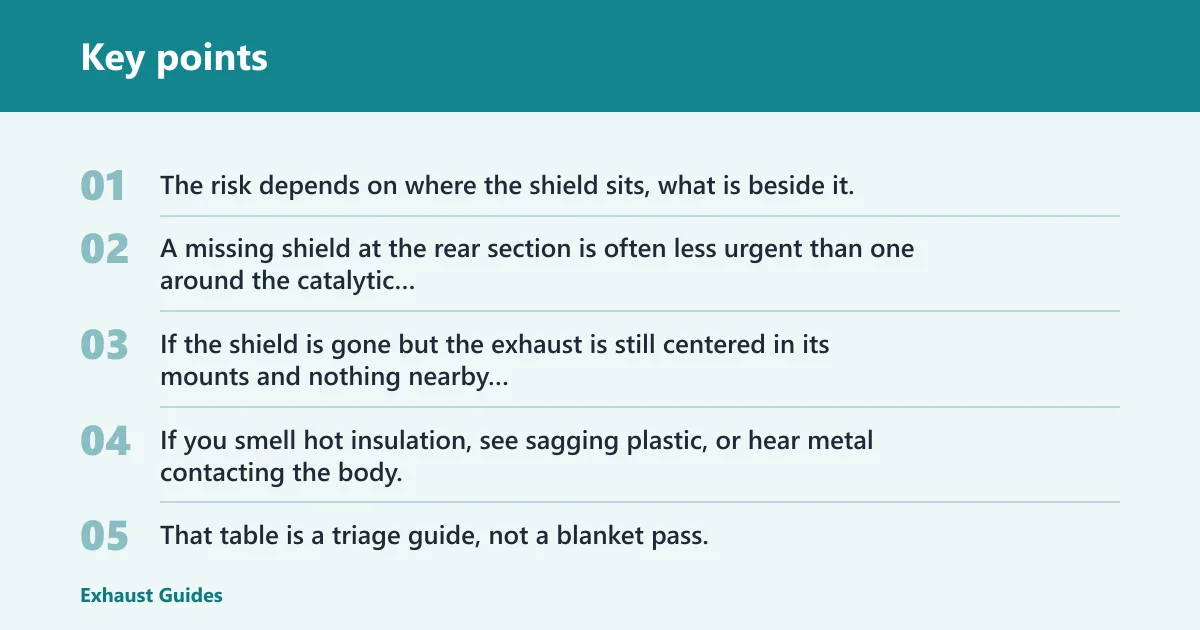


Yes, sometimes for a short trip. The risk depends on where the shield sits, what is beside it, and whether any nearby part is already heat-stressed or touching the exhaust. A missing shield at the rear section is often less urgent than one around the catalytic converter, turbo area, or an underfloor tunnel with wiring and hoses.
If the shield is gone but the exhaust is still centered in its mounts and nothing nearby shows heat damage, a brief drive to a repair shop may be reasonable. If you smell hot insulation, see sagging plastic, or hear metal contacting the body, treat it as a repair-now issue.
Heat shield triage table
| Missing shield location | Likely risk level | Parts most at risk | Recommended action |
|---|---|---|---|
| Front exhaust | High if near the engine, starter, or turbo; moderate if clear of nearby parts | Starter motor, wiring loom, hoses, floor insulation | Inspect before driving far; reattach or replace quickly |
| Catalytic converter area | High | Floor pan, oxygen sensor wiring, heat-sensitive underbody parts | Park if you see scorch marks, melting, or dangling insulation; repair now |
| Underfloor tunnel | Moderate to high, depending on routing | Wiring loom, fuel lines, hoses, cabin floor insulation | Check clearance carefully; drive only if nothing is contacting or discolored |
| Rear section | Lower, unless fuel system parts or bumper plastics are nearby | Rear floor insulation, bumper covers, spare tire well components | Short-trip drive may be acceptable after inspection; schedule repair soon |
That table is a triage guide, not a blanket pass. A shield missing from one car may be a nuisance; the same failure on another car may expose the starter, oxygen sensor wiring, or fuel lines to radiant heat that can damage them quickly.
What a heat shield protects
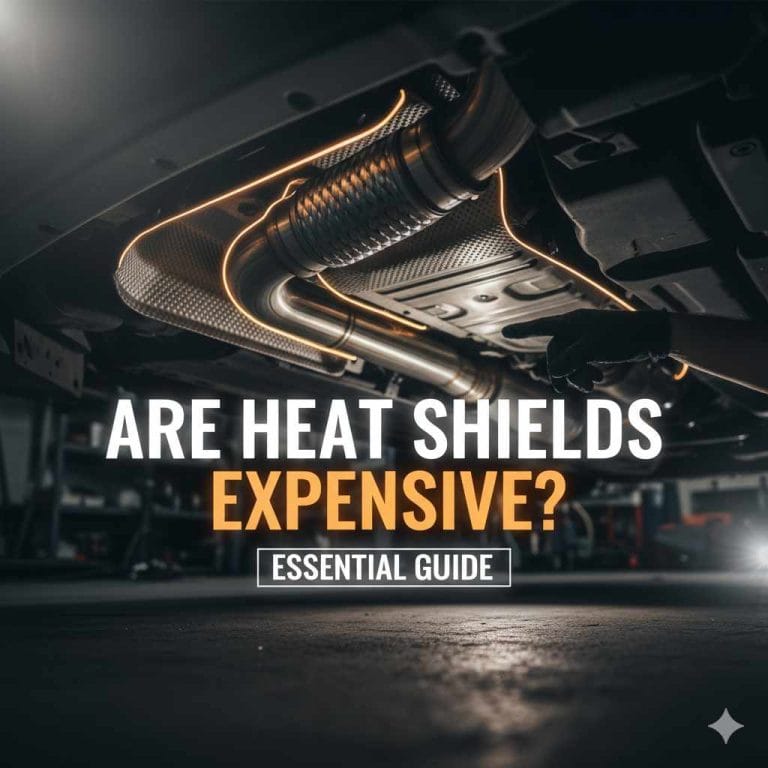
A heat shield blocks exhaust heat from soaking nearby metal, plastic, wiring, and hoses. Exhaust surface temperature can be high enough to damage floor insulation, wiring insulation, hoses, and plastic parts, especially under load, with a turbocharger present, or when a catalytic converter sits close to the floor pan.
Heat shields are usually mounted around hot exhaust parts. Common materials include stainless steel, aluminum, and ceramic-coated or insulated layers. They are found on the exhaust system itself and on underbody shielding, which varies by vehicle layout and OEM design.
Shield placement and related panels
Underbody shielding can overlap with splash shields or undertrays. Splash shields are also called undercarriage panels or skid plates. They are protective covers beneath the vehicle, and they can be made from plastic, metal, or both. Those panels help deflect road debris away from wiring, hoses, steering parts, and other exposed components, limit spray and moisture intrusion, and can help with temperature control, aerodynamics, vehicle longevity, safety, and performance.
That overlap matters because a missing exhaust heat shield is not always the same as a missing undertray. A plastic undertray may be protecting a different area, while the metal exhaust shield is doing the heat work close to the pipe, converter, or turbo housing.
When is a missing shield a hazard?
A missing shield becomes a hazard when exposed heat can reach parts that should stay cooler. Look for smell, melt marks, brittle insulation, scorched surfaces, sagging plastic, or a new rattle that sounds like metal tapping the floor or tunnel. Those signs point to more than a cosmetic issue.
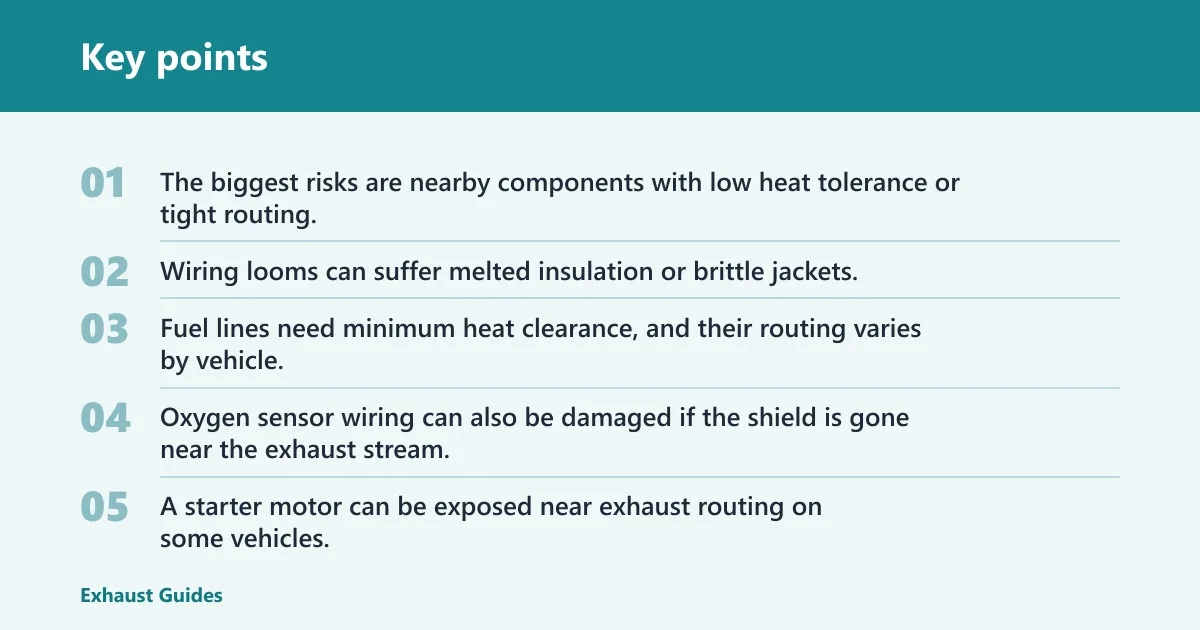
The biggest risks are nearby components with low heat tolerance or tight routing. Wiring looms can suffer melted insulation or brittle jackets. Hoses can harden, split, or deform. Fuel lines need minimum heat clearance, and their routing varies by vehicle. Oxygen sensor wiring can also be damaged if the shield is gone near the exhaust stream. A starter motor can be exposed near exhaust routing on some vehicles, and heat soak risk rises without shielding.
Say your compact sedan loses the shield beside the catalytic converter and you notice a hot plastic smell after a 15-minute commute. That is not a “watch it later” case. The converter area runs hot enough that the missing shield can raise the odds of damage to floor insulation or nearby wiring.
Suppose the rear shield on a hatchback is gone, but the exhaust sits centered, the bumper cover is cool to the touch after shutdown, and there are no melt marks. That is more likely a short-trip inconvenience, though it still deserves inspection and repair soon.
What changes the risk
Engine load matters. So does turbo presence. A turbocharged vehicle can concentrate heat near the front exhaust and downpipe area, and hard driving raises exhaust temperatures further. Catalytic converter proximity also changes the answer because the converter radiates significant heat when hot. Traffic, hills, towing, and long highway climbs all increase thermal stress.
In other words, the same missing shield can be tolerable on a gentle five-mile trip and far more risky during stop-and-go driving with repeated acceleration. The job of the shield is to block radiant heat, and that heat rises with temperature and time.
Can you remove a heat shield?
Sometimes, but only after you verify that the exposed area still has safe clearance and enough heat protection. If the shield is damaged beyond reuse and the remaining layout keeps the floor, wiring, hoses, starter, fuel lines, and oxygen sensor wiring outside the heat path, removal may be acceptable on some vehicles.
That is not the same as simply leaving it off. On many cars, the shield is part of the thermal design. If you remove it without checking nearby parts, you may create a heat problem that was not there before.
What must be verified first?
- Check that the exhaust is not touching the body, crossmember, or undertray.
- Inspect for melted plastic, cracked loom tape, brittle insulation, or scorched underbody coating.
- Confirm that wiring looms, fuel lines, hoses, and oxygen sensor wiring have clearance.
- Look for rusted brackets, broken fasteners, and warped metal that may let a replacement shield rattle.
- Make sure the remaining underbody shielding still protects the occupants and nearby components from heat transfer.
If the vehicle was designed with a shield in a tight area, removal should be the last choice. Reattach or replace is usually safer than “leave it off and hope.”
How to fix a loose heat shield
A loose heat shield is often fixable, but the repair starts with inspection. Check the fasteners, brackets, and mounting points for rust, cracks, or missing hardware. A shield may be loose because a tab has corroded away, a clamp has shifted, or the metal has warped from repeated heating and cooling.
If the shield only rattles and the surrounding parts are undamaged, reattach it with the proper fasteners or replace the worn hardware. If the shield is rusted through, warped, or torn around the mounting holes, replacement is usually the better call. If nearby parts show heat damage, inspect those parts before putting the car back in service.
A common first-timer mistake is chasing the rattle without looking at what sits beside the shield. A loose panel near the exhaust tunnel can be more than an annoyance if it is also brushing a wiring loom or floor insulation.
Practical repair order
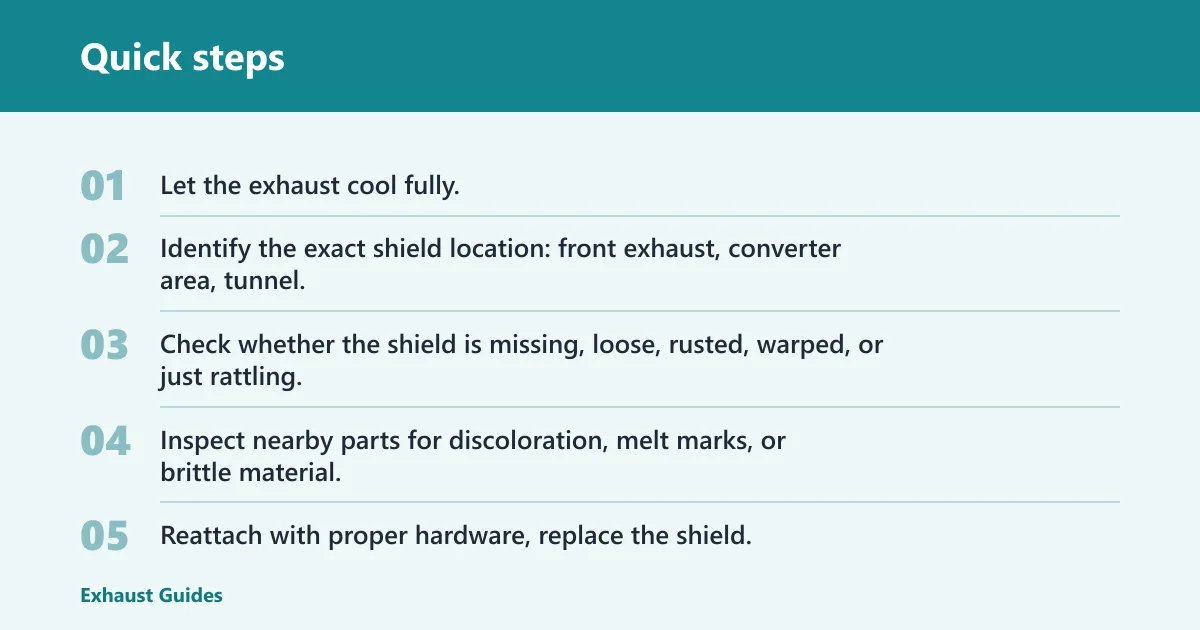
- Let the exhaust cool fully.
- Identify the exact shield location: front exhaust, converter area, tunnel, or rear section.
- Check whether the shield is missing, loose, rusted, warped, or just rattling.
- Inspect nearby parts for discoloration, melt marks, or brittle material.
- Reattach with proper hardware, replace the shield, or remove it only if clearance and heat protection are verified.
If the rattle changes with engine speed or road bumps, the shield may be moving against the exhaust or body. That can wear through a pipe wrap, damage brackets, or start a chain of vibration issues that is more expensive than the original repair.
Frequently asked questions
Does a car need a heat shield?
Many cars need one in at least some locations, especially near the catalytic converter, turbocharger, or an underfloor tunnel with wiring and hoses. The shield is there to control radiant heat. Whether a specific car can safely run without one depends on clearance, nearby parts, and how the exhaust is routed.
What happens if the exhaust heat shield is missing?
The missing shield can allow more heat into the floor pan and nearby components. That may lead to melted insulation, hardened hoses, damaged wiring looms, or hot spots on underbody panels. The risk rises with engine load, turbo presence, and how close the converter or pipe sits to the body.
Is it safe to drive if the heat shield is rattling?
A rattling shield is often a sign of loose fasteners, warped metal, or rusted mounting points. It may still be driveable for a short trip if nothing is touching hot parts, but it should be inspected soon. A rattle near the exhaust can also mean the shield is already contacting the body.
Can a missing heat shield damage wiring or hoses?
Yes. Wiring looms can lose insulation strength, connectors can age faster, and hoses can harden or soften when exposed to heat for too long. That risk is highest near the exhaust tunnel, catalytic converter area, and front exhaust where routing is tight and clearance can be minimal.
Can you drive without a heat shield?
Sometimes, but only as a short-term decision after checking the location and the surrounding parts. A rear shield with plenty of clearance may be a short-trip inconvenience. A missing shield near the starter, fuel lines, or oxygen sensor wiring is more serious and should be inspected before more driving.
How do you fix a loose heat shield?
Start with the mounting points. Replace missing clips or bolts, check for rusted brackets, and inspect the shield for cracks or warped edges. If the metal is too thin or torn around the holes, replace it. If the rattle comes from heat-damaged nearby parts, repair those first.