Do Exhaust Flex Pipes Leak? What to Know About Your Vehicle
If you’re new to car repairs, the question Do Exhaust Flex Pipes Leak? What to Know might seem tricky. Exhaust systems can appear complex, but we’ll break it down. Don’t worry, understanding exhaust leaks doesn’t have to be hard. We’ll explore why flex pipes matter and what can cause leaks. After reading this, you’ll feel confident in checking your own exhaust system. Let’s start with a look at what flex pipes actually do.
What Are Exhaust Flex Pipes and Their Function?
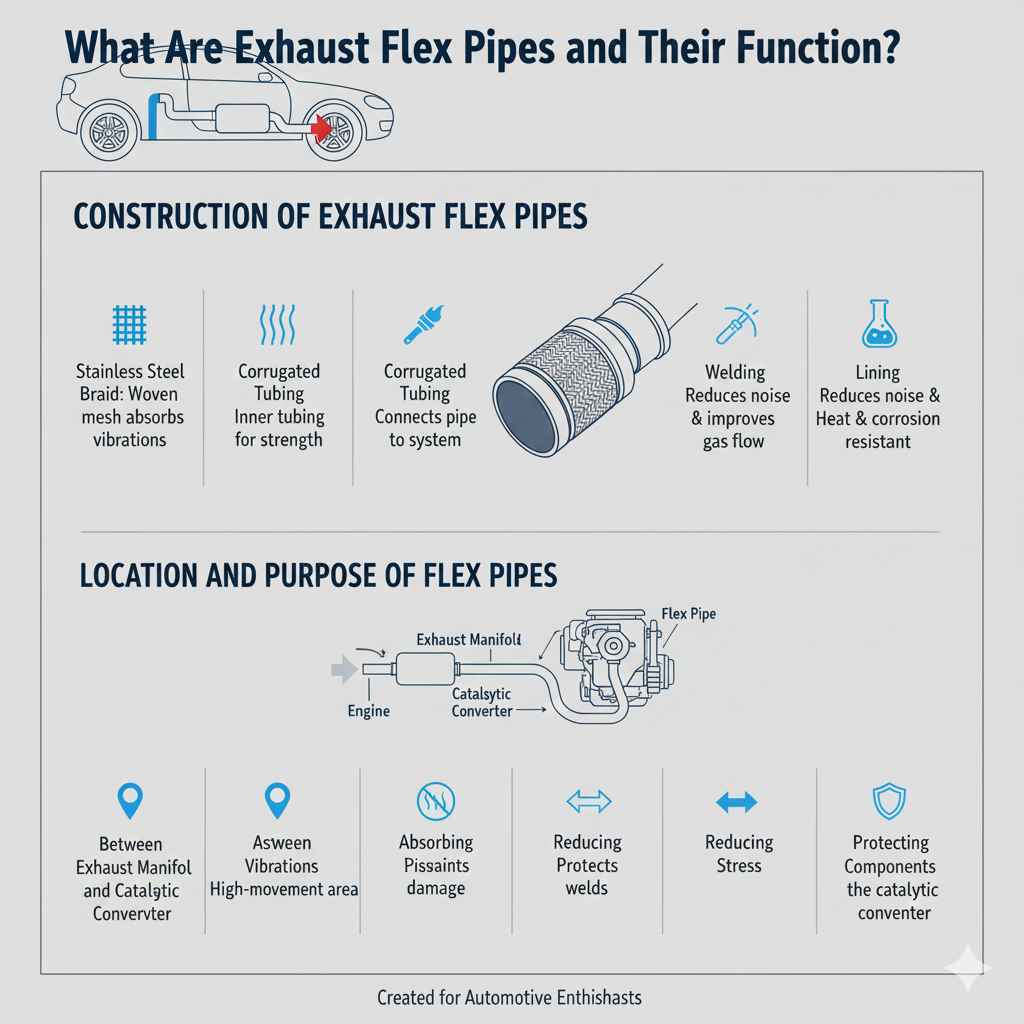
Exhaust flex pipes are important parts of your car’s exhaust system. They are designed to absorb vibrations and movement from the engine. This flexibility prevents stress on the exhaust system, which could lead to cracks or breaks. They are usually located between the exhaust manifold and the catalytic converter, or in other spots where the exhaust system moves during vehicle operation. Flex pipes are often made of a woven metal mesh, making them flexible yet strong enough to withstand high temperatures and pressure. The design allows for some movement, like when your engine shifts or when you go over bumps.
Knowing about flex pipes helps you spot potential problems early. By recognizing their purpose and location, you can better understand why they might leak. This knowledge is especially useful when inspecting your exhaust system. When a flex pipe fails, it can cause problems such as exhaust leaks, which could lead to loss of engine performance or even danger. We’ll explore the main causes of these leaks, so you’ll be able to identify them effectively. This step is important for fixing the issue quickly.
Construction of Exhaust Flex Pipes
Exhaust flex pipes are engineered for durability. They are typically constructed from a stainless-steel braid, or a combination of stainless steel and corrugated tubing. The braided design allows for the necessary flexibility. The corrugated tubing offers a robust structure. These materials can endure high temperatures and resist corrosion. The choice of materials ensures the pipes can handle the harsh conditions within an exhaust system. The pipes often have a liner inside to reduce noise and enhance the flow of exhaust gases. The design keeps exhaust gases flowing smoothly while maintaining structural integrity. The welding process plays a key role, making sure the connections are secure and leak-free.
- Stainless Steel Braid: The most common part is a woven stainless steel mesh. This braid allows the pipe to flex and move, which absorbs vibrations.
- Corrugated Tubing: Some flex pipes have corrugated tubing inside. This helps with the strength and reduces noise.
- Welding: High-quality welding is critical to attach the flex pipe to other exhaust system parts.
- Lining: Some flex pipes have a lining to help with noise reduction and gas flow.
- Materials Quality: The materials used are chosen for their heat resistance and resistance to corrosion.
Location and Purpose of Flex Pipes
The flex pipe’s placement is deliberate, usually near the engine. They’re found where the exhaust system needs to handle the most movement. This is usually between the engine and the catalytic converter. They serve to reduce the stress caused by engine movement. The location is important as it helps to absorb vibrations. This placement protects the exhaust system from damage. The flexibility means the exhaust system will not be rigidly fixed. It also protects the exhaust manifold and other sensitive components. This positioning is critical for overall exhaust system health. Correct placement assures that the exhaust system lasts longer. It also guarantees your car will operate safely and efficiently.
- Between Exhaust Manifold and Catalytic Converter: The most common location is between the exhaust manifold and the catalytic converter. This section of the exhaust system experiences significant engine movement.
- Absorbing Vibrations: The main job is to absorb vibrations. These vibrations could damage the exhaust system.
- Reducing Stress: The flexibility decreases stress on welds and joints. This prevents cracks and breaks.
- Protecting Components: The flex pipe protects sensitive parts of the exhaust system. This includes the catalytic converter.
Causes of Leaks in Exhaust Flex Pipes
Several things can cause leaks in exhaust flex pipes. Heat, corrosion, and physical damage are all major culprits. The constant heating and cooling cycles that the exhaust system goes through can weaken the metal over time. Corrosion from road salt and moisture can eat away at the flex pipe, causing holes. Impacts from road debris or accidents can also cause damage. When a flex pipe leaks, you will notice different signs. These include strange noises from under your car, a smell of exhaust fumes, or even reduced engine performance. Understanding the main causes helps you take action to address the issue.
The conditions the flex pipes operate in are extreme. They are exposed to high temperatures and corrosive elements. This constant exposure will eventually degrade the materials. The rate of degradation depends on several factors. This includes the quality of the materials used in the flex pipe, the driving conditions, and the climate you live in. Knowing these causes can help you prevent leaks by checking and maintaining your exhaust system regularly. This maintenance will extend the life of your flex pipe and protect your vehicle.
Common Causes of Leaks
The most common reasons for flex pipe leaks are related to wear and tear. Over time, the materials will weaken. Constant exposure to heat and exhaust gases accelerates the degradation. Leaks often develop at the welds or in the flex part. This is where the stresses are concentrated. Corrosion, caused by exposure to moisture and road salt, also weakens the metal. Physical damage, like from hitting something on the road, can cause immediate failure. Understanding these factors will help you troubleshoot and address any leaks.
- Heat and Thermal Cycling: Constant heating and cooling can weaken the metal. This makes it more brittle and prone to cracking.
- Corrosion: Exposure to road salt and moisture causes corrosion. This eats away at the metal.
- Physical Damage: Impacts from road debris or accidents can dent or tear the flex pipe.
- Vibrations and Movement: The flex pipe absorbs vibrations. Excessive movement, especially with age, can lead to metal fatigue.
- Poor Material Quality: Lower-quality flex pipes may not withstand the harsh conditions as well. This leads to early failure.
Identifying Leaks
To identify leaks, you will need to inspect your exhaust system. Start by listening for unusual noises coming from under your car. A hissing or rattling sound can indicate a leak. Visually inspect the flex pipe for any holes, cracks, or signs of corrosion. You might also notice exhaust fumes. This is especially true when the car is running. Using soapy water is an easy method to check for leaks. Spray the flex pipe with soapy water, and if there’s a leak, bubbles will form. Ensure the engine is cool. Check for any soot around the flex pipe, which can point to a leak. Performing this check will help you spot leaks early.
- Listening for Noises: Hissing or rattling sounds coming from the exhaust area. These noises often suggest a leak.
- Visual Inspection: Look closely at the flex pipe for visible damage. Check for holes, cracks, or signs of rust.
- Exhaust Fumes: A strong smell of exhaust fumes in or around the car can be a key sign.
- Soap Test: Spray the flex pipe with soapy water while the engine is running. Bubbles will appear at the leak points.
- Soot Inspection: Soot deposits around the flex pipe indicate escaping exhaust gases.
Can Do Exhaust Flex Pipes Leak? What to Know About Detection?
You can detect exhaust flex pipe leaks with a few simple techniques. A visual inspection is a starting point. Look for signs of damage or corrosion. You can listen for unusual noises coming from the exhaust system. A hissing sound often indicates a leak. Another common method is the soap test. Spray soapy water onto the flex pipe and look for bubbles. You can also use a smoke test. This involves injecting smoke into the exhaust system to find leaks. Early detection is important to prevent further damage. Regularly checking your exhaust system will help you identify leaks early. This also ensures your car runs safely and efficiently.
Detecting leaks is not difficult. It requires attention to detail and some basic tools. By becoming familiar with the common signs of a leak, you can save money on repair bills. You can also protect yourself from potentially harmful exhaust fumes. This knowledge will provide you with confidence. You can check your exhaust system on your own. You can even know what to look for when you take your car to a mechanic. Being proactive in exhaust system maintenance will help you prevent more serious problems.
Methods for Spotting Leaks
There are several easy ways to detect leaks. The most common is a visual inspection. Check the flex pipe for holes, cracks, or rust. Listening for unusual sounds is also important. A hissing noise suggests an exhaust leak. Using the soap test is simple. Mix soapy water, spray it on the flex pipe, and see if bubbles appear. More detailed methods involve a smoke test. This involves injecting smoke into the exhaust system. This helps find even small leaks. Regular checks will improve your vehicle’s safety and performance.
- Visual Inspection: Examine the flex pipe for any visible damage, such as cracks, holes, or corrosion.
- Listen for Sounds: Pay attention to unusual noises. A hissing sound often signals a leak.
- Soap Test: Mix soapy water in a spray bottle. Spray the flex pipe and watch for bubbles.
- Smoke Test: Inject smoke into the exhaust system. The smoke will escape through any leaks.
- Professional Inspection: Take your car to a mechanic for a complete inspection if you are unsure.
DIY vs. Professional Inspection
You can perform some basic exhaust inspections yourself. The visual inspection and soap test are easy to do at home. However, some methods, like a smoke test, are better left to professionals. A mechanic will have the proper equipment and experience to detect all leaks. They can also diagnose any other issues with your exhaust system. If you are not comfortable working under your car, or if you don’t have the right tools, a professional inspection is the safest choice. Regular professional checks will ensure your exhaust system stays in good condition. They can also catch problems that you might miss. The key is to know your limits and choose the best option for your car.
| Feature | DIY Inspection | Professional Inspection |
|---|---|---|
| Tools Needed | Basic tools (spray bottle, soapy water) | Specialized equipment (smoke machine, lift) |
| Skill Level | Easy to moderate | Requires experience and knowledge |
| Thoroughness | Limited, may miss small leaks | Comprehensive, detects all leaks |
| Cost | Low or no cost | Higher, but may prevent more costly repairs |
| Safety | Must ensure safe working conditions | Mechanic trained in safety procedures |
Repairing or Replacing Exhaust Flex Pipes
When you discover an exhaust flex pipe leak, you need to decide if you want to repair or
The repair process depends on the type and extent of the damage. For minor leaks, patching the damaged area may be an option. However, these fixes often do not last long. Replacement provides a more durable solution. When a mechanic replaces the flex pipe, they cut out the old damaged section. Then, they weld in a new flex pipe. This process needs specialized equipment and welding skills. Attempting repairs that are beyond your skill level can lead to more problems. Always consider your safety and the longevity of the repair. Consulting a mechanic helps you choose the best and safest approach. This ensures the exhaust system is reliable.
Repair Options
There are different ways to fix a leaky flex pipe, including repair and
- Exhaust Patch/Sealant: A temporary solution for small leaks. Not a long-term fix.
- Flex Pipe Replacement: The most reliable method. Involves cutting out the old and welding in the new.
- Welding: Requires specialized equipment and skills. Essential for the flex pipe installation.
- Clamps: Some exhaust systems use clamps, but welding is usually stronger.
- Professional Help: It’s best to take your car to a mechanic for flex pipe replacement.
The Replacement Process
Replacing a flex pipe is a process. The first step is to lift the car safely. The mechanic will then cut out the old flex pipe. The damaged section is removed using a saw or cutting tool. The mechanic measures and cuts the new flex pipe to the right size. It is critical to ensure a proper fit. The new flex pipe is then welded into place. The welds have to be strong and airtight. The mechanic checks for leaks after installation. The replacement ensures a proper seal. The mechanic might inspect other exhaust system components. This makes sure there are no other issues. The mechanic makes sure the entire exhaust system is operating correctly. This includes checking for exhaust leaks and securing the new flex pipe.
- Vehicle Preparation: Raise the car securely using jack stands or a lift.
- Removal of Old Pipe: Cut out the damaged flex pipe with appropriate tools.
- Measurement and Cutting: Measure and cut the new flex pipe to fit perfectly.
- Welding New Pipe: Weld the new flex pipe into place, ensuring strong and airtight connections.
- Leak Test and Inspection: Check for leaks and inspect the whole system to ensure everything is working correctly.
Frequently Asked Questions
Question: How often should I check my exhaust flex pipes?
Answer: It’s a good idea to check your exhaust flex pipes every time you get an oil change or at least twice a year. If you notice any unusual noises or smells, inspect them immediately.
Question: Can I drive with a leaking exhaust flex pipe?
Answer: It is not recommended to drive with a leaking exhaust flex pipe for long periods. Leaks can release harmful exhaust fumes and reduce your engine’s performance. Have it repaired as soon as possible.
Question: Are flex pipes expensive to replace?
Answer: The cost to replace a flex pipe can vary depending on your car model and where you take it for repair. However, it’s usually not a very expensive repair compared to other engine problems. Get a quote from a local mechanic.
Question: What’s the difference between a flex pipe and a catalytic converter?
Answer: The flex pipe is a flexible section of the exhaust system. The catalytic converter cleans the exhaust gases. They have different jobs, but both are essential parts of your car’s exhaust system.
Question: Can I fix an exhaust flex pipe leak myself?
Answer: Small leaks might be temporarily patched. However, the best way to fix it is by replacing it. This often requires welding skills and the right tools. It’s usually best to take it to a mechanic.
Final Thoughts
Do Exhaust Flex Pipes Leak? What to Know is critical for vehicle maintenance. Flex pipes are an integral part of your exhaust system. They absorb engine vibrations. Leaks can happen due to heat, corrosion, or physical damage. It’s important to know the signs of a leak. This includes unusual noises, exhaust smells, and visible damage. You can check your exhaust system yourself. A visual check and a soapy water test can help you find small leaks. For more serious issues, or if you’re uncomfortable, taking your car to a mechanic is best. You can choose to repair or replace the flex pipe. Remember to address leaks quickly. This will help your car run well. You can also protect your health. Being proactive about your car’s exhaust system will save you time and money. Stay safe, and keep your car running smoothly!