Do Heat Shields Improve Performance or Just Protection?
For many street cars, heat shields mainly protect nearby parts, and they tend to improve performance only when they reduce intake heat soak or keep hot-side turbo parts from adding heat to the bay. Without that, the usual result is lower underhood temperatures, not more horsepower. This guide shows where shields help, where they do not, and how to choose the right type.
How heat shields affect intake temperature and reliability


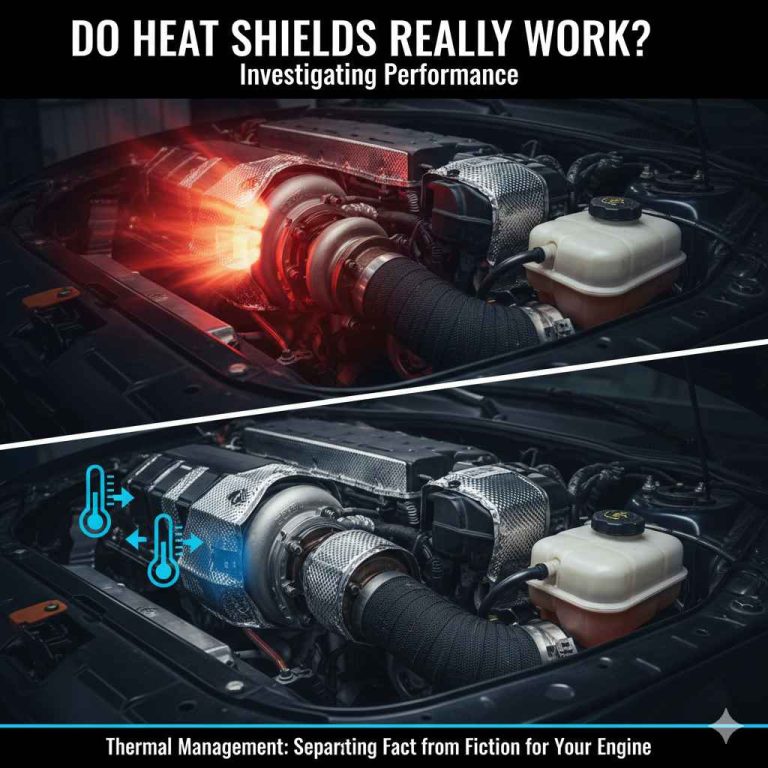
Yes, but only in specific cases. A heat shield can help performance when it lowers intake air temperature, reduces heat soak around an airbox or intake tube, or keeps hot-side turbo hardware from adding extra heat to the engine bay. In most other locations, protection comes first and power gains second.
The size of the gain depends on what the shield is shielding. A shield near a hot manifold or turbo can cut local radiant heat enough to protect hoses, wiring, and plastic parts. That matters for reliability. It does not automatically mean more horsepower.
Where performance gains can happen
The clearest gains show up when the intake path sits close to hot exhaust routing. If the airbox, filter, or intake tube is exposed to the manifold, downpipe, or turbo outlet, a shield can help keep inlet air cooler at idle, in traffic, or after a hard pull.
Turbo setups often have the best chance of a measurable benefit. They run hotter than many naturally aspirated setups, so targeted shielding can reduce heat soak around the compressor side, nearby sensors, and the intake tract.
Why most gains are small
Heat shields do not cool the whole engine bay. They block radiant heat from one source and leave conductive heat in contacted parts untouched. If the shield is far from the intake, or if the intake already sits in fresh outside air, the effect on performance is usually minor.
That is why factory shields are often there for durability and safety. They protect parts near the exhaust, and any power benefit is usually indirect.
When the gain is measurable
A measurable benefit is most likely when you can see intake air temperature change in OBD2 data after a heat-soak event, or when a turbo blanket and shield combination keeps underhood temperatures from climbing into the intake path. If the intake temperature stays flat, the shield is doing little for power.
Say your intake cone sits 2 inches from a tubular manifold. A formed shield with about a 1/2-inch air gap can reduce the filter’s heat soak after idling in traffic. Move that same shield to a trunk-mounted cold-air intake, and the benefit nearly disappears.
How heat shields work
Heat shields work by blocking radiant heat, which is a main type of heat transfer they address. They are usually sheet metal barriers mounted near exhaust parts to reflect heat away from nearby components and reduce heat soak. They usually work best when they do not touch the hot part they are protecting.
Air gaps and standoff mounting matter more than direct contact. A shield mounted on clips, studs, standoffs, or clamps can leave a small insulating gap that reduces heat transfer far better than a panel pressed against the source.
Radiant heat versus conductive heat
Radiant heat travels through space from a hot surface to cooler parts nearby. A reflective shield can interrupt that path. Conductive heat moves through direct contact, so a shield bolted hard against a hot pipe or housing loses much of its value as insulation.
This is why shield shape matters. A panel that sits close to the source without touching it usually works better than a thicker part installed flat against the exhaust.
Why air gaps matter
An air gap slows heat transfer and gives the shield space to reflect heat instead of absorbing it. The gap also helps prevent the shield from soaking up the source heat and passing it into the bracket, body panel, or floorpan.
On many factory parts, the mounting uses OEM studs, clips, or small standoffs for that reason. Those fasteners are not cosmetic. They are part of the heat control design.
Common mounting methods
- OEM studs or threaded bosses on the manifold, turbo housing, or body panel.
- Spring clips or formed tabs that hold a shield with a small gap.
- Clamps or brackets for aftermarket shields on downpipes and turbo pipes.
- Standoff mounts that keep a barrier off the hot surface.
Heat shield decision table
| Component | Likely benefit | Observable symptoms | Recommendation |
|---|---|---|---|
| Manifold | Protection for wiring, hoses, starter parts, and nearby plastics; small performance gain only if intake heat soak drops. | Scorched loom, brittle vacuum hose, heat shimmer, intake temp rise after idling. | Keep or replace if the intake path or nearby parts are heat-stressed. |
| Turbo | Protection plus the best chance of performance benefit from lower heat soak around the hot side. | Hot underhood area, repeated heat soak, plastic parts near the turbine housing, intake temp climb. | Use a shield, turbo blanket, or both if packaging is tight. |
| Catalytic converter | Mostly protection for floorpan, underbody trim, and nearby lines. | Hot cabin floor, cooked underbody coating, nearby fuel or brake line exposure. | Keep a shield when the converter sits close to body panels or lines. |
| Downpipe | Protection for wiring, hoses, and transmission or steering parts; small intake benefit only if the intake route is adjacent. | Heat in the tunnel, nearby loom discoloration, warped plastic shields. | Fit a shield when there is tight packaging or underbody exposure. |
| Cabin floor | Protection and comfort, with little direct power effect. | Hot footwell, higher cabin temperature, heat felt through carpet or tunnel. | Repair or add shielding if the floor above the exhaust gets hot. |
| Wiring, hoses | Protection is the main value; performance is indirect through reliability. | Cracked hoses, hardened loom, brittle connectors, repeat failures near exhaust heat. | Prioritize shielding here if the parts are within the heat plume. |
| Intake proximity | Best chance of measurable performance from lower intake air temperature. | Heat soak after shutdown, slower recovery in traffic, higher OBD2 intake temperature. | Use a shield if the intake sits near the manifold, turbo, or downpipe. |
Are heat shields only for protection?
No. Protection is the main job, but not the only one. Heat shields also help manage heat soak around intake parts and electronics when they sit close to exhaust hardware. On many cars, though, the first sign of value is fewer heat-related failures, not more power.
That is especially true for wiring, hoses, and fluid lines. If the shield prevents repeated heat exposure from cooking a brake line, fuel line, vacuum hose, or connector, it is doing important work even if the dyno number never changes.
Wiring, hoses, and fluid lines
These parts are vulnerable because they age faster under repeated heat. A shield can lower peak radiant load and keep insulation, rubber, and plastic from hardening or cracking near the exhaust.
A common first-timer mistake is to remove a missing shield because it rattles, then notice a brake fluid line or loom sits almost against the downpipe. The rattle was annoying. The missing protection was the larger issue.
Floorpan and cabin protection
A shield near the catalytic converter or tunnel can keep heat out of the cabin and off the floorpan. That is a comfort gain, but it also protects seam sealer, underbody coating, and nearby insulation from long-term damage.
This matters more on cars with low ground clearance or dense underbody packaging. The shield’s job is local. It is still worth keeping if the floor above the exhaust gets noticeably hot.
Factory shields and why they stay there
Factory shields are often there because the original layout needed them. Engineers use them to protect parts near the exhaust, meet durability targets, and keep surrounding materials within temperature limits. They are not always intended as performance parts.
If a factory shield is intact, leave it in place unless there is a clear reason to change it. If it is damaged, loose, or missing fasteners, repair it before assuming it is unnecessary.
Do heat shields help turbo cars more?
Yes. Turbocharged cars usually benefit more than naturally aspirated cars because the turbo and turbine housing run hotter, and the surrounding packaging is often tighter. A shield can help keep heat away from the intake tract, brake lines, wiring, and nearby body panels.
Turbo cars also respond better when the shield is aimed at the right target. A shield that protects the turbo hot side or the intake path can matter more than one placed on a cooler section of pipe.
Hot-side turbo packaging
The hot side of a turbo setup is one of the harshest heat sources in a passenger car engine bay. The turbine housing, downpipe, and nearby hardware can raise local temperatures enough to damage hoses, loom, and plastic covers.
Targeted shielding helps because it reduces the amount of radiant heat reaching those parts. In tight bays, that can be the difference between stable packaging and chronic heat damage.
Turbo blankets versus shields
They are not the same tool. A turbo blanket wraps the turbine housing itself to keep more heat inside the turbine section. A shield blocks radiant heat from escaping toward nearby parts.
On many setups, the best answer is both. Use a blanket on the turbo and a shield where the downpipe, compressor outlet, or nearby panel still sees heat.
When intake air temperature matters
Performance gains matter most when the intake is close to the turbo heat source or the manifold. That is where a shield can cut heat soak and help keep intake air temperature lower after idling, heat soak, or a slow crawl in traffic.
If the intake already pulls cool outside air from far away, the shield is mostly there for protection. The power effect will usually be small.
Heat shields versus exhaust wrap
Heat shields and exhaust wrap solve different problems. A shield reflects radiant heat away from nearby parts. Wrap keeps heat inside the pipe or manifold, which can lower external surface temperature but can also increase component temperature and, in some cases, stress the part it wraps.
They are not interchangeable. Use wrap when the goal is to keep heat inside a pipe or manifold, and use a shield when the goal is to protect nearby parts from that heat.
What each one is meant to do
Wrap belongs on the hot component itself. A shield belongs between the heat source and the part you want to protect. If the goal is to stop a brake line or harness from cooking, the shield is usually the cleaner choice.
If the goal is to keep exhaust gas temperature up inside the pipe for a turbo setup, wrap may be the better fit. That said, many street cars still benefit more from a shield because it is easier to inspect and replace.
Where wrap helps more
Wrap can be useful on race-style or purpose-built parts where controlling heat inside the exhaust path matters more than long-term part finish. It can reduce radiant heat around the wrapped section, but it is still part of the hot surface.
That makes inspection important. Wrapped parts can trap moisture and hide corrosion, so the trade-off is different from a formed metal shield.
Where a shield is the better choice
A shield is usually better for street cars, firewall areas, floorpans, and any spot where access, durability, and inspection matter. It is also the better choice when the nearby concern is wiring, hoses, or cabin heat rather than exhaust gas retention.
-
Inspect the heat path.
Look for the hottest nearby part and trace the line of sight to hoses, wiring, the intake, or the cabin floor. If the shield blocks a clear radiant path, it is likely doing real work.
-
Check the mounting gap.
Make sure the shield sits off the exhaust with an air gap. If it is bent flat against the manifold, downpipe, or housing, it is far less effective and may need new clips, standoffs, or brackets.
-
Match the shield to the use case.
Keep or replace shields near turbos, manifolds, catalytic converters, and intake parts first. Consider deleting only a loose, nonfunctional cover that does not protect anything nearby and does not affect cabin heat.
-
Watch for heat symptoms.
Look for hardened hose ends, discolored loom, hot footwells, and intake air temperature spikes after idling. Those signs point to a shield that still has a job to do.
Frequently asked questions
Do heat shields actually improve performance?
Sometimes, but only in a narrow way. The main performance benefit comes when a shield lowers intake air temperature or keeps hot-side turbo hardware from soaking the engine bay. If neither applies, the result is usually protection and lower local heat, not a noticeable horsepower gain.
Do exhaust heat shields reduce engine bay temperature?
They can reduce local engine bay heat near the shielded part, especially around manifolds, downpipes, and turbos. They do not cool the whole bay evenly. Their effect is local, and the best results come when the shield has an air gap and blocks a direct radiant path.
Are heat shields only for protecting wiring and hoses?
No. That is one of their most important jobs, but shields also protect floorpans, cabin areas, intake parts, and nearby body panels. On turbo cars, they can also help manage heat soak in ways that support performance when the intake path sits too close to hot exhaust parts.
How much performance gain can a heat shield really make?
Usually small. A shield can matter if it lowers intake air temperature in a heat-soak-prone setup, but it rarely adds power by itself. The biggest gains tend to come on turbo cars, tight engine bays, or intakes positioned close to the manifold or downpipe.
Is a heat shield better than exhaust wrap?
They are better at different tasks. A heat shield is usually better for protecting nearby parts and for street use because it is easy to inspect and replace. Exhaust wrap is better when the goal is to keep heat inside the exhaust component itself, especially on purpose-built setups.
Can a missing heat shield cause damage?
Yes. A missing shield can allow enough radiant heat to damage wiring, hoses, connectors, underbody coatings, or cabin insulation over time. It can also cause rattles, which are often the warning sign that the part is loose before the heat-protection function is lost.
When should I replace a heat shield instead of repairing it?
Replace it when the metal is torn, badly rusted, or missing mounting points, or when it no longer maintains the needed air gap. Repair is reasonable for a bent shield with intact metal and usable fasteners. If it cannot stay secure, replacement is the safer choice.