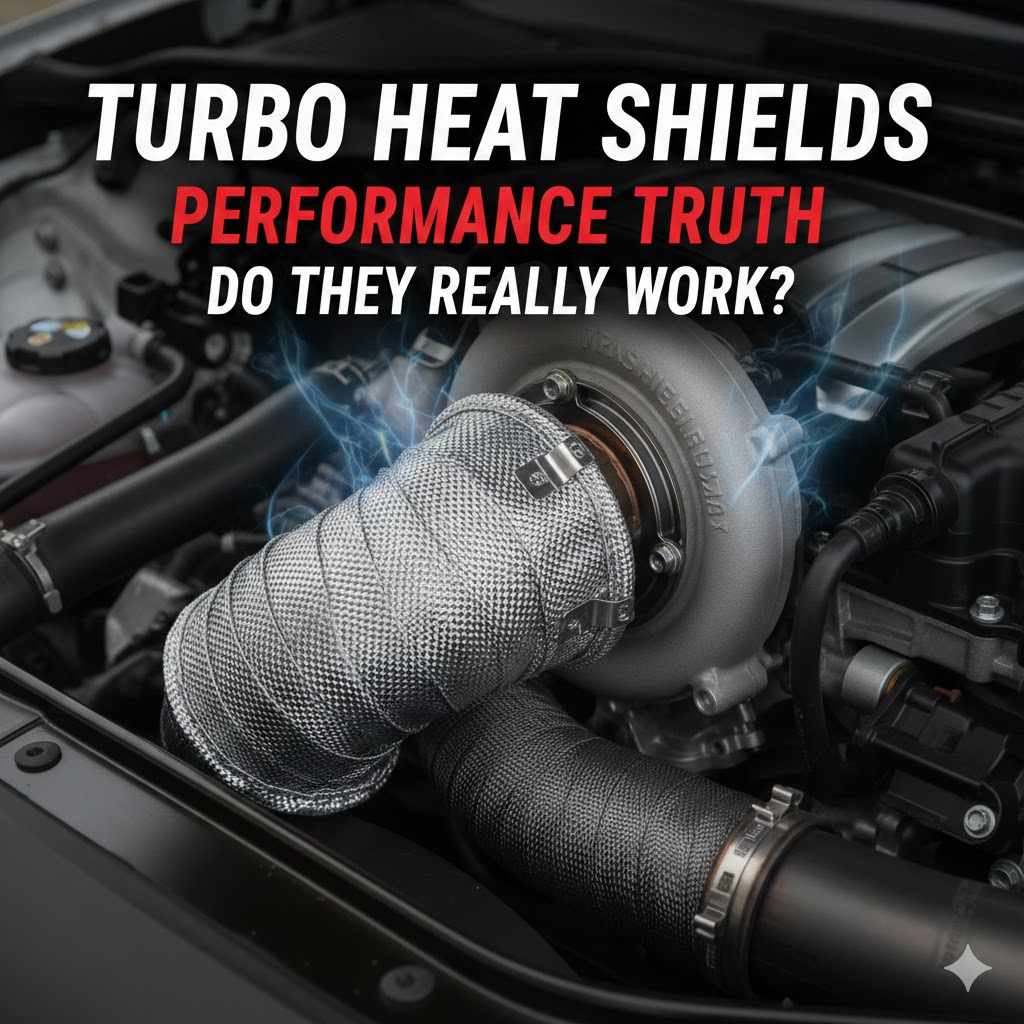
Do Turbo Heat Shields Really Work Performance Truth
Lots of car fans wonder, Do Turbo Heat Shields Really Work? Performance Truth is a question that can feel a bit confusing when you’re just starting out with car upgrades. You see them on cars, but what do they actually do?

HiwowSport
HIWOWSPORT FireShield T4 Titanium Turbo Blanket T4…
- Fit most of T4 turbocharger. Keep crucial engine components protected from the heat of the turbo.
- Inner side is made of high silica cloth and there is a layer of stainless steel net on the inner side, Outer is made of basalt tit…
- Withstands 1800F direct/2500F intermittent heat.
As an Amazon Associate I earn from qualifying purchases.
It’s like trying to figure out a secret handshake for your engine. Don’t worry, we’ll make it super simple to understand. We’ll break it down piece by piece so you know exactly what’s happening and if these shields are worth it for your car.
Get ready to learn all about them!
How Turbo Heat Shields Work
Turbo heat shields are designed to protect surrounding engine components from the intense heat generated by a turbocharger. When a turbo spools up, it gets incredibly hot. This heat can damage nearby wires, hoses, and even paintwork if not managed.
Heat shields act as a barrier, reflecting or absorbing this heat.
This section will explore the fundamental principles behind turbo heat shields. We’ll look at how they are constructed and the different materials used. Understanding these basics is key to grasping their effectiveness.
We will also discuss the physics of heat transfer involved and why managing turbo heat is so important for engine longevity and performance.
Material Science Behind Heat Shields
The materials used in heat shields are critical to their function. They need to withstand high temperatures and effectively block heat radiation. Common materials include fiberglass, Kevlar, and various metal alloys like stainless steel and titanium.
Each material has unique properties that make it suitable for different applications.
Fiberglass and Kevlar are often used for flexible shields or wraps. They offer good insulation and are relatively inexpensive. Metal shields, on the other hand, are more rigid and can handle extremely high temperatures.
They often have a reflective surface to bounce heat away.
- Fiberglass is a popular choice for its cost-effectiveness and good insulating properties. It’s made from fine glass threads woven together. This creates a material that traps air, which is a poor conductor of heat, thus providing insulation. It can withstand temperatures up to about 1200 degrees Fahrenheit.
- Kevlar, known for its strength, is also used in some high-performance heat shields. Its high tensile strength and resistance to heat make it suitable for demanding applications. It can endure even higher temperatures than fiberglass, often exceeding 1600 degrees Fahrenheit.
- Stainless steel is a common metal for rigid heat shields. It’s durable, corrosion-resistant, and can handle significant heat. The shiny surface of stainless steel also helps reflect radiant heat away from sensitive components. It can withstand temperatures well over 1600 degrees Fahrenheit.
- Titanium offers excellent heat resistance and is very lightweight. It’s often used in high-end racing applications where weight savings and extreme heat management are crucial. Titanium can handle temperatures upwards of 1800 degrees Fahrenheit.
How Heat is Transferred
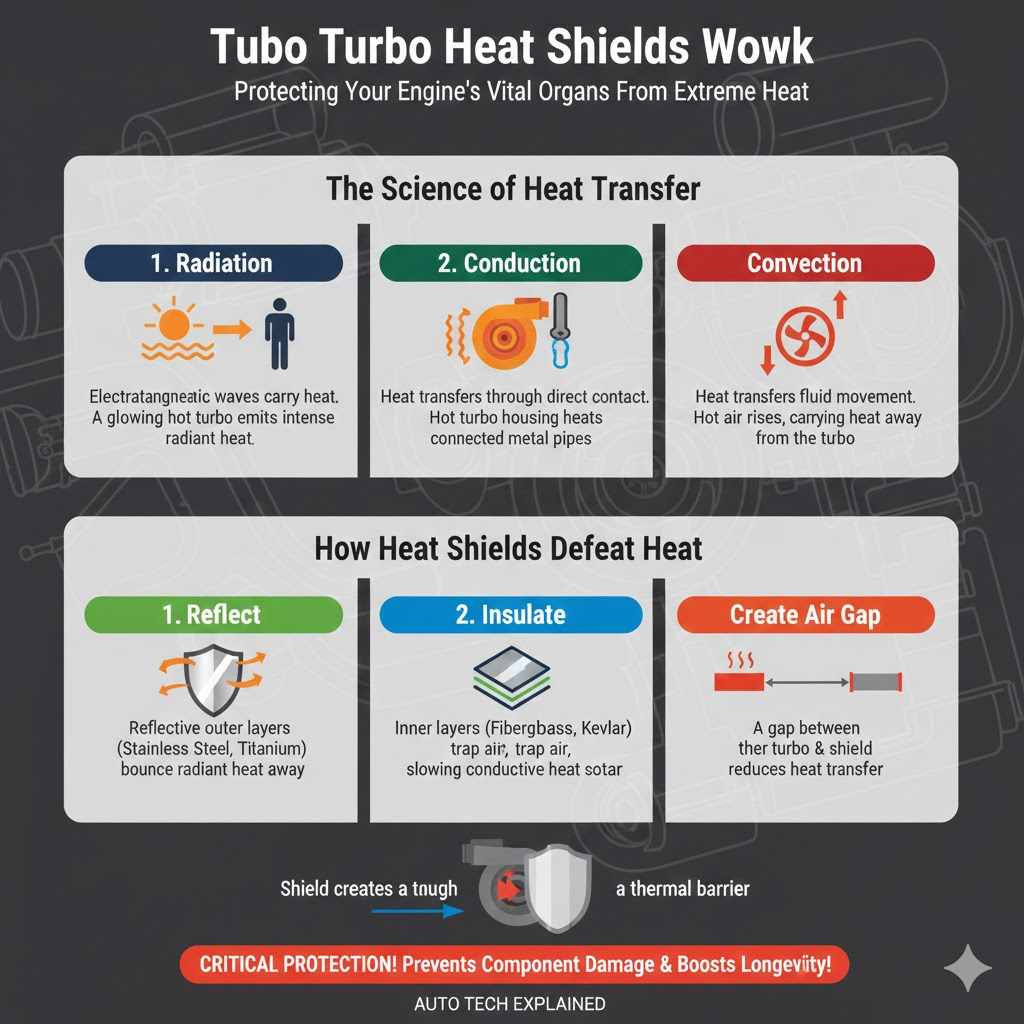
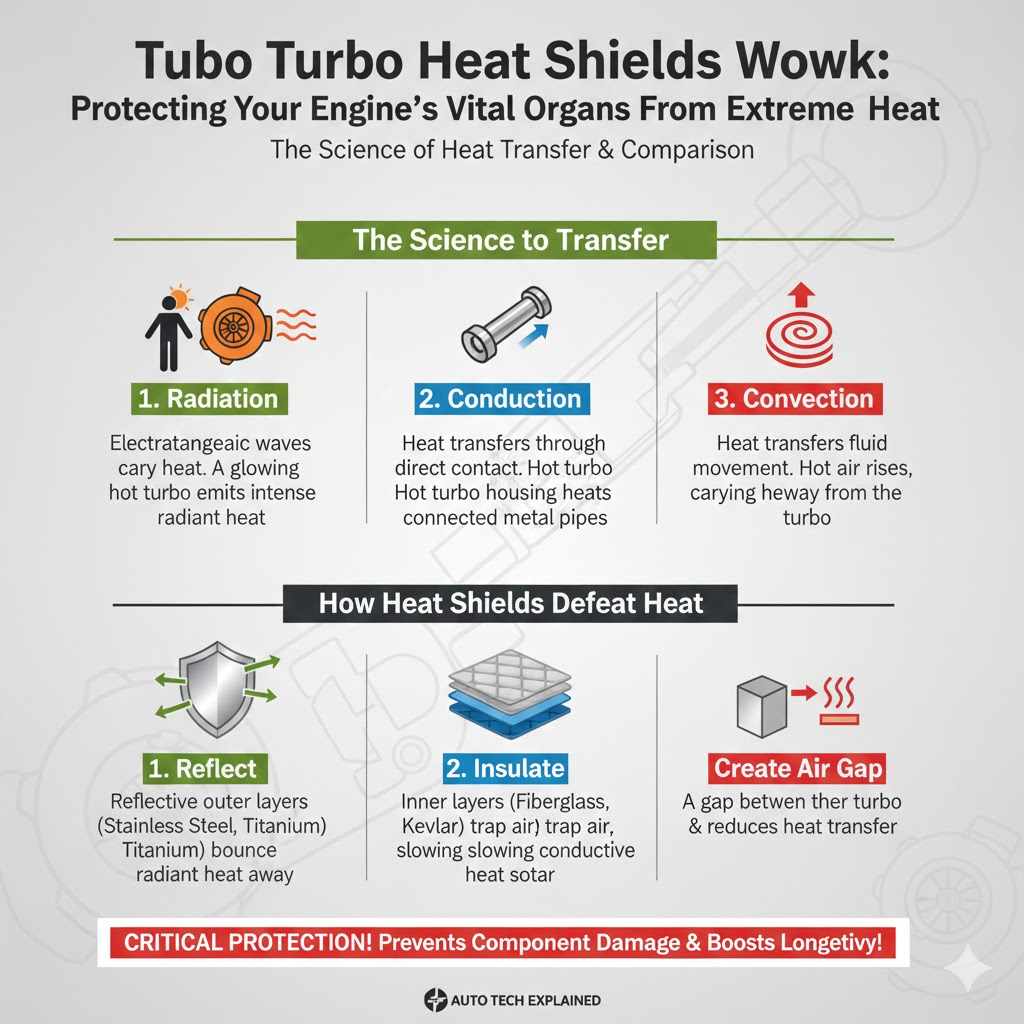
Heat can be transferred in three main ways: conduction, convection, and radiation. Turbochargers generate heat primarily through exhaust gases, leading to significant radiant heat. Understanding these transfer methods helps explain why heat shields are effective.
Conduction is the transfer of heat through direct contact. When hot engine parts touch cooler parts, heat moves. Convection is heat transfer through the movement of fluids, like air or coolant.
Hot air rises, carrying heat away. Radiation is the transfer of heat through electromagnetic waves, like the heat you feel from the sun. Turbochargers emit a lot of heat this way.
Heat shields primarily combat radiant heat. They are often made with reflective surfaces to bounce this heat away. Some shields also incorporate insulating materials to slow down conduction.
The goal is to create a barrier that keeps the intense heat of the turbo from reaching delicate engine parts. This is vital for preventing premature wear and failure.
The Real Performance Impact Of Turbo Heat Shields
The question of whether turbo heat shields truly impact performance is a common one. While their primary role is protection, this protection can indirectly lead to better performance. By preventing heat-related damage, they help maintain engine efficiency and reliability.
This section will look at the direct and indirect effects of heat shields on your car’s performance. We’ll discuss how they can help keep components cooler, which in turn can affect engine power and longevity. We will also address common myths and provide real-world examples to illustrate their effectiveness.
Preventing Heat Soak
Heat soak is a phenomenon where engine components absorb heat from the turbocharger, leading to increased intake air temperatures. Cooler intake air is denser, meaning more oxygen can enter the engine, leading to better combustion and more power.
A heat shield can help reduce heat soak by blocking the radiant heat from the turbo. This keeps the intake manifold and intercooler piping cooler. This directly translates to denser air entering the engine.
For example, a study by an automotive performance company found that installing a turbo heat shield reduced intake air temperatures by an average of 15 degrees Fahrenheit under load. This led to a measurable increase in horsepower, particularly during sustained high-performance driving.
Protecting Engine Components
The extreme heat from a turbocharger can degrade rubber hoses, plastic connectors, and wiring insulation over time. This can lead to leaks, electrical failures, and ultimately, costly repairs.
Heat shields act as a protective barrier, shielding these sensitive parts from direct heat exposure. This extends their lifespan and reduces the risk of sudden failures. A hose that might last only a year near a hot turbo could last many years when properly shielded.
Consider a scenario where a brake line runs close to a turbocharger. Without a heat shield, the brake fluid could overheat, reducing braking performance. With a heat shield, the brake line remains at a safer temperature, ensuring reliable braking even under demanding conditions.
Efficiency and Longevity
By keeping the engine bay cooler, heat shields can contribute to overall engine efficiency and longevity. Less heat stress on components means they are less likely to fail prematurely.
This can lead to more consistent performance over time. Engines that are better protected from heat often run more smoothly and require fewer repairs. This saves money and keeps your car on the road longer.
A common observation among enthusiasts is that engines with well-protected turbos tend to have a longer service life. This is because the critical parts are not subjected to constant extreme heat cycles.
When Are Turbo Heat Shields Most Beneficial?
Not every car or driving situation requires a turbo heat shield. However, under certain conditions, their benefits become much more pronounced. Understanding these scenarios will help you decide if a heat shield is the right choice for you.
This part of our discussion will focus on the specific circumstances where turbo heat shields offer the greatest advantage. We will explore different driving styles, vehicle types, and environmental factors that make these shields particularly valuable. By the end, you’ll know if your car could benefit from one.
High-Performance Driving
For drivers who frequently push their vehicles to the limit, such as on race tracks or during spirited road driving, managing turbo heat is crucial. Sustained high engine loads generate a tremendous amount of heat.
In these situations, the difference between a shielded and unshielded turbo can be significant. A heat shield helps maintain optimal intake temperatures and protects surrounding components from heat damage during long periods of hard acceleration.
Think about track days. Cars are driven at redline for extended periods. The turbocharger is working overtime, generating extreme heat.
Without a heat shield, components like wiring harnesses or coolant hoses near the turbo are under immense thermal stress. This can lead to failure at the worst possible moment.
Modified Turbo Systems
Cars with modified turbo systems often generate even more heat than stock setups. Larger turbos, higher boost pressures, and performance tuning all contribute to increased thermal loads.
These modifications can make a heat shield not just beneficial, but essential. The added heat from an upgraded turbo system poses a greater risk to engine components, making a robust heat shield a critical protective measure.
Consider a car that has had its turbocharger upgraded to a larger unit for more power. This bigger turbo spins faster and hotter. The original heat shielding, if any, might not be sufficient.
Installing a custom or high-performance heat shield becomes a necessity to protect the engine bay.
Hot Climates and Daily Driving
Even for daily drivers in hot climates, a turbo heat shield can offer advantages. In ambient temperatures of 90 degrees Fahrenheit or higher, the engine bay already starts at a high temperature.
Adding the heat from a turbocharger can push sensitive components closer to their breaking point. A heat shield can help mitigate this, keeping intake air temperatures more stable and reducing stress on parts. This can lead to better fuel economy and more reliable operation in extreme heat.
Imagine driving in Phoenix during the summer. The car sits in the sun, and the engine bay gets very hot. When you accelerate, the turbo adds its heat to this already hot environment.
A heat shield acts as an extra layer of defense, helping to keep essential parts cooler and prevent issues.
Common Misconceptions About Turbo Heat Shields
Like many automotive modifications, turbo heat shields are subject to various myths and misconceptions. Some people believe they offer massive horsepower gains, while others dismiss them as useless. Understanding the truth behind these ideas is important.
In this segment, we will debunk some of the most common myths surrounding turbo heat shields. We will clarify what they do and do not do, helping you make an informed decision based on facts, not hearsay. This will help you avoid common pitfalls and understand their true value.
Myth 1 Turbo Heat Shields Add Horsepower
This is a significant misconception. Turbo heat shields are primarily protective devices. They do not directly add horsepower.
Any performance increase is usually an indirect result of preventing heat-related power loss or component failure.
They help maintain optimal engine conditions by preventing heat soak, which can lead to slightly denser intake air. This slight improvement in air density might result in a very small horsepower gain, but it’s not their main function. Their main job is protection.
For instance, if an engine’s performance drops significantly due to high intake air temperatures caused by an unshielded turbo, then installing a heat shield could restore that lost performance. This isn’t adding new power, but preventing the loss of existing power.
Myth 2 They Are Only For Race Cars
While race cars certainly benefit greatly from turbo heat shields due to extreme operating conditions, they are not exclusively for track use. As discussed earlier, daily drivers in hot climates or vehicles with modified turbo systems can also see significant benefits.
Protecting essential engine components from heat damage is important for all vehicles, not just those driven at their limit. A heat shield can extend the life of various parts and prevent unexpected failures in everyday driving.
Consider a commuter car with a small turbo. Even during normal driving, the turbo gets hot. If it’s located near delicate wiring or a plastic coolant reservoir, a heat shield provides valuable protection.
It’s about preventing future problems.
Myth 3 All Heat Shields Are The Same
The effectiveness of a heat shield can vary greatly depending on its design, materials, and how well it fits the specific turbocharger and engine bay. A cheap, poorly fitting shield might offer minimal protection.
High-quality heat shields are made from robust materials and engineered to provide optimal coverage and heat reflection. The best shields are often vehicle-specific or designed for particular turbo models to ensure a proper seal and maximum effectiveness.
A universal heat shield might block some heat, but a custom-designed shield that conforms perfectly to the turbocharger and surrounding components will offer superior protection. The gaps in a universal shield can allow heat to escape.
Myth 4 They Overheat The Turbo Itself
There’s a concern that wrapping a turbo too tightly or using the wrong materials could trap too much heat, causing the turbo itself to overheat. This is generally not the case with properly designed and installed heat shields.
Good heat shields are designed to reflect heat away from the turbo and surrounding components, not to trap it. They allow for airflow around the turbo to cool it naturally. The materials used are chosen for their heat resistance and ability to manage thermal energy.
In fact, some exhaust manifold heat shields are designed to help the manifold and turbocharger reach optimal operating temperatures faster. This can lead to quicker spool-up times. So, rather than overheating, they can help manage temperature more effectively.
Installing And Maintaining Your Turbo Heat Shield
Once you decide a turbo heat shield is right for your vehicle, proper installation and maintenance are key to its effectiveness. A poorly installed shield can be ineffective or even cause problems. Regular checks will ensure it continues to protect your engine.
This section will guide you through the process of installing and caring for your turbo heat shield. We will cover basic installation steps, common challenges, and what to look for during routine inspections. Following these steps will maximize the benefits and lifespan of your heat shield.
Installation Process
Installation can range from very simple to moderately complex depending on the type of shield. Many heat shields are designed to bolt on directly to existing mounting points on the turbocharger or exhaust manifold. Others might require custom brackets or securing with heat-resistant ties.
Always refer to the manufacturer’s instructions for your specific heat shield. Ensure all fasteners are securely tightened, but be careful not to overtighten, which could strip threads. Make sure the shield doesn’t rub against any moving parts or electrical components.
A common installation might involve removing a few bolts, placing the shield, and re-installing the bolts. For wrap-style shields, it’s about carefully wrapping the material around the hot sections and securing it with the provided clamps or ties.
Sample Installation Scenario
- Gather your tools. This usually includes wrenches or socket sets appropriate for your vehicle’s bolts.
- Identify the mounting points for the heat shield. These are often located on the turbocharger housing or the exhaust manifold.
- Carefully position the heat shield against the turbocharger or manifold.
- Insert and tighten the mounting bolts. Ensure the shield is snug and stable.
- Check for any clearance issues with other engine components. Make sure nothing is rubbing against the shield.
- Start the engine and listen for any unusual noises. Inspect the area after a short drive to ensure everything is secure and no heat is escaping unexpectedly.
Maintenance Checks
Regular visual inspections are crucial for ensuring your heat shield remains effective. Over time, vibrations or extreme heat can cause fasteners to loosen or materials to degrade.
Check the heat shield periodically for any signs of damage, such as cracks, tears, or warping. Also, inspect the mounting hardware to ensure it is still secure. If you notice any issues, address them promptly.
A quick check can be done during routine oil changes or other under-hood inspections. Look for any signs of discoloration on the shield itself, which might indicate excessive heat build-up or a breach in its protective layer.
- Inspect mounting hardware for tightness. Vibrations can loosen bolts over time. Ensure all clamps or ties are secure and not coming undone.
- Look for any signs of wear or damage. This includes cracks, tears, or areas where the insulating material is deteriorating. Damaged shields are less effective.
- Check for any rubbing or contact with other engine parts. The shield should not be touching wires, hoses, or rotating components, as this can cause damage to either the shield or the part it touches.
- Ensure there are no gaps where excessive heat can escape. Gaps can significantly reduce the effectiveness of the shield. Make sure any seals or gaskets are intact.
Comparing Different Types Of Heat Shields
When looking at turbo heat shields, you’ll find a variety of designs and materials. Each type has its own strengths and weaknesses, making some more suitable for certain applications than others. Choosing the right one depends on your specific needs.
This section will compare different types of turbo heat shields available on the market. We will look at their construction, primary uses, and typical performance characteristics. This comparison will help you understand the options and make an informed choice for your vehicle.
| Type Of Heat Shield | Primary Material | Form Factor | Pros | Cons | Best For |
|---|---|---|---|---|---|
| Exhaust Manifold Heat Shield | Stainless Steel, Titanium | Rigid, wraps manifold | Excellent heat reflection, durable | Can be expensive, requires specific fit | High-performance, racing |
| Turbo Blanket | Fiberglass, Kevlar, Ceramic | Flexible wrap, covers turbo | Good insulation, easy to install | Can trap some heat, longevity varies | Daily drivers, moderate performance |
| Heat Shield Mat | Fiberglass, Ceramic Fiber | Flexible mat, can be cut to size | Versatile, good for custom applications | May require adhesive or ties for mounting | Custom builds, protecting specific areas |
| Heat Shield Spray/Coating | Ceramic, Silicone | Liquid applied | Easy application, covers irregular shapes | Durability depends on product quality | Minor protection, supplementary |
Rigid Shields vs. Flexible Wraps
Rigid heat shields, often made from metal like stainless steel, are typically bolted directly to the exhaust manifold or turbocharger housing. They offer robust protection and excellent heat reflection. However, they can be heavier and more expensive.
Flexible wraps, such as turbo blankets made from fiberglass or ceramic materials, are easier to install and conform to the shape of the turbocharger. They provide good insulation but might not reflect heat as effectively as metal shields. They can also be more prone to wear and tear over time.
Scenario Comparison
- Scenario 1: Track Car with High Boost
A race car running very high boost pressures will generate extreme heat. A rigid stainless steel or titanium heat shield on the exhaust manifold and turbocharger is ideal. It offers the highest level of heat reflection and durability under extreme conditions. - Scenario 2: Daily Driver with Stock Turbo
A daily driver with a standard turbocharger might benefit from a flexible turbo blanket. It’s easier to install, less expensive, and provides sufficient insulation to protect nearby components. It also helps the turbo reach optimal temperature faster for better efficiency.
Material Differences
The material of the heat shield significantly impacts its performance. Stainless steel and titanium are chosen for their high-temperature resistance and durability in rigid shields. Fiberglass and ceramic fibers are used in flexible wraps for their insulating properties.
Each material has different heat tolerance levels and longevity. For instance, a ceramic fiber blanket might withstand higher temperatures than a standard fiberglass wrap. Choosing the right material ensures the shield can handle the heat it’s expected to encounter.
Frequently Asked Questions
Question: Do turbo heat shields actually make my car faster
Answer: Turbo heat shields do not directly add horsepower. They protect engine components from extreme heat. Any performance gain is usually due to preventing heat-related power loss by keeping intake air cooler.
Question: How often should I check my turbo heat shield
Answer: It’s a good idea to visually inspect your turbo heat shield during routine maintenance, like oil changes. Look for any signs of damage, looseness, or wear.
Question: Can I install a heat shield myself
Answer: Many heat shields are designed for DIY installation and come with instructions. However, some may require more specialized tools or knowledge. Always follow the manufacturer’s guidelines.
Question: What happens if I don’t use a turbo heat shield
Answer: Without a heat shield, components near your turbocharger are exposed to extreme heat. This can lead to premature wear, damage to hoses and wiring, and potential engine failures over time.
Question: Are turbo blankets better than metal shields
Answer: It depends on the application. Metal shields offer superior heat reflection and durability for very high-heat situations. Turbo blankets are easier to install and offer good insulation for daily drivers and less extreme conditions.
Summary
So, do turbo heat shields really work? The answer is a definitive yes. They protect vital engine parts from damaging heat, maintain cooler intake air, and contribute to overall engine health.
From daily drivers to track cars, these shields offer valuable benefits by preventing heat soak and extending component life.
Related pick: Check today's price on Amazon