Heat Shield Rattle Causes and Fixes
A heat shield rattle usually points to loose hardware if the noise changes with RPM or stops when you tap the shield. Rust failure or exhaust damage is more likely if the shield hangs, touches the pipe, or the noise becomes constant. Ignoring it can lead to louder vibration, melted underbody parts, broken exhaust mounts, or a shield falling onto the road. This guide matches the rattle pattern to the likely cause and the right repair.
What you’ll need


- Work gloves and safety glasses
- Wheel chocks
- Floor jack and jack stands, if you need more access
- Flashlight or shop light
- Socket set and ratchet
- Screwdrivers and pliers
- Worm gear hose clamps, preferably in more than one size
- Steel wool or another void filler for a temporary gap fill
- Replacement bolts, screws, clips, or washers as needed
- Marker or paint pen to mark loose contact points
- Welder or shop repair access if the shield needs permanent reattachment
How can you tell if the rattle is the heat shield or the exhaust pipe?
A heat shield rattle usually changes with idle vibration or a narrow RPM band. An exhaust pipe issue is more likely to stay audible across more driving conditions. If the noise is tied to bumps, tapping the shield, or a thin metal buzz near the catalytic converter or muffler, the shield is the better first suspect.
Check the pattern before you crawl under it
- Start the engine and listen at idle, then hold a steady 1,500 to 2,000 RPM.
- Lightly tap along the exhaust pipes and shield with a rubber mallet or gloved hand.
- Drive slowly over a rough patch only if the noise is safe to repeat and you have help watching from outside.
- Look near the catalytic converter, muffler, exhaust pipe, and nearby hangers for movement, missing hardware, or contact marks.
Say your Subaru-style crossover makes a metallic buzz only at idle in Drive, then quiets as soon as the RPM rises. That pattern points more toward a loose shield or bracket than a pipe crack, especially if tapping the shield changes the sound immediately.
Heat shield rattle fix selector
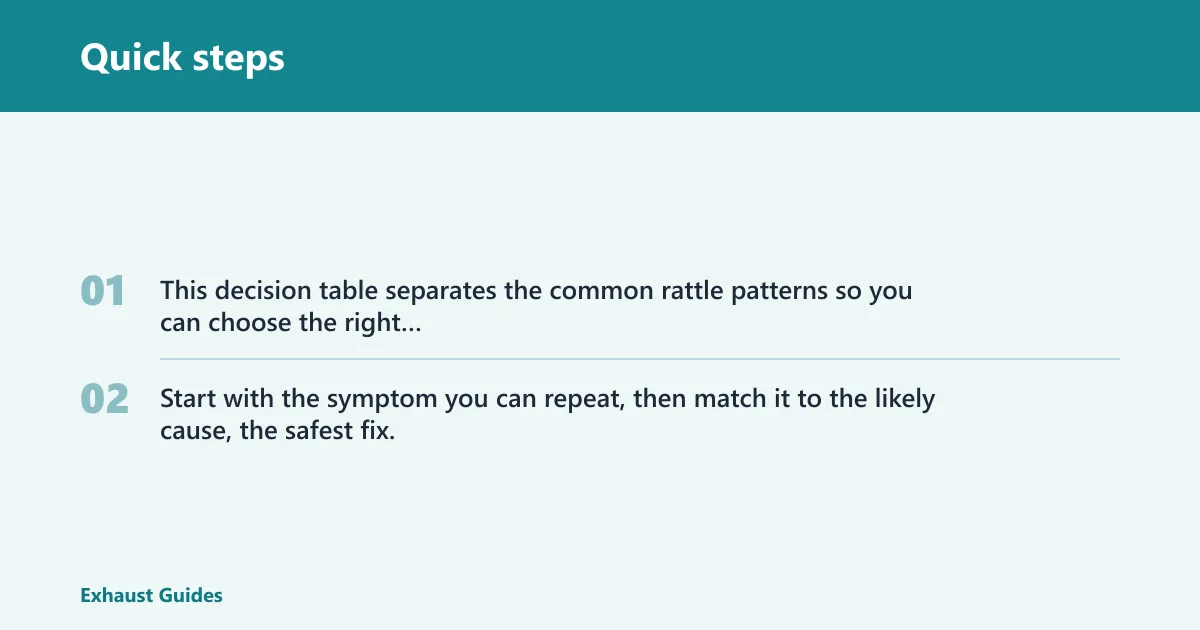
This decision table separates the common rattle patterns so you can choose the right repair the first time. Start with the symptom you can repeat, then match it to the likely cause, the safest fix, and whether the shield is worth saving.
| Symptom pattern | Likely cause | Safe DIY fix | When to replace | Estimated repair durability |
|---|---|---|---|---|
| Idle-only rattle that fades above idle | Loose hardware or shield edge excited by RPM vibration | Tighten or replace fasteners; add a hose clamp if the shield still moves | Replace if the mounting holes are torn out | Moderate if the shield is still solid |
| Bump-triggered rattle on rough pavement | Loose shield section or missing clip | Re-secure the shield and check adjacent hangers | Replace if the shield flexes freely or cracks spread | Moderate to good |
| Rusted-through edge or flaking metal | Corrosion has weakened the shield | Temporary clamp and void filler only, if the rest is still intact | Replace when the edge crumbles or the clamp cannot grip sound metal | Poor if corrosion is advanced |
| Missing fastener or empty mounting hole | Lost bolt, screw, clip, or washer | Install correct mounting hardware and recheck for play | Replace if the shield hole is elongated or cracked | Good if the shield metal is still strong |
| Shield touching the pipe | Misalignment, bent shield, or sag from rust | Reposition the shield and isolate the gap with clamp pressure | Replace if the shield cannot hold clearance | Short to moderate, depending on rust |
| Cracked exhaust mistaken for shield noise | Exhaust pipe damage, hole, or broken weld | Do not clamp the shield first; inspect the pipe and hanger system | Repair the pipe or muffler section instead of the shield | N/A until the exhaust damage is fixed |
| Catalytic converter area buzz at specific RPM | Shield around the catalytic converter loosened by rust or vibration | Clamp the shield if the wrap area is still intact | Replace if the shield wraps are too thin or distorted | Moderate |
How do you fix a rattling heat shield?
Start with the least invasive repair that matches the symptom. Tighten or replace missing mounting hardware first, then use hose clamps on loose sections, then move to welding or replacement if rust has made the shield too thin to hold shape. A loose shield is often minor, but a shield that has lost structure usually needs a permanent fix.
Follow the repair ladder
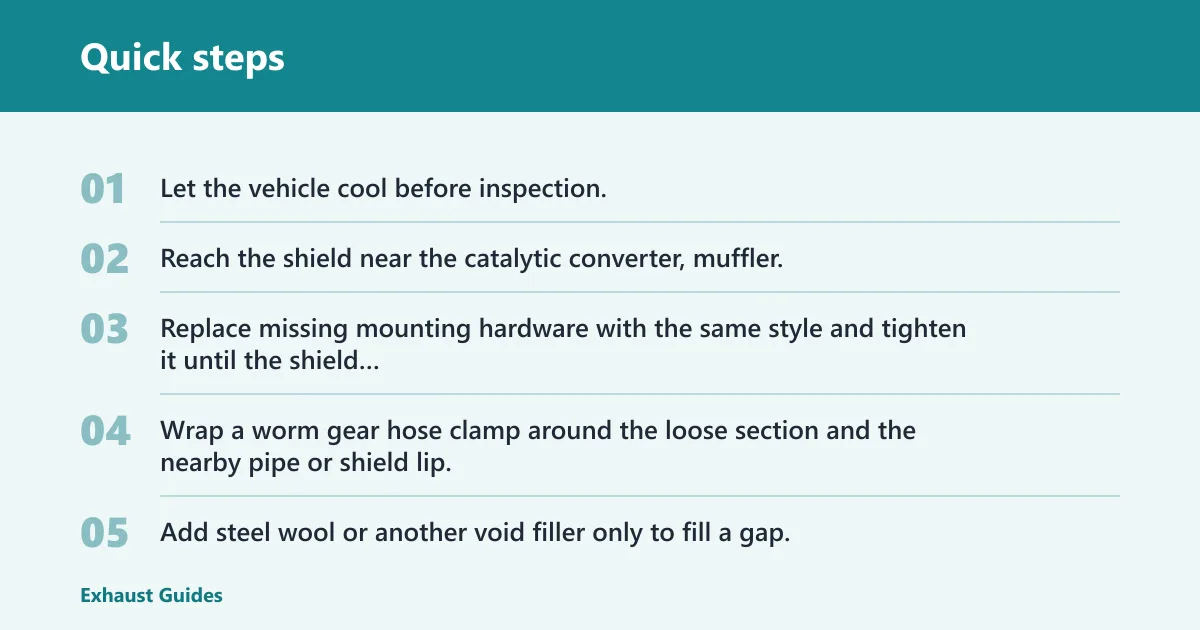
- Let the vehicle cool before inspection.
- Reach the shield near the catalytic converter, muffler, or exhaust pipe and check for missing bolts, screws, clips, or washers.
- Replace missing mounting hardware with the same style and tighten it until the shield stops moving.
- Wrap a worm gear hose clamp around the loose section and the nearby pipe or shield lip; use 2 clamps or more if the wrap area is wide.
- Add steel wool or another void filler only to fill a gap, then clamp over it for a short-term noise fix.
- Weld the shield back in place if the metal around the mount is still solid and the surrounding parts can be protected from heat.
- Replace the shield if corrosion, cracks, or torn holes keep the repair from holding.
Picture a Tacoma that rattles only when you tap the shield by the catalytic converter, but the shield still has enough intact lip for a clamp to grip. That is a clamp-first repair. If the lip crumbles in your fingers, skip the clamp and move to replacement.
How do I fix heat shield rattle without replacing it?
You can often stop the noise without replacement if the shield still has enough sound metal for hardware to hold. Hose clamps, a wire tie as a pinch fix, or a small void fill can work when the shield is loose but not rotten through. Those fixes are temporary if rust has already eaten the edge.
Use the least permanent fix that fits the damage
- Clamp the loose section with a worm gear hose clamp and retest the rattle at idle.
- If the shield is wide, add a second clamp so pressure is spread over the wrap area.
- If there is a gap between the shield and pipe, pack a little steel wool into the void before clamping.
- Recheck after a short drive and retighten if the clamp shifts.
A common first-timer mistake is treating a clamp fix as permanent on a shield that is already thin and flaky. The clamp may stop the sound for weeks or months, but it will not restore metal that has rusted away.
Is it safe to drive with a loose heat shield?
A rattling heat shield is usually more annoying than dangerous, but the answer changes if the shield is hanging, contacting the pipe, or exposing nearby parts to excess heat. Removing the shield is discouraged because it protects components around hot exhaust parts, and a loose one can fall or rub through nearby material.
Decide whether the risk has moved past nuisance
- Stop driving and inspect immediately if the shield is dragging, smoking, or touching the exhaust pipe.
- Check for hot smell, melted plastic, or fresh contact marks on nearby panels.
- Look for missing fasteners, cracked mounts, or a shield edge that can swing freely.
- If the shield is only buzzing at idle and still mounted, plan a repair soon rather than an emergency tow.
Common mistakes
Many repairs fail because the exhaust system is not checked first. A cracked exhaust pipe, broken hanger, or damaged catalytic converter area can sound like a shield even when the shield is not the source.
- Clamping a shield that is too thin to hold pressure
- Ignoring missing hardware and only squeezing the outer edge
- Skipping the pipe, hanger, and muffler inspection
- Using welding too close to heat-sensitive nearby parts
- Calling a temporary fix permanent when rust is still spreading
If that didn’t work, try this next
- Move from clamp repair to hardware replacement if the shield still shifts.
- Move from hardware replacement to welding if the mount is intact but the shield still rattles.
- Move from welding to full shield replacement if rust has thinned the metal or cracked the attachment points.
- Move from shield repair to exhaust repair if the pipe itself is cracked or chipped.
How much does heat shield rattle repair cost?
DIY repairs are usually cheap when the problem is loose hardware or a clamp-only fix, while welding and replacement cost more because they take more labor and parts. A realistic repair range is about 150-300 dollars when a shop handles the job, but price changes with rust level, access, and whether the exhaust itself is damaged.
What changes the price
- Missing fasteners cost less than replacing a rusted shield.
- A clamp fix costs less than welding because it needs fewer labor hours.
- A shield near the catalytic converter can cost more if access is tight.
- Exhaust pipe damage raises cost because the shield is no longer the only repair.
What causes a heat shield to rattle at idle?
Idle vibration often excites a loose heat shield because the engine shakes at a low, steady frequency. Rust, missing hardware, and a shield that barely touches the pipe are common reasons the noise shows up at idle but fades at higher RPM. That pattern points first to looseness, not a major exhaust failure.
Why does my heat shield rattle when accelerating?
Acceleration can change engine and exhaust movement enough to make a loose shield shift, touch the pipe, or buzz against another bracket. If the rattle appears only under load, check for a shield section that moves when the engine torques over, along with broken clips, loose clamps, or a cracked mount near the catalytic converter.
Frequently asked questions
Is a loose heat shield dangerous to drive with?
It is often a nuisance more than an emergency, but the risk rises if the shield hangs low, touches the pipe, or exposes nearby parts to heat. Stop driving if you see smoke, smell melting material, or hear the shield scraping. A missing shield is a different problem and should not be ignored.
Can I use hose clamps to stop heat shield rattle?
Yes. Hose clamps are commonly used as a quick fix, and larger wrap areas may need about 2 clamps or more. They work best when the shield still has sound metal and the problem is looseness rather than deep rust. If the metal tears or flexes too much, replacement is the better call.