Do Heat Shields Really Work? Investigating Performance
Figuring out if Do Heat Shields Really Work? Tested Results can be tricky. It’s something many people wonder about, especially when trying to protect things from high temperatures. You might feel a little lost at first, but don’t worry! This guide will break down everything in simple steps. We’ll explore the science, the materials, and what to expect when it comes to heat protection. Let’s get started and see what we can discover!

Bernzomatic
Bernzomatic Heat Shield | FormFoil 12x12" |…
- FormFoil Technology: With its unique moldable design, Bernzomatic Heat and Flame Shield is the ideal tool for wrapping around item…
- Heat Transfer Resistant: Mitigates heat transfer on average 3 times better when tested against competitors; withstands constant te…
- Reusable and Durable: Bernzomatic Heat and Flame Shield retains structure and remains smoke and odor free when tested against comp…
As an Amazon Associate I earn from qualifying purchases.
Shields and Their Function
Heat shields play a vital role in protecting various objects and systems from excessive heat. They are barriers that prevent heat from transferring directly to a sensitive component or area. The design and materials used in these shields are critical to their effectiveness. Heat shields are frequently utilized in automotive applications to safeguard engine components and in aerospace applications to protect spacecraft during atmospheric reentry. Understanding how they function is the initial stage in determining their efficiency.
Heat Transfer Basics
Heat transfer happens in three main ways: conduction, convection, and radiation. Conduction is heat moving through a solid, like a metal pan getting hot on a stove. Convection involves heat transfer through fluids (liquids or gases), such as air circulating around an object. Radiation is heat traveling through space as electromagnetic waves, like the sun’s rays. Heat shields are created to manage these different forms of heat transfer, minimizing the amount of heat that reaches a protected object. They often employ methods to reflect, absorb, or dissipate heat to ensure protection.
- Conduction: Heat moves through materials. A heat shield might use materials with low thermal conductivity to slow down heat transfer by conduction. Think of it like a wall that doesn’t let heat pass easily.
- Convection: Heat moves through fluids. Heat shields might be designed with airflow in mind to dissipate heat and prevent it from building up around protected components. It’s like having a fan to keep things cool.
- Radiation: Heat travels as waves. Heat shields frequently use reflective surfaces to deflect radiant heat, such as from the sun or a hot engine. Imagine a mirror bouncing back the sun’s rays.
- Material Properties: The materials used in a heat shield affect its ability to manage heat transfer. This includes the material’s ability to resist temperature changes and its ability to reflect radiation.
Materials Used
Various materials are employed in the construction of heat shields. The choice of material depends on the application’s specific requirements, including temperature range, the nature of the heat source, and the environment. Some commonly used materials include ceramics, metals, and composites. These materials are selected for their unique properties, such as high melting points, low thermal conductivity, and the ability to withstand extreme conditions. The combination of materials is often used in a layered structure to optimize performance. Careful consideration is given to the thermal expansion properties to prevent the shield from warping or failing under high temperatures.
- Ceramics: These materials are highly resistant to heat and can withstand extreme temperatures. Ceramic tiles are often used on spacecraft to shield against the heat of atmospheric reentry.
- Metals: Metals like stainless steel or aluminum are utilized when good thermal conductivity is beneficial for dissipating heat. These are often used in automotive heat shields.
- Composites: Composites, created by combining different materials, can offer a balance of properties. They might combine a heat-resistant ceramic with a strong metal framework.
- Coatings: Some heat shields have special coatings to improve their ability to reflect radiation. These coatings can significantly boost the shield’s efficiency.

How Heat Shields Are Tested
To accurately assess whether Do Heat Shields Really Work? Tested Results, several methods and instruments are utilized. This usually involves exposing the shield to a controlled heat source and measuring the temperatures on both sides. These tests can be performed in laboratories under simulated conditions or in real-world scenarios. The data gathered provides insights into how well the shield prevents heat from reaching the protected object. Various factors are taken into consideration, including the heat source’s intensity, exposure duration, and the type of material. These tests help determine the shield’s efficiency.
Testing Methods
Testing involves a range of methods tailored to assess performance. These include both laboratory and field tests. Laboratory testing typically involves using calibrated heat sources, such as furnaces or infrared lamps, to simulate real-world conditions. Temperature sensors are strategically positioned to monitor the heat flow. Field testing can involve placing shields in real-world environments like a car engine compartment. Data loggers are used to record the temperature changes over time. Comparative studies might involve testing different types of heat shields under identical circumstances to assess their performance relative to each other.
- Laboratory Testing: Controlled environments are used, allowing precise control over heat sources and measurement parameters. This offers a repeatable and systematic approach.
- Field Testing: Real-world scenarios are used, such as testing heat shields on cars under operational conditions. This provides data about the shield’s performance under actual circumstances.
- Thermal Imaging: Specialized cameras are used to visualize temperature distribution across the shield’s surface. This can provide valuable insights into its effectiveness.
- Accelerated Testing: Shields are exposed to extreme conditions for brief periods to assess their durability and resistance to wear and tear. This helps determine how long the shield will last.
Data Analysis
The information acquired during testing is carefully analyzed to determine the shield’s efficiency. Key metrics include the temperature difference between the shielded and unshielded surfaces, the rate of heat transfer, and the shield’s overall thermal resistance. Graphs and charts are often used to represent the data, making it easier to see how the shield functions under different circumstances. Numerical values help to quantify the shield’s performance, allowing for direct comparisons between different materials and designs. The results help assess whether the shield is meeting the performance requirements.
- Temperature Readings: Thermocouples and other temperature sensors are used to measure the temperature on both sides of the heat shield.
- Heat Flux Measurement: This gauges the rate at which heat is passing through the shield, giving an idea of its effectiveness.
- Thermal Resistance Calculation: This indicates the shield’s ability to resist heat flow, which is crucial for determining its efficiency.
- Comparative Analysis: Comparing data from different shields allows for a straightforward assessment of their relative performances.
Real-World Testing and Results
Examining real-world examples and testing results provides a clearer picture of whether Do Heat Shields Really Work? Tested Results. Practical applications of heat shields can be observed in various sectors, from automotive to aerospace. These tests frequently evaluate the shields’ effectiveness under specific operational conditions. These real-world scenarios reveal the practical benefits of using heat shields. Practical results highlight the importance of testing and selecting the right shield.
Automotive Examples
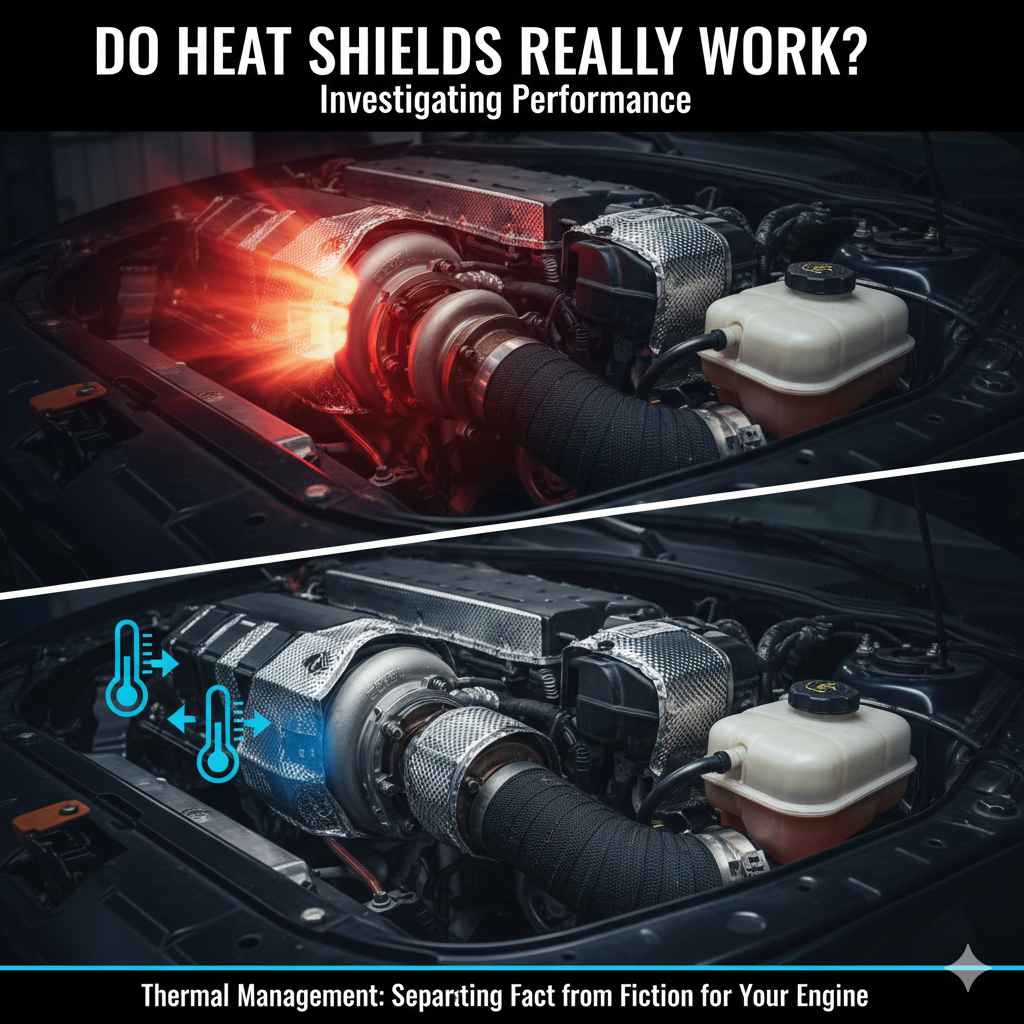
In the automotive industry, heat shields are used to protect sensitive components from the high temperatures produced by the engine and exhaust system. They are often placed around the catalytic converter, exhaust manifolds, and turbochargers. Engine compartment temperatures can be extremely high, and heat shields help maintain lower temperatures in the surrounding components. Testing has shown that the installation of heat shields can significantly reduce under-hood temperatures, preventing damage to vital components like wiring and plastic parts. They also contribute to enhancing the efficiency and longevity of automotive systems.
- Catalytic Converter Shielding: Heat shields reduce the risk of heat-related damage to nearby components, increasing the lifespan of items.
- Exhaust Manifold Protection: These shields decrease radiant heat, contributing to increased engine performance.
- Under-Hood Temperature Reduction: Heat shields protect sensitive parts like the battery and electronics from excessive temperatures.
Aerospace Applications
Heat shields play a crucial function in spacecraft and aircraft, particularly during atmospheric reentry and high-speed flight. During reentry, the friction between the spacecraft and the atmosphere produces extreme heat, which can quickly destroy unprotected surfaces. Heat shields, frequently made of ablative materials, are created to withstand these harsh conditions. These materials gradually erode or burn away, carrying heat away from the spacecraft. This process prevents the interior of the spacecraft from reaching dangerous temperatures. This allows spacecraft to endure the harsh conditions of high-speed flight and atmospheric reentry. The success of heat shields is essential to the safety and success of aerospace missions.
- Reentry Protection: Shields protect spacecraft from extreme temperatures.
- High-Speed Flight: Heat shields on aircraft minimize the effects of heat.
- Materials and Design: Specialized materials like ablative coatings.
Factors Affecting Performance
Multiple factors influence how well heat shields function. The choice of materials, the design of the shield, and the environment it operates in all play important roles. Knowing these elements is essential for maximizing the shield’s effectiveness. Optimizing these factors can dramatically improve the shield’s ability to protect the items. Proper planning is critical to the shield’s efficiency.
Material Selection
The materials employed in heat shields have a major impact on their performance. The materials must have particular qualities depending on the application. Materials that have a high heat resistance and low thermal conductivity are used in high-temperature environments. Reflective surfaces are utilized to reflect radiation. The choice of material affects the shield’s ability to block heat. Materials like ceramics and specialized composites are often utilized in high-temperature scenarios, such as aerospace applications. The correct material choice is critical to the shield’s effectiveness and longevity.
- Thermal Conductivity: This influences how easily heat passes through a material. Low conductivity is favorable for heat shields.
- Heat Capacity: High heat capacity materials can absorb a large amount of heat without rapidly increasing in temperature.
- Melting Point: The material should withstand high temperatures without melting or degrading. This is especially important for shields exposed to direct flames.
- Reflectivity: Highly reflective surfaces minimize the absorption of radiation, thus reducing heat transfer.
Design Considerations
The design of a heat shield significantly influences its performance. This involves the form, size, and construction of the shield. The design must take into account the heat source, the item being shielded, and the surrounding environment. Designing the shield for optimal airflow to help dissipate heat is very beneficial. The construction may include multiple layers of materials, each providing different forms of protection, from reflection to absorption. A well-designed heat shield ensures effective heat management. Effective design is key to maximizing protection.
- Shape and Size: The shield’s design must be appropriate for the item it is shielding and the environment in which it will be used.
- Airflow Management: The inclusion of ventilation or airflow channels can help remove heat away from the shielded component.
- Multi-Layer Construction: Combining different materials in layers can offer improved protection against numerous heat transfer techniques.
- Attachment Methods: The shield must be securely fixed to ensure it stays in place and operates as intended.
Limitations of Heat Shields
Although heat shields are extremely effective, they also have limitations. They are not always a perfect solution, and their effectiveness is dependent on several variables. These constraints are essential to consider when determining if and how to utilize heat shields. Knowing the limitations can help in making the best decisions about how to protect objects. Realizing the constraints helps in having realistic expectations about performance.
Material Degradation
The materials used in heat shields can degrade over time and with exposure to high temperatures. This can affect the shield’s efficiency and lifespan. For example, materials exposed to extreme heat for extended periods may experience oxidation, erosion, or even structural changes. To counteract this, shield materials might require specialized coatings or treatments. Shield failure can occur when materials degrade, which reduces the amount of time they are useful. Maintenance and inspections are required to ensure that heat shields continue to function properly.
- Oxidation: High temperatures can cause materials to react with oxygen, leading to corrosion and weakening.
- Erosion: Exposure to high-speed airflow or particle impact can gradually wear away the surface.
- Thermal Stress: Repeated heating and cooling cycles can cause materials to expand and contract, which can cause cracking.
- Ablation: In some cases, the material is designed to burn away slowly, which is an intentional form of degradation to protect the object.
Cost and Weight
Implementing heat shields can add to the weight and expense of a project or system. Materials that are extremely heat-resistant and have complicated designs can be costly. For certain applications, such as aerospace or automotive engineering, the weight of the shield may be a concern. Engineers must consider weight and cost when selecting materials and designs. Balancing cost, weight, and effectiveness is crucial when using heat shields. These trade-offs are important for ensuring efficient and cost-effective heat protection.
- Material Costs: Specialized materials like ceramics and composites are frequently more expensive than standard materials.
- Manufacturing Costs: Creating complex shield designs can increase manufacturing expenses, particularly if specialized equipment is needed.
- Weight Considerations: In applications like aircraft or spacecraft, weight is a critical factor and must be taken into account when designing a shield.
- Installation: Installing a heat shield also adds to the overall expense, particularly if installation is difficult or requires specialized labor.

Frequently Asked Questions
Question: What’s the main function of a heat shield?
Answer: A heat shield’s primary job is to protect objects and systems from extreme heat, like preventing a car’s engine parts from overheating or a spacecraft from burning up during reentry.
Question: What materials are often used in heat shields?
Answer: Common materials include ceramics, metals (like stainless steel), and composites, each chosen for their resistance to heat, reflection capabilities, and ability to withstand high temperatures.
Question: How are heat shields tested to see if they work?
Answer: Testing involves exposing the shield to a heat source, measuring temperatures on both sides, and analyzing how well it blocks or dissipates heat. Methods include lab tests, field tests, and thermal imaging.
Question: What are some limitations of heat shields?
Answer: Heat shields can be limited by material degradation over time, and they can add to the weight and cost of a system. The materials can break down due to heat or wear.
Question: Do heat shields work in all situations?
Answer: Heat shields are effective but aren’t perfect. Their performance depends on factors like material quality, design, and environmental conditions. They work best when correctly designed and maintained.
Final Thoughts
We’ve explored Do Heat Shields Really Work? Tested Results. It’s clear that these shields are a real help. They protect things from heat by blocking, reflecting, or absorbing it. The materials, from ceramics to special metals, play a major role, and design matters too. Tests in the lab and in the real world help us to see how well they work. Although they’re super useful, there are some things to remember, like the materials might wear down, or they can cost extra. If you need to keep something safe from heat, understanding heat shields is key. Explore the different materials, designs, and testing options to find the best fit for your needs. Consider the environment and use case. Keep in mind that a well-designed shield can make a real difference in keeping things safe and in good working order!
Related pick: Check today's price on Amazon