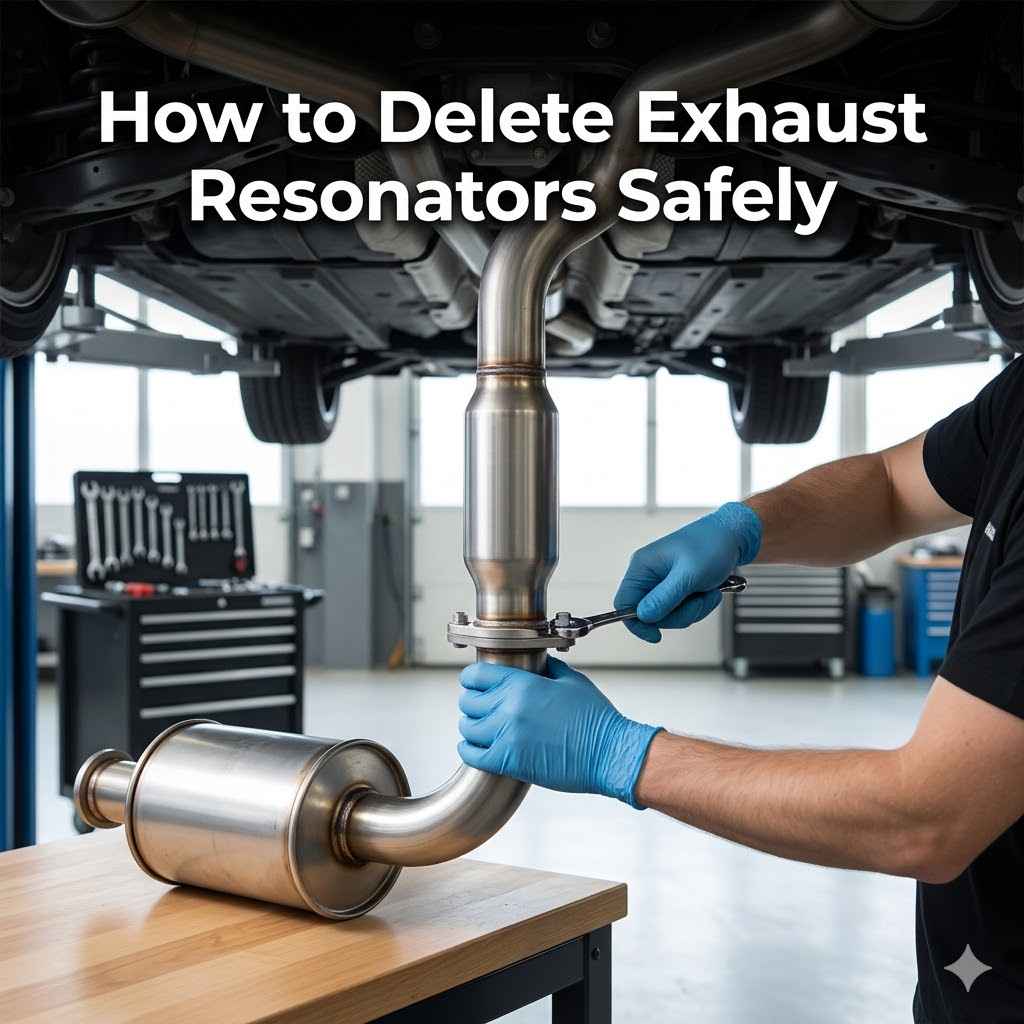
How to Delete Exhaust Resonators Safely

Pacific Performance Engineering
2020-2026 GM 3.0L Duramax Turbo Resonator Delete…
- Simple bolt-on installation, no tuning needed
- Precision-machined billet 6061-T6 aluminum
- Minimizes restriction, enhances airflow
As an Amazon Associate I earn from qualifying purchases.
Thinking about changing your car’s exhaust sound by removing the resonators? It’s a popular modification, but doing it wrong can cause problems. Many folks, especially beginners, wonder about the right way to handle this task.
You might worry about making your car sound bad, or worse, damaging something. Don’t stress! This guide will walk you through How to Delete Exhaust Resonators Safely, step by step, making it easy to understand and follow.
Understanding Exhaust Resonators
Exhaust resonators are an important part of your vehicle’s exhaust system, designed to manage sound. They work by canceling out specific sound frequencies. Think of them like mufflers but focused on specific tones rather than overall noise reduction.
When you remove them, you’ll notice a change in your car’s exhaust note. This section will explain what these parts do and why people choose to modify them. Understanding their function is the first step to safely making any changes.
What Are Exhaust Resonators
Exhaust resonators are often misunderstood as simply extra mufflers. However, their primary role is more refined. They are essentially tuned chambers within the exhaust pipe.
These chambers use sound wave cancellation principles to reduce specific, often droning or unpleasant, exhaust noises. They achieve this by creating internal reflections of sound waves that interfere with and cancel out certain frequencies. Unlike a muffler which aims to reduce overall decibel levels, a resonator targets particular pitches.
This allows manufacturers to create a smoother, more refined engine note for drivers.
The design of a resonator can vary. Some are simple perforated tubes inside a larger casing, while others are more complex Helmholtz resonators, which are tuned to specific frequencies. The placement within the exhaust system is also key; they are typically found between the catalytic converter and the muffler.
Their presence contributes to a quieter, more comfortable driving experience, especially at highway speeds where engine drone can be a significant issue.
Why Remove Resonators
People often decide to remove exhaust resonators to achieve a different sound from their vehicle’s exhaust system. The goal is usually to make the exhaust note deeper, louder, and sportier. For enthusiasts who enjoy the sound of their engine, removing resonators can enhance this auditory experience.
It’s a relatively simple modification that can significantly alter the character of the car’s exhaust. Some also believe it can lead to minor improvements in exhaust flow, though this is debated and often negligible.
This modification is popular among those who want a more aggressive tone without the cost or complexity of a full aftermarket exhaust system. The sound change can be quite noticeable, transforming a quiet commuter car into something with more audible presence. It’s a common entry-level modification for car owners looking to personalize their vehicle’s sound profile.
The allure of a more commanding exhaust note drives many to explore resonator deletion.
Potential Downsides of Resonator Removal
While many enjoy the sound change, removing resonators isn’t without its drawbacks. One of the most common issues is an increase in exhaust drone. This is an unpleasant, constant humming or buzzing sound that can be particularly noticeable at certain engine speeds, often during highway cruising.
This drone can be fatiguing and make the cabin environment uncomfortable for drivers and passengers. It’s a trade-off for a sportier sound that not everyone appreciates.
Another concern is the potential for increased exhaust noise to violate local noise ordinances. Many areas have regulations on how loud vehicles can be, and removing sound-dampening components like resonators could put a vehicle out of compliance. Furthermore, in some cases, removing resonators might affect emissions control systems if they are integrated in a way that impacts exhaust gas flow to other components.
This is less common but something to be aware of.
Preparing for Resonator Removal
Before you start cutting or welding, proper preparation is key to ensuring you can delete exhaust resonators safely. This involves gathering the right tools and materials, understanding your vehicle’s specific exhaust setup, and ensuring you have a safe working environment. Rushing into this process without adequate preparation can lead to mistakes, damage to your vehicle, or even personal injury.
Taking the time to plan and gather everything you need will make the job much smoother and safer.
Essential Tools and Materials
You’ll need a good set of tools for this job. This typically includes a socket set, wrenches, a jack and jack stands for safely lifting your car, safety glasses, and gloves. Depending on your chosen method for removal, you might also need a reciprocating saw with a metal-cutting blade or an angle grinder.
If you’re welding the new pipes in place, you’ll need welding equipment and the expertise to use it safely. You’ll also need replacement exhaust pipe sections to bridge the gap where the resonators were.
For cutting, a reciprocating saw offers good control, while an angle grinder can make quicker work of it but requires more caution. Ensure you have appropriate metal-cutting blades for whichever tool you choose. If you plan to clamp the new pipes in place rather than welding, you’ll need exhaust clamps, often specifically designed for exhaust pipe connections to ensure a tight seal.
Having extra exhaust sealant or high-temperature RTV silicone can also be beneficial for ensuring leak-free connections.
Assessing Your Vehicle’s Exhaust System
Every vehicle’s exhaust system is a bit different. Before you begin, take a close look at how your resonators are integrated. Are they separate units bolted on, or are they welded directly into the exhaust pipe?
This will determine how you remove them. If they are bolted, removal is much simpler. You can usually just unbolt them and bolt in a straight pipe section.
If they are welded, you’ll need to cut them out and then weld or clamp in new pipe sections.
Also, note the diameter and shape of the exhaust pipe. You’ll need to purchase replacement pipe sections that match these dimensions to ensure a proper fit. Measure the length of the section you’ll be removing to get appropriately sized straight pipes.
Some vehicles have resonators integrated into the muffler assembly itself, which makes direct removal more complicated and might require a different approach or a specialized muffler delete kit.
Ensuring a Safe Workspace
Safety is paramount when working on your car, especially underneath it. Always use sturdy jack stands on a level, solid surface. Never rely on the jack alone.
Make sure the vehicle is securely supported before getting underneath. Wear safety glasses to protect your eyes from debris, especially when cutting metal. Gloves will protect your hands from sharp edges and heat.
If you’re welding, ensure proper ventilation and fire safety precautions are in place. Working in a well-lit area will also help prevent accidents.
If you’re not comfortable working under your car or with the tools required, it’s best to seek professional help. A qualified mechanic can perform this modification safely and correctly. However, if you are equipped and confident, a safe workspace is the first line of defense against injury.
Ensure no flammable materials are nearby if you’re using tools that produce sparks.
Methods for Resonator Removal
There are a few common ways to remove exhaust resonators, each with its own advantages and disadvantages. The method you choose will depend on your tools, skills, and desired outcome. Whether you’re cutting and clamping or cutting and welding, the goal is the same: to
Cutting and Clamping Method
This method is often preferred by DIYers because it doesn’t require welding skills. First, you cut out the resonator using a reciprocating saw or angle grinder. Then, you purchase straight exhaust pipe sections of the correct diameter and length to fit the space.
These new pipes are then slid over the existing exhaust pipes on either side of the removed resonator, and secured using strong exhaust clamps. This creates a leak-free connection. This is a reversible modification if you ever want to put the resonators back.
Advantages of this method include its simplicity and the fact that it’s not a permanent modification. If you decide you don’t like the sound or want to revert the change, you can simply remove the clamps and pipes and reattach the original resonator or a new one. It’s also generally safer for beginners than welding.
The main disadvantage is that clamp connections, if not done perfectly, can sometimes develop leaks over time or loosen up, requiring re-tightening.
Example Scenario Cutting and Clamping
Imagine you have a 2018 Honda Civic Si. You’ve measured the exhaust pipe diameter to be 2.5 inches. You locate the two resonators in the mid-pipe section.
Using a reciprocating saw, you carefully cut around the resonator, leaving enough pipe on either side to slide the new section onto. You buy two 2.5-inch diameter, 12-inch long straight exhaust pipes. You slide one pipe onto the front section of the exhaust and secure it with two heavy-duty exhaust clamps.
You then slide the second pipe onto the rear section of the exhaust and secure it. Finally, you ensure all clamps are tightened firmly.
Cutting and Welding Method
For a more permanent and potentially cleaner-looking installation, cutting and welding is the preferred method. After cutting out the resonator, you fit straight pipe sections into the gap. These sections are then permanently joined to the existing exhaust pipes using a welder.
This method results in a seamless connection that is less likely to leak or loosen over time compared to clamped connections. It offers a very robust and professional finish.
The main advantage here is durability and appearance. Welded connections are strong and look integrated with the rest of the exhaust system. However, this method requires welding equipment and the skill to use it properly.
If not done correctly, a bad weld can lead to leaks or structural weakness. It’s also a permanent modification, making it harder to reverse without cutting again.
Example Scenario Cutting and Welding
Consider a 2020 Ford Mustang GT. The resonators are welded into the exhaust. You use an angle grinder to carefully cut the resonator free from the exhaust pipe.
You measure the gap and cut two pieces of 3-inch diameter exhaust tubing to fit. You then position these pipes and use a MIG welder to create strong, secure welds on both sides of each resonator location. After the welds cool, you inspect them for any pinholes or weak spots, ensuring a solid, leak-free exhaust system.
The final result is a clean, integrated look.
Professional Installation
If you’re not comfortable with any of these DIY methods, or if your vehicle has a complex exhaust system, professional installation is the safest and most reliable option. Many auto repair shops and custom exhaust shops can perform resonator deletes quickly and efficiently. They have the right tools, expertise, and experience to do the job correctly, ensuring proper fitment, secure connections, and minimal risk of damage to your vehicle.
This is the best choice for those who prioritize peace of mind.
The benefit of professional installation is undeniable. You’re relying on experts who do this regularly. They can advise you on potential issues, ensure compliance with local regulations, and offer a warranty on their work.
While it costs more than a DIY approach, it eliminates the risk of mistakes, potential damage, and ensures a high-quality outcome. This is particularly important for newer or more expensive vehicles where errors could be costly.
Step-by-Step Guide to Resonator Deletion
Now that you understand the methods, let’s walk through the actual process of how to delete exhaust resonators safely. This guide assumes you are performing a cutting and clamping removal, which is the most common DIY approach. Always prioritize safety and double-check each step before proceeding.
This methodical approach will ensure a successful outcome and the sound you’re looking for.
Step 1 Lifting and Securing the Vehicle
Park your car on a flat, level surface. Engage the parking brake firmly. If you have wheel chocks, place them behind the rear wheels for added security.
Locate the designated jacking points on your vehicle’s frame (refer to your owner’s manual). Use a quality floor jack to lift the rear of the vehicle to a height that allows comfortable access underneath. Once lifted, place sturdy jack stands under the frame rails or designated support points.
Slowly lower the vehicle onto the jack stands, ensuring they are stable and supporting the weight of the car. Gently push on the car to confirm it’s secure before getting underneath.
Step 2 Locating and Marking Resonators
Get under the car and visually inspect the exhaust system. Resonators are typically cylindrical or oval-shaped chambers located in the mid-pipe section, between the catalytic converter and the muffler. They are usually smaller than the muffler.
Once identified, you need to decide where to cut. Generally, you’ll want to cut on either side of the resonator, leaving enough of the original pipe attached to the resonator to slide your new pipe section onto. Use a marker to draw a straight line around the exhaust pipe where you intend to cut.
Step 3 Cutting Out the Resonators
Put on your safety glasses and gloves. If using a reciprocating saw, insert a metal-cutting blade. Position the blade on your marked line.
Start the saw and carefully guide it along the cut line, applying steady pressure. If using an angle grinder, ensure you have a metal cut-off wheel installed. Hold the grinder firmly with both hands and begin cutting along the marked line.
Be prepared for sparks and debris. Make two cuts, one on each side of the resonator, to remove it completely. Take your time to ensure clean cuts.
Step 4 Preparing and Fitting New Pipe Sections
Measure the length of the section you just removed. Purchase straight exhaust pipe sections of the same diameter as your existing exhaust pipe. The length of these new sections should be slightly less than the removed resonator’s length, to allow for overlap with the existing pipes.
For example, if you removed 10 inches of resonator, you might need two 4-inch pipe sections for a total of 8 inches, allowing 1 inch of overlap on each side of the two remaining original pipes. Clean the ends of the original pipes and the new sections to ensure a good seal. Slide the new pipe sections onto the ends of the original exhaust pipes.
Step 5 Securing with Exhaust Clamps
Slide heavy-duty exhaust clamps over the newly fitted pipe sections. Position the clamps so they bridge the seam between the original pipe and the new pipe section. Use a socket wrench to tighten the clamps firmly.
You want a snug fit that prevents any exhaust leaks. Ensure the clamps are evenly distributed around the pipe. For extra security, some people use two clamps on each connection.
If you’re using exhaust sealant, apply it around the original pipe before sliding the new section on, and then tighten the clamps.
Step 6 Final Inspection and Testing
Before lowering the vehicle, do a final visual inspection. Check that all clamps are tight and that the new pipes are securely in place. Make sure there are no obvious gaps or potential leak points.
Once you’re satisfied, carefully lower the vehicle off the jack stands. Start the engine and listen for any unusual noises or signs of exhaust leaks, such as hissing sounds or soot marks around the connections. Take the car for a short, low-speed test drive to further assess the sound and check for any issues.
Gradually increase speed and listen carefully.
Legal and Performance Considerations
When modifying your vehicle’s exhaust, it’s essential to consider the legal implications and any potential impact on performance. While resonator deletes are popular for sound, they can sometimes lead to unintended consequences regarding emissions, noise regulations, and even how your engine performs. Being aware of these factors will help you make an informed decision and avoid future problems.
Understanding Local Noise Ordinances
Many cities and states have laws that regulate vehicle exhaust noise. Removing resonators typically makes your exhaust louder, which could put you in violation of these ordinances. It’s crucial to check your local laws regarding vehicle noise levels.
In some areas, excessively loud exhaust systems can result in tickets or fines. The enforcement of these laws can vary, but it’s better to be aware and comply than to risk penalties. Some modifications might even require specific types of mufflers to remain street legal.
These ordinances are in place to maintain a peaceful environment for residents. They often specify maximum decibel levels allowed at a certain distance from the vehicle. Modifying your exhaust system without considering these regulations is a risk.
Some people choose to install “quiet inserts” or specific muffler types if they are concerned about noise compliance, especially during inspections.
Impact on Vehicle Performance
The impact of resonator deletion on engine performance is often minimal and can even be debated. While removing any restriction in the exhaust system can theoretically improve flow, resonators are generally designed to manage sound, not act as significant bottlenecks. The primary effect of resonator deletion is on sound, not significant horsepower gains.
For most daily drivers, the performance difference will be negligible. Performance gains are more often seen with other modifications like full cat-back exhaust systems or tuning.
However, in some specific engine configurations or with certain aftermarket setups, a resonator delete might contribute slightly to improved exhaust scavenging, which could offer a very minor increase in power. This is more likely on high-performance vehicles. For the average car, the focus should be on the sound improvement, as substantial performance gains from this modification alone are unlikely.
Emissions and Catalytic Converters
Resonators are located downstream of the catalytic converter. Therefore, removing them typically has no direct impact on your vehicle’s emissions system or the function of the catalytic converter. The catalytic converter’s job is to reduce harmful pollutants from the exhaust gases, and the resonator’s role is purely acoustic.
So, as long as you are not tampering with the catalytic converter itself, a resonator delete should not affect your vehicle’s emissions compliance. Always ensure your catalytic converter remains intact and functional.
The catalytic converter uses a catalyst to chemically convert harmful gases like carbon monoxide, nitrogen oxides, and unburned hydrocarbons into less harmful substances like water vapor, nitrogen, and carbon dioxide. Its efficiency is dependent on exhaust gas temperature and flow. Resonators do not alter the chemical composition of the exhaust in a way that would affect the catalyst’s ability to do its job.
Case Study Exhaust Flow Dynamics
A study conducted by an automotive performance magazine examined the exhaust flow dynamics of a popular sports sedan. They measured exhaust backpressure before and after removing the resonators and replacing them with straight pipes. The results showed a reduction in backpressure by an average of 1.5 psi at peak RPM.
While this is a measurable decrease, the impact on horsepower was found to be less than 1% on their dynamometer tests. This suggests that while flow is marginally improved, significant performance gains are not to be expected from this modification alone for this specific vehicle.
Statistics on Exhaust Modifications
A survey of car enthusiasts indicated that exhaust modifications are among the most popular upgrades. Approximately 40% of respondents reported having modified their vehicle’s exhaust system. Among these, resonator deletes were cited as a common choice for their noticeable sound effect and relatively low cost, making up about 25% of all exhaust modifications reported.
Noise complaints related to exhaust systems remain a consistent issue, with local authorities issuing an estimated 50,000 tickets annually across the United States for excessive vehicle noise, underscoring the importance of checking local laws.
Frequently Asked Questions
Question: Will deleting exhaust resonators make my car illegally loud
Answer: It depends on your local noise ordinances. Resonator deletion typically increases exhaust volume, and some areas have strict limits on how loud a vehicle can be. You should check your local laws to see if this modification is permissible in your area.
Question: Can I delete my exhaust resonators myself
Answer: Yes, many people do it themselves, especially with the cutting and clamping method. If you have basic tools and a safe workspace, it is a feasible DIY project. However, if you are uncomfortable with any part of the process, it is best to have a professional do it.
Question: How much louder will my car be after removing resonators
Answer: The increase in volume can vary significantly depending on your car’s make and model, and the type of resonators it has. Generally, you can expect a noticeable increase in the exhaust note’s depth and volume, often with more audible engine sounds.
Question: Will deleting resonators affect my car’s warranty
Answer: Modifying your exhaust system can potentially void the warranty on exhaust-related components or even other parts of the powertrain if the modification is deemed to have caused a failure. It’s best to consult your vehicle’s warranty documentation or the dealership.
Question: What is exhaust drone
Answer: Exhaust drone is an unpleasant, droning or humming sound that can occur at certain engine speeds, especially during highway driving, after removing resonators. It’s a constant sound that can be irritating and make the cabin uncomfortable.
Wrap Up
Learning how to delete exhaust resonators safely is achievable with careful preparation and the right approach. By understanding your exhaust system and using appropriate tools, you can achieve the sound you desire without compromising safety or legality. Always prioritize safe working conditions and consult local regulations to ensure compliance.
Enjoy your newly enhanced exhaust note.
Related pick: Check today's price on Amazon