What Do Resonators Look Like
Sometimes, when you’re learning about new things, words sound strange. You might hear about “resonators” and wonder, “What do resonators look like?” This question is very common, especially when you first start exploring topics like music, sound, or even physics. It can be a little tricky because “resonator” can mean different things in different situations.

As an Amazon Associate I earn from qualifying purchases.
Don’t worry, though! This post will make it super clear. We’ll break down exactly what they are and what they look like, step by step.
Get ready to see how simple it can be!
Understanding What Resonators Look Like
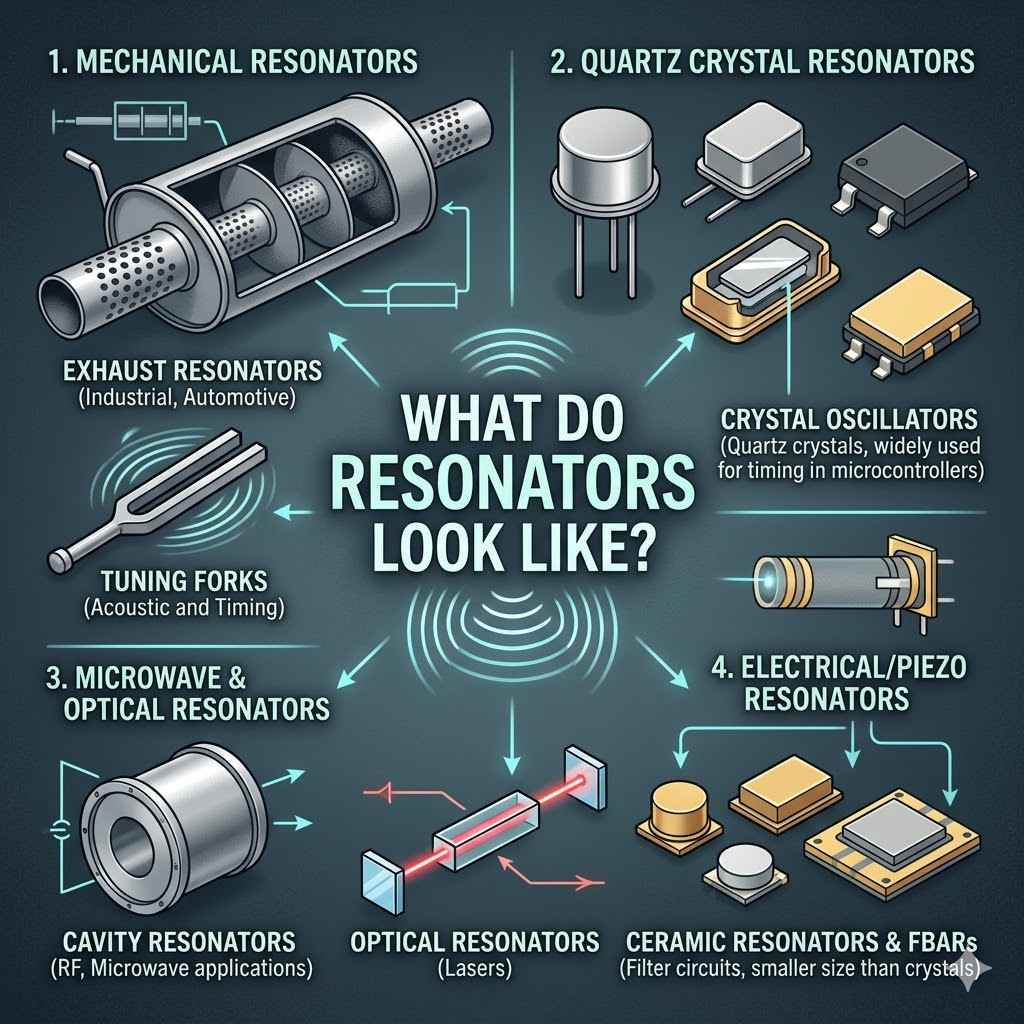
Resonators are objects or spaces that vibrate at certain frequencies. When they vibrate, they can make sounds louder or change the sound. People often ask What Do Resonators Look Like? because the word itself doesn’t immediately tell you their shape or form.
They can appear in many surprising ways, from tiny parts inside your phone to large structures in concert halls. This section will explore the common forms resonators take across different fields, helping you picture them clearly.
Resonators in Musical Instruments
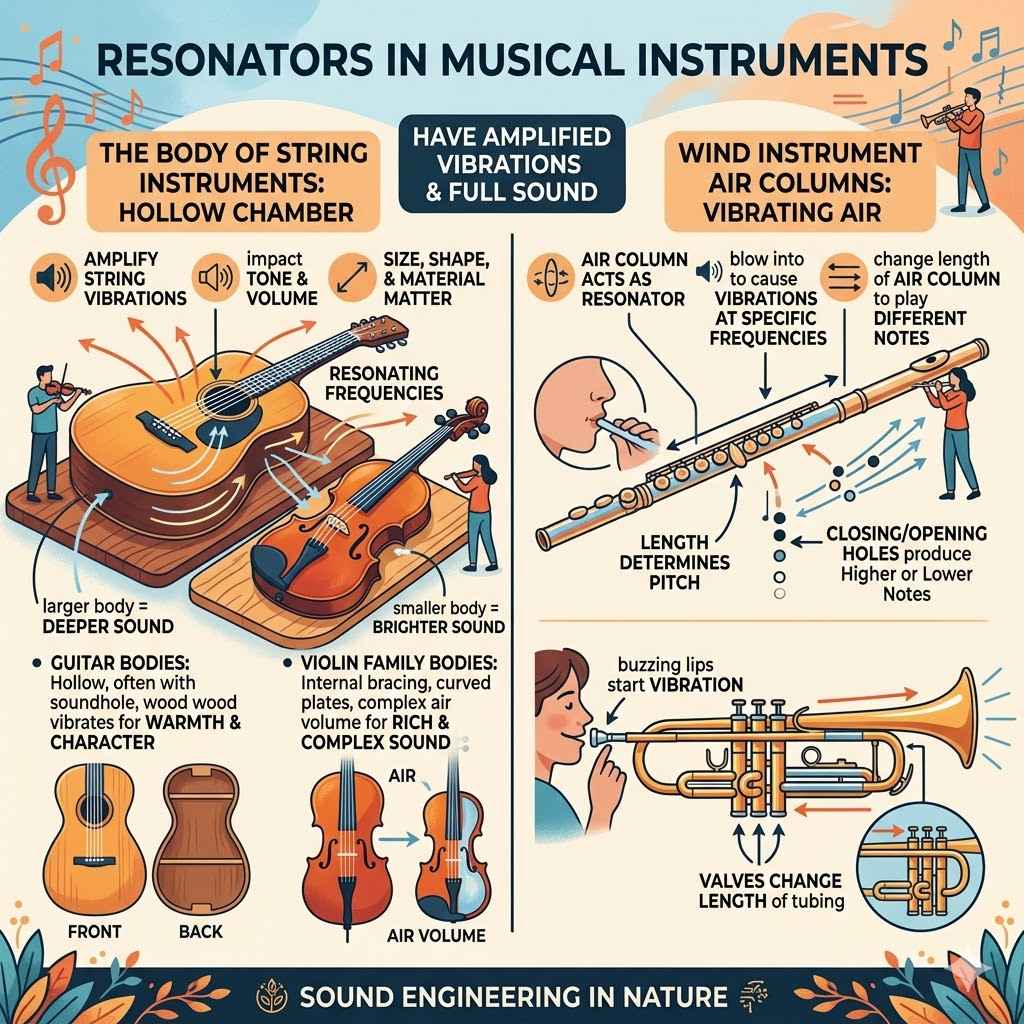
Musical instruments use resonators all the time to create sound. Think about a guitar. The hollow wooden body of the guitar is a resonator.
It amplifies the vibrations from the strings, giving the guitar its full sound. Without this resonator, the strings would sound very quiet and thin. Even simple instruments have them.
The Body of String Instruments
The main body of guitars, violins, cellos, and similar instruments acts as a resonator. This hollow chamber is designed to resonate with the frequencies produced by the vibrating strings. The size, shape, and material of the body significantly impact the instrument’s tone and volume.
A larger body might produce a deeper, richer sound, while a smaller body might create a brighter tone.
- Guitar Bodies: Typically made of wood, these bodies are hollow and often feature an opening called a soundhole. The soundhole helps to project the amplified sound outwards. The wood itself vibrates, adding warmth and character to the notes played.
- Violin Family Bodies: These instruments have a more complex internal bracing system. The curved shape of the front and back plates, along with the internal air volume, work together to create the instrument’s signature rich and complex sound.
Wind Instrument Air Columns
For wind instruments like flutes, clarinets, and trumpets, the column of air inside the instrument acts as the resonator. When you blow into them, you cause this air column to vibrate at specific frequencies. Different keys or valves change the length of the air column, allowing you to play different notes.
A flute’s air column resonates when you blow across the embouchure hole. The length of the tube determines the fundamental pitch. Closing and opening holes along the tube effectively change the resonating length, producing higher or lower notes.
In a trumpet, the player’s lips buzzing into the mouthpiece starts the vibration. This vibration travels down the tubing, and the air inside resonates. Valves change the length of the tubing, altering the notes you can play.
Everyday Objects as Resonators
Resonators aren’t just in instruments; they are all around us in everyday objects. Sometimes, a simple container or space can resonate with certain sounds. This can be useful, or it can sometimes cause unwanted noise.
Containers and Chambers
Many containers have resonant properties. For example, an empty bottle can resonate with a passing siren, or the air inside a room can amplify certain sounds. This is why some rooms sound “live” and echoey, while others sound “dead” and quiet.
The size and shape of the space are key factors.
Consider a soda can. If you tap it, it makes a ringing sound. This is the metal vibrating and the air inside resonating.
Different sized cans will produce slightly different pitches.
In a car, the passenger cabin is a large resonant chamber. The interior design and the materials used can affect how engine noise, road noise, and music sound inside. Car manufacturers spend a lot of time designing these spaces to minimize unwanted resonance and enhance the desired acoustics.
Architectural Acoustics
In architecture, especially in places like concert halls and auditoriums, the design of the space is crucial for acoustics. The walls, ceiling, and even the seating arrangements act as resonators. They are carefully shaped to reflect and enhance sound in a pleasing way for the audience.
A concert hall might have curved walls and a high ceiling designed to spread sound evenly. They might also use specific materials that absorb or reflect sound waves to prevent echoes and create a clear, full sound experience. The goal is to make sure every seat has a good view and a good listening experience.
Resonators in Technology and Science
Beyond music and everyday objects, resonators play important roles in science and technology. They are used in everything from clocks to communication devices. Understanding their function helps us appreciate how many modern technologies work.
Electronic and Mechanical Oscillators
In electronics, components called resonators are vital for creating stable frequencies. These are often tiny crystals or ceramic pieces that vibrate at a very precise rate when an electric current is applied. This stable vibration is used to control the timing of electronic circuits, like those found in watches, radios, and computers.
A quartz crystal oscillator is a prime example. It’s a small piece of quartz cut into a specific shape. When electricity is passed through it, the crystal bends and vibrates at an extremely consistent frequency.
This consistent vibration is like a metronome for electronic devices, ensuring they operate accurately and in sync.
These resonators are typically very small, often measured in millimeters. They look like tiny, flat chips or sometimes small cylindrical components with wires attached. Their appearance is far removed from musical instruments but their function is similar—to vibrate at a specific frequency.
Acoustic Resonators in Devices
Many devices use acoustic resonators to modify sound waves. For instance, some speakers have small chambers designed to resonate at certain bass frequencies, enhancing the bass response without needing a larger speaker. Your smartphone also uses tiny acoustic resonators within its speaker system to produce clearer and richer sounds.
Even a simple object like a tuning fork is an acoustic resonator. When struck, it vibrates at a specific frequency, producing a pure musical tone. This is used to tune musical instruments accurately.
Scientists also use specialized resonators in experiments. For example, in particle accelerators, electromagnetic cavities act as resonators, using electric and magnetic fields to accelerate particles to very high speeds. These cavities are often large, complex metal structures.
Visualizing Different Types of Resonators
To really grasp What Do Resonators Look Like?, let’s visualize them. Their appearance varies greatly depending on their purpose and the environment they are in.
From Small to Large
Resonators can be incredibly small, like the quartz crystals in a watch, which are often smaller than a grain of rice. They can also be massive, such as the large acoustic chambers in concert halls or the resonant cavities in industrial machinery.
Imagine a tiny, greyish square chip with two metal legs – that’s a common look for an electronic resonator. Now picture a grand piano’s soundboard, a large, flat wooden surface that vibrates. Or think of the bell of a tuba, a large, flared metal opening that helps project sound.
Materials and Shapes
The materials used for resonators are diverse. Wood is common in musical instruments, providing warmth and resonance. Metals are used for tuning forks, bells, and electronic components.
Plastics and ceramics are also employed in various applications.
Shapes can be anything from simple cylinders (like a pipe organ’s air column) to complex curves (like the body of a violin) or even precisely cut geometric shapes (like a quartz crystal).
Here’s a quick way to think about it:
- Musical Instruments: Often large, hollow, made of wood or metal, with curved or shaped bodies.
- Electronic Devices: Very small, solid chips, often square or rectangular, with metal connections.
- Architectural Spaces: Entire rooms or halls, defined by walls, ceilings, and floors, often with curved surfaces.
- Scientific Equipment: Can be large metal structures, precisely shaped cavities, or small, delicate components.
The Function Drives the Form
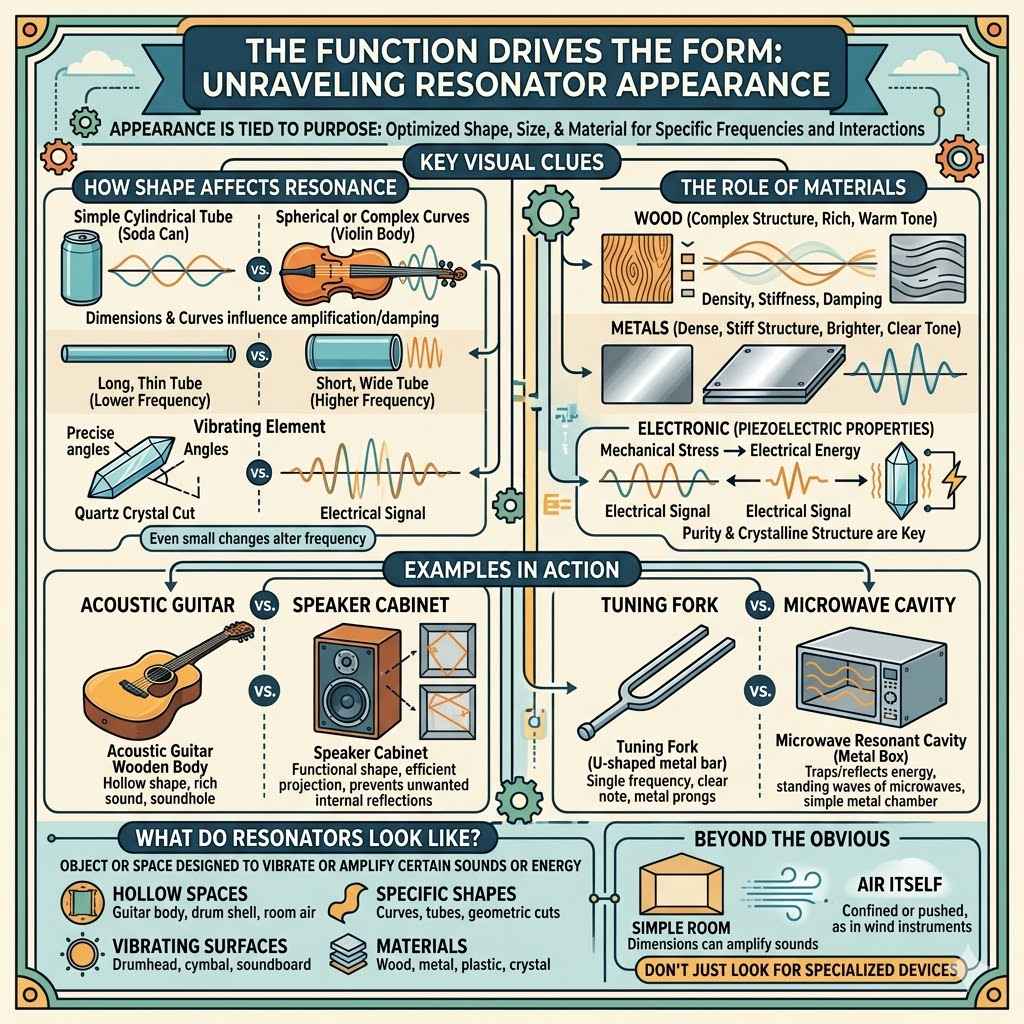
The reason What Do Resonators Look Like? is such a varied question is that their appearance is directly tied to their function. The shape, size, and material of a resonator are all optimized to vibrate at specific frequencies and interact with sound or energy in a particular way.
How Shape Affects Resonance
A cavity’s shape is critical. A simple cylindrical tube (like a soda can) resonates differently than a spherical or complexly curved chamber (like a violin body). The dimensions and curves of a surface can influence which sound waves it amplifies or dampens.
For example, a long, thin tube will resonate with lower frequencies than a short, wide one.
Similarly, the shape of a vibrating element, like a quartz crystal, is cut to have precise physical properties. These properties dictate exactly how it will vibrate when an electrical signal is applied. Even small changes in the cut angle can alter the resonance frequency.
The Role of Materials
The material a resonator is made from also plays a huge role in its appearance and how it functions. Different materials have different densities, stiffness, and internal damping properties, all of which affect vibration. Wood, for instance, has a complex structure that produces a rich, warm tone when it vibrates.
Metals, being denser and stiffer, often produce brighter, clearer tones.
In electronic resonators like crystals, the material’s piezoelectric properties are essential. This means the material can convert mechanical stress into electrical energy and vice versa. This is how an electrical signal causes the crystal to vibrate, and how that vibration can be converted back into an electrical signal.
The material’s purity and crystalline structure are key to its consistent performance.
Examples in Action
Let’s look at a couple of examples:
- Acoustic Guitar vs. Speaker Cabinet: An acoustic guitar’s hollow wooden body is shaped to produce its own rich sound. A speaker cabinet, while also often hollow and made of wood, is designed primarily to house a speaker and prevent unwanted internal reflections that could distort the sound. The external shape might be more boxy and functional, focusing on efficient sound projection.
- Tuning Fork vs. Resonant Cavity in a Microwave: A tuning fork is a simple U-shaped metal bar that vibrates at a single frequency when struck, producing a clear note. It looks like two metal prongs connected at the base. A resonant cavity in a microwave oven is a metal box designed to trap and reflect microwave energy, causing food to heat up. It looks like a simple metal chamber, and its internal dimensions are calculated to create standing waves of microwaves.
What Do Resonators Look Like in Simple Terms
When you ask What Do Resonators Look Like?, the simplest answer is that they look like an object or a space that is designed to vibrate or amplify certain sounds or energy. They can be anything from a hollow box to a tiny crystal.
Key Visual Characteristics
Look for these clues:
- Hollow Spaces: Many resonators involve a hollow chamber. This could be a guitar body, a drum shell, or even the air inside a room.
- Vibrating Surfaces: Some resonators have thin surfaces that are meant to vibrate. Think of a drumhead, a cymbal, or the soundboard of a piano.
- Specific Shapes: The shape is often important. Curved surfaces, tubes, and precise geometric cuts are common because they help direct or amplify specific frequencies.
- Materials: Materials like wood, metal, plastic, and crystal are frequently used. The choice of material greatly influences the appearance and sound.
For example, the body of an acoustic bass guitar is a large, hollow wooden box with a soundhole. It looks like a musical instrument, and its appearance is directly linked to its job of making sound. On the other hand, the resonator in a quartz watch looks like a tiny, metallic tuning fork or a small crystal chip.
Its appearance is very different, but its purpose is the same: to vibrate consistently.
Beyond the Obvious
Sometimes, a resonator might not look like much at all. A simple room can be a resonator if its dimensions are just right to amplify certain sounds. The air itself, when confined or pushed, can act as a resonator, as in wind instruments.
So, don’t just look for specially made objects; consider the spaces and air too.
Frequently Asked Questions
Question: Are all resonators the same shape and size
Answer: No, resonators come in many different shapes and sizes. Their form depends entirely on what they are used for. A resonator in a musical instrument will look very different from a resonator in a clock or a microwave oven.
Question: Can any object be a resonator
Answer: While many objects can vibrate, not all are designed or used as intentional resonators. True resonators are typically shaped or positioned to amplify or produce specific frequencies effectively for a particular purpose.
Question: Where are resonators most commonly found
Answer: Resonators are commonly found in musical instruments, acoustic spaces like concert halls, and various electronic devices. You might also find them in everyday objects like containers or even in nature.
Question: What makes something a resonator
Answer: An object or space becomes a resonator when it vibrates at specific frequencies when excited. This vibration amplifies certain sounds or energy, or it is used to maintain a stable frequency for timing purposes.
Question: Do resonators affect the sound quality
Answer: Yes, resonators play a huge role in sound quality. In musical instruments, they shape the tone and volume. In rooms, they can create echo or make the sound clearer.
In devices, they ensure accurate sound reproduction.
Summary
Resonators are varied objects and spaces designed to vibrate and amplify sound or energy. They can look like hollow wooden bodies of instruments, air columns in wind instruments, simple containers, or tiny electronic crystals. Their appearance is always linked to their function, whether it’s making music, timing electronics, or shaping sound.
Related pick: Check today's price on Amazon