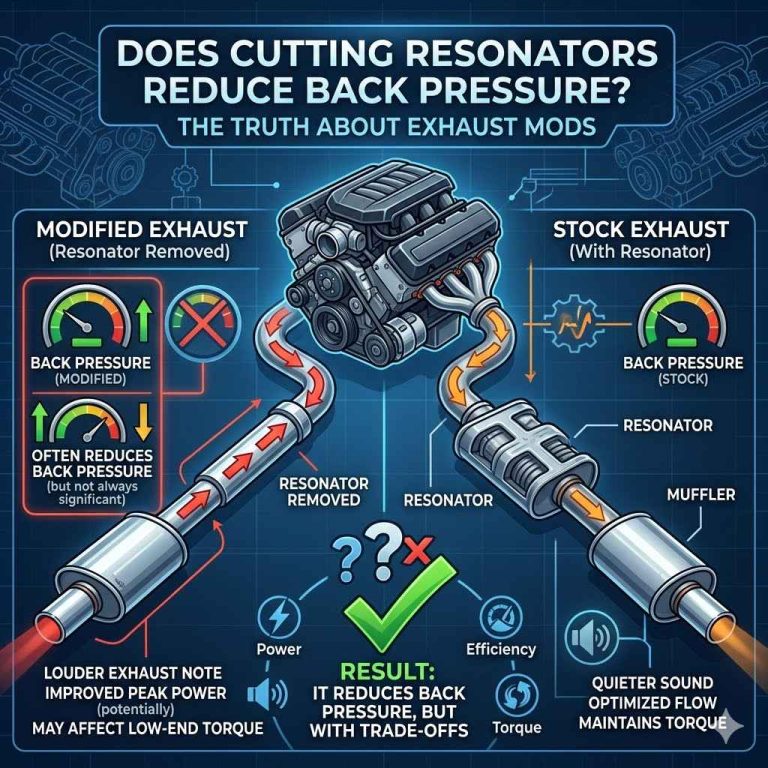
How Much Do Audi A5 Resonators Cost
Figuring out how much Audi A5 resonators cost might seem a bit tricky when you’re just starting out. There are a few things that make it less straightforward than you might expect. But don’t worry! We’re here to make it super simple. We’ll walk you through everything you need to know, step by step, so you can get a clear picture without any confusion. Get ready to find the answers you’re looking for.
Audi A5 Resonator Replacement Costs
Finding out the cost of replacing an Audi A5 resonator is a common question for owners. This part is important for your car’s exhaust system, helping to quiet down the engine’s noise. When it needs replacing, people want to know what they’ll pay. Costs can change based on where you get the work done and the specific parts used. We’ll explore these factors to give you a good idea of the expected expenses.
What Is an Audi A5 Resonator?
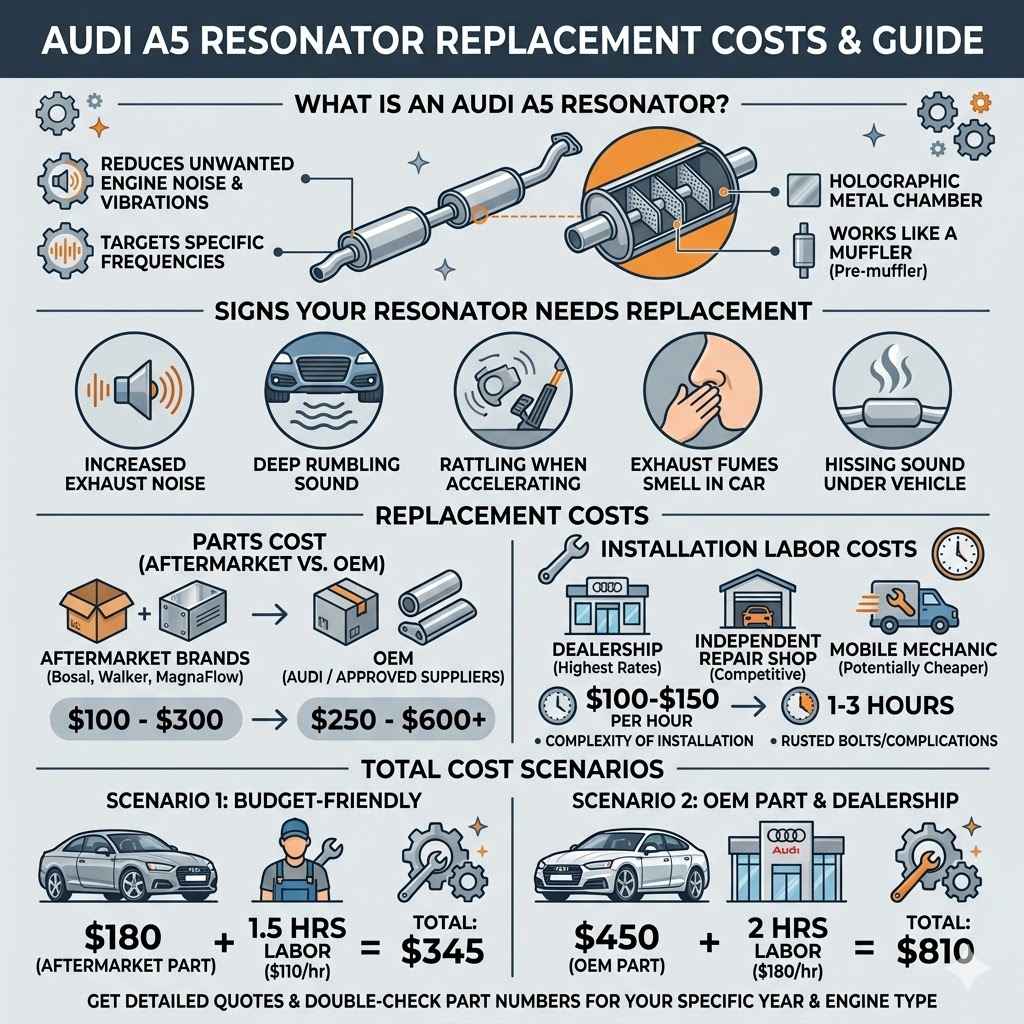
An Audi A5 resonator is a key component of your car’s exhaust system. Its main job is to reduce unwanted noise and vibrations coming from the engine. Think of it like a muffler, but it targets specific sound frequencies. It works by using internal baffles and chambers that absorb sound waves. This makes your car run much quieter and smoother.
The resonator is usually found in front of the muffler. It’s a hollow metal chamber with internal structures. These structures create a sort of echo chamber effect. When sound waves from the engine pass through the resonator, they bounce around inside. This bouncing causes the sound waves to cancel each other out, reducing the overall noise you hear.
Without a working resonator, your Audi A5 might have a louder exhaust note. This can be annoying for some drivers and might even affect the car’s performance slightly. It’s a small part, but it plays a big role in your driving comfort and the overall refinement of the vehicle’s sound.
Signs Your Audi A5 Resonator Needs Replacement
You might notice a few things if your Audi A5 resonator is on its way out. A common sign is a sudden increase in exhaust noise. Your car might sound much louder than usual, maybe even like a sports car if the resonator is severely damaged or rusted through.
Another clue is a deeper, rumbling sound that wasn’t there before. This is because the resonator is no longer effectively canceling out those specific engine noises. You might also hear a rattling sound, especially when you accelerate. This could indicate that something inside the resonator has broken loose.
Sometimes, a failing resonator can lead to exhaust leaks. You might smell exhaust fumes more strongly inside the car or notice a hissing sound from under the vehicle. If you experience any of these symptoms, it’s a good idea to have your car checked by a mechanic. Prompt replacement can prevent further damage to your exhaust system.
How Much Do Audi A5 Resonators Cost for Parts
The cost of just the Audi A5 resonator part can vary a lot. You can find aftermarket resonators from brands like Bosal, Walker, or MagnaFlow. These often cost less than original equipment manufacturer (OEM) parts. An aftermarket resonator might range from $100 to $300.
OEM resonators, made by Audi or their approved suppliers, will typically cost more. These parts are designed to meet Audi’s exact specifications for fit, performance, and sound. For an OEM resonator, you might be looking at $250 to $600 or even more, depending on the specific model year of your A5.
The price also depends on whether you need the resonator as a single unit or as part of a larger assembly. Some vehicles have integrated resonator and pipe sections. Always double-check the exact part number for your car’s make, model, and year. This ensures you’re getting the correct part and helps avoid overpaying.
Factors Affecting Resonator Part Prices
Several things influence how much an Audi A5 resonator part will cost you. The brand of the part is a big one. As mentioned, OEM parts from Audi are usually the most expensive. They come with the assurance of being made to the manufacturer’s standards.
Aftermarket brands offer a wide range of prices. Some high-performance aftermarket brands might be as expensive as OEM parts, while budget-friendly options can be significantly cheaper. The material used also plays a role. Stainless steel resonators tend to last longer and cost more than those made from aluminized steel.
The specific Audi A5 model year and engine type can also affect the price. Different models might have slightly different exhaust system designs, requiring unique resonator parts. Finally, where you buy the part matters. Online retailers might offer lower prices due to less overhead compared to a local auto parts store or dealership.
Audi A5 Resonator Installation Labor Costs
Beyond the cost of the part itself, you’ll also need to consider labor charges for installation. This is the price you pay for a mechanic’s time and expertise to replace the resonator. The complexity of the installation can affect how long it takes, and therefore, the labor cost.
Generally, replacing a resonator is a moderately complex job. It involves getting under the car, disconnecting the old exhaust section, and installing the new one. Mechanics usually charge an hourly rate. This rate can vary greatly depending on your location and the type of shop you visit.
A dealership will often have the highest labor rates. Independent repair shops might offer more competitive pricing. Mobile mechanics could also be an option, sometimes providing a more convenient and potentially cheaper service. It’s always a good idea to get quotes from a few different places before committing to the repair.
Estimating Installation Labor Time
Mechanics use standard labor guides to estimate how long a job should take. For replacing an Audi A5 resonator, this might typically be between 1 to 3 hours of labor. This time accounts for safely lifting the car, removing exhaust clamps and bolts, detaching the old resonator, fitting the new one, and reassembling everything.
If there are complications, like rusted bolts that are hard to remove or if the new part doesn’t fit perfectly, the labor time could increase. This means a higher final bill. Some shops might charge a flat rate for common repairs like this, while others bill by the hour. Understanding the shop’s pricing structure beforehand is key.
Always ask if the labor estimate includes any potential unexpected issues. This way, you won’t be surprised by additional charges if the mechanic runs into problems during the installation process. Clear communication with your chosen repair shop is essential for managing expectations about the total cost.
Total Cost Breakdown How Much Do Audi A5 Resonators Cost
To understand the total cost, let’s put the parts and labor together. For a more budget-friendly approach using an aftermarket resonator, you might pay around $100-$300 for the part. Add to this 1 to 3 hours of labor, which could range from $100 to $300 (assuming a labor rate of $100-$150 per hour).
This puts the total cost for an aftermarket resonator
These are estimates, and actual prices can fluctuate. For instance, a dealership might charge $150 per hour for labor, pushing the total higher. Conversely, a small independent shop might have lower rates and use a more affordable aftermarket part, bringing the cost down. It’s always best to get a detailed quote.
Scenario 1 A Budget-Friendly Replacement
Let’s imagine you have an Audi A5 from a few years ago, and you want the most cost-effective repair. You find a reputable independent mechanic. They offer to install a high-quality aftermarket resonator from a known brand like MagnaFlow. The part costs $180. The mechanic estimates 1.5 hours of labor at $110 per hour.
The labor cost would be $110 * 1.5 = $165. The total bill for this scenario would be $180 (part) + $165 (labor) = $345. This is a very reasonable price for getting your car back to its normal sound. You’ve saved money by choosing an aftermarket part and an independent shop.
This scenario shows that a well-maintained Audi A5 resonator replacement doesn’t have to break the bank. It highlights the importance of shopping around for both parts and service providers. Getting a trusted mechanic to install a good quality aftermarket part can offer a great balance of performance and affordability.
Scenario 2 An OEM Part Installation at the Dealership
Now, consider a different situation. You have a newer Audi A5, and you prefer to keep it as close to original as possible. You take it to an Audi dealership. The OEM resonator part is quoted at $450. The dealership’s labor rate is $180 per hour, and they estimate 2 hours for the job.
The labor cost here would be $180 * 2 = $360. The total cost in this scenario would be $450 (part) + $360 (labor) = $810. This is a significantly higher price, but it reflects the use of genuine Audi parts and dealership service.
This scenario illustrates the premium price for OEM parts and dealership labor. While more expensive, this option provides peace of mind for some owners who want the certainty of factory-spec components and service. The decision often comes down to budget versus a preference for original parts.
Factors Influencing Audi A5 Resonator Prices
The cost of an Audi A5 resonator isn’t a fixed number. Many different things can make the price go up or down. Understanding these factors helps you budget better and potentially find a more affordable solution.
Part Type Aftermarket Versus OEM
One of the biggest cost drivers is whether you choose an aftermarket part or an Original Equipment Manufacturer (OEM) part. OEM parts are made by Audi or their approved suppliers. They are guaranteed to fit perfectly and meet Audi’s exact specifications for sound and performance. Because of this, they are generally more expensive.
Aftermarket parts are made by other companies. They can range from budget-friendly options to high-performance components. Generally, aftermarket parts are less expensive than OEM. However, quality can vary greatly between brands. It’s important to choose a reputable aftermarket brand to ensure durability and proper fit.
Sometimes, aftermarket parts are even an improvement over OEM. For example, some aftermarket manufacturers might use higher-grade stainless steel, making the part last longer. Weighing the cost savings against potential differences in quality and longevity is crucial when making your decision.
Example: Comparing Brand Durability
Let’s look at brands. An OEM Audi resonator ensures you get exactly what the car came with. Reports from owners suggest that OEM parts, when functioning correctly, can last for many years, often 7-10 years or more, depending on driving conditions and exposure to road salt in colder climates.
On the other hand, a quality aftermarket brand like MagnaFlow, known for its stainless steel construction, might also offer similar longevity, potentially 5-10 years. However, a very cheap, unbranded aftermarket part might only last 2-4 years before showing signs of rust or damage. This difference in lifespan means that a cheaper part might end up costing you more in the long run if you need to replace it more often.
Aftermarket Resonator Brands
There are many aftermarket brands producing resonators for Audi A5 vehicles. Some popular and reliable options include:
- Bosal
- Bosal is a well-known global manufacturer of exhaust systems. Their parts are generally considered good quality and offer a balance of price and performance. They often use aluminized steel for their resonators, which provides good corrosion resistance for its price point.
- Walker
- Walker is another major player in the exhaust parts market. They offer a wide range of resonators, often designed to meet or exceed OEM specifications. Their ‘Quiet-Flow’ series, for example, aims to replicate the original factory sound.
- MagnaFlow
- MagnaFlow is often associated with performance exhaust systems, but they also produce resonators designed for quieter operation and durability. Their products are typically made from stainless steel, offering excellent resistance to rust and corrosion, though they can be more expensive than other aftermarket options.
- MEVOTECH
- MEVOTECH focuses on providing reliable aftermarket parts for a variety of vehicles. Their exhaust components are designed for a good fit and durability, often at a competitive price point.
Choosing a brand like MagnaFlow for its stainless steel construction might mean a higher upfront cost, perhaps $200-$300 for the part, but could lead to longer service life compared to a $100-$150 aluminized steel option from another brand.
Vehicle Model Year and Engine Type
The specific year of your Audi A5 can make a difference in the cost of the resonator. Cars from different model years might have slight variations in their exhaust system design. This means the resonators themselves might differ in shape, size, or mounting points.
For example, an Audi A5 from 2010 might use a different resonator part than an Audi A5 from 2018. Newer models, especially those with more advanced emission control systems, might have more complex resonator designs, which can increase the part cost. Similarly, different engine options within the same model year (like a 2.0L turbocharged engine versus a 3.2L V6) can also require different exhaust components, including resonators.
It’s essential to provide your exact model year and engine information when searching for parts or getting quotes from mechanics. This ensures you’re looking at the correct and most compatible resonator, avoiding costly mistakes or fitment issues.
Location and Type of Repair Shop
Where you get your Audi A5 resonator replaced significantly impacts the total cost. Dealerships, as mentioned, typically charge the highest prices. This is due to higher overhead costs, specialized tools, and factory-trained technicians. However, they offer the assurance of using OEM parts and maintaining your car’s warranty if it’s still active.
Independent repair shops, especially smaller, local ones, often have lower labor rates. They can also be a great source for quality aftermarket parts. You might find a good independent mechanic who specializes in European cars like Audi and can offer competitive pricing.
Mobile mechanics are another option. They come to your home or workplace to perform the repair. This can save you time and the hassle of driving to a shop. Their labor rates can sometimes be lower than traditional shops, although availability might vary depending on your location.
Cost Comparison by Shop Type (Example Data)
Here’s a general idea of how costs might break down by shop type for an Audi A5 resonator replacement (assuming a mid-range aftermarket part and average labor times):
| Repair Shop Type | Estimated Part Cost (Aftermarket) | Estimated Labor Cost (1.5-2 hours) | Total Estimated Cost |
|---|---|---|---|
| Audi Dealership | $250 – $500 (OEM) | $300 – $500 ($150-$250/hr) | $550 – $1000+ |
| Independent European Specialist | $150 – $250 (Good Aftermarket) | $200 – $350 ($100-$175/hr) | $350 – $600 |
| General Independent Repair Shop | $120 – $200 (Aftermarket) | $150 – $300 ($75-$150/hr) | $270 – $500 |
| Mobile Mechanic | $120 – $200 (Aftermarket) | $120 – $250 ($80-$125/hr) | $240 – $450 |
This table shows that choosing a general repair shop or a mobile mechanic can lead to significant savings compared to a dealership. However, it’s always wise to check reviews and ask for recommendations before choosing a mechanic.
Geographic Location Impact
The cost of living in your area also plays a role. Mechanics in major metropolitan areas often charge more for labor than those in rural areas. This is because the overhead for businesses in cities is typically higher.
For example, labor rates in California or New York City might be $200 per hour or more, while in a smaller town in the Midwest, it might be $80 per hour. This difference can add hundreds of dollars to the total repair bill, even if the parts cost the same.
When seeking quotes, be sure to factor in your local cost of living and average mechanic rates. This will give you a more realistic expectation of how much do Audi A5 resonators cost in your specific region.
Complexity of Installation
While resonator replacement is generally straightforward, some vehicles can present installation challenges. Rusted exhaust clamps, seized bolts, or tight spaces can make the job more time-consuming for the mechanic. This increased labor time directly translates to higher costs.
If your car is older or has spent many years in a climate where road salt is used, you might encounter more rust. Mechanics often have to use special tools or techniques to deal with seized components, which adds to the labor. Sometimes, if bolts are too corroded, they might need to be cut off, and new ones installed, adding a small cost for hardware.
On the other hand, a newer Audi A5 in a dry climate might have exhaust systems that come apart easily, leading to a quicker and cheaper installation. It’s difficult to predict these issues perfectly beforehand, but an experienced mechanic can often give you an educated guess based on the vehicle’s age and your location.
Understanding Exhaust System Components
To fully grasp why a resonator costs what it does and why it’s important, it helps to know a bit about the entire exhaust system. Your car’s exhaust system is more than just a pipe; it’s a complex network of parts designed to safely channel gases away from the engine and reduce noise and pollution.
The exhaust system starts at the engine’s cylinder head with the exhaust manifold. This collects exhaust gases from each cylinder and directs them into a pipe. From there, the gases travel through various components before being expelled into the atmosphere through the tailpipe. Each part plays a specific role in managing these gases.
The Role of the Resonator in the Exhaust System
The resonator is a crucial component, usually positioned before the muffler. Its primary function is to eliminate specific sound frequencies, particularly drone. Drone is that unpleasant, low-frequency humming sound that can be very noticeable at certain engine speeds, often on the highway.
Unlike the muffler, which is designed to reduce overall noise across a broad range of frequencies, the resonator is tuned to cancel out particular sound waves. It achieves this through a process called destructive interference. Sound waves entering the resonator’s chambers are reflected and interact with other sound waves.
When a sound wave reflects off a surface inside the resonator, it can create a new wave that is out of phase with the original. This means the peaks of one wave line up with the troughs of the other, effectively canceling each other out. This targeted sound cancellation makes the exhaust note much more refined and quieter, especially at cruising speeds.
Difference Between Resonator and Muffler
It’s common to confuse resonators and mufflers, but they have distinct roles in your Audi A5’s exhaust system. The muffler is the component primarily responsible for reducing the overall loudness of the exhaust. It uses a series of baffles and chambers to slow down the exhaust gases and absorb sound energy. Mufflers tackle a wider spectrum of noise.
The resonator, however, is more about fine-tuning the sound. It targets specific, often irritating, frequencies. Think of the muffler as the heavy-duty noise dampener and the resonator as the sound equalizer. While both contribute to a quieter ride, they do so in different ways.
An Audi A5 typically has both a resonator and a muffler. Replacing just one might resolve the immediate issue, but sometimes both components show signs of wear. If a resonator is damaged, the exhaust note might become louder and deeper, possibly with an annoying hum. If the muffler is failing, the entire exhaust will sound much louder.
Visualizing the Sound Cancellation Process
Imagine a simple sound wave represented by a wavy line. A resonator works by creating a “reflected” wave that is an inverted version of the original. So, if the original wave goes up, the reflected wave goes down at the same time.
When these two waves meet inside the resonator, the upward movement of one wave cancels out the downward movement of the other. This process, repeated with many sound waves within the carefully designed chambers of the resonator, results in a significant reduction of specific sound frequencies. This is why a car with a functioning resonator sounds smoother and less boomy.
Common Exhaust System Issues
Besides resonator problems, other common issues can affect your Audi A5’s exhaust system. These include exhaust leaks, catalytic converter failure, and muffler damage.
Exhaust leaks can occur at the joints between pipes, at gaskets, or if the metal itself corrodes. These leaks can cause a louder exhaust sound, a smell of exhaust fumes, and can affect engine performance and emissions.
The catalytic converter is vital for reducing harmful pollutants. If it fails, your car might run poorly, the check engine light will likely illuminate, and it can be an expensive repair. Muffler damage, often from rust or impact, will lead to a very loud exhaust.
Recognizing these different issues helps in diagnosing the exact problem and estimating repair costs accurately. A loud exhaust could be a simple muffler fix or a more complex resonator issue.
Audi A5 Resonator Replacement Options and Recommendations
When it’s time to replace your Audi A5 resonator, you have a few paths you can take. Each option has its own pros and cons, mainly related to cost, quality, and warranty. Making an informed choice will help you get the best value for your money.
Choosing Between Repair and Replacement
Sometimes, a resonator might be repairable, especially if the damage is minor, like a small hole from rust. A skilled exhaust shop might be able to weld a patch onto the resonator to fix it. This can be a cheaper alternative to a full replacement, saving you money on both parts and labor.
However, repairs are often temporary solutions. If the resonator is significantly rusted or internally damaged, welding a patch might not hold for long or might not effectively restore its sound-dampening capabilities. In most cases, especially if the resonator is old or shows widespread corrosion, replacement is the more reliable and long-term solution.
It’s always best to consult with a trusted mechanic. They can assess the condition of your resonator and advise whether a repair is feasible and worthwhile, or if a full replacement is the recommended course of action for lasting results.
Pros and Cons of Repair Versus Replacement
Here’s a quick look at the advantages and disadvantages of each approach:
- Repair (Patching/Welding):
- Pros: Potentially lower upfront cost, quick fix for minor damage.
- Cons: Often a temporary solution, might not restore original sound quality, can fail again if underlying rust is extensive.
- Replacement:
- Pros: Long-term solution, restores original performance and sound, peace of mind.
- Cons: Higher upfront cost (especially for OEM parts), requires more labor than a simple patch.
For an Audi A5, where refinement and quiet operation are key features, investing in a proper replacement is usually the better choice for maintaining the car’s intended driving experience.
DIY Replacement Considerations
If you’re comfortable working on your car, you might consider replacing the resonator yourself. This can be the most cost-effective option, as you only pay for the part itself. However, it requires specific tools and knowledge.
You’ll need to safely lift your Audi A5 using jack stands, have access to an exhaust hanger removal tool, and likely a socket set to remove clamps and bolts. Depending on the condition of the old fasteners, you might also need penetrating oil or even a cutting tool if they are severely rusted.
It’s also important to ensure proper fitment of the new part. Getting the exhaust aligned correctly is crucial for avoiding leaks and stress on other exhaust components. If you’re unsure about any step, it’s always better to have a professional handle the installation to avoid potential damage or safety hazards.
Tools Needed for DIY Resonator Replacement
For a typical DIY Audi A5 resonator replacement, you would likely need the following:
- Car jack and jack stands (essential for safety)
- Wrench set or socket set (metric sizes will be needed for Audi)
- Penetrating oil (to loosen rusted bolts and clamps)
- Exhaust hanger removal tool or pry bar
- Safety glasses and gloves
- New exhaust clamps and possibly new gaskets if required
- Torque wrench (to ensure fasteners are tightened correctly)
- Wire brush (to clean mounting surfaces)
If the old bolts are severely corroded, you might also need a reciprocating saw or an angle grinder to cut them off. This is where a DIY job can become more complicated and potentially dangerous if you’re not experienced.
Warranty and Service Contracts
If your Audi A5 is still under its original manufacturer’s warranty or an extended service contract, check its coverage for exhaust components. Some warranties might cover exhaust system repairs, including resonators, for a certain period or mileage.
If the resonator fails within the warranty period, you might be able to get it replaced for free or at a reduced cost by an authorized Audi dealer. It’s always worth checking your warranty documents or calling the dealership to inquire about coverage before paying for repairs out of pocket.
Even if the original warranty has expired, some extended service contracts might still cover exhaust system components. Reviewing the terms of any aftermarket warranty you might have is a wise step before authorizing any repair work.
Sample Warranty Coverage for Exhaust Parts
Many new car warranties cover the exhaust system for a specific duration, often around 3 years or 36,000 miles, whichever comes first. Some manufacturers offer longer warranties specifically for emissions components, which can sometimes include the catalytic converter and potentially the resonator if it’s deemed part of the emissions system.
Extended service contracts vary widely. Some comprehensive plans might include exhaust components, while others might specifically exclude them. It’s crucial to read the fine print of any extended warranty to understand what is and isn’t covered. A resonator failure could fall under general powertrain coverage or be specifically listed as an exclusion.
Maintenance Tips to Prolong Resonator Life
While resonators are built to last, proper maintenance and driving habits can help extend their lifespan. Avoiding common causes of premature failure can save you money and hassle in the long run.
Regular Inspections
Making a habit of having your exhaust system inspected during routine maintenance can catch problems early. Mechanics can check for signs of rust, corrosion, or damage to the resonator and other exhaust components. Early detection of minor issues, like a small rust spot, might allow for preventive measures before a major failure occurs.
During an inspection, a mechanic will typically look for:
- Rust or perforations on the resonator’s casing.
- Loose or damaged exhaust hangers, which can cause excessive movement and stress on the system.
- Signs of leaks, such as black soot marks around joints or holes.
- Damage from road debris, like impacts from speed bumps or road hazards.
These regular checks are part of good car ownership and can help you avoid unexpected repair bills.
Driving Habits to Protect Your Exhaust
Your driving style can also impact the longevity of your Audi A5’s exhaust system. Frequent short trips where the engine doesn’t get fully warmed up can lead to moisture buildup inside the exhaust system. This moisture can condense and cause rust from the inside out.
Driving on rough roads or frequently hitting potholes can also cause physical damage to the exhaust system, including the resonator. Avoiding aggressive driving and being mindful of road conditions can help protect these components from undue stress and impact.
Also, be cautious of driving through deep puddles or standing water, especially at speed. This can cause rapid cooling of hot exhaust components and potentially lead to cracks or other damage.
Dealing with Road Salt and Corrosion
In regions where road salt is used during winter, corrosion is a major enemy of exhaust systems. Salt, combined with moisture, accelerates the rusting process. If you live in such an area, consider opting for aftermarket parts made from stainless steel, which offers superior corrosion resistance compared to aluminized steel or standard mild steel.
Aftermarket companies like MagnaFlow often use high-grade stainless steel for their resonators and exhaust systems. While these parts may have a higher initial cost, their resistance to rust and salt damage can make them last significantly longer, ultimately providing better value and potentially saving you money on premature replacements.
Additionally, some owners opt for undercoating or rust-proofing treatments for their vehicle’s underside, which can help protect the entire exhaust system, including the resonator, from corrosive elements.

Frequently Asked Questions
Question: How much does it typically cost to replace an Audi A5 resonator at a dealership?
Answer: Replacing an Audi A5 resonator at a dealership typically ranges from $550 to $1000 or more. This includes the cost of an OEM part, which can be $250-$500, and labor charges that are usually higher at dealerships, often $150-$250 per hour.
Question: Can I save money by buying an Audi A5 resonator online?
Answer: Yes, you can often save money by buying an Audi A5 resonator online. Online retailers may offer lower prices on aftermarket parts due to less overhead. However, ensure you are buying from a reputable seller and verify the part is compatible with your specific Audi A5 model and year.
Question: Is it worth repairing a rusted Audi A5 resonator, or should I always replace it?
Answer: Repairing a rusted Audi A5 resonator might be a temporary fix if the rust is minor and localized. However, if the rust is widespread or the internal structure is compromised, replacement is usually the more reliable and long-term solution for restoring sound quality and preventing future issues.
Question: How long does an Audi A5 resonator usually last?
Answer: The lifespan of an Audi A5 resonator can vary widely, but typically they can last anywhere from 7 to 10 years or more with proper care and driving conditions. Factors like climate, road salt exposure, and the quality of the part itself (OEM vs. aftermarket) can influence its longevity.
Question: What are the signs that my Audi A5 resonator needs to be replaced?
Answer: Signs that your Audi A5 resonator may need replacement include a noticeable increase in exhaust noise, a deeper or rumbling sound, rattling noises from under the car, or potentially the smell of exhaust fumes inside the cabin.
Wrap Up
Understanding how much Audi A5 resonators cost involves looking at parts, labor, and where you get the work done. Aftermarket parts can save you money, while OEM ensures factory specifications. Independent shops often offer lower labor rates than dealerships. For a budget-friendly repair, aim for a quality aftermarket resonator from a trusted brand installed at a local mechanic. This approach balances cost with reliability for your Audi A5.