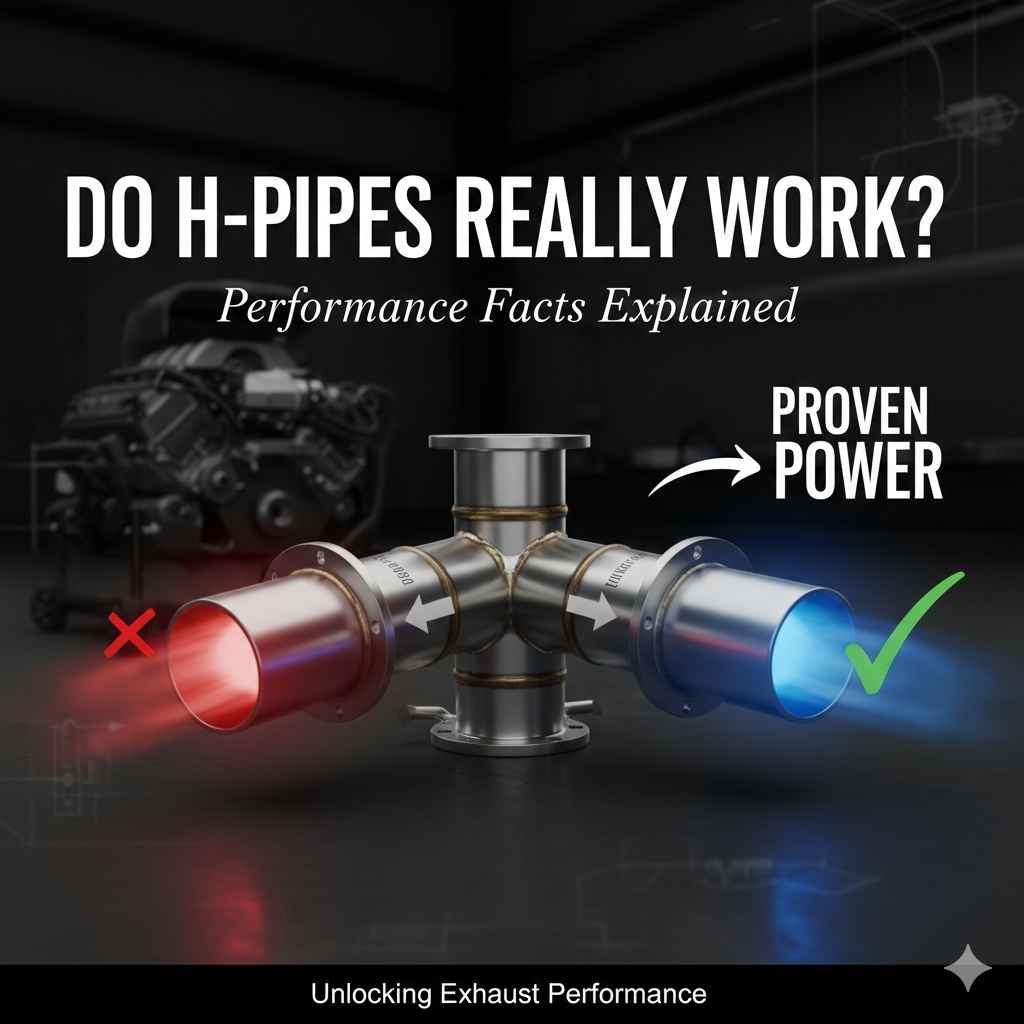
Do H-Pipes Really Work? Performance Facts Explained
Figuring out if Do H-Pipes Really Work? Performance Facts can be a tricky topic. It’s often confusing because there’s a lot of technical talk, and it’s hard to know what’s true. But don’t worry! This post will break everything down in simple steps, so it’s easy to get. We’ll explore the basics and show you the real deal. Get ready to learn!

A-KARCK
A-KARCK Exhaust X Pipe Dual 3" Inlet,…
- MATERIAL - High quality stainless steel infused with anti-corrosive agents improves overall strength.
- DIMENSION: Dual 3" inlet, dual 3" outlet, 12" overall length.
- PROMOTE EXHAUST: "X" shape design, allows the exhaust pulsesto merge at the crossover point for a smoother flowing exhaust.
As an Amazon Associate I earn from qualifying purchases.
What H-Pipes Are and Why They Matter
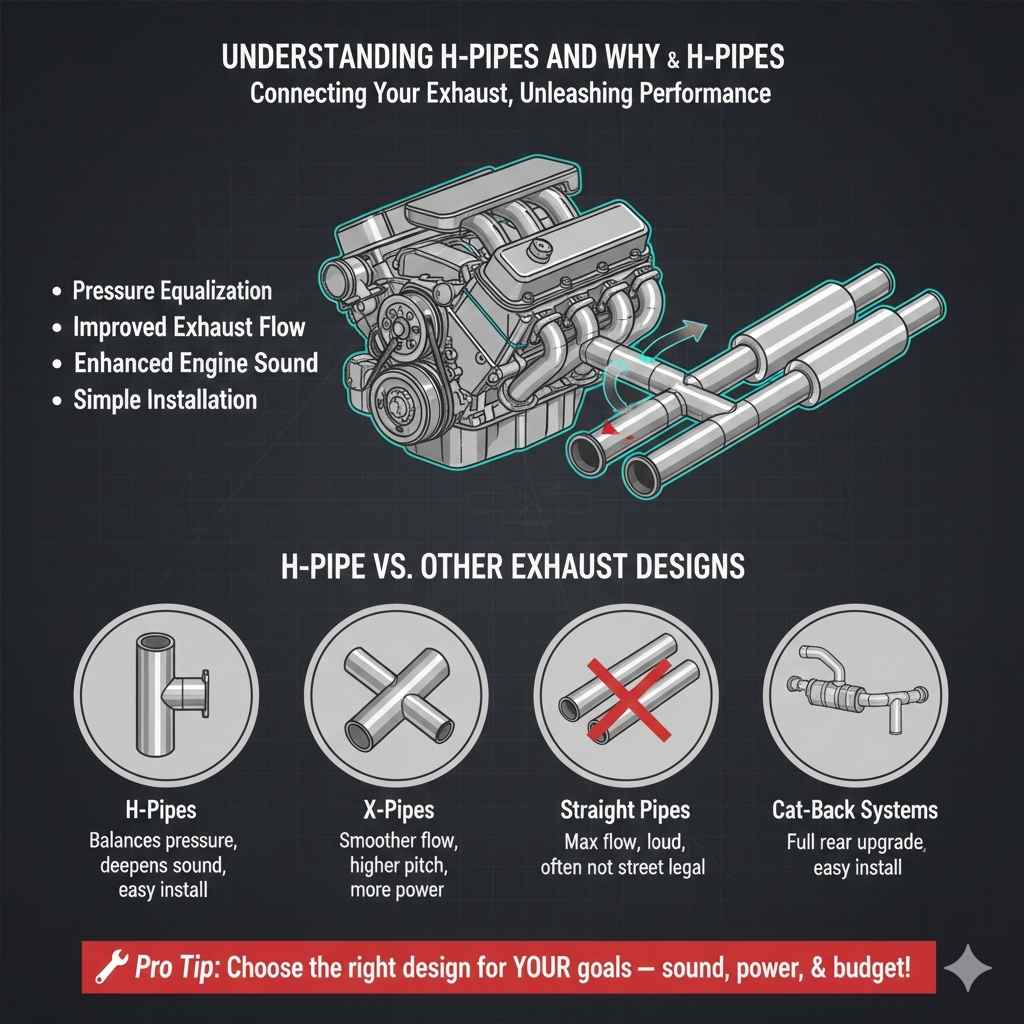
An H-pipe is a connecting pipe that links the exhaust pipes on either side of an engine. It’s a simple piece of metal, yet its location in your exhaust system has a big effect on how your engine runs. The goal is to balance the pressure and improve the flow of exhaust gases. This can lead to better engine performance, more horsepower, and a nicer sound. This is very important in the performance world.
The Purpose and Placement of H-Pipes
The main job of an H-pipe is to equalize the exhaust pressure between the two sides of your engine. When exhaust gases leave the engine, they travel down exhaust pipes. If each side has its own pipe, the pressure can be different. The H-pipe connects the pipes, letting the gases move from one side to the other to make the pressure even. This helps the engine run smoothly and efficiently. The best place for an H-pipe is usually close to the engine, after the exhaust manifolds, where the gases are still hot and moving fast.
Pressure Equalization: H-pipes even out exhaust pressure.
Uneven exhaust pressure can make your engine less efficient and lower performance. The H-pipe helps to make sure both sides of the engine are working together effectively. By letting exhaust gases move freely between the pipes, it prevents pressure buildup, which can hurt performance and cause issues.
Improved Exhaust Flow: Aids in smoother gas movement.
Better exhaust flow means that the gases can exit the engine quicker and with less resistance. This helps the engine to “breathe” better, which can lead to gains in horsepower and torque. It’s like widening a straw, letting more air flow through with less effort.
Enhanced Engine Sound: Affects the exhaust note.
H-pipes often change the sound of the exhaust. They can make the exhaust note deeper and smoother. This is because the gases mix together in the H-pipe, which changes the sound waves. Car people often love this extra benefit.
Simple Installation: Relatively easy to add.
Compared to other performance mods, installing an H-pipe is generally straightforward. This makes it a popular choice for people looking to boost their car’s performance without a lot of complicated work. It usually involves cutting and welding, but the process is usually simple.
H-Pipe vs. Other Exhaust Designs
When you’re upgrading your exhaust, you have choices beyond just the H-pipe. Other setups, like X-pipes and straight pipes, have their own pros and cons. The choice depends on what you want from your car. Different designs affect performance, sound, and how easy it is to set up. Think about how you want your car to look and perform to pick the right one.
X-Pipes: Similar goal, different method.
X-pipes also connect the exhaust pipes, but they do it by crossing the pipes, forming an ‘X. This creates a smoother, more continuous flow of exhaust gases. This design can lead to more horsepower gains than an H-pipe, but can often be harder to fit. X-pipes tend to produce a more high-pitched exhaust note.
Straight Pipes: Maximizes flow, often not street legal.
Straight pipes have no mufflers or connecting pipes; the exhaust goes straight from the engine to the tailpipe. This provides the least restriction and can lead to the biggest power gains. However, straight pipes are often very loud and may not be allowed in many places. They are usually only used for racing.
Cat-Back Systems: Upgrade from the catalytic converter.
Cat-back systems change the exhaust from the catalytic converter back to the tailpipe. They usually include better mufflers and pipes, helping with performance and sound. Cat-back systems are usually easy to install. They are a good starting point for exhaust upgrades.
Axle-Back Systems: Upgrade from the rear axle.
Axle-back systems replace the exhaust parts from the rear axle to the tailpipe. They are easy to set up and usually just change the sound and look of your car. These are the easiest of the exhaust upgrades. They do not increase performance as much as other systems.
How H-Pipes Change Engine Performance
The effects of an H-pipe on engine performance are important for car people. An H-pipe can impact things such as engine efficiency, horsepower, and torque. By improving exhaust flow and balancing the pressure, the H-pipe helps your engine run better. The changes are often subtle, but they add up to make your car run and sound better. This can be great for car enthusiasts.
Horsepower and Torque Gains Explained
When you add an H-pipe, your engine can breathe better, leading to small gains in horsepower and torque. Horsepower is how fast your engine can do work, and torque is the force that makes your car move. Even though the gains from an H-pipe might not be huge, they’re noticeable. This is especially true in the mid-range of your engine’s power band, where the engine feels more responsive. These power increases can make the car more fun to drive and better on the track.
Improved Mid-Range Power: Better engine response at lower speeds.
The mid-range is where the engine’s power is most used. An H-pipe boosts power and torque in this range. This makes the car feel quicker when you speed up from a stop or pass another car. This makes daily driving and racing much better. This is because H-pipes improve the engine’s ability to clear exhaust gases at lower engine speeds.
Enhanced Engine Efficiency: Better fuel use.
By helping exhaust gases exit more smoothly, the H-pipe can improve the efficiency of the engine. This means your car might use fuel more efficiently. Better efficiency is a side benefit of better exhaust flow. This can slightly lower fuel costs over time.
Reduced Backpressure: Less resistance in the exhaust.
An H-pipe reduces backpressure in the exhaust system. Backpressure is resistance that the exhaust gases face as they leave the engine. Reducing backpressure lets the engine operate more freely. This can lead to increased power and torque.
Optimized Exhaust Scavenging: Aids in gas removal.
Exhaust scavenging is when the exhaust gases help to pull each other out of the engine. The H-pipe helps the exhaust gases exit the engine by balancing the pressure and making the flow smoother. This is the main reason why H-pipes help performance.
Real-World Performance Examples
The gains from an H-pipe can vary depending on the car, the engine, and the other modifications. However, they are often noticeable. People have used dyno tests to show the changes, and you can feel the changes when driving. Car people often share their experiences online, making it easy to see what others have experienced. These examples can help you to understand what to expect.
Example 1: A common muscle car, such as a Mustang or Camaro.
In many tests, people have seen horsepower gains of 5-10 HP when they install an H-pipe. These gains are usually greater in the mid-range. Torque may increase 5-10 lb-ft. This leads to better acceleration and a more responsive feel.
Example 2: A truck with a V8 engine.
Trucks may see similar gains from an H-pipe. Drivers will notice a better throttle response, especially when pulling a load. The engine sound will change, giving the truck a more aggressive tone.
Example 3: A sports car with a naturally aspirated engine.
Sports cars may have slightly different results. The H-pipe often improves the overall exhaust flow. This helps the engine to “breathe” better. Horsepower and torque gains are often around 5-10 HP and lb-ft. This can make a sports car more fun and exciting to drive.
Installation and Setup of H-Pipes
Setting up an H-pipe isn’t super difficult, but it’s not something you should rush into. It often involves cutting your existing exhaust system and welding in the H-pipe. This is something that you can do yourself. Many car people will take the car to a professional mechanic to do this work. It will require some tools and know-how, but you’ll get a better performance. Be sure to plan ahead and have a safe workplace.
Step-by-Step Installation Guide
The steps below explain how to install an H-pipe on your car. Always start by ensuring your car is cool, and you have all the tools. Safety first is important. Be sure to check the instructions that come with your H-pipe kit and your car’s service manual. These tips can help you.
Gather Your Tools and Materials: Get everything ready.
You’ll need an H-pipe kit, a welding machine, a cutting tool, such as a saw, safety glasses, gloves, and jack stands. Make sure you have the right size H-pipe for your car and that you have all the tools you need.
Prepare the Car: Safely lift your vehicle.
Safely lift and secure your car with jack stands. Make sure the car is stable and that you have plenty of room to work under it. This is a very important safety step.
Remove the Existing Exhaust Section: Carefully cut and remove sections.
Measure the place to put the H-pipe. Cut the existing exhaust pipe in the place where the H-pipe will go. Be careful not to damage the rest of the exhaust system.
Fit the H-Pipe: Make sure it fits correctly.
Place the H-pipe into the space. Ensure that it fits correctly. Make any needed adjustments for a perfect fit. Get the H-pipe and the existing pipes as close as possible.
Weld the H-Pipe: Secure it in place.
Weld the H-pipe to the existing exhaust pipes. Use the right welding settings. Make sure the welds are strong and secure. You need to make sure the connection is solid and leak-free.
Check for Leaks: Ensure everything is sealed.
Check the exhaust system for leaks after the welds have cooled. Start the engine and listen for any hissing or unusual sounds. You can use soapy water on the welds. Look for bubbles to find any leaks.
Lower the Vehicle: Complete the installation.
Once you’ve checked for leaks, lower the car and remove the jack stands. Start the engine to test the exhaust. Take your car for a test drive to feel any changes.
Tools Needed for the Job
Having the right tools is key for a successful H-pipe setup. The tools make the job easier, safer, and ensure the right outcome. You can usually find these tools at a local auto parts store or online. This list can help you get started.
Welding Machine: For attaching the H-pipe.
A welding machine is needed to securely attach the H-pipe to your existing exhaust system. A MIG welder is often used because it is easier to use and it is great for welding pipes. Be sure to know how to use the welder before you start.
Cutting Tool: For removing the old exhaust parts.
You’ll need a cutting tool to remove parts of your existing exhaust. You can use a reciprocating saw or a pipe cutter. Be sure to protect your eyes and wear gloves when you use the tool.
Jack and Jack Stands: For lifting and securing the vehicle.
These are necessary for safely raising your car to work underneath. Always use jack stands to support your car. Never work under a car supported only by a jack.
Measuring Tools: To fit the H-pipe correctly.
You’ll need tools like a measuring tape and a marker to measure and mark where to cut your existing exhaust pipe. This is important to ensure the H-pipe fits correctly.
Safety Gear: Protect your eyes and hands.
Wear safety glasses and gloves when working with tools and welding. Protect your eyes from sparks and wear gloves to protect your hands.
Sound and Legal Considerations
Beyond performance, an H-pipe changes the sound of your car. This can be great but also means you need to think about noise levels and local laws. This can have an effect on your driving experience. Taking these factors into account ensures you enjoy the upgrade without issues.
Sound Differences: What to Expect
An H-pipe can change your car’s exhaust note. It’s often a bit deeper and smoother, with a more aggressive tone. The change depends on your engine, the existing exhaust system, and the H-pipe itself. Some people will like the way the car sounds with the H-pipe. Others might prefer a more quiet sound. You can listen to online videos of cars with H-pipes to get an idea of the sound.
Deeper Tone: Common sound change.
H-pipes often give the exhaust a deeper sound. The mixing of exhaust gases in the H-pipe lowers the tone. This is often appealing to people who love cars. The sound will often be much better than the old exhaust.
Smoother Sound: Less rasp.
H-pipes can also smooth out the exhaust sound, reducing harshness. This results from how the exhaust gases mix. It makes the exhaust sound more refined. This often sounds better than just straight pipes.
Volume Increase: It can get louder.
H-pipes can increase the volume of the exhaust, which is a key part of the experience. It may make the car louder, but the amount of sound changes depends on other parts of your exhaust system. This can be too loud for some people. This is the main reason why many people will not like H-pipes.
Overall Sound Quality: Improved or altered sound.
The H-pipe is one part of the overall exhaust sound. This is combined with the engine and the other exhaust parts. Together, they create a unique sound profile for your car. This is why people can often identify cars just by the sound.
Noise Regulations and Legalities
Noise regulations and local laws vary. You need to know these laws and stay within them. Many places have rules about how loud a car’s exhaust can be. There might be sound level limits, inspections, or other rules. You need to consider these to ensure you’re on the right side of the law. You can often find this information at your local government website.
Local Laws: Rules vary by location.
Noise regulations vary significantly from place to place. Some areas have strict rules, while others are more relaxed. Some states have noise limits, some require the car to have a factory exhaust, and some do not have specific noise laws. Before you make any exhaust changes, know the local rules.
Sound Level Limits: Decibel levels may be restricted.
Many places set limits on how loud a vehicle can be. These limits are usually measured in decibels (dB). Police often use decibel meters to check exhaust sound levels. Be sure to get your car inspected and make sure that it passes any noise checks.
Inspection Requirements: Some regions have required checks.
Some areas require vehicle inspections that include exhaust noise checks. Your car might fail the inspection if it is too loud. You’ll need to fix the exhaust system and pass the inspection again. This is why you should always know the laws.
Penalties for Violations: Fines and other punishments.
If you violate noise regulations, you could face fines, or other punishments. You might have to fix your exhaust system and get a new inspection. You might get tickets and even have your car taken off the road. It’s best to be aware of the laws before you modify your car.
Choosing the Right H-Pipe for Your Vehicle
Choosing the correct H-pipe involves many things. You will need to think about your car model, the engine size, and what you want from your car. Different H-pipes come in different sizes, materials, and designs. Matching the H-pipe to your car’s needs ensures the best performance and fit. This is important to ensure you get the best outcome.
Material and Size Considerations
The material and size of your H-pipe are key choices. Materials affect durability and sound, and the size affects performance and fit. Selecting the correct materials and sizes helps to maximize your exhaust system’s performance and life. These considerations will help you make the right decisions.
Material Options: Stainless steel is ideal.
H-pipes are often made of steel. Stainless steel is a popular choice for its resistance to corrosion and is built to last. It is also more expensive. Mild steel is a cheaper choice. It can rust easily. The material you choose will affect how long your H-pipe lasts.
Pipe Diameter: Match the engine.
The pipe diameter should match your engine’s displacement. Larger engines need larger diameter pipes to let the gases flow. Using the wrong size can hurt performance. Consult an expert to find the right size for your car.
Wall Thickness: Durability and heat resistance.
The wall thickness affects how durable the H-pipe is and how well it handles heat. Thicker walls are stronger and can handle higher temperatures. This makes them ideal for racing cars or cars that work hard. Thinner walls may be lighter and can work fine for daily driving.
Fitment: Ensure the H-pipe is correct.
Make sure the H-pipe fits your car’s make and model. Check the kit specifications. If the H-pipe does not fit your car, it will not work. Be sure to check this before you buy the parts. A good fit will make the setup easier.
Matching H-Pipes to Different Engine Types
The best H-pipe depends on your engine type. Different engines have different exhaust flow needs. You will want to research the right H-pipe for your engine and driving style. By matching the H-pipe to your engine, you can improve performance. Some examples are below.
V8 Engines: Most common application.
H-pipes are most commonly found on V8 engines. They help balance exhaust pressures between the two cylinder banks. This helps to smooth out the exhaust note. The benefits will vary based on the specific design.
Inline Engines: Can still provide benefits.
H-pipes can also work on inline engines, though they are less common. Because there is only one exhaust bank, the benefits may be less noticeable. It can still help with exhaust flow.
Turbocharged Engines: Less common, but still used.
H-pipes are less common on turbocharged engines because of the turbo’s presence. Some people still use them to balance the exhaust pressures before the turbo. The effects of an H-pipe on a turbocharged engine are often less noticeable.
Engine Displacement: Size matters.
The engine size determines the ideal pipe diameter. Bigger engines need larger diameter pipes to handle the greater exhaust flow. Matching the H-pipe to your engine displacement is key for good performance.
| Engine Type | Ideal H-Pipe Characteristics | Additional Considerations |
|---|---|---|
| V8 | Standard materials; correct diameter | Focus on fit and sound quality. |
| Inline | May require some research | Consider whether performance gains are worth it. |
| Turbocharged | Often less useful. | May affect turbo performance. |
| Engine Size | Matching pipe diameter. | Ensure proper exhaust flow. |
Do H-Pipes Really Work?
Comparing H-Pipes to Alternatives
H-pipes aren’t the only exhaust mods. There are other choices that also boost engine performance. These can offer different benefits. Comparing H-pipes to their alternatives helps to make the correct choice for you.
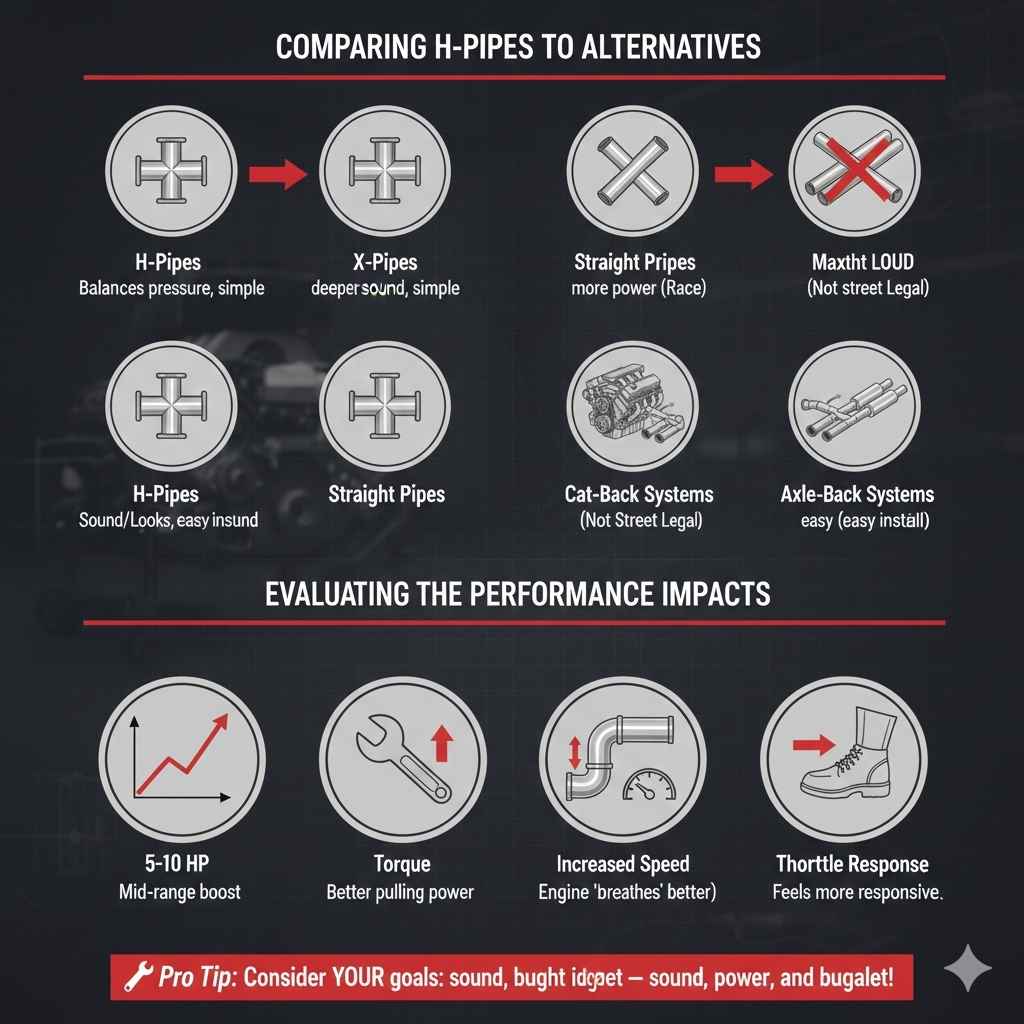
H-Pipes vs. X-Pipes: Different designs, similar goals.
Both H-pipes and X-pipes connect the exhaust pipes. X-pipes provide better exhaust flow because of their design. H-pipes are often simpler and cheaper to set up. Each type has its benefits. Many consider X-pipes to be better for racing.
H-Pipes vs. Straight Pipes: Very different sound, varied legality.
Straight pipes remove all restrictions, offering the best flow and power gains. However, straight pipes are very loud and may not be allowed on the road. H-pipes offer a balance of performance. They provide some power gains and a nice sound, while often staying within legal noise limits. Straight pipes are illegal in many states.
H-Pipes vs. Cat-Back Systems: A full system versus a single part.
Cat-back systems replace the exhaust from the catalytic converter back. They often include an H-pipe or X-pipe. They provide a complete upgrade, better performance and sound, and are easier to set up. They are much more expensive. An H-pipe is a simple upgrade that you can do alone.
H-Pipes vs. Axle-Back Systems: Upgrade from the rear axle.
Axle-back systems replace parts from the rear axle to the tailpipe. They are easy to install, but their performance gains are minor. H-pipes are better for performance but may be more work. This choice depends on what you are hoping to get.
Evaluating the Performance Impacts
The performance impacts of an H-pipe can be seen with numbers. These numbers are from dyno tests and real-world results. These numbers help show the value of H-pipes and other upgrades. These are just some examples, and the results will vary.
Horsepower Gains: Mostly in the mid-range.
You can usually expect horsepower gains of 5-10 HP with an H-pipe. These gains are often most noticeable in the mid-range, improving acceleration and throttle response. This is because the engine breathes better. Car people will notice this during normal driving conditions.
Torque Improvements: Better pulling power.
Along with horsepower, an H-pipe also often improves torque. This gives your car better pulling power. The added torque makes it easier to accelerate and pass other cars. These torque gains are not huge, but you will often notice it.
Exhaust Flow Tests: Increased gas exit speed.
Tests on the flow of exhaust gases show that H-pipes improve the exit speed. This helps the engine to “breathe” better. A better flow is what helps the engine work. This is one of the main reasons why you will see performance gains.
Real-World Driving: Better throttle response.
The performance changes can be felt in the way the car drives. Many car people will say that the throttle response is better. The engine feels more responsive. These small changes can make a big difference.
Frequently Asked Questions
Question: Will an H-pipe void my car’s warranty?
Answer: It depends. Modifications can void parts of the warranty. Always check your warranty and talk to your dealer to avoid issues.
Question: Is it difficult to install an H-pipe?
Answer: It can be a DIY project if you have the right tools and skills. It is often best to have a mechanic do it for you.
Question: Will an H-pipe make my car sound much louder?
Answer: It may make the sound different. It will probably be a little louder, but this depends on the rest of your exhaust system.
Question: Do I need to retune my engine after installing an H-pipe?
Answer: You usually don’t need a retune, but you might get more out of the setup with one.
Question: Are H-pipes legal everywhere?
Answer: No, you need to check the laws in your area about exhaust noise levels and modifications.
Final Thoughts
So, Do H-Pipes Really Work? Performance Facts show they can make a positive impact. They even out pressure and smooth the exhaust flow. This can bring small boosts in horsepower and torque, and a more pleasant exhaust note. Setting up an H-pipe is usually an easy upgrade that many car people are able to do by themselves. It’s important to consider what you need and what the laws allow. Choose the correct H-pipe for your car and engine. The results can be a more responsive engine and a more enjoyable driving experience. Now, you have everything you need to begin your journey.
Related pick: Check today's price on Amazon