Do Mid Pipes Add Horsepower Real Performance Test
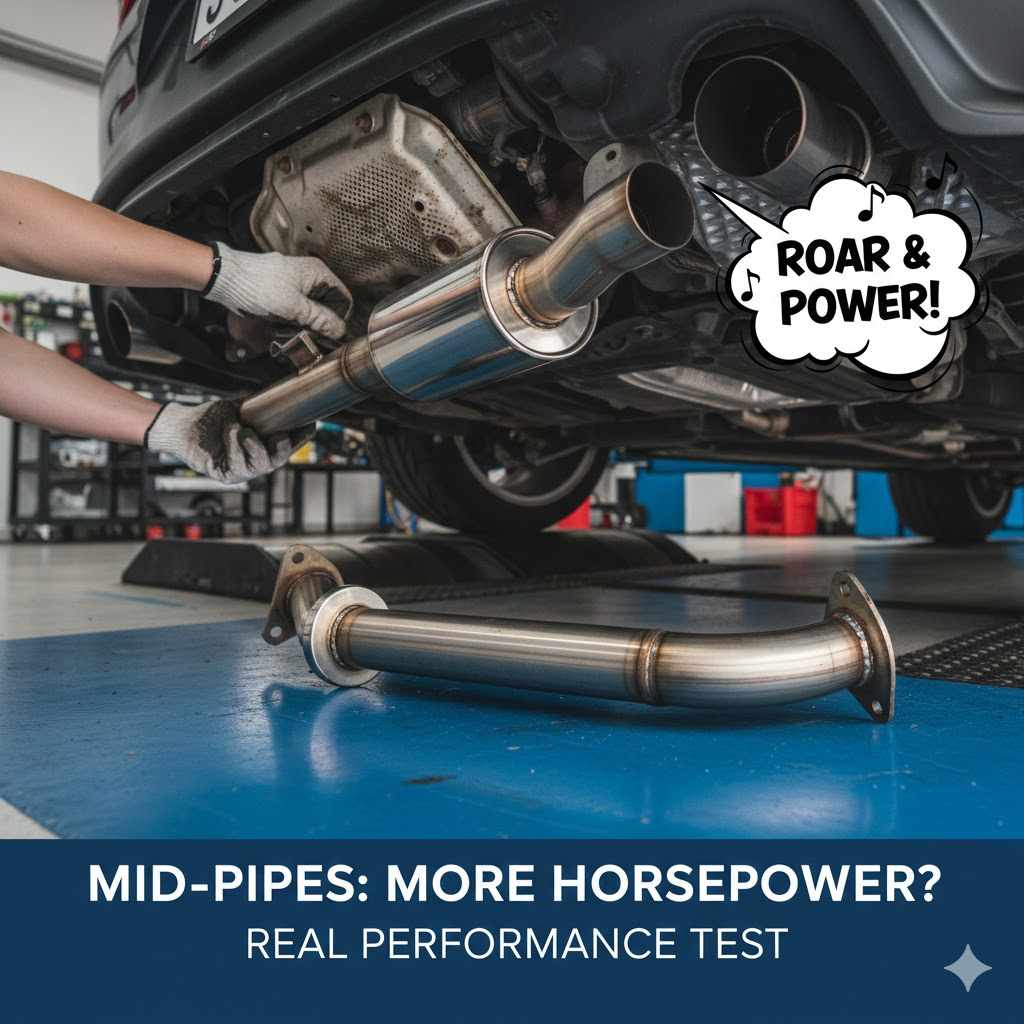
Many car owners wonder about the little things that make their car go faster. The question, “Do Mid Pipes Add Horsepower? Real Performance Test” pops up a lot.
It can seem tricky to figure out if these parts really make a difference for someone just starting out. Don’t worry, though! We’ll break it all down in a super simple way.
We’ll show you exactly what you need to know to understand how mid-pipes affect your car’s power. Get ready to learn something cool!
This section explores if changing your car’s mid-pipe can actually give it more power. We will look at how the exhaust system works and what role the mid-pipe plays. You’ll learn about different types of mid-pipes and what makes them perform differently.
We want to give you the real facts so you can make smart choices for your car. This part sets the stage for understanding the performance gains or losses.
What Is A Mid Pipe And How Does It Work
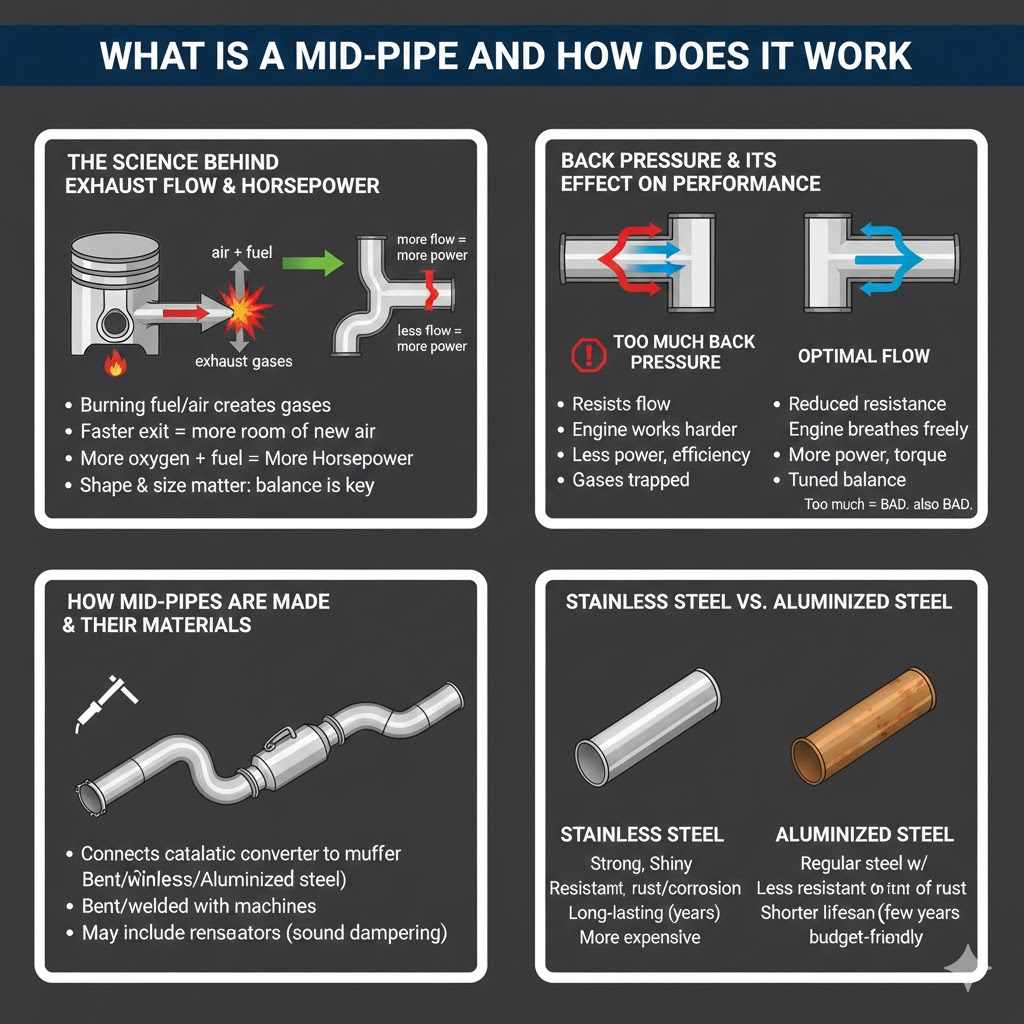
A mid-pipe is a part of your car’s exhaust system. It connects the catalytic converter to the muffler. Its main job is to let the exhaust gases flow smoothly away from the engine.
Think of it like a big pipe that carries smoke from a fire to the outside. The smoother the path, the easier it is for the smoke to get out. This makes the engine work better because it doesn’t have to push so hard to get rid of waste gases.
ocked or restricted, the engine can’t breathe well. This is why improving the exhaust can help. A better-flowing exhaust means the engine can work more efficiently.
This can lead to more power.
The Science Behind Exhaust Flow And Horsepower
Engines make power by burning fuel and air. This burning creates gases that need to exit the engine quickly. This exiting of gases is called exhaust.
The faster these gases can leave, the more room there is for new fuel and air to enter. This cycle repeats many times a second. If exhaust gases are trapped, the engine can’t breathe in as much.
This limits how much power it can make.
Horsepower is a measure of how much work an engine can do. More horsepower means the car can go faster or accelerate more quickly. A less restricted exhaust system allows the engine to expel gases more efficiently.
This means more power can be produced. It’s like trying to blow air through a small straw versus a wide tube. The wide tube lets more air through with less effort.
The shape and size of the exhaust pipes matter a lot. They need to be designed to handle the hot gases without slowing them down. Too small, and they choke the engine.
Too big, and the gases might slow down too much, which also isn’t good. There’s a sweet spot that works best for most engines. This is why performance exhaust parts are carefully engineered.
Back Pressure And Its Effect On Performance
Back pressure is the resistance to the flow of exhaust gases in the exhaust system. It’s like a traffic jam for the gases. Some amount of back pressure is actually good.
It helps the engine’s computer manage the fuel and air mix correctly. It also helps push exhaust gases out of the cylinders.
However, too much back pressure can hurt performance. When there’s too much resistance, the engine has to work harder to push the gases out. This wastes energy.
It also means the cylinders don’t get cleared out as well, so less fresh air and fuel can enter for the next cycle. This reduces the power the engine can make.
Performance exhaust systems, including certain mid-pipes, aim to reduce excessive back pressure. They do this by using larger diameter pipes and smoother bends. This allows gases to flow more freely.
The goal is to find the right balance. Too little back pressure can also be bad, leading to a loss of low-end torque.
How Mid Pipes Are Made And Their Materials
Mid-pipes are typically made from metal. Common materials include stainless steel and aluminized steel. Stainless steel is preferred for its durability and resistance to rust.
Aluminized steel is a more budget-friendly option, but it doesn’t last as long.
The manufacturing process involves bending and welding these metal tubes. Manufacturers use special machines to create the precise curves needed to fit the car’s undercarriage. They then weld on hangers and connection points so the mid-pipe can be easily installed.
Some high-performance mid-pipes might also include resonators. Resonators are small chambers designed to cancel out certain exhaust sounds. This can help reduce drone or unwanted noise without significantly restricting flow.
The design of these internal components is key to a good performing mid-pipe.
Stainless Steel Vs. Aluminized Steel
Stainless steel is a strong and shiny metal that doesn’t rust easily. This makes it great for parts that are exposed to water and salt, like exhaust systems. A stainless steel mid-pipe will last for many years, even in tough conditions.
It’s also a bit heavier than other metals.
Aluminized steel is regular steel that has been coated with aluminum. This coating helps prevent rust, but it’s not as tough as pure stainless steel. An aluminized steel mid-pipe might start to rust after a few years, especially if you live in an area with snow and salt on the roads.
It’s usually cheaper, though.
For most people who want a long-lasting upgrade, stainless steel is the better choice. If you’re on a tight budget and don’t plan to keep the car for a very long time, aluminized steel can be a good option.
The exhaust system is like your car’s breathing system. It takes the used air from the engine and sends it out. The engine needs to exhale freely to take in fresh air and fuel.
If the exhaust is blocked or restricted, the engine can’t breathe well. This is why improving the exhaust can help. A better-flowing exhaust means the engine can work more efficiently.
This can lead to more power.
The Science Behind Exhaust Flow And Horsepower
Engines make power by burning fuel and air. This burning creates gases that need to exit the engine quickly. This exiting of gases is called exhaust.
The faster these gases can leave, the more room there is for new fuel and air to enter. This cycle repeats many times a second. If exhaust gases are trapped, the engine can’t breathe in as much.
This limits how much power it can make.
Horsepower is a measure of how much work an engine can do. More horsepower means the car can go faster or accelerate more quickly. A less restricted exhaust system allows the engine to expel gases more efficiently.
This means more power can be produced. It’s like trying to blow air through a small straw versus a wide tube. The wide tube lets more air through with less effort.
The shape and size of the exhaust pipes matter a lot. They need to be designed to handle the hot gases without slowing them down. Too small, and they choke the engine.
Too big, and the gases might slow down too much, which also isn’t good. There’s a sweet spot that works best for most engines. This is why performance exhaust parts are carefully engineered.
Back Pressure And Its Effect On Performance
Back pressure is the resistance to the flow of exhaust gases in the exhaust system. It’s like a traffic jam for the gases. Some amount of back pressure is actually good.
It helps the engine’s computer manage the fuel and air mix correctly. It also helps push exhaust gases out of the cylinders.
However, too much back pressure can hurt performance. When there’s too much resistance, the engine has to work harder to push the gases out. This wastes energy.
It also means the cylinders don’t get cleared out as well, so less fresh air and fuel can enter for the next cycle. This reduces the power the engine can make.
Performance exhaust systems, including certain mid-pipes, aim to reduce excessive back pressure. They do this by using larger diameter pipes and smoother bends. This allows gases to flow more freely.
The goal is to find the right balance. Too little back pressure can also be bad, leading to a loss of low-end torque.
How Mid Pipes Are Made And Their Materials
Mid-pipes are typically made from metal. Common materials include stainless steel and aluminized steel. Stainless steel is preferred for its durability and resistance to rust.
Aluminized steel is a more budget-friendly option, but it doesn’t last as long.
The manufacturing process involves bending and welding these metal tubes. Manufacturers use special machines to create the precise curves needed to fit the car’s undercarriage. They then weld on hangers and connection points so the mid-pipe can be easily installed.
Some high-performance mid-pipes might also include resonators. Resonators are small chambers designed to cancel out certain exhaust sounds. This can help reduce drone or unwanted noise without significantly restricting flow.
The design of these internal components is key to a good performing mid-pipe.
Stainless Steel Vs. Aluminized Steel
Stainless steel is a strong and shiny metal that doesn’t rust easily. This makes it great for parts that are exposed to water and salt, like exhaust systems. A stainless steel mid-pipe will last for many years, even in tough conditions.
It’s also a bit heavier than other metals.
Aluminized steel is regular steel that has been coated with aluminum. This coating helps prevent rust, but it’s not as tough as pure stainless steel. An aluminized steel mid-pipe might start to rust after a few years, especially if you live in an area with snow and salt on the roads.
It’s usually cheaper, though.
For most people who want a long-lasting upgrade, stainless steel is the better choice. If you’re on a tight budget and don’t plan to keep the car for a very long time, aluminized steel can be a good option.
Do Mid Pipes Add Horsepower Real Performance Test Results
Here, we will look at actual tests and data to see if mid-pipes really boost your car’s power. We’ll discuss what a “performance mid-pipe” is and how it’s different from a stock one. You will find out what kind of gains people can expect and what factors influence them.
This is where we get to the heart of the question.
Understanding Performance Mid Pipes
A performance mid-pipe is designed to improve exhaust flow. It often has a larger diameter than the original pipe. It might also have smoother bends, meaning fewer sharp turns.
Some performance mid-pipes are straight pipes, meaning they remove the catalytic converter. This is often illegal and bad for the environment.
Other performance mid-pipes are designed to work with high-flow catalytic converters. These converters allow exhaust gases to pass through more easily than standard ones. The goal of a performance mid-pipe is to reduce back pressure.
This allows the engine to breathe better.
Some performance mid-pipes are also called “cat-back” systems. This means they replace everything from the catalytic converter back to the exhaust tip. However, a true mid-pipe replacement just changes the section between the catalytic converter and the muffler.
The term can be a bit confusing, but the main idea is better flow.
Features of a Performance Mid Pipe
Performance mid-pipes often feature a larger internal diameter. This wider pipe allows more exhaust gas to escape the engine at a faster rate. The smoother, mandrel-bent curves are another key feature.
Mandrel bending ensures the pipe’s diameter stays consistent around the bend, unlike crush bends that can narrow the passage.
Some performance mid-pipes are made from lightweight materials like titanium or thinner gauge stainless steel. This can slightly reduce the overall weight of the car, which indirectly helps with performance. They might also incorporate different muffler designs or resonator delete pipes to further optimize flow and sound.
These pipes are engineered to work with the specific engine and exhaust manifold of a vehicle. This ensures optimal performance gains. Generic pipes may not offer the same benefits and could even cause issues.
Real World Dyno Tests And Gains
Dyno tests are the best way to measure horsepower and torque gains. A dynamometer (dyno) is a machine that measures the power output of an engine. For these tests, a car is driven on rollers that create resistance.
Sensors measure how much force the wheels are applying.
Many tests have been done on various cars. Some tests show modest gains, like 5 to 10 horsepower. Other tests with more aggressive mid-pipes, or when combined with other mods, can show larger gains.
It really depends on the car and the specific mid-pipe.
For example, a common test on a V6 sports sedan might show an increase of 7 horsepower and 6 lb-ft of torque after installing a performance mid-pipe. This might not sound like a lot, but it can make the car feel more responsive. These gains are usually most noticeable at higher RPMs.
Factors Affecting Horsepower Gains
Several things can affect how much horsepower a mid-pipe adds. The type of car is a big one. A turbocharged car might see different gains than a naturally aspirated one.
The existing exhaust system also plays a role. If the stock exhaust is already pretty free-flowing, the gains from a new mid-pipe will be smaller.
The quality of the mid-pipe itself is also important. A well-designed pipe with smooth bends and the right diameter will perform better than a poorly made one. The material used can also make a difference, though usually the design is more critical for horsepower.
Finally, the air intake system and the engine’s computer (ECU) can influence gains. If the car’s intake is restrictive, the engine can’t get enough air to take advantage of the better exhaust flow. Similarly, the ECU might need to be reprogrammed to fully optimize the engine for the new exhaust.
Case Study A Stock Catback Exhaust Vs Performance Mid Pipe
Let’s look at a specific example. A 2018 Honda Civic Si was tested with its stock exhaust. Then, a performance mid-pipe was installed.
The car was run on a dyno before and after the change.
On the stock exhaust, the car produced 195 horsepower and 180 lb-ft of torque at the wheels. After installing a high-flow performance mid-pipe, the same car was re-tested.
The results showed an increase to 203 horsepower and 187 lb-ft of torque at the wheels. This is a gain of 8 horsepower and 7 lb-ft of torque. While not a massive jump, it represents a noticeable improvement in performance for a relatively simple modification.
This kind of gain is typical for many cars.
Comparing Different Mid Pipe Designs
Mid pipes come in different styles. Some are straight pipes, meaning they remove the catalytic converter. Others
Straight pipes often offer the largest horsepower gains because they remove the restriction of the catalytic converter entirely. However, they are usually illegal and can cause your car to fail emissions tests. They also make the exhaust much louder.
Mid pipes with high-flow catalytic converters offer a good balance. They improve flow and provide some horsepower gains while still keeping the car street legal and reducing harmful emissions. These are generally the best choice for most drivers.
Do Mid Pipes Add Horsepower Real Performance Test Considerations
Beyond just horsepower, there are other things to think about when considering a mid-pipe upgrade. We’ll talk about the sound your car will make, if it will be legal, and what it will cost. These are important factors for anyone looking to change their car’s exhaust.
The Sound Of Your Exhaust
Changing the mid-pipe will definitely change the sound of your car’s exhaust. Stock mid-pipes often have mufflers or resonators that quiet things down. A performance mid-pipe might remove some of these sound-dampening components.
This can make the exhaust note deeper and louder.
Some performance mid-pipes are designed to reduce drone. Drone is an annoying, constant humming sound that can occur at certain RPMs. Others might increase it.
It’s important to listen to sound clips or reviews of the specific mid-pipe you are considering.
If you want a sportier sound, a performance mid-pipe can provide that. If you prefer a quiet ride, you might want to stick with a stock or modified stock system. The sound is a very personal preference.
Resonators And Mufflers
Resonators and mufflers are key parts of the exhaust system that control sound. A muffler uses chambers and baffles to quiet down the exhaust noise. A resonator uses sound waves to cancel out specific frequencies, often targeting the lower, rumbling sounds.
Many performance mid-pipes will either have a smaller, less restrictive muffler or will remove the stock muffler altogether. Some might also remove the resonator. The absence of these components leads to a louder and more aggressive exhaust sound.
For example, a “muffler delete” pipe
Legality And Emissions
This is a very important point. Modifying your exhaust system can have legal consequences. In many places, removing or tampering with your catalytic converter is illegal.
This is because catalytic converters are crucial for reducing harmful emissions from your car.
Even if you don’t remove the catalytic converter, changes to the mid-pipe can affect how your car performs on emissions tests. Some performance mid-pipes are designed to work with high-flow catalytic converters, which are legal in some areas. Always check your local laws and regulations before making exhaust modifications.
Ignoring these laws can lead to fines or your car being deemed unroadworthy. It’s best to choose parts that are certified for street use or consult with a professional to ensure compliance.
What About Emissions Testing
Emissions testing is designed to ensure cars are not polluting the air too much. Catalytic converters play a huge role in this. If a mid-pipe modification alters or removes the catalytic converter, it can cause your car to fail emissions tests.
Even if the catalytic converter is still in place, changes to the exhaust flow can sometimes affect the readings during an emissions test. Some aftermarket mid-pipes are designed to be emissions-legal. They often use high-flow catalytic converters that meet certain standards.
It’s crucial to research your local emissions requirements. Some states have stricter rules than others. If you live in a region with strict emissions testing, you need to be very careful about the modifications you choose.
Cost And Installation
The cost of a performance mid-pipe can vary quite a bit. Simple, aluminized steel mid-pipes might cost a few hundred dollars. High-quality stainless steel pipes, especially those from reputable brands, can cost upwards of $500 to $1000 or more.
Installation can also add to the cost. If you are comfortable working on cars, you might be able to install it yourself, saving on labor costs. However, if you need a professional mechanic to do it, expect to pay for their time.
Installation typically takes 1-3 hours, depending on the complexity of the exhaust system.
When considering the cost, remember to factor in potential legal issues or the need for future repairs if a cheaper part fails prematurely. A slightly more expensive, well-made part might save you money in the long run.
DIY Installation Versus Professional
Installing a mid-pipe can be a do-it-yourself project for someone with basic mechanical skills and tools. You’ll need wrenches, possibly some penetrating oil to loosen rusted bolts, and a way to safely lift the car (like jack stands).
However, some exhaust systems can be rusted and difficult to remove. If bolts are seized or the old pipe is hard to detach, it can become a frustrating job. A professional mechanic has the experience and specialized tools to handle these situations efficiently.
For many, the peace of mind that comes with professional installation is worth the extra cost. They can also ensure the new mid-pipe is properly sealed and secured, preventing leaks.
Frequently Asked Questions
Question: Can I install a mid pipe myself
Answer: Yes, with basic tools and mechanical knowledge, many mid pipes can be installed at home. However, if you encounter rusted bolts or difficulty, professional help is recommended.
Question: Will a mid pipe make my car illegal
Answer: Modifying your exhaust, especially by removing the catalytic converter, can make your car illegal. Always check local laws regarding emissions and exhaust modifications.
Question: How much horsepower can I expect from a mid pipe
Answer: Horsepower gains from a mid pipe typically range from 5 to 15 horsepower, depending on the car and the specific product.
Question: Does a mid pipe affect fuel economy
Answer: In some cases, a less restrictive mid pipe might slightly improve fuel economy due to better engine efficiency. However, the effect is usually minimal.
Question: What is the difference between a mid pipe and a cat-back system
Answer: A mid pipe replaces the section between the catalytic converter and the muffler. A cat-back system replaces everything from the catalytic converter back to the exhaust tip, including the mid pipe and muffler.
Summary
So, do mid pipes add horsepower? Yes, they can, but the gains are often modest. A well-designed performance mid-pipe can improve exhaust flow, leading to a small but noticeable increase in power.
Consider the sound, legality, and cost to make the best choice for your car.