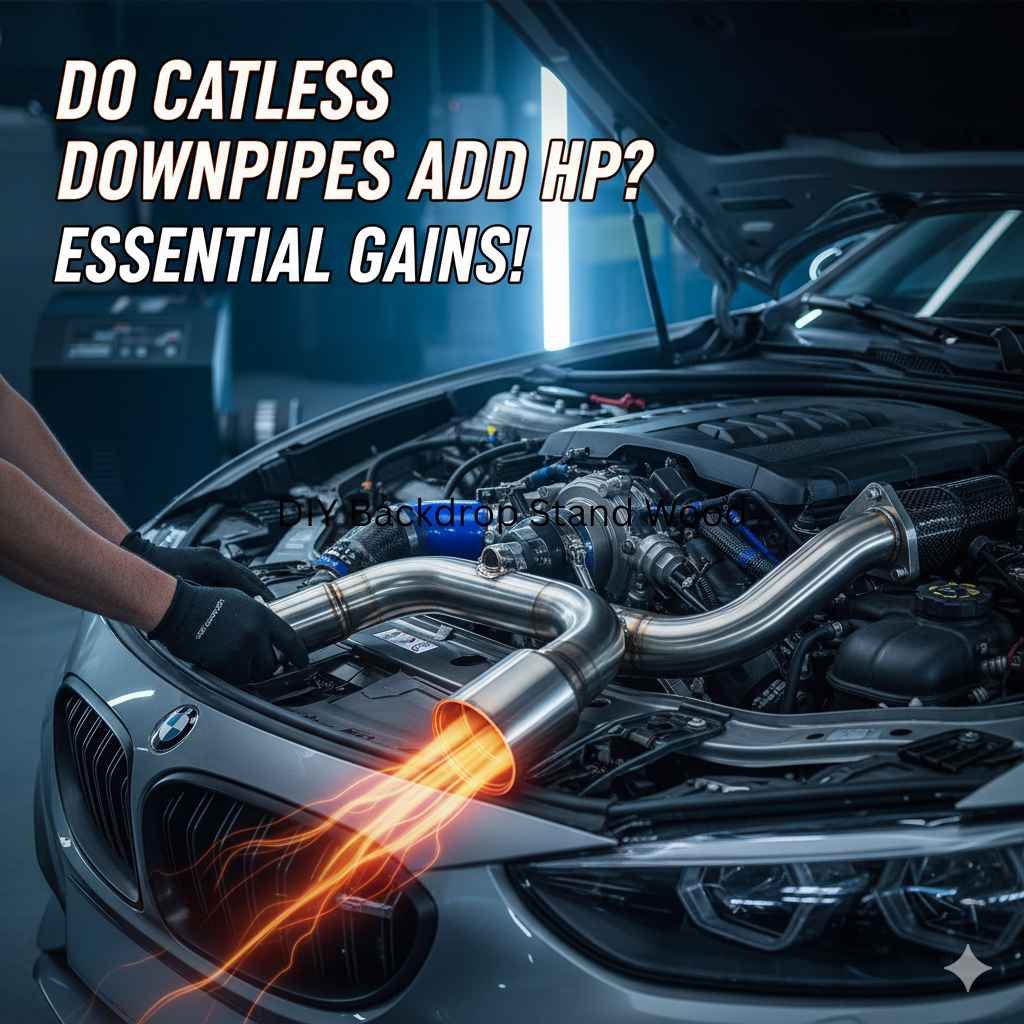
Do Catless Downpipes Add HP? Essential Gains!
Yes, catless downpipes can add horsepower and torque by improving exhaust flow and reducing backpressure. This allows your engine to breathe more freely, leading to a noticeable performance boost. For many car owners, this is a popular upgrade for enhanced speed and response.
Thinking about upgrading your car’s exhaust? You’ve probably heard the term “catless downpipe” and wondered what it is and if it actually makes your car faster. It sounds a bit technical, and maybe even a little intimidating. But don’t worry, I’m here to break it all down for you in a way that makes perfect sense. We’ll explore exactly what a catless downpipe does, how much power you can expect, and what else you need to know before you even think about making this change. Stick with me, and by the end, you’ll feel confident understanding this exhaust upgrade.
What Exactly is a Downpipe?
Let’s start with the basics. Your car’s exhaust system is like its breathing apparatus. It takes the burnt gases from your engine and sends them out the back. The downpipe is a crucial part of this system. It’s the pipe that comes right after your turbocharger (if your car has one) or exhaust manifold. Its main job is to connect these components to the rest of your exhaust system, which usually includes a catalytic converter and a muffler.
Think of it as the first section of pipe after your engine’s “lungs” have exhaled. It’s a pretty direct pathway for those hot exhaust gases. Because it’s one of the first pipes in the system, its design and how freely it allows exhaust to flow have a big impact on how well your engine can perform.

The Role of the Catalytic Converter
Before we get into catless pipes, we need to understand why most cars have catalytic converters in the first place. The catalytic converter is a vital part of your car’s emissions system. It looks like a metal box or a section of pipe with a honeycomb-like structure inside, coated with precious metals like platinum, palladium, and rhodium.
Its job is to convert harmful exhaust pollutants – like carbon monoxide, hydrocarbons, and nitrogen oxides – into less harmful gases such as carbon dioxide, nitrogen, and water vapor. This process significantly cleans up the exhaust gases before they are released into the atmosphere. It’s a crucial component for environmental protection and meeting legal emissions standards. The catalytic converter does create some restriction in the exhaust flow because of its design and the chemical process happening inside.
You can find more information about how catalytic converters work on the U.S. Environmental Protection Agency’s website.
So, What is a Catless Downpipe?
A catless downpipe, as the name suggests, is an aftermarket replacement for your car’s factory downpipe that does NOT contain a catalytic converter. Instead of a restricted flow through the catalytic converter, it offers a straight-through pipe. This significantly reduces the backpressure and obstruction in your exhaust system.
Imagine trying to blow through a straw that’s been slightly bent versus blowing through a perfectly straight, wider straw. The straight, wide straw will let air come out much more easily. That’s essentially what a catless downpipe does for your engine’s exhaust gases. It allows them to exit the engine and turbocharger much faster and with less resistance.
Do Catless Downpipes Add HP? The Essential Gains Explained
Now, to the big question: do catless downpipes add horsepower (HP) and torque? The straightforward answer is yes, they often do.
By reducing exhaust backpressure, a catless downpipe allows your engine, especially a turbocharged one, to operate more efficiently. Here’s how it translates to performance gains:
Improved Turbocharger Spool: In turbocharged engines, a less restricted exhaust means the turbocharger can spin up faster. This is often referred to as reducing “turbo lag” – the delay between pressing the accelerator and feeling the turbo boost kick in. Faster spooling means quicker response and more power when you need it.
Increased Airflow: With less obstruction, more exhaust gas can escape the cylinders. This helps the engine “inhale” a fresh charge of air and fuel more effectively on the next cycle. Think of it as helping the engine to “breathe out” more freely so it can “breathe in” better.
Higher Peak Power: The combination of faster spool and better airflow can lead to an increase in both horsepower and torque, particularly at higher RPMs and during boost.
Better Turbocharger Efficiency: A more efficient exhaust path can mean the turbo doesn’t have to work as hard to generate the same amount of boost pressure, potentially leading to better overall efficiency under load.
How much HP? This is where it gets a bit variable. The actual horsepower gain depends heavily on several factors:
Your Car’s Engine: Naturally aspirated engines will see smaller gains compared to turbocharged engines.
Turbo Size and Type: Larger turbos often benefit more from improved exhaust flow.
Other Modifications: Gains are usually amplified when other performance parts are installed, such as an upgraded intake, intercooler, or a custom ECU tune.
The Factory System Itself: Cars with highly restrictive factory downpipes will see more significant gains than those with already efficient designs.
Generally, for a turbocharged car, you might see anywhere from 5 to 20+ horsepower gains from just installing a catless downpipe. When combined with a custom tune, these numbers can increase significantly.
Estimating Performance Gains
It’s important to have realistic expectations. While catless downpipes offer gains, they aren’t a magic bullet for doubling your car’s power. Here’s a general idea of what you might expect, keeping in mind these are estimates and actual results will vary:
| Vehicle Type | Typical HP/Torque Gain (with Tune) | Notes |
|---|---|---|
| Turbocharged Economy Car | 10–25 HP / 15–30 lb-ft Torque | Noticeable improvement in acceleration and responsiveness. |
| Performance Turbo Car | 15–40 HP / 20–50 lb-ft Torque | Significant boost in feel, especially around mid-range RPMs. |
| High-Performance Turbo Car | 20–60+ HP / 30–70+ lb-ft Torque | Gains are more pronounced, especially with supporting mods and a good map. |
| Naturally Aspirated Car | 2–8 HP / 2–5 lb-ft Torque | Minimal gains, as the primary benefit is for turbocharged engines. |
Important Note: These figures are often observed with a proper ECU (Engine Control Unit) tune that optimizes the engine’s fuel and boost settings to take full advantage of the improved exhaust flow. Without a tune, gains might be lower, and in some cases, it could even lead to less optimal performance if the car’s computer isn’t adjusted.
The Sound Factor
Beyond horsepower, catless downpipes significantly alter the sound of your exhaust. They tend to make the exhaust note louder, deeper, and more aggressive. For many enthusiasts, this is a desirable characteristic. However, it’s also a key consideration, as a louder exhaust can be more noticeable and might not be to everyone’s liking, especially for daily driving.
Considerations Before Installing a Catless Downpipe
While the performance benefits are enticing, installing a catless downpipe comes with significant considerations that every car owner should be aware of. These aren’t just about wrenching on your car; they involve legal, environmental, and vehicle health aspects.
1. Legality and Emissions Compliance
This is perhaps the most critical point. In many regions, removing or tampering with your catalytic converter is illegal. Catalytic converters are mandated by emissions regulations designed to protect air quality. Driving a vehicle without a functional catalytic converter on public roads can result in:
Failed Emissions Tests: If your area requires emissions testing, your car will not pass.
Fines and Penalties: Law enforcement can issue tickets or fines for tampering with emissions equipment.
Inability to Register Your Vehicle: Some jurisdictions may refuse to register a vehicle that doesn’t meet emissions standards.
It’s crucial to check your local, state, and federal laws regarding emissions equipment. Organizations like the U.S. Environmental Protection Agency (EPA) provide comprehensive information on vehicle emissions standards. The EPA mandates that emissions control components are not tampered with or removed. Many aftermarket parts are sold for “off-road use only” or “racing purposes” to acknowledge these restrictions.
2. Check Engine Light (CEL)
Modern vehicles have oxygen sensors (O2 sensors) before and after the catalytic converter. These sensors monitor the efficiency of the converter. When you remove the catalytic converter, the rear O2 sensor will likely detect that the exhaust gases are not being processed as expected, leading to a “Check Engine Light” (CEL) illumination on your dashboard.
To combat this:
O2 Sensor Spacers/Foulers: These are simple devices that can sometimes trick the rear O2 sensor into thinking the catalytic converter is still present and functioning properly. They essentially move the sensor out of the direct exhaust stream. This is a common, low-cost solution but doesn’t always work on all vehicles.
ECU Tune/Remap: The most reliable way to prevent or turn off the CEL is by reprogramming your car’s Engine Control Unit (ECU) or “remapping” it. A professional tune can disable the rear O2 sensor code or adjust the parameters so the ECU doesn’t trigger a fault. This is often done in conjunction with other performance modifications.
3. Environmental Impact
Catalytic converters are essential for reducing harmful pollutants. By removing one, you are increasing the number of toxic gases released from your vehicle into the atmosphere. This contributes to air pollution, smog, and climate change. While the performance gains can be exciting, it’s important to weigh them against the environmental consequences.
4. Warranty Concerns
Modifying your vehicle’s exhaust system, especially by removing emissions control devices, can potentially void your vehicle’s manufacturer warranty. If you experience issues with your engine or drivetrain after installing a catless downpipe, the manufacturer may deny warranty claims if they can prove the modification caused or contributed to the problem. This is a risk that many performance enthusiasts are willing to take, but it’s important to be aware of.
5. Other Modifications and Supporting Mods
As mentioned earlier, a catless downpipe often works best when paired with other upgrades and, crucially, an ECU tune. Without a tune, you might experience reduced performance on some vehicles, or the car’s computer may not be optimally adjusted for the new exhaust flow. A custom tune can:
Safely optimize air-fuel ratios: This ensures the engine runs efficiently and avoids potential damage.
Adjust boost pressure: For turbocharged cars, a tune can safely increase boost levels to take advantage of the reduced backpressure.
Turn off CEL triggers: Reliably fix the Check Engine Light issue.
Improve throttle response and overall drivability.
Other supporting modifications that can complement a catless downpipe include:
Cold Air Intake: Improves airflow into the engine.
Upgraded Intercooler: More efficient cooling of charged air for turbocharged engines.
Performance Exhaust System: A catless downpipe is just the first step; a larger, free-flowing cat-back exhaust system can further enhance gains.
6. Installation Complexity
While the concept is simple, installing a downpipe can range from moderately difficult to very challenging, depending on your vehicle and your mechanical skill level. It involves working underneath the car, dealing with potentially rusty bolts, and ensuring a good seal at all connection points.
Tools You Might Need (General List):
Safety Glasses and Gloves
Jack and Jack Stands (essential for safety!)
Ratchet Set (Metric and/or SAE, depending on your car)
Wrench Set
Breaker Bar (for stubborn bolts)
Penetrating Oil (like WD-40 or PB Blaster)
Torque Wrench (for proper tightening)
New Gaskets and Hardware (highly recommended)
* Possibly a Sawzall or Angle Grinder (if factory bolts are seized, though this is a last resort and often indicates a much harder job)
If you’re not comfortable working under your car or dealing with exhaust components, it’s best to have this modification done by a qualified mechanic or a performance shop. They have the experience and tools to do the job correctly and safely.
Catless Downpipes vs. High-Flow Catalytic Converters
For car owners who want some performance improvement but are concerned about legality, emissions, and environmental impact, a high-flow catalytic converter is a popular alternative.
A high-flow cat looks similar to a standard one but uses a less restrictive internal design and often a higher-density catalyst material. This allows for better exhaust flow than a stock catalytic converter while still performing its emissions-cleaning function.
Here’s a quick comparison:
| Feature | Catless Downpipe | High-Flow Cat Downpipe | Stock Downpipe w/ Cat |
|---|---|---|---|
| HP/Torque Gains | Highest — unrestricted exhaust flow | Moderate to High — improved flow with emissions control | Lowest — restrictive for performance |
| Exhaust Sound | Loudest, raw and aggressive tone | Deeper, sportier, still controlled | Quietest, smooth and muffled |
| Emissions | None processed, releases raw exhaust gases | Partially processed, less effective than OEM | Fully processed, meets emission standards |
| Legality | Illegal for street use in most regions | Usually legal, depending on local laws | Completely legal |
| Check Engine Light (CEL) | Almost certain without tune/O2 spacer | Less likely, especially with proper tune | No CEL issues |
| Environmental Impact | High, pollutes more | Moderate, cleaner than catless | Low, environmentally friendly |
| Cost | Moderate, cheaper materials and design | Moderate to High, depends on cat quality | Included with vehicle |
| Warranty Impact | High risk — often voids powertrain warranty | Moderate risk, depending on brand and install | No impact |
Choosing between a catless downpipe and a high-flow cat depends on your priorities. If maximum performance and a very aggressive sound are your only concerns, and you can manage the legal risks, a catless pipe might be your choice. If you want a significant performance bump without the major legal and environmental drawbacks, a high-flow cat is a much more sensible option for most drivers.

Frequently Asked Questions (FAQ)
Here are some common questions beginners have about catless downpipes.
Q1: Will a catless downpipe make my car illegal to drive on the street?
A: In most places, yes. Removing or replacing a catalytic converter is illegal for street use because it bypasses emissions regulations. It’s essential to check your local laws. Many people use these parts for track or off-road use only.
Q2: Will my Check Engine Light come on if I install a catless downpipe?
A: Almost certainly. Your car’s computer uses oxygen sensors to measure the effectiveness of the catalytic converter. Without it, the sensors will detect an issue, triggering the Check Engine Light. You’ll usually need an ECU tune or an O2 sensor spacer to prevent this.
Q3: How much louder will my exhaust be with a catless downpipe?
A: Your exhaust will be noticeably louder and have a deeper, more aggressive tone. The exact increase in volume and tone depends on your car’s specific engine and the rest of your exhaust system. It can be quite significant.
Q4: Do I need a tune after installing a catless downpipe?
A: It is highly recommended, especially for turbocharged cars. A tune optimizes your engine’s performance for the new exhaust flow, prevents the Check Engine Light, and ensures safe operation. For some modern, sophisticated engines, it might be necessary to avoid running lean and potentially damaging the engine.
Q5: Can I install a catless downpipe myself?
A: If you have some mechanical experience and the right tools (including safety equipment like jack stands), you might be able to. However, working under a car and dealing with exhaust bolts can be challenging. If you’re unsure, it’s best to have it professionally installed by an experienced mechanic or performance shop.
Q6: Will a catless downpipe affect my car’s fuel economy negatively?
A: This can go either way. When driving gently, you might see a slight improvement due to better engine efficiency. However, if you’re constantly enjoying the new power and sound, your fuel economy will likely decrease because you’ll be using more throttle more often.
Q7: Are there any benefits to a catless downpipe for naturally aspirated engines?
A: The gains for naturally aspirated (non-turbocharged) engines are typically very small, often only a few horsepower. The main advantage of reduced backpressure is most pronounced in turbocharged applications where it helps the turbo spool up faster and more efficiently. For naturally aspirated cars, other modifications usually offer a better return on investment for performance.
Conclusion
So, do catless downpipes add HP? Yes, they absolutely can, especially on turbocharged vehicles. By removing the catalytic converter, you reduce exhaust backpressure, allowing your engine to breathe more freely, spool the turbo faster, and ultimately produce more power and torque. The performance gains can be significant and are often further amplified with supporting modifications and a proper ECU tune.
However, this performance leap comes with important trade-offs. The legality of catless downpipes for street use is a major concern in most areas due to emissions regulations. You’ll likely encounter a Check Engine Light that requires attention, and the environmental impact of releasing unfiltered exhaust gases is undeniable. Furthermore, such modifications can affect your vehicle’