
Are Downpipes Only for Turbo Cars

Are Downpipes Only for Turbo Cars? Essential Guide

No, downpipes are NOT exclusively for turbocharged cars. Every internal combustion engine car has a downpipe as a vital part of its exhaust system, regardless of whether it has a turbocharger or not. Its primary job is to efficiently channel exhaust gases away from the engine.

Are Downpipes Only for Turbo Cars? Your Essential Guide

Ever wondered about that pipe connecting your engine to the rest of your car’s exhaust system? You might have heard the term “downpipe” and perhaps associated it with the roar of turbocharged performance cars. It’s easy to get confused, especially with all the talk about exhaust upgrades and special parts for souped-up rides. But here’s a little secret: your everyday sedan, SUV, or even your trusty old commuter car has one too! This guide will demystify the downpipe, explain its crucial role, and clarify why it’s an essential component for every gasoline car, not just the ones with turbos.

We’ll break down what a downpipe is, how it works, and what’s different about them in turbocharged versus naturally aspirated vehicles. By the end, you’ll understand this unsung hero of your exhaust system and feel confident about its function. Let’s get started on understanding this key part of your vehicle!

What Exactly is a Downpipe?

Think of your car’s exhaust system like a highway for burnt gases. After your engine burns fuel, it produces a lot of hot exhaust gases. These gases need to go somewhere safe, away from the car’s cabin and the engine itself, to be treated and released into the atmosphere. The downpipe is the very first section of this highway, right after the exhaust manifold.

The exhaust manifold is the part bolted directly to your engine’s cylinder head, collecting exhaust gases from each cylinder. The downpipe then takes these combined gases and directs them downwards (hence the name!) towards the rest of the exhaust system, which typically includes a catalytic converter, muffler, and tailpipe.

Its main jobs include:

Collecting Exhaust Gases: It gathers exhaust gases from the exhaust manifold.
Directing Flow: It guides these gases smoothly into the rest of the exhaust system.
Reducing Backpressure: A well-designed downpipe helps gases flow out efficiently, reducing resistance.

Essentially, it’s the critical first step in getting those exhaust fumes out of your car.
Are Downpipes Only for Turbo Cars

Expand your knowledge about Buying Guides & Comparisons with this article. 304 vs 409 Stainless Exhaust: Essential Guide

Downpipe vs. Exhaust Manifold vs. Catalytic Converter: What’s What?

It can get a bit confusing with all these parts of the exhaust system. Let’s clear things up briefly:

Exhaust Manifold: This is bolted directly to the engine. It looks like a series of pipes coming out of the engine block, designed to collect exhaust from each cylinder into one outlet.
Downpipe: This is the pipe that connects immediately after the exhaust manifold outlet. It’s the first piece of the exhaust piping running underneath your car.
Catalytic Converter: This is a device in the exhaust system that uses special metals to convert harmful exhaust gases into less harmful ones. It usually comes after the downpipe.

Think of it like this: The manifold is the gathering point at the engine, the downpipe is the initial chute, and the catalytic converter is the treatment plant the gases pass through next.

The Role of the Downpipe in Naturally Aspirated (Non-Turbo) Cars

For cars without a turbocharger, often called “naturally aspirated” (NA) engines, the downpipe plays a straightforward but vital role. In these vehicles, the exhaust gases are pushed out of the engine solely by the piston’s movement and the natural pressure build-up.

The downpipe in an NA car is designed to:

Facilitate Smooth Exit: Ensure gases leave the manifold efficiently and head towards the catalytic converter.
Minimize Pulsations: Help to smooth out the “pulses” of exhaust gas coming from individual cylinders.
Integrate with Components: Provide the correct connection point for the catalytic converter and other exhaust parts.

While performance isn’t usually boosted by a different downpipe on an NA car as much as on a turbo car, a standard, well-maintained downpipe is crucial for proper engine function, emissions control, and preventing exhaust leaks. For example, a leaky downpipe can cause exhaust fumes to enter the cabin, which is dangerous due to toxic gases like carbon monoxide. You can learn more about car exhaust safety from the U.S. Environmental Protection Agency.

Explore more about Downpipes with this related post. Are Downpipes Bad For Your Car? Essential Insight

The Downpipe’s Special Job in Turbocharged Cars

Here’s where the downpipe often gets highlighted. Turbocharged cars produce significantly more exhaust gas volume and at higher temperatures than naturally aspirated cars. A turbocharger uses these exhaust gases to spin a turbine, which in turn compresses intake air, forcing more air into the engine for more power.

Because of this, the downpipe in a turbocharged car has a few extra considerations and potential for upgrades:

Handling Higher Volumes: It needs to handle a larger quantity of exhaust gas being expelled rapidly.
Turbo Spool: The downpipe’s design directly impacts how quickly the turbocharger “spools up” or starts producing boost. A more restrictive downpipe can delay turbo spool, leading to slower acceleration.
Catalytic Converter Size: Turbocharged cars often have larger catalytic converters, and the downpipe needs to accommodate this.
Aftermarket Performance: This is where upgrading is most common. Aftermarket performance downpipes for turbo cars are typically designed to be larger in diameter and smoother internally to reduce exhaust restriction. This allows spent gases to escape faster, leading to:
Quicker turbo spool.
More horsepower and torque.
A more aggressive exhaust note.
Potentially better fuel efficiency (though this is less common with performance upgrades).

Many performance-focused downpipes, especially for turbocharged cars, might omit or be designed to work with a high-flow catalytic converter, or in some racing applications, be a “cat-delete” pipe (which is illegal for street use in most places).

Materials and Construction: What Are Downpipes Made Of?

Downpipes are typically made from durable metals that can withstand high temperatures and corrosive exhaust gases. The most common materials include:

Common Downpipe Materials

Mild Steel: This is a common, cost-effective material. However, it’s prone to rust and corrosion over time, especially in areas with harsh weather conditions or road salt. It’s often coated for some protection.
Stainless Steel: This is a much more durable and corrosion-resistant option. It’s more expensive than mild steel but offers a longer lifespan and better resistance to rust. There are different grades of stainless steel, with 304 and 409 being common in exhaust systems. 304 is more corrosion-resistant than 409.
Aluminized Steel: This is mild steel coated with aluminum. It offers better corrosion resistance than plain mild steel and is a good middle-ground option in terms of cost and durability.

The construction also varies. Some downpipes are a single, bent piece of tubing, while others might be made of multiple sections welded together. Higher-quality aftermarket downpipes often feature mandrel bends, which maintain a constant diameter through bends, unlike crush bends that can constrict the pipe. This smooth flow is key for performance.

Dive deeper into Downpipes by checking out this article. Are Downpipes Legal: Essential Facts Revealed

Differences in Downpipe Design: A Comparative Look

The fundamental job of a downpipe remains the same, but the specifics can differ between NA and turbo applications.

FeatureNaturally Aspirated (NA) DownpipeTurbocharged Downpipe
DiameterTypically smaller, sized for moderate gas flow.Generally larger, designed for higher gas volumes.
Flow PathDesigned for efficient exit from manifold.Crucial for turbo spool speed; often smoother.
Pressure DropLess critical, but still a factor for efficiency.Highly scrutinized for turbo performance.
Heat StressHigh, but generally lower than turbo systems.Very high due to proximity to turbocharger.
Upgrade FocusLess common for significant performance gains.Very common for performance gains (spool, power).
ComplexitySimpler integration with exhaust system.May include specific mounting for turbo housing.

As you can see, while both serve the same core purpose, the engineering demands for a downpipe in a turbocharged engine are significantly higher, leading to different design choices and upgrade potential.

Can You Upgrade Your Downpipe?

Yes, you absolutely can upgrade your downpipe! This is one of the more common exhaust modifications, especially for turbocharged vehicles.

Why Upgrade Your Downpipe?

Performance Boost: For turbo cars, a larger, smoother downpipe reduces exhaust backpressure. This means the turbo can spin up faster (better spool), leading to increased horsepower and torque.
Improved Sound: A less restrictive downpipe can alter the exhaust note, often making it deeper and more aggressive.
Better Engine Response: Reduced backpressure can sometimes lead to a more immediate throttle response.
Durability: Upgrading to stainless steel can offer superior rust and corrosion resistance compared to factory mild steel.

Considerations for Upgrading:

Emissions and Legality: This is critical! In many regions, removing or modifying a catalytic converter (often integrated into or immediately following the downpipe) is illegal for street use. Performance downpipes often come with options for including a high-flow catalytic converter or are designed to mate with aftermarket ones. Always check your local laws and emissions regulations before making changes. Many automotive enthusiasts learn about these regulations from organizations like the Automotive Aftermarket Industry Association (AMIA).

CEL (Check Engine Light): If you remove or significantly alter the catalytic converter, or if the new downpipe’s sensor placement is different, you might trigger a P0420 or similar code, illuminating your Check Engine Light. Many aftermarket downpipes include provisions for the oxygen sensor to prevent this, or you might need a tune.

Fitment: Ensure the new downpipe is designed specifically for your car’s make, model, and year.

Installation: While some DIYers can tackle this, it often requires lifting the car, dealing with rusty bolts, and potentially cutting or welding. If you’re not comfortable, a professional installer is recommended.

Cost: Upgraded downpipes can range from a couple of hundred to over a thousand dollars, depending on the material, design, and whether it includes a catalytic converter.

Looking for more insights on Downpipes? You may find this post valuable. Are Downpipes Illegal In New Jersey? Essential Facts

Installation: A Beginner’s Look (General Steps)

Installing a downpipe can range from moderately challenging to difficult, depending on your vehicle and experience. This is a general overview; detailed instructions will vary by car model.

Tools You Might Need:

Socket set and wrenches
Jack and jack stands (for safely lifting the car)
Penetrating oil (like WD-40) for stubborn bolts
Gasket scraper
Torque wrench
New gaskets and hardware (often recommended)
Safety glasses and gloves

General Installation Steps:

  1. Safety First: Ensure the car is on a level surface, parked with the parking brake engaged. Use jack stands to securely support the vehicle. Never work under a car supported only by a jack.
    2.
    Locate the Downpipe: Find where the exhaust manifold connects to the downpipe, and where the downpipe connects to the next section of the exhaust (usually the catalytic converter).
    3.
    Soak Stubborn Bolts: Spray penetrating oil on all nuts and bolts holding the downpipe in place. Let it sit for a while to work.
    4.
    Disconnect Sensors: Carefully disconnect any oxygen sensors (O2 sensors) from the downpipe.
    5.
    Unbolt the Downpipe: Loosen and remove the nuts and bolts connecting the downpipe to the exhaust manifold and the catalytic converter. Be prepared for rust.
    6.
    Remove Old Downpipe: Gently maneuver the old downpipe out. It might require some wiggling.
    7.
    Clean Surfaces: Use a gasket scraper to thoroughly clean the mating surfaces on the exhaust manifold and the catalytic converter flange.
    8.
    Install New Gaskets: Place new gaskets onto the exhaust manifold and catalytic converter flanges.
    9.
    Position New Downpipe: Carefully place the new downpipe into position, aligning it with the manifold and catalytic converter.
    10.
    Install Hardware: Start all nuts and bolts by hand to avoid cross-threading.
    11.
    Tighten Bolts: Gradually tighten the nuts and bolts using a criss-cross pattern.
    12.
    Torque to Spec: Use a torque wrench to tighten everything to the manufacturer’s specifications. This is crucial for a good seal. You can often find torque specifications in your car’s service manual or online forums dedicated to your vehicle.
    13.
    Reconnect Sensors: Reconnect the oxygen sensors. Ensure they are tightened correctly.
    14.
    Lower Vehicle: Carefully lower the car.
    15.
    Start Engine & Check: Start the engine and listen for any exhaust leaks (hissing or puffing sounds). Check again for leaks after the exhaust heats up.

If any of this process seems daunting, it’s always better to seek professional help. A qualified mechanic will ensure the job is done safely and correctly. Check out resources like NHTSA’s guidance on safe vehicle maintenance for general safety tips applicable to working on your car.

Explore more about Downpipes with this related post. Do Catless Downpipes Throw Codes Outback XT: Essential Guide

Common Issues with Downpipes

Like any part of a car that’s exposed to heat, vibration, and the elements, downpipes can develop issues:

Rust and Corrosion: This is the most common problem, especially with mild steel downpipes. Rust can weaken the pipe, lead to leaks, and make removal very difficult.
Leaks: Gaskets can fail, or the pipe itself can rust through, causing exhaust leaks. These can lead to a loud exhaust noise, reduced performance, and dangerous fume entry into the cabin.
Cracks: Cracks can develop due to heat cycles or physical damage from road debris.
Damaged O2 Sensor Bungs: The fittings for oxygen sensors can become damaged or corroded, leading to sensor malfunction.
Physical Damage: Hitting speed bumps, road debris, or even improper jacking can bend or damage the downpipe.

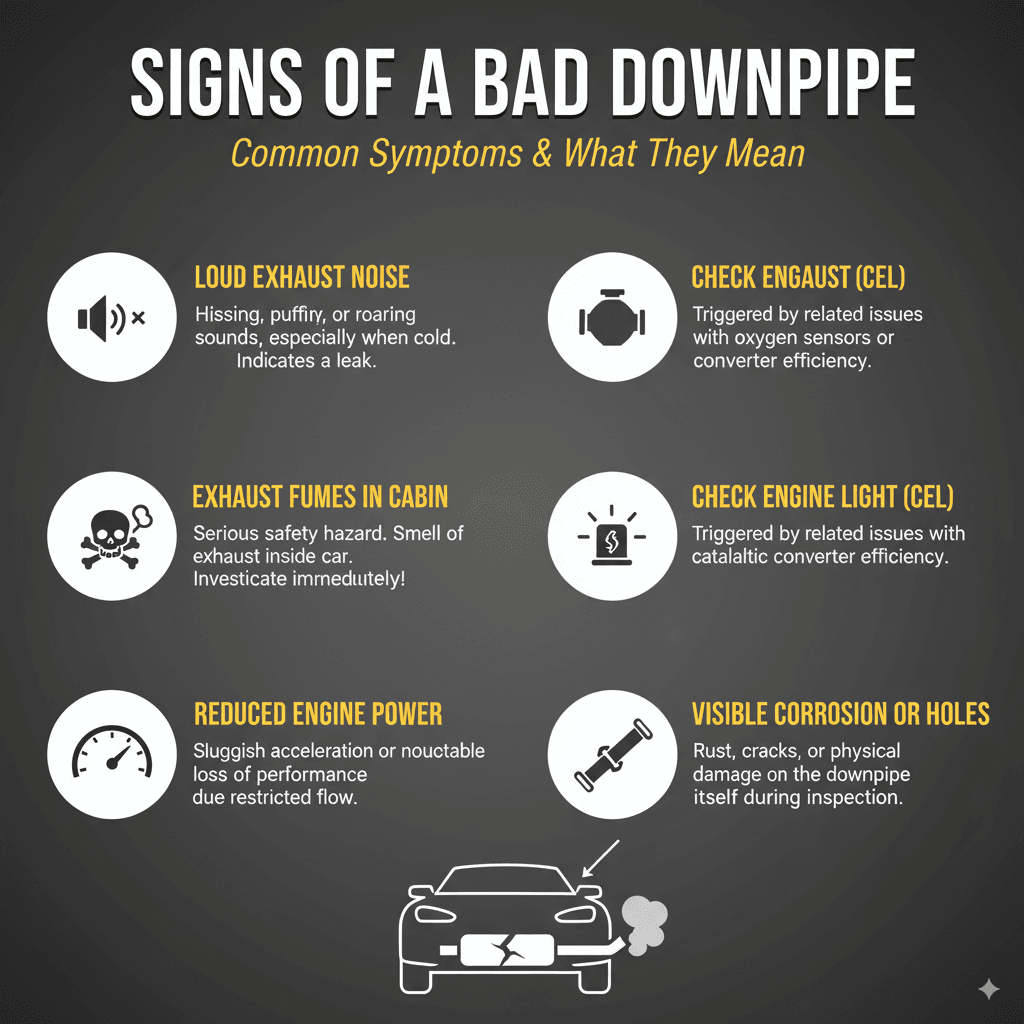
Signs of a Bad Downpipe

If you suspect your downpipe is failing, here are some signs to look out for:

Loud Exhaust Noise: A hissing, puffing, or suddenly much louder exhaust sound, especially when the engine is cold, is a classic sign of a leak.
Exhaust Fumes in Cabin: This is a serious safety hazard. If you smell exhaust inside your car, pull over and investigate immediately.
Reduced Engine Power: A significant leak or a severely restricted downpipe can impact engine performance.
Check Engine Light: As mentioned, issues with the catalytic converter or oxygen sensors due to downpipe problems can trigger a CEL.
Visible Corrosion or Holes:** A visual inspection underneath your car might reveal rust, holes, or cracked sections on the downpipe.

Signs of a Bad Downpipe

Frequently Asked Questions (FAQ)

Q1: Do all cars have downpipes?

Yes, every car with an internal combustion engine has an exhaust system that includes a downpipe. It’s the first section of pipe after the exhaust manifold.

Q2: Is a louder exhaust noise always a bad sign for a downpipe?

A sudden change to a louder exhaust noise, especially a hissing or puffing sound, often indicates a leak in the downpipe or its connections, which is a problem. A deeper, more aggressive sound might be intentional if you’ve upgraded the pipe, but a leak is never good.

Find out more about Downpipes by exploring this related topic. Do Catless Downpipes Add HP? Essential Gains!

Q3: Can a bad downpipe affect my car’s fuel economy?

Yes, a leaking or overly restrictive downpipe can negatively affect fuel economy. An exhaust leak can confuse oxygen sensors, leading the engine computer to make incorrect fuel mixture adjustments. A badly designed or damaged pipe creating excessive backpressure also makes the engine work harder.

Q4: What’s the difference between a downpipe and a test pipe?

A downpipe is an integral part of the exhaust system, typically connecting the manifold to the catalytic converter. A “test pipe” (or “cat-delete pipe”) is generally used in performance applications as a replacement for the catalytic converter, and it’s usually illegal for street use due to emissions regulations.

Q5: How long do downpipes typically last?

This depends heavily on the material and driving conditions. A mild steel downpipe in a rust-prone area might only last 5-10 years, while a quality stainless steel downpipe in a dry climate could last for the life of the vehicle.

Q6: Can I just remove my downpipe?

Removing your downpipe entirely is generally not recommended for street-legal vehicles. It will almost certainly cause issues with emissions, trigger a Check Engine Light, and is illegal in most places. It will also likely make your exhaust extremely loud and unpleasant.

Conclusion

So, there you have it! The downpipe isn’t just for the high-performance, turbocharged machines. It’s a fundamental component in the exhaust system of every gasoline-powered car, playing a crucial role in channeling exhaust gases safely away from your engine and cabin.

Similar Posts