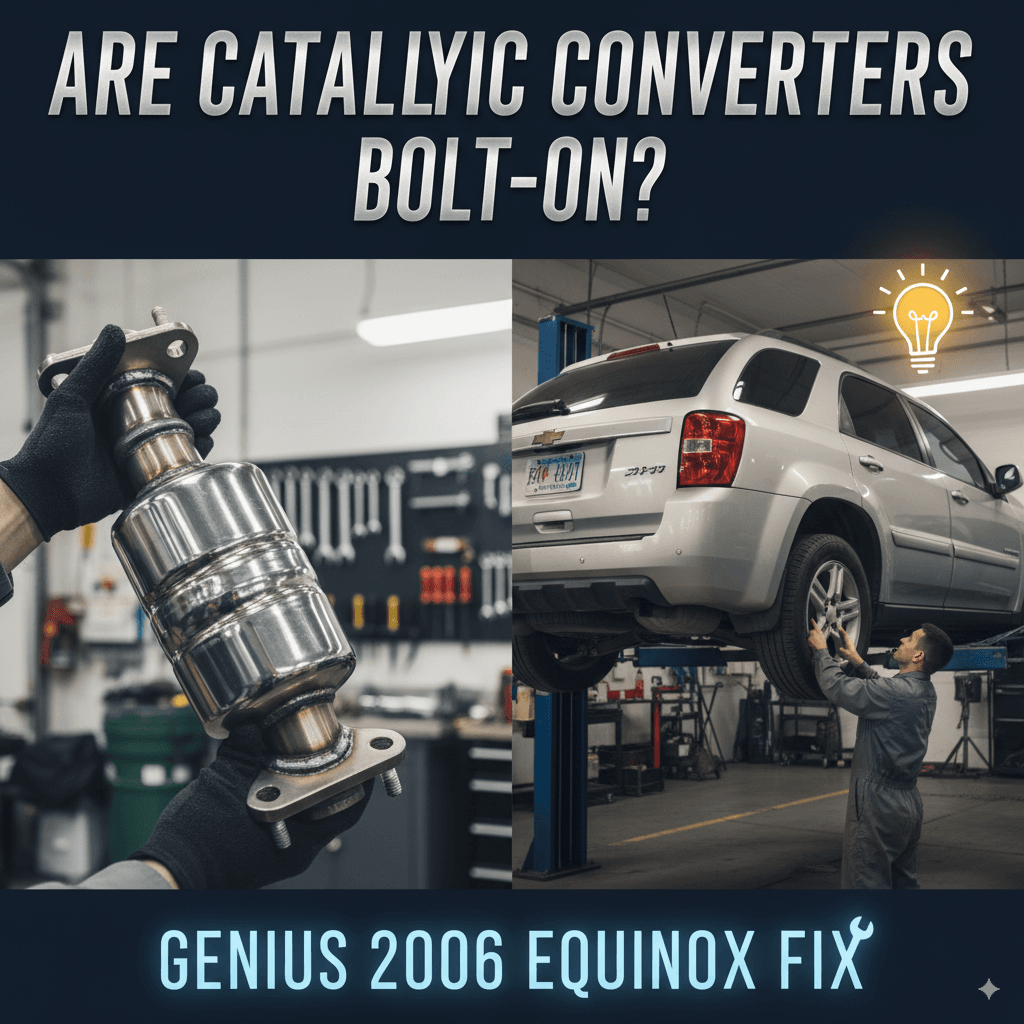
Are Catalytic Converters Bolt-On? Genius 2006 Equinox Fix
Your 2006 Equinox catalytic converter is likely bolt-on, making replacement a manageable DIY project. We’ll guide you through understanding this, its common issues, and how to fix it simply and effectively.

AKWH
53478 Catalytic Converter with Gaskets Replacement for…
- [Type] These free-flow catalytic converters have bolt-on connections and flange to flange design for effortless installation.
- [Fitment] 53478 Catalytic Converter Replacement for Honda Element 2.4L 2003 2004 2005 2006 2007 2008 2003 2010 2011
- [Reference OEM Part Number] 53478 40874 58158
As an Amazon Associate I earn from qualifying purchases.
When your 2006 Chevrolet Equinox starts acting up, or you get that dreaded check engine light, the catalytic converter can often be a suspect. Many car owners worry that replacing such a vital part of the exhaust system is a huge, expensive job. But here’s a bit of good news: for your specific model year, the catalytic converter is designed to be a “bolt-on” component. This means it’s generally attached with bolts and clamps, not welded directly to the exhaust pipes. This makes a big difference for DIY repairs. We’re here to walk you through everything you need to know, making this repair less intimidating.
More About Catalytic Converters
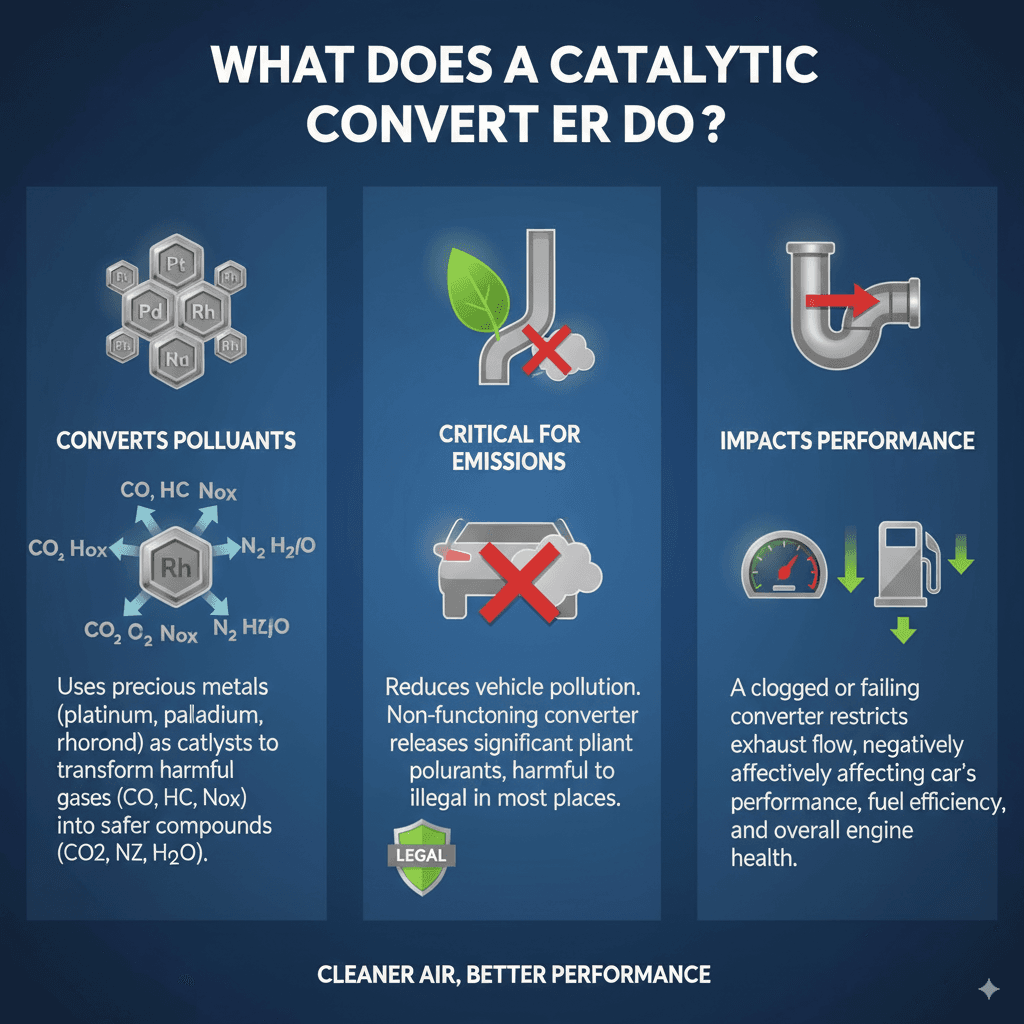
A catalytic converter might sound complicated, but its job is surprisingly straightforward. It’s an exhaust emission control device. Its main purpose is to convert toxic gases produced by your engine into less harmful substances before they exit your tailpipe. Think of it as a filter and a chemical reactor rolled into one.
Here’s a quick breakdown of what it does:
Converts Pollutants: It uses precious metals like platinum, palladium, and rhodium as catalysts. These metals trigger chemical reactions that change harmful gases such as carbon monoxide (CO), unburned hydrocarbons (HC), and nitrogen oxides (NOx) into safer compounds like carbon dioxide (CO2), nitrogen (N2), and water (H2O).
Critical for Emissions: Without a functioning catalytic converter, your vehicle would be releasing a significant amount of pollutants into the atmosphere, which is not only bad for the environment but also illegal in most places.
Impacts Performance: A clogged or failing catalytic converter can restrict exhaust flow, negatively impacting your car’s performance, fuel efficiency, and overall engine health.
Common Signs of a Failing Catalytic Converter
Your 2006 Equinox will usually give you some clues if its catalytic converter is having issues. Paying attention to these signs can save you from bigger problems down the line.
Check Engine Light: This is the most common indicator. Modern cars have sensors that monitor the efficiency of the catalytic converter. If it’s not working correctly, the light will come on.
Reduced Engine Performance: You might notice your car accelerating slower than usual or feeling sluggish. This happens because a clogged converter is like trying to breathe through a straw – it restricts exhaust flow.
Fuel Economy Decrease: If you find yourself stopping at the gas station more often, especially without changing your driving habits, a faulty converter could be the culprit. Poor exhaust flow can make your engine work harder, burning more fuel.
Sulfur Smell: Sometimes, a failing converter can produce a rotten egg or sulfur smell from the exhaust. This is often due to high levels of sulfur in the fuel that the converter isn’t processing correctly.
Rattling Noises: If the internal honeycomb structure of the converter breaks apart, you might hear rattling sounds, especially when you start the engine or accelerate.
Are Catalytic Converters Bolt-On for the 2006 Equinox?
Yes, for the vast majority of 2006 Chevrolet Equinox models, the catalytic converter is designed as a bolt-on component. This is excellent news for DIY mechanics! It means that the converter is typically attached to the exhaust pipes before and after it using bolts and flange gaskets, and secured with clamps. It’s not an integrated, welded-on part of the exhaust system that would require cutting and welding for replacement.
This bolt-on design is a common feature in many vehicles, simplifying maintenance and repair. When you need to replace it, you’ll usually be unbolting the old unit and bolting in a new one.
Let’s compare this to a welded system:
| Feature | Bolt-On Catalytic Converter | Welded Catalytic Converter |
|---|---|---|
| Installation | Bolts, nuts, clamps, gaskets | Cutting exhaust pipes, welding new section in place |
| DIY Friendliness | High – requires basic tools and mechanical skill | Low – requires welding equipment and expertise |
| Repair Cost | Generally lower due to easier labor | Generally higher due to specialized labor |
| Replacement | Relatively quick and straightforward | Time-consuming and requires professional intervention |
| Commonality | Widely used on many vehicle models | Less common on newer models, more on older or custom builds |
Understanding the Parts Involved in a Bolt-On Catalytic Converter:
When you’re dealing with a bolt-on catalytic converter, a few key components work together to secure it and ensure a good seal:
Catalytic Converter Unit: The main component itself, containing the precious metals and honeycomb structure.
Flanges and Gaskets: These are crucial. The converter has mating surfaces (flanges) on both ends that bolt to the pipes. Gaskets sit between these flanges to create an airtight seal, preventing exhaust leaks.
Bolts and Nuts: These are used to fasten the flanges together. They are often specific types of hardware designed for exhaust systems, which can get hot and corroded.
Clamps: Some connections might use U-bolts or band clamps to secure the exhaust pipes to the converter or to hold sections together.
Why is a Bolt-On Design Beneficial?
The bolt-on design for your 2006 Equinox’s catalytic converter offers several advantages, especially for car owners:
Easier DIY Replacement: This is the biggest perk. If you’re comfortable with basic tools, you can tackle this job yourself, saving money on labor costs.
Quicker Repairs: Mechanics can often replace a bolt-on converter much faster than a welded one, leading to quicker turnaround times at the shop.
Reduced Risk of Damage: Less cutting and welding means less risk of damaging other parts of your exhaust system or the vehicle’s undercarriage.
Cost-Effective: While the converter itself can be pricey, the generally lower labor costs associated with bolt-on replacements make the overall repair more affordable.
Replacing Your 2006 Equinox Catalytic Converter: A Step-by-Step Guide
Here’s a general guide on how you might replace a bolt-on catalytic converter on a 2006 Equinox. Always consult your vehicle’s specific repair manual for the most accurate procedures and safety recommendations.
Safety First!
Working under a car can be dangerous. Make sure you always:
Park on a level surface.
Engage the parking brake firmly.
Use jack stands to support the vehicle; never rely solely on a jack.
Wear safety glasses and gloves.
Allow the exhaust system to cool completely before working on it.
Tools and Materials You’ll Likely Need:
New Catalytic Converter: Ensure it’s the correct one for your 2006 Equinox (e.g., California or Federal emissions compliant).
New Exhaust Gaskets: Crucial for a proper seal. Get the ones designed for your converter’s flanges.
New Exhaust Bolts and Nuts: It’s often recommended to replace these, as old ones can be seized or corroded.
Socket Set and Wrenches: SAE and possibly metric sizes.
Rubber Mallet or Dead Blow Hammer: For persuading stubborn connections.
Penetrating Oil (like PB Blaster or WD-40): To loosen rusted bolts.
Wire Brush: To clean mating surfaces.
Torque Wrench: To tighten bolts to factory specifications.
Jack and Jack Stands: To safely lift and support the vehicle.
Safety Glasses and Gloves.
The Procedure:
1. Gain Access: Safely lift your Equinox using a jack and support it securely with jack stands. Ensure you have enough clearance to work comfortably underneath.
2. Locate the Catalytic Converter: It’s usually found in the exhaust system under the vehicle, often located after the exhaust manifold and before the muffler. For some vehicles, it might be a manifold converter, meaning it’s attached directly to the engine exhaust manifold. Your 2006 Equinox might have one or two depending on the engine.
3. Apply Penetrating Oil: Spray a liberal amount of penetrating oil on all bolts and nuts connecting the old catalytic converter to the exhaust pipes. Let it soak for at least 15-30 minutes (or longer if they are very rusty). This step is critical for easier removal.
4. Loosen and Remove Bolts: Using the appropriate socket or wrench, carefully loosen and remove the bolts and nuts connecting the converter. If bolts are seized, you might need to use more penetrating oil, a wire brush to clean around them, or, in extreme cases, a breaker bar or even an exhaust pipe expander. Try to work them gently back and forth.
5. Separate the Converter: Once the bolts are out, the converter should be free. You might need to gently tap it with a rubber mallet or pry the pipes apart slightly to break the seal. Be careful not to damage the connecting pipes.
6. Clean Mating Surfaces: Use a wire brush to thoroughly clean the flange surfaces on both the exhaust pipes where the old converter was attached. This ensures a good seal with the new gaskets.
7. Install New Gaskets: Place the new gaskets onto the respective flanges of the new catalytic converter or the exhaust pipes, as per the new converter’s instructions.
8. Position the New Converter: Carefully maneuver the new catalytic converter into place, aligning its flanges with the exhaust pipes and ensuring the gaskets are seated correctly.
9. Install New Bolts and Nuts: Insert the new bolts and nuts. Hand-tighten them first to ensure proper alignment.
10. Tighten Bolts: Using your socket set, tighten the bolts. It’s best to tighten bolts in a cross pattern, gradually increasing the tightness. This ensures even pressure across the gasket.
11. Torque to Specification: This is very important for a leak-free seal. If you have a torque wrench, use it to tighten the bolts to the manufacturer’s specified torque. Overtightening can damage gaskets, while undertightening can lead to leaks. You can often find these specifications in your car’s service manual or online. For example, exhaust flange bolts might require around 25-35 ft-lbs, but this varies greatly.
12. Lower the Vehicle: Once everything is securely tightened, carefully lower the vehicle off the jack stands.
13. Start the Engine: Start your Equinox and listen for any exhaust leaks (hissing sounds) around the new converter connections. Allow the engine to run for a few minutes, and check again.
Checking for Exhaust Leaks:
A common way to check for leaks after installation is to feel around the connections with your hand (while wearing gloves and being cautious, as exhaust can be hot) or use a piece of paper to see if it’s being blown away by escaping gases. The engine should run smoothly without any unusual noises or smells.
When to Call a Professional
While a bolt-on catalytic converter replacement is a common DIY job, there are times when you might want to leave it to the experts:
Severely Rusted Exhaust System: If your exhaust pipes are heavily rusted, brittle, or damaged, attempting to remove the converter could cause more harm.
Lack of Proper Tools: If you don’t have a safe way to lift the vehicle or the essential tools like a torque wrench, it’s safer to go to a shop.
Uncertainty: If you’re not confident in your mechanical abilities or the repair procedure, it’s always best to seek professional help.
Integrated Manifold Converters: Some vehicles have catalytic converters integrated directly into the exhaust manifold. These are much harder to replace and often require specialized tools and expertise. While less common on your specific model, it’s worth noting.
Catalytic Converter Replacement on the 2006 Equinox: What to Expect
When you’re looking to replace the catalytic converter on your 2006 Equinox, knowing what to expect can ease your mind. Since it’s a bolt-on system, the labor involved is typically less intensive than if it were welded.
Cost Components:
Part Cost: The catalytic converter itself can be a significant expense, ranging from a few hundred to over a thousand dollars, depending on the brand and whether it’s an OEM (Original Equipment Manufacturer) part or an aftermarket alternative. Aftermarket parts are often more budget-friendly.
Labor Cost: For a bolt-on replacement, a professional mechanic might charge anywhere from 1 to 3 hours of labor. If it’s a straightforward removal and installation, it could fall on the lower end of that spectrum.
Additional Parts: You’ll also need to factor in the cost of new gaskets, bolts, and nuts, which are usually inexpensive but crucial for a proper seal.
DIY vs. Professional:
DIY: If you have the basic tools and are willing to spend a few hours working on your car, doing it yourself can save you a considerable amount on labor costs. Patience and following safety guidelines are key.
Professional: Taking it to a reputable mechanic ensures the job is done correctly and efficiently. They have the specialized knowledge, tools, and lifts to perform the job safely. The cost will be higher due to labor charges.
Emissions Compliance:
It’s vital to purchase a catalytic converter that is compliant with emissions standards in your region. For instance, if you live in California or a state that follows California’s emissions standards (like New York), you’ll need a California-compliant converter. Federal emissions converters are generally not legal for use in California and similar states. Always check the part’s specifications and your local regulations. You can find great resources on emissions compliance from the U.S. Environmental Protection Agency (EPA) website, such as their pages discussing emissions standards and types of emission control systems.
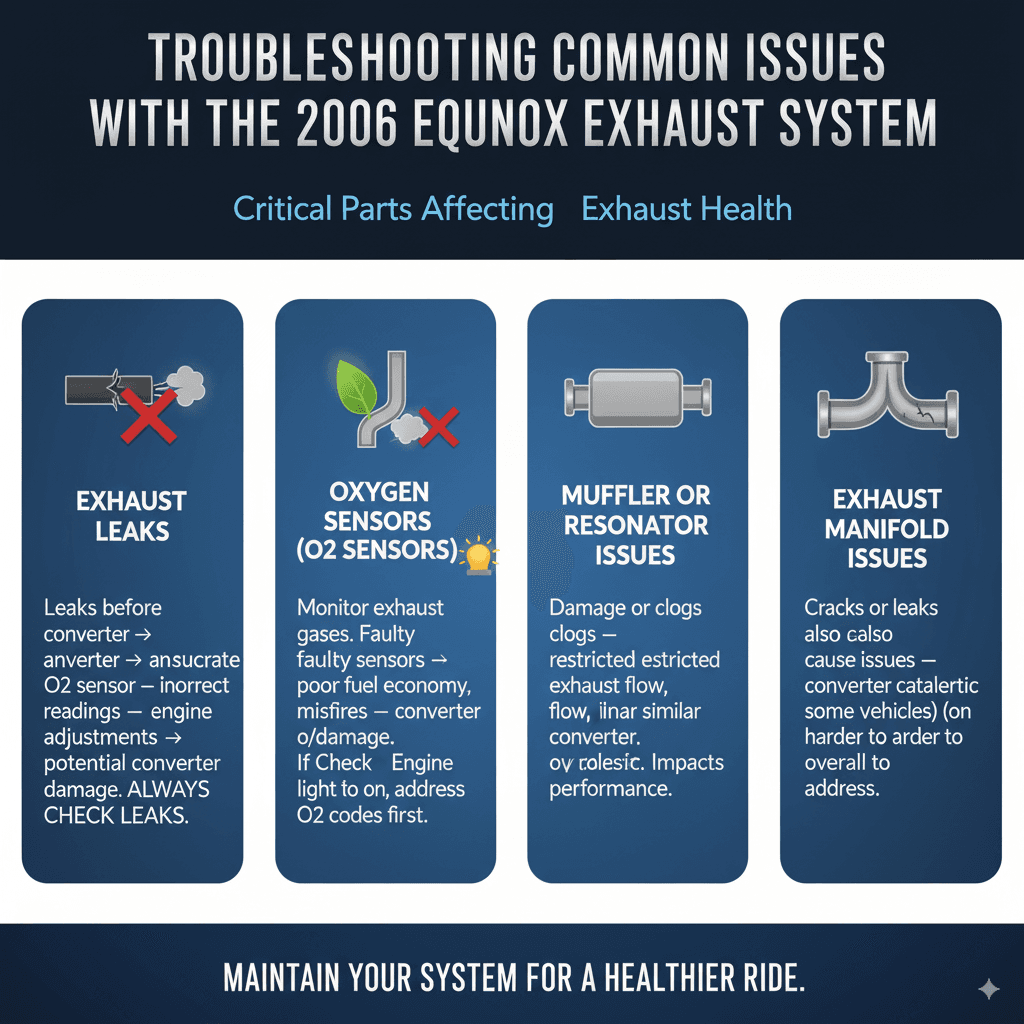
Troubleshooting Common Issues with the 2006 Equinox Exhaust System
While we’re focusing on the catalytic converter, it’s worth mentioning that other parts of your Equinox’s exhaust system can affect its operation and even the converter’s health.
Exhaust Leaks: Leaks before the catalytic converter can cause inaccurate readings from oxygen sensors, which can fool the engine computer into making incorrect adjustments, potentially damaging the converter. Always check for leaks when working on the exhaust.
Oxygen Sensors (O2 Sensors): Your 2006 Equinox has O2 sensors that monitor exhaust gases and send data to the engine control module (ECM). A faulty O2 sensor can cause poor fuel economy and misfires, and can lead to the catalytic converter being overloaded or damaged. If your check engine light is on and code point to O2 sensors, address them first.
Muffler or Resonator Issues: Damage or clogs in the muffler or resonator can also restrict exhaust flow, similar to a failing catalytic converter.
Exhaust Manifold: Cracks or leaks in the exhaust manifold can also cause issues. On some vehicles, the catalytic converter is integrated into the manifold, making these harder to address.
Frequently Asked Questions (FAQ)
Q1: How long does a catalytic converter typically last on a 2006 Equinox?
A1: Catalytic converters are designed to last a long time, often for the lifespan of the vehicle. However, they can fail prematurely due to issues like engine misfires, coolant leaks, or using leaded gasoline. With proper maintenance, many can last over 100,000 miles.
Q2: Can I drive my 2006 Equinox with a bad catalytic converter?
A2: While your car might still run, it’s not recommended. A failing converter can lead to significantly reduced performance, poor fuel economy, and potential engine damage. Furthermore, it’s illegal to drive a vehicle with a faulty emissions system in most areas, and you won’t pass an emissions test.
Q3: What’s the difference between an OEM and an aftermarket catalytic converter for my 2006 Equinox?
A3: OEM (Original Equipment Manufacturer) parts are made by or for your car’s manufacturer (GM, in this case) and are designed to meet exact specifications. Aftermarket converters are made by other companies and can be less expensive. Ensure any aftermarket converter you buy is certified for emissions compliance in your state.
Q4: How do I know if my catalytic converter is stolen?
A4: Stolen catalytic converters leave obvious signs. The exhaust system will sound significantly louder, like a straight pipe, and there will be a visible gap where the large, cylinder-shaped converter used to be, usually between the exhaust manifold and the muffler section.
Q5: Are there specific diagnostic trouble codes (DTCs) related to catalytic converter failure for a 2006 Equinox?
A5: Yes, common DTCs include P0420 (Catalyst System Efficiency Below Threshold Bank 1) and P0430 (Catalyst System Efficiency Below Threshold Bank 2), if your Equinox has two converters. Other codes related to oxygen sensors can also indicate potential converter issues.
Q6: Do I need to replace oxygen sensors when replacing the catalytic converter on my 2006 Equinox?
A6: It’s not always mandatory, but it’s often a good idea, especially if the sensors are old (over 80,000-100,000 miles) or have been throwing codes themselves. Old sensors might not provide accurate readings to the new converter, hindering its performance.
Q7: Can I clean a clogged catalytic converter instead of replacing it?
A7: In some cases, a clogged converter can be cleared by driving it hard on the highway or using specific fuel additives. However, this is usually only effective for minor clogs. If the internal structure is melted or broken apart, replacement is the only viable solution.
Related pick: Check today's price on Amazon