Are 2000 Buick Lesabre Catalytic Converters Interchangeable? Essential Guide
Yes, some 2000 Buick LeSabre catalytic converters can be interchangeable, but it’s not a simple yes or no. Fitment depends on engine size, emissions standards, and specific vehicle configurations. Always verify compatibility by VIN or part number before purchasing to ensure proper function and avoid costly mistakes.
Are 2000 Buick LeSabre Catalytic Converters Interchangeable? An Essential Guide
Navigating the world of car parts can sometimes feel like deciphering a secret code. When your 2000 Buick LeSabre’s check engine light pops on, or you notice a strange smell or reduced power, a faulty catalytic converter often comes to mind. One of the biggest questions car owners face is whether a catalytic converter from one vehicle can fit another, especially within the same model year or even different years. This is particularly common with a popular car like the Buick LeSabre. You might wonder, “Can I use a converter from a different LeSabre, or even a similar car?” It’s a valid concern, and understanding the nuances can save you time, money, and frustration. We’re here to break down exactly what you need to know about interchangeable catalytic converters for your 2000 Buick LeSabre, making sure you get the right part the first time. Let’s dive in and simplify this for you!
Understanding Your 2000 Buick LeSabre’s Catalytic Converter
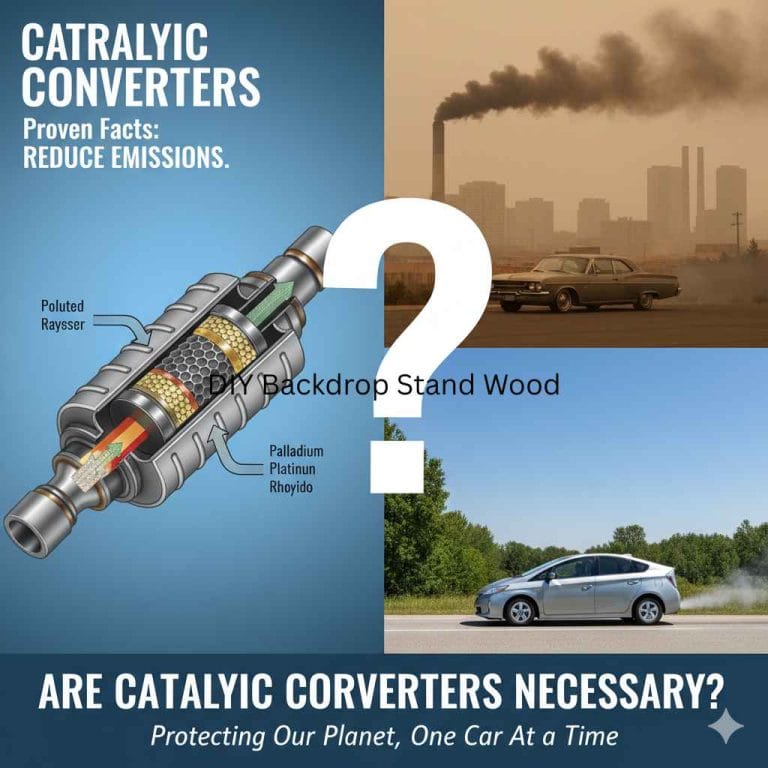
The catalytic converter is a vital component of your car’s exhaust system. Its primary job is to convert harmful pollutants produced during combustion into less harmful gases. Think of it as your car’s internal filter, working tirelessly to keep the air cleaner.
For a 2000 Buick LeSabre, the catalytic converter setup can vary. Most commonly, these vehicles were equipped with either a 3.8L V6 engine or a supercharged 3.8L V6 engine. These different engine options, along with variations in emissions standards (like California emissions versus Federal emissions), mean that not all catalytic converters are identical. Even within the same model year, slight changes in design or required performance can make a difference.
Why Interchangeability is Tricky
It’s tempting to assume that parts from the same car model are universally compatible. However, catalytic converters are more specific than many other parts. Here’s why:
- Engine Size: Different engine displacements require different catalytic converter capacities to effectively process exhaust gases. A converter designed for a smaller engine might not handle the volume of a larger one, leading to performance issues or premature failure.
- Emissions Standards: Vehicles sold in different regions often have varying emissions requirements. Federal Emission standards are the baseline in most of the U.S., but California and states that follow its standards have stricter rules. Catalytic converters designed for California emissions are generally more robust and may not be legally substitutable in Federal emission states, and vice-versa.
- Mounting Points and Shape: While the general function is the same, the physical shape of the catalytic converter, the location of its inlet and outlet pipes, and the mounting brackets need to match the exhaust system precisely. Even a slight difference can prevent a proper fit.
- Oxygen Sensor Ports: The number and location of oxygen sensor ports are crucial. Modern catalytic converters use oxygen sensors to monitor exhaust gas efficiency. A converter with the wrong sensor configuration won’t communicate correctly with the car’s computer, leading to error codes and poor performance.
- Internal Material: The precious metals (platinum, palladium, rhodium) inside the converter are calibrated to meet specific performance requirements. A converter with a different internal matrix might not have the same efficiency or lifespan.

Are 2000 Buick LeSabre Catalytic Converters Interchangeable with Other Years?
This is where it gets a bit more complicated. For the 2000 Buick LeSabre, the catalytic converter design remained relatively consistent for that generation. This means a converter designed for a 2000 model might fit other years within the same generation (generally from the late 1990s to early 2000s). However, it’s not a guarantee.
For example, a 1999 LeSabre might share a catalytic converter with a 2000 model, especially if both have the same engine and emissions package. However, changes in vehicle design or emissions regulations from year to year can introduce subtle differences. For instance, a converter designed for a pre-1996 LeSabre might not meet OBD-II (On-Board Diagnostics II) requirements, which became standard in 1996. The 2000 LeSabre is an OBD-II compliant vehicle, so replacing its converter with an older, non-OBD-II compliant one would cause significant issues, including check engine lights and potential failure to pass emissions tests.
To be absolutely sure, you must cross-reference part numbers or use a VIN (Vehicle Identification Number) lookup tool. Relying on assumptions can lead to buying the wrong part, which means wasting money and having to buy the correct one anyway.
Specific Considerations for the 2000 Buick LeSabre
The 2000 Buick LeSabre typically came with one of two engine options:
- 3.8L V6 (Naturally Aspirated): This is the more common engine. Converters for this engine are specific to its exhaust flow and emissions needs.
- 3.8L V6 Supercharged: The supercharged version has slightly different performance characteristics, and its catalytic converter may also be different to accommodate this.
Crucially, you must also consider whether your car was originally equipped with California emissions equipment or Federal emissions equipment. Catalytic converters for California emissions vehicles are designed to meet much stricter standards and often have different internal formulations. If your car is registered in California or a state that follows California emissions standards (like New York or Maine), you generally must use a converter certified for those standards. Using a Federal Standard converter in a California-compliant vehicle is typically illegal and will likely cause emissions test failures.
You can usually find information about your vehicle’s emissions system on a label located under the hood or in the engine bay. Consult your owner’s manual or a reputable auto parts supplier for help deciphering this.
How to Determine if a Catalytic Converter is Interchangeable
The most reliable way to confirm interchangeability is to avoid guesswork. Here’s a step-by-step approach:
1. Identify Your Current Catalytic Converter
If possible, get under your car and look at the existing catalytic converter. You might find a part number stamped directly onto it. However, these numbers are often manufacturer-specific and may not be universally recognized. It’s more reliable to use your vehicle’s information.
2. Gather Your Vehicle’s Information
You’ll need the following:
- Year: 2000
- Make: Buick
- Model: LeSabre
- Engine Size: 3.8L V6 or 3.8L V6 Supercharged
- VIN (Vehicle Identification Number): This is the most definitive way to ensure you get the correct part.
- Emissions Standard: Federal or California (or a state that follows California emissions).
3. Use a Reliable Parts Catalog or VIN Decoder
This is where technology helps:
Online Auto Parts Stores: Most major online auto parts retailers (like RockAuto, AutoZone, O’Reilly Auto Parts, Advance Auto Parts) have excellent search tools. You can input your vehicle’s year, make, model, and engine, and they will show you compatible catalytic converters. Many also offer VIN lookup services or allow you to compare part numbers.
VIN Decoder Tools: Some manufacturers and third-party services offer VIN decoder tools online. You enter your VIN, and it pulls up detailed specifications for your exact vehicle, including the correct catalytic converter part number.
Professional Mechanic or Parts Specialist: If you’re unsure, a trusted mechanic or a knowledgeable parts counter employee at an auto parts store can look up the correct part for you using your VIN. They have access to comprehensive databases.
4. Compare Part Numbers (If You Have Them)
If you’re looking at a used catalytic converter or a specific aftermarket part, compare its part number to the recommended or original equipment (OE) part number for your 2000 Buick LeSabre. Many aftermarket manufacturers will list which OE part numbers their product is intended to replace.
Examples of Catalytic Converter Fitment for 2000 Buick LeSabre
Let’s look at some hypothetical scenarios to illustrate interchangeability and its limitations.
Scenario 1: 2000 Buick LeSabre 3.8L (Federal Emissions)
A catalytic converter designed for another 2000 Buick LeSabre with the same 3.8L naturally aspirated engine and Federal emissions might be interchangeable. However, if that other LeSabre had the supercharged engine or California emissions, it would likely not be interchangeable.
Scenario 2: 2000 Buick LeSabre 3.8L Supercharged (California Emissions)
A converter for a 2001 Buick LeSabre with the 3.8L supercharged engine and California emissions could potentially fit and function correctly, as there are often minor design refinements between consecutive model years within the same generation. But, a converter from a 2000 LeSabre with a Federal emissions package would not be suitable for this vehicle, both due to emissions standards and potentially physical fit or sensor configurations.
Scenario 3: 1999 Buick LeSabre 3.8L vs. 2000 Buick LeSabre 3.8L
Given they are from the same generation and share the same engine, a catalytic converter for a 1999 Buick LeSabre 3.8L (Federal Emissions) is likely to be interchangeable with a 2000 Buick LeSabre 3.8L (Federal Emissions). However, it’s always best practice to verify using the VIN or a precise parts lookup.
A key point to remember is the OBD-II system evolution. While 1996 was the first year for OBD-II, manufacturers continued to refine their systems. This means a converter designed for an early OBD-II vehicle (like a 1996) might not be a direct swap for a later OBD-II vehicle (like a 2000) if there were changes in sensor placement or internal catalyst technology required by updated standards.
Aftermarket vs. OEM Catalytic Converters
When it comes to replacing your catalytic converter, you’ll generally have two options: Original Equipment Manufacturer (OEM) and aftermarket.
- OEM Converters: These are made by or for Buick. They are designed to be a perfect fit and meet all original specifications. They are often more expensive but offer the highest assurance of quality and compatibility.
- Aftermarket Converters: These are made by third-party companies. They are typically less expensive. When choosing aftermarket, it’s crucial to buy from reputable brands that explicitly state compatibility with your 2000 Buick LeSabre, its engine, and its emissions standard. Poorly made aftermarket converters can fail prematurely, cause performance issues, or not pass emissions tests. Look for converters that are EPA-certified, especially if you are not in a California-emissions state. For California and similar states, you’ll need a CARB (California Air Resources Board) compliant converter. You can check the CARB compliance list on their official website.
Tools and Materials You Might Need
Replacing a catalytic converter can be a DIY job for those with some mechanical experience and the right tools. Safety first! Always use jack stands, never rely solely on a jack. Wear safety glasses and gloves.
Here’s a general list of what you might need:
- New Catalytic Converter (correct part for your vehicle!)
- Jack and Jack Stands
- Wrench Set (Metric)
- Socket Set (Metric)
- Ratchet
- Breaker Bar (for stubborn bolts)
- Penetrating Oil (like PB Blaster or WD-40)
- Wire Brush (to clean mounting surfaces)
- Torque Wrench
- Exhaust Gasket Sealant (sometimes recommended)
- Oxygen Sensor Socket (if you need to remove/reinstall sensors)
- Safety Glasses
- Work Gloves
Step-by-Step Guide (General)**
Disclaimer: This is a general guide. Specific procedures can vary. If you’re not comfortable with any step, it’s best to consult a professional mechanic.
- Safety First: Park your car on a level surface. Engage the parking brake and use wheel chocks. Safely lift the vehicle using a jack and secure it firmly on jack stands. Never work under a vehicle supported only by a jack.
- Locate the Catalytic Converter: It’s usually located in the exhaust system between the exhaust manifold (where exhaust gases exit the engine) and the muffler. For your 2000 LeSabre, it might be one or two units depending on the configuration.
- Inspect and Prepare: Spray penetrating oil on all bolts connecting the catalytic converter to the exhaust pipes and any mounting brackets. Let it soak for at least 15-30 minutes, or longer for rusted bolts.
- Remove Heat Shields: Some catalytic converters have heat shields that may need to be removed to access the mounting bolts.
- Disconnect Exhaust: Using your wrenches and sockets, carefully loosen and remove the bolts at the front and rear connection points of the catalytic converter. You may also need to unbolt mounting brackets. Be prepared for exhaust system components to sag slightly once disconnected.
- Remove Oxygen Sensors: If your old converter has oxygen sensors, carefully remove them using an oxygen sensor socket or wrench. Note their positions.
- Remove the Old Converter: Once all bolts and connections are free, carefully lower the old catalytic converter. It might be heavier than expected.
- Clean Mounting Surfaces: Use a wire brush to clean the mating surfaces on the exhaust pipes where the new converter will attach. This ensures a good seal.
- Install the New Converter: Position the new catalytic converter. If new gaskets are required, install them now. Reinstall any heat shields.
- Connect Exhaust and Install Oxygen Sensors: Bolt the new converter into place, making sure it’s properly aligned. Reinstall the oxygen sensors into their respective ports on the new converter.
- Tighten Bolts: Tighten all bolts to the manufacturer’s recommended torque specifications. Do not overtighten, which can strip threads or damage the exhaust system. A torque wrench is essential here.
- Lower the Vehicle: Carefully lower the vehicle off the jack stands.
- Start the Engine: Start the engine and let it run for a few minutes. Listen for any exhaust leaks (hissing sounds) around the new converter connections. Check for the check engine light.
- Test Drive: Take your car for a short test drive to ensure everything sounds and feels normal. A mechanic can also clear any diagnostic trouble codes (DTCs) from the car’s computer.

When to Seek Professional Help
While replacing a catalytic converter can be a manageable DIY project, there are times when professional help is advisable:
- If you’re uncomfortable with the process: Car maintenance can be intimidating. If you lack confidence or experience working with exhaust systems, it’s better to have a professional handle it.
- Heavily rusted bolts: Exhaust systems are prone to rust. If bolts are severely rusted and you risk breaking them or damaging other components, a mechanic has specialized tools and techniques.
- Exhaust Pipe Damage: If the pipes connecting to the converter are rusted or damaged, a professional can repair or replace them.
- Emissions Testing Requirements: If you live in strict emissions testing areas, ensuring the correct installation and part is crucial. A shop can guarantee compliance.
- Lack of Tools: If you don’t have the necessary tools like a torque wrench or appropriate sockets, it’s cheaper and safer to let a shop do the work.
For example, if you live in a state with stringent emissions testing, like California, understanding the California Air Resources Board (CARB) regulations for aftermarket parts is essential. Only CARB-compliant converters are legal for sale and installation in California and other states that follow its emissions standards.
Frequently Asked Questions (FAQ)
Here are some common questions car owners have about catalytic converter interchangeability for their 2000 Buick LeSabre:
Q1: My 2000 LeSabre has a 3.8L engine. Can I use a catalytic converter from a 2002 LeSabre with the same engine?
A: Possibly, but not guaranteed. While they are from the same generation and likely share the same engine, there could be minor design changes or updates to emissions standards between 2000.