

Are Magnaflow Catalytic Converters High Flow? Proven Best
The simple answer is yes, MagnaFlow catalytic converters are generally considered high-flow, especially when compared to restrictive factory OEM units. This is because MagnaFlow designs their stainless steel converters with high-quality substrate and engineered paths for better exhaust gas movement, often resulting in better performance without sacrificing critical emissions control.
Are you looking to boost your car’s power without letting the “Check Engine” light haunt your dashboard? Many car owners, just like you, hear about exhaust upgrades and instantly worry about passing smog tests or harming the environment. The catalytic converter is often the biggest bottleneck.
You might be wondering: “Are MagnaFlow catalytic converters high flow?” It is a common, very smart question! Dealing with exhaust parts can feel confusing, but I’m Monowar Shohag, and I’m here to clear the air. We will break down exactly what “high flow” means for MagnaFlow and why this upgrade is often the best balance between performance, sound, and legality. Next, we’ll look at the science behind how they work so you feel totally confident in your choice.
Understanding the Catalytic Converter: Your Car’s Super Cleaner
Before we talk about MagnaFlow, let’s quickly cover what any good catalytic converter does. Think of it as the unsung hero under your car. Its main job is to take harmful exhaust gases—like carbon monoxide and nitrogen oxides—and turn them into less harmful stuff like water vapor and carbon dioxide.
The Three-Way Converter Explained Simply
Modern cars use a “three-way” converter because it handles three main types of pollutants:
- Oxidation: Turning carbon monoxide (CO) into carbon dioxide ($text{CO}_2$).
- Reduction: Turning nitrogen oxides ($text{NO}_{text{x}}$) into nitrogen gas ($text{N}_2$).
- Further Oxidation: Converting leftover hydrocarbons (unburnt fuel) into $text{CO}_2$ and water ($text{H}_2text{O}$).
This complex cleaning process requires the exhaust gas to pass through a ceramic or metallic honeycomb structure coated with precious metals (platinum, rhodium, and palladium).
Why Factory Converters Limit Flow
Your car’s original equipment manufacturer (OEM) converter is designed first and foremost for reliability and meeting strict EPA emission guidelines—not peak horsepower.
To ensure they clean the gases effectively for many years, manufacturers often:
- Use a very dense honeycomb structure inside the casing.
- Design it to operate at lower, more restrictive flow rates.
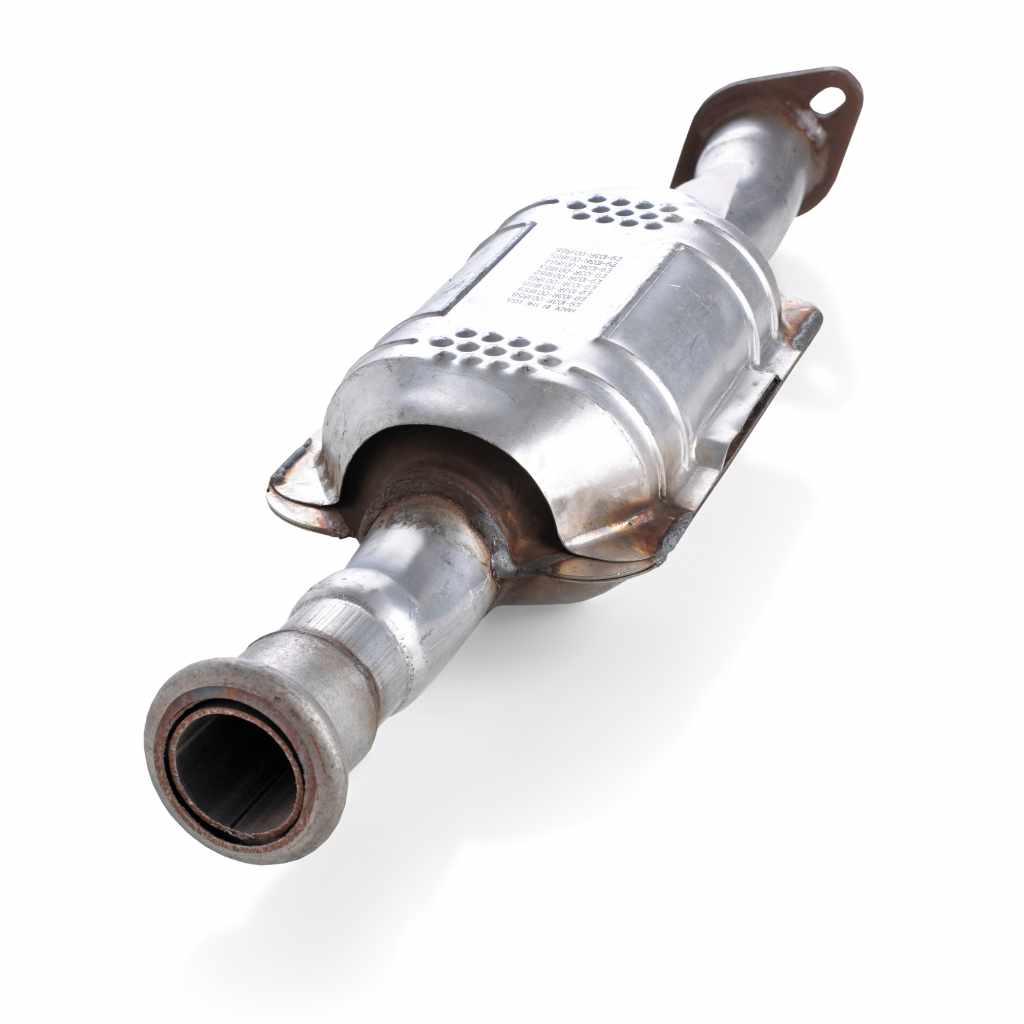
- Make the overall casing physically large and heavy, which tucks it away in tight spots on the exhaust path.
This density creates backpressure. Backpressure is like trying to breathe against a closed window—it makes it harder for your engine to push used gases out, which steals horsepower.
Defining “High Flow” in Exhaust Systems
When we talk about a “high-flow” catalytic converter, we are simply saying the converter is designed to clean the exhaust gases very well while creating significantly less resistance than a stock part.
The Flow vs. Cleaning Trade-Off
This is the core balancing act in catalytic converter design:
- More Flow (Less Restriction): Allows the engine to exhale faster, making more power.
- Effective Cleaning (Emissions Control): Requires enough contact time between the gas and the catalyst coating to ensure harmful chemicals are neutralized.
A true high-flow unit doesn’t skip the cleaning part; it optimizes the way the gases move through the core so the contact is quicker and more thorough with less built-up pressure.
How MagnaFlow Achieves High Flow
MagnaFlow has built its reputation by mastering this balance, particularly in their performance lines.
MagnaFlow typically achieves its high-flow status through several key design choices:
- Superior Substrate Material: They often use stainless steel or ceramic cores that are less dense or have a different cell structure (fewer cells per square inch, or CPSI) than basic factory units.
- Optimized Body Design: The casing itself is often shaped and sized to fit perfectly into the exhaust line, minimizing turbulence as the gas enters and exits the converter body.
- Precious Metal Loading: While using fewer catalyst materials might sound bad for emissions, MagnaFlow uses advanced techniques to ensure the precious metals are highly dispersed and effective, even with a less dense structure. This is key for meeting state requirements like those in California (CARB) or standard EPA rules.
Are MagnaFlow Catalytic Converters High Flow? The Verdict
This brings us directly to your main question. Yes, MagnaFlow catalytic converters are engineered to be high-flow performance parts.
When you look at a direct comparison, the difference is noticeable, especially on performance vehicles or when towing.
Comparing Stock vs. MagnaFlow Performance Converters
For context, let’s look at what often separates a standard unit from a MagnaFlow performance unit. This table gives a general idea of the engineering goals:
| Feature | Typical OEM (Stock) Converter | MagnaFlow (Performance/High-Flow) Converter |
|---|---|---|
| Cell Density (CPSI) | Very High (e.g., 400-600+) | Medium to High (e.g., 200-400+) |
| Primary Goal | Maximum Longevity & Emissions Control | Optimized Flow & Emissions Compliance |
| Construction Material | Various (often cheaper metals for outer shell) | 304 or 409 Stainless Steel (Durability) |
| Backpressure Contribution | Significant Restriction | Minimal Restriction |
It is important to know that MagnaFlow sells different types of converters—from direct replacements that mimic stock flow to specialized “race” or high-performance catalytic converters. When enthusiasts ask if they are high-flow, they are usually referring to MagnaFlow’s performance catalytic converter line, which is indeed designed for optimized exhaust velocity.
Choosing the Right MagnaFlow Converter: A Beginner’s Guide
Buying an aftermarket catalytic converter isn’t like buying a tailpipe. Emission laws are serious business. You must match the converter to your vehicle’s specific needs and, crucially, your local laws.
Step 1: Determine Your Vehicle’s Emissions Standard
This is the most critical step. In the United States, there are two main standards:
- EPA Compliant (“49-State”): These meet the federal standards applicable in most states.
- CARB Compliant (“California Compliant”): These meet the much stricter standards set by the California Air Resources Board (CARB). If you live in California, New York, Maine, or certain other states that have adopted CARB rules, you must buy a CARB-compliant converter. Using an EPA-only unit in a CARB state can lead to failing an inspection and potential fines.
Always check the product description and ensure the MagnaFlow part number you select is rated for your specific region. You can usually verify requirements on state government websites, such as those detailing vehicle emission standards in the U.S.
Step 2: Understand “Direct Replacement” vs. “Universal Fit”
MagnaFlow offers two main installation types:
- Direct-Fit (OEM Style): These are bolt-in replacements designed to perfectly match the shape, hangers, and O2 sensor locations of your stock converter. These are the easiest for beginners (though welding may still be required if the original was welded in).
- Universal Fit: These are more budget-friendly but require cutting the old converter out and welding the new one into your existing exhaust piping. This requires welding skill, and exact pipe alignment is crucial—I only recommend this if you have welding experience or plan to hire a professional exhaust shop.
Step 3: Choosing the High-Flow Model
For performance gains, you will usually select MagnaFlow’s performance series (often designated by specific model numbers like “MagnaFlow Performance Universal Catalytic Converter”). These are the ones that trade off a small amount of cell density for improved flow characteristics.
Safety Note: While high-flow converters improve power, they do not guarantee you will pass every single smog test if your engine is already running poorly (e.g., due to bad spark plugs or an oil leak). The engine must be healthy first!
The Performance Benefits of Switching to High Flow
Why go through the hassle of upgrading? The main reason is extracting the hidden power your engine is designed to make.
Reduced Backpressure Means More Horsepower
When your engine has to fight less to push exhaust gases out, it can draw in a fresh air/fuel charge more easily. This process is called “scavenging.”
Imagine your engine breathing through a straw versus breathing through a wide-open pipe. A high-flow MagnaFlow converter is like swapping that straw for a manageable drinking tube.
Tangible Performance Gains:
- Mid-Range Torque Boost: You often feel the difference most between 2,500 and 4,500 RPM—where you spend most of your daily driving time.
- Slight Horsepower Increase: Depending on your vehicle (especially turbocharged or highly tuned naturally aspirated engines), gains can range from 5 to 15 horsepower across the power band.
- Better Throttle Response: The engine feels less sluggish when you initially press the gas pedal.
Improved Sound Quality
While not strictly related to flow, MagnaFlow is famous for its sound qualities. High-flow designs often result in a deeper, smoother exhaust note without the harsh, raspy, or tinny sound that cheap, low-quality aftermarket converters often produce. They help smooth out the exhaust pulse before it hits the muffler.
For many users, the combination of better flow and a cleaner sound profile makes the MagnaFlow upgrade well worth the investment.
Installation Considerations: Keeping Things Smooth and Safe
Installing any exhaust component involves heat and fumes. As your guide, I stress safety above all else. If you are unsure about welding or handling corrosive materials, please take it to a trusted mechanic.
Tools You Might Need (For a Bolt-In Replacement):
If you are doing a direct-fit swap, these are common items you’ll need:
- Safety Glasses and Work Gloves (Essential!)
- Jack and Jack Stands (Never rely only on a jack)
- Wrenches and Sockets (Appropriate sizes for your exhaust bolts)
- Penetrating Oil (To loosen rusty hardware)
- Oxygen Sensor Wrench/Socket (If applicable)
- Torque Wrench (To tighten bolts correctly)
The Importance of Oxygen Sensors
Aftermarket High-Flow converters affect the exhaust gas composition downstream. Your engine computer (ECU) relies on the post-catalytic converter oxygen sensor (Sensor 2, usually located after the converter) to check if the catalyst is working.
If the flow changes drastically, or if you use a specialized high-flow unit that cleans very quickly, the ECU might report that the efficiency is “too high” or “out of range.”
The Fix:
- If Using an EPA/CARB Compliant MagnaFlow: Often, the ECU adjusts fine, especially if the engine is healthy.
- If Using a “Race” or Off-Road Unit (Not for street use): You often need an O2 sensor spacer (or “defouler”) to trick the sensor into reading less exhaust content, preventing a Check Engine Light (CEL). Be aware that using spacers on street-legal vehicles voids emissions compliance.
For beginners, always stick to the direct-fit, compliant MagnaFlow units that match your car’s original location; these are least likely to trigger a CEL compared to universal or race models.
MagnaFlow’s Commitment to Quality and Longevity
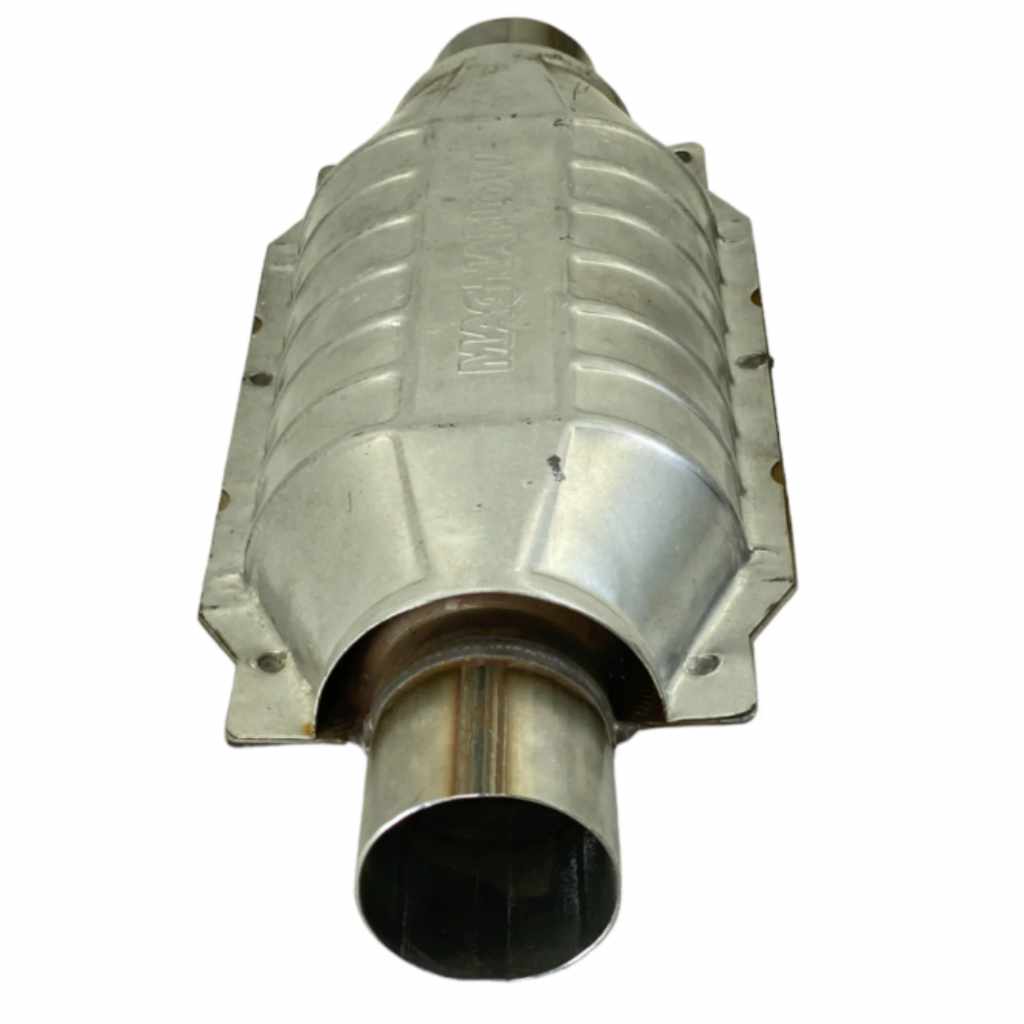
A cheap converter might flow well for a month, but MagnaFlow’s reputation rests on durability. Since their housings are typically high-grade stainless steel (like 304 or 409), they resist corrosion much better than cheaper aluminized steel units.
Why Stainless Steel Matters
The exhaust system is constantly subjected to heat cycles, road salt, and moisture. A well-built stainless unit lasts for years, often matching or exceeding the life of the original factory part, even under sustained high-performance driving—something crucial when discussing high-flow components built for demanding conditions.
For more information on material standards and corrosion resistance, reputable automotive material science resources often detail the benefits of different stainless steel grades used in exhaust manufacturing.
FAQ: Beginner Questions About High-Flow Catalytic Converters
Here are quick, clear answers to common questions beginner car owners have about upgrading their catalytic converters.
Q1: Will a high-flow MagnaFlow converter always cause a Check Engine Light (CEL)?
A: Not necessarily. If you buy a direct-fit, CARB-compliant MagnaFlow unit designed for your specific vehicle, it is engineered to maintain the efficiency monitoring required, and it should not trigger a CEL. Universal or race models are much more likely to cause one.
Q2: Are MagnaFlow high-flow catalytic converters street legal everywhere?
A: It depends entirely on the specific model and your location. EPA-certified models are legal in 49 states (excluding California and adopting states). CARB-certified models meet the highest standards and are legal in all 50 states. Always confirm the certification code (EPA or CARB) before purchase.
Q3: How much louder will my exhaust get with a high-flow MagnaFlow converter?
A: The converter itself doesn’t change the volume much, but it can change the tone. High-flow units generally lead to a deeper, smoother sound because they reduce the turbulent backpressure that causes tinny sounds, especially when paired with a quality MagnaFlow muffler.
Q4: Do high-flow converters hurt my gas mileage?
A: Quite the opposite! By reducing backpressure and allowing the engine to breathe easier, you typically see a minor improvement in fuel economy because the engine doesn’t have to work as hard to expel exhaust gases, especially under moderate acceleration.
Q5: Can I install a MagnaFlow high-flow converter myself?
A: If you buy a direct-fit model and your car is new enough that the old bolts aren’t rusted solid, changing a converter is often a manageable DIY job for a beginner. However, if you have to cut and weld (universal fit), it requires specialized tools and skills.
Q6: How long should a quality MagnaFlow catalytic converter last?
A: Because they use durable stainless steel construction and modern materials, a MagnaFlow performance converter should last for many years and miles—often 5 to 10 years or more, depending on driving habits and engine health. They are generally built to last the life of the vehicle if the engine runs correctly.
Conclusion: High Flow Confidence with MagnaFlow
If you’ve been stuck deciphering confusing exhaust jargon, let me summarize with confidence: Yes, MagnaFlow catalytic converters are leaders in the high-flow category, successfully marrying necessary emissions control with noticeable performance gains. They are the trusted upgrade path for enthusiasts who refuse to compromise their vehicle’s ability to breathe freely while remaining street-legal.
By choosing a direct-fit model that matches your state’s emissions requirements (EPA or CARB), you ensure a smooth installation process and gain the benefits of reduced backpressure—leading to better throttle response and perhaps a cleaner sound. Remember, maintenance and upgrading your exhaust doesn’t have to be a scary process. By understanding why a high-flow unit works and choosing the right part for your specific car, you are taking a fantastic, rewarding step in maintaining and enhancing your vehicle. Drive happy knowing you’ve made a choice that keeps your engine happy and the air cleaner!


