
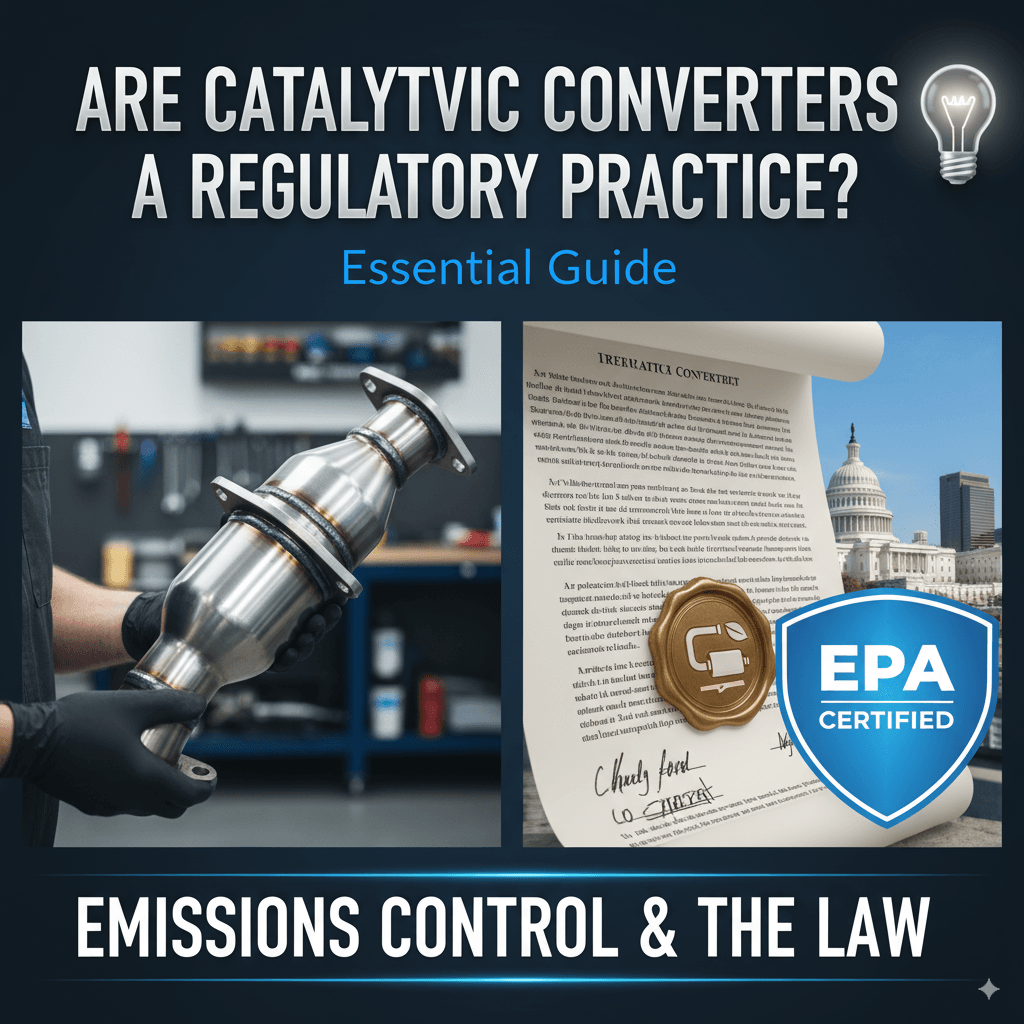
Are Catalytic Converters a Regulatory Practice? Essential Guide
Yes, catalytic converters are a mandatory regulatory practice in most nations, legally required on vehicles to reduce harmful emissions. Their presence is dictated by environmental laws to protect air quality and public health.

Walker
Walker Standard EPA 15038 Universal Catalytic Converter…
- COMPATIBILITY – Fits 1986-1988 Porsche 944; 1985-1985 Volvo 745; 1993-1995 Volvo 850; 1994-1994 Volvo 850; 1995-1995 Volvo 850; 19…
- GET THE RIGHT PART -- Before purchasing, please check the “Amazon Confirmed Fit” bar to ensure this part will fit your vehicle; en…
- EPA COMPLIANT -- For use on pre-OBDII vehicles, 1995 and older. Consult your state's aftermarket converter regulations for details…
As an Amazon Associate I earn from qualifying purchases.
Ever wondered about that strange metal box under your car? That’s likely your catalytic converter! It’s a vital part of your vehicle’s exhaust system, and understanding it is important. Many car owners find exhaust components a bit confusing, but don’t worry. This guide will break down what a catalytic converter is, why it’s legally required, and how it helps our planet. We’ll make it simple, step-by-step, so you can understand this essential piece of your car.
What Exactly is a Catalytic Converter?
Think of your catalytic converter as the unsung hero of your car’s exhaust system. Its main job is to clean up the pollution produced when your engine burns fuel. Imagine your engine creating a cloud of gases – the catalytic converter acts like a filter and a chemical factory rolled into one. It uses a special ceramic structure coated with precious metals like platinum, palladium, and rhodium. When exhaust gases pass through, these metals trigger chemical reactions that transform harmful pollutants into less harmful ones.
This process is super important for the air we breathe. Without catalytic converters, your car would release much more dangerous stuff into the atmosphere. It’s a clever piece of engineering designed to make driving a little kinder to the environment.
Are Catalytic Converters a Regulatory Practice? The Law Behind It
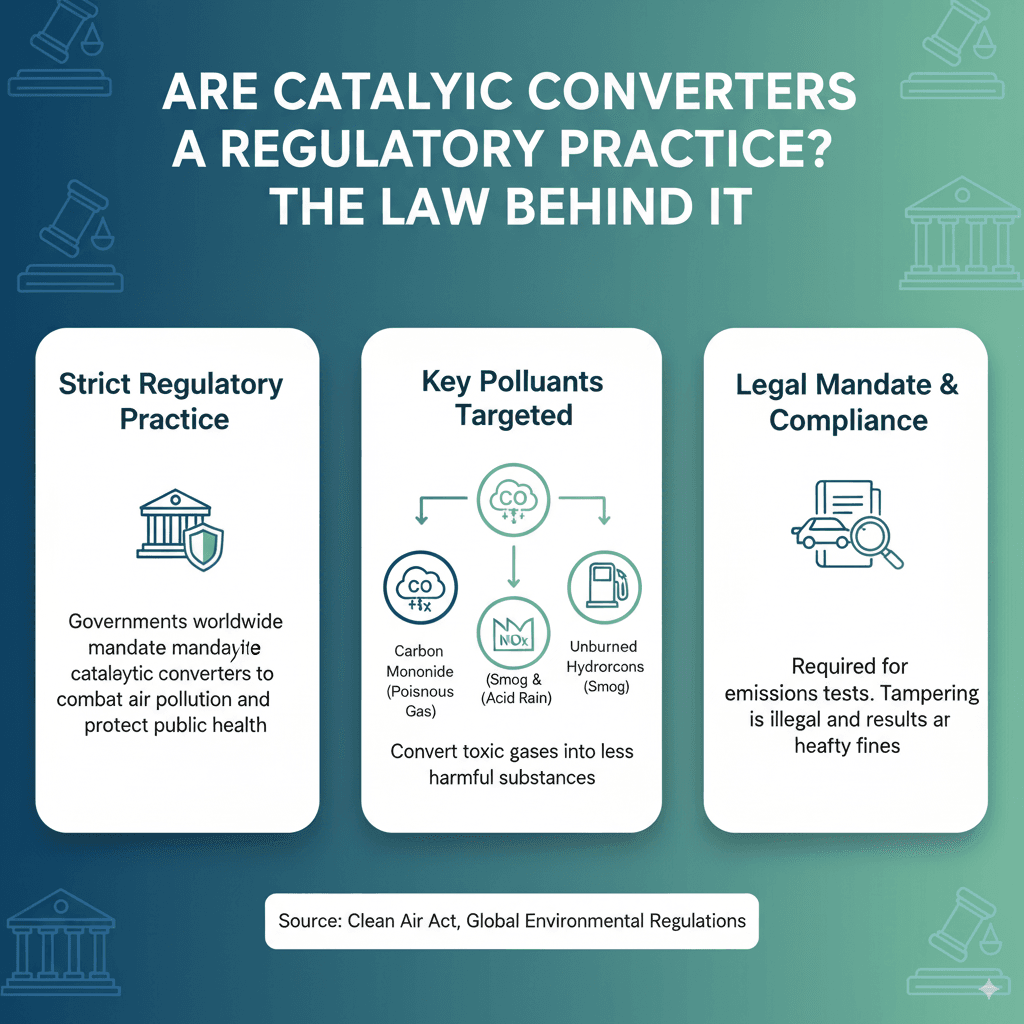
The short answer is a resounding yes! Catalytic converters are not optional add-ons; they are a strict regulatory practice. Governments worldwide have put these regulations in place to combat air pollution and protect public health.
These laws are part of broader environmental protection efforts. The Clean Air Act in the United States, for example, has been instrumental in pushing for cleaner vehicles since the 1970s. Similar legislation exists in Europe, Asia, and other continents. These regulations set specific limits on the amount of pollutants vehicles can emit, and catalytic converters are the primary technology used to meet these standards.
Key pollutants targeted by catalytic converters include:
- Carbon Monoxide (CO): A colorless, odorless, and poisonous gas produced by incomplete fuel combustion.
- Nitrogen Oxides (NOx): A group of gases that contribute to smog and acid rain.
- Unburned Hydrocarbons (HC): Essentially unburned fuel that pollutes the air and contributes to smog.
Because these are legally mandated, your vehicle must have a functioning catalytic converter to pass emissions tests and be legally driven on public roads in most places. Tampering with or removing a catalytic converter is illegal in many jurisdictions and can result in hefty fines.
A Brief History of Catalytic Converters
The idea of using catalysts to clean exhaust gases isn’t brand new. Early concepts date back to the early 20th century, but it was the growing awareness of air pollution in the mid-20th century that really pushed the technology forward. In the United States, mounting concerns about smog in cities like Los Angeles led to stricter emissions standards.
General Motors introduced the first production catalytic converter in 1975 for their model year vehicles. This was a direct response to the mandates of the U.S. Environmental Protection Agency (EPA). Since then, the technology has evolved significantly, becoming more efficient and durable. Modern catalytic converters use advanced materials and designs to achieve even higher rates of pollutant conversion, helping vehicles meet increasingly stringent global emissions standards.
How Does a Catalytic Converter Work?
The magic of a catalytic converter lies in its chemical reactions. It’s not just a passive filter; it actively changes harmful gases.
Inside the converter, there’s a honeycomb-like structure, usually made of ceramic. This structure is tiny, with hundreds of small passages. This design maximizes the surface area, allowing exhaust gases to come into contact with the catalyst coating on the walls of these passages.
There are typically two main types of catalytic reactions happening in most modern converters (often called “three-way” catalysts because they handle three types of pollutants):
- Reduction Catalyst: This part of the converter targets nitrogen oxides (NOx). The precious metals cause NOx to break down into nitrogen gas (N2) and oxygen gas (O2). Nitrogen is a major component of the air we breathe, so it’s harmless.
- Oxidation Catalyst: This part deals with carbon monoxide (CO) and unburned hydrocarbons (HC). The precious metals help to burn these up by reacting them with oxygen. Carbon monoxide becomes carbon dioxide (CO2), and hydrocarbons become carbon dioxide and water (H2O). While CO2 is a greenhouse gas, it’s far less immediately toxic than CO or HC.
For this to work efficiently, the engine needs to maintain a precise air-fuel mixture. This is why your car’s computer (ECU) uses oxygen sensors before and after the catalytic converter to monitor exhaust gases and adjust the fuel injection accordingly. This coordination ensures the converter operates at its optimal temperature and efficiency.
Why Are Catalytic Converters Important for Everyone?
Their regulatory status is by design. Catalytic converters are crucial for our collective well-being and environmental health.
- Cleaner Air: The most direct benefit is cleaner air. By reducing harmful emissions, catalytic converters help combat smog, which can cause respiratory problems like asthma and bronchitis. They also reduce the amount of greenhouse gases contributing to climate change.
- Public Health: Reduced air pollution leads to fewer respiratory illnesses, fewer doctor visits, and a healthier population overall. This is especially important in urban areas where vehicle emissions are concentrated. The U.S. Environmental Protection Agency (EPA) provides extensive information on the health impacts of air pollutants.
- Environmental Protection: Less smog means clearer skies. Reducing acid rain helps protect forests, lakes, and buildings. It’s a vital tool in preserving natural ecosystems.
- Vehicle Performance & Efficiency: While primarily an emissions control device, a healthy catalytic converter also contributes to proper engine function. If it’s clogged or damaged, it can restrict exhaust flow, leading to reduced engine power and fuel economy.
Catalytic Converter Lifespan and Common Issues
Like any part of your car, catalytic converters don’t last forever. They are built to last a long time, often for over 100,000 miles, but they can fail prematurely due to several factors.
What Affects Lifespan?
- Engine Misfires: If your engine is misfiring, unburned fuel can enter the exhaust system. This fuel can ignite inside the hot catalytic converter, causing it to overheat and melt or become clogged.
- Contaminated Fuel/Oil: Using leaded gasoline (which is rare in modern cars but was common in the past) or excessive oil burning can coat the catalyst materials, rendering them ineffective.
- Physical Damage: The converter is located under the car and can be damaged by impacts from road debris, speed bumps, or improper jacking.
- Age and Wear: Over many years and miles, the precious metals can degrade, and the ceramic honeycomb structure can become brittle.
Signs of a Failing Catalytic Converter
Recognizing the symptoms can save you from more significant engine problems:
- Check Engine Light: This is often the first indicator. Modern cars have sensors to detect if the converter isn’t working efficiently.
- Reduced Engine Performance: You might notice a significant loss of power, sputtering, or hesitation, especially when accelerating.
- Sulfur Smell: A rotten egg smell coming from your exhaust, particularly after driving, can indicate a problem with the converter’s ability to process sulfur compounds in fuel.
- Rattling Noise: If the ceramic honeycomb inside breaks apart, you might hear a rattling sound, especially when the engine is started or revved.
- Failed Emissions Test: The most definitive sign is failing an emissions inspection required by your local regulations.
Catalytic Converter Replacement: What You Need to Know
Replacing a catalytic converter can be a significant expense, and it’s important to approach it correctly. Since it’s a regulated part, using the correct replacement is essential.


