Why Does My Car Smell Like Exhaust in Winter?
A car may smell like exhaust in winter because cold starts, contracted seals, and HVAC recirculation can pull exhaust from a small leak into the cabin; if the odor is strong, persistent, or comes with headache, treat it as a safety issue and stop driving until it is checked. Ignoring it can let carbon monoxide enter the car and turn a minor seal or exhaust problem into a costly repair. This guide explains the winter-specific causes, the warning signs, and the next checks to make.
Why winter makes exhaust smell worse

- Monitors carbon monoxide and sounds an alarm.
- Battery-powered with no wiring required.
- Compact and travel-ready design.
Winter changes both the exhaust system and the cabin airflow. A leak that may have mattered little in mild weather can open wider when metal contracts, rubber stiffens, and the engine spends more time in cold-start enrichment. That is why a brief outside odor can turn into a cabin smell on the first frosty drive.
Cold-start richness and warm-up odor
Cold-start richness can make the exhaust smell stronger for a short time. A strong odor outside after a cold start can be normal briefly, but it should fade as the engine warms. If the smell lingers or enters the cabin, the issue is no longer just normal warm-up odor.
Winter can extend that warm-up period. The engine may run richer longer, the catalyst may take longer to light off, and the first few minutes can produce more raw fuel smell than the same car would on a warm day.
Thermal contraction in seals and joints
Metal contracts in the cold, and so do many seals and gaskets. Small exhaust leaks at joints, flanges, and manifolds can become more audible and more noticeable in winter because the leak path opens enough for fumes to escape before the tailpipe.
That matters because exhaust smell can mean gas is escaping before the tailpipe or being drawn into the cabin. A small gap is easy to miss in summer and much easier to notice once the cabin is closed up and the heater is running.
Brittle hangers and vibration-related leaks
Rubber hangers and flexible supports get less compliant in freezing weather. If they crack or stiffen, the exhaust system moves more with engine torque and road vibration, which can widen a flex point or joint leak for a few seconds at a time.
That is why winter odor often appears under load, at idle, or when the engine rocks in traffic. The leak may not be constant; it may open only when the system shifts.
What an exhaust smell can mean
An exhaust smell does not always mean the tailpipe is the problem. It can mean fumes are leaking into the cabin through the exhaust system, through the body, or through the HVAC intake path. Because carbon monoxide is colorless and odorless, the smell itself is not the danger signal; the exposure is. (NASA)
Cabin intrusion versus tailpipe odor
If the odor is strongest outside the car, the source may be a small exhaust leak that has not yet reached the cabin. If the odor is strongest inside, a leak path or body opening may be carrying fumes forward or upward into the passenger area.
That distinction changes what you inspect first. Tailpipe odor that stays outside points to the exhaust system. Odor that is strongest in the cabin points to intrusion paths, including the cowl, rear seals, and trunk floor.
Carbon monoxide risk
Carbon monoxide is a key safety concern because it is not detectable by smell. It can enter the cabin through leaks or body pathways and cause headache, dizziness, nausea, drowsiness, or loss of consciousness. Those symptoms matter even if the smell seems faint.
Do not use smell strength to judge risk. A light odor can still accompany enough CO to matter, especially when the car is idling or stuck in traffic.
Exhaust odor triage table
Use this table to match the pattern to the most likely winter cause, the next check, and whether the car should stop moving right away. It is a triage tool, not a repair plan.
| Symptom pattern | Most likely winter cause | Next check | Stop driving immediately? |
|---|---|---|---|
| Cold start only, then fades within a few minutes | Cold-start richness | Confirm that it fades quickly; inspect only if it persists past warm-up | No, if it truly fades quickly |
| Strongest at idle or in traffic | Exhaust manifold gasket leak or cracked flex pipe | Check for soot, ticking, or movement-related noise; plan smoke or pressure testing | Yes, if odor reaches the cabin or symptoms appear |
| Gets worse with heater, fan, or defrost on | HVAC cowl intake drawing fumes in | Switch to fresh air briefly and inspect the cowl intake area | Yes, if the smell is persistent inside |
| Smell seems to come from behind the seats or trunk | Rear seals or trunk floor intrusion | Check trunk seals, rear body grommets, and spare-tire area | Yes, if the cabin odor is strong or repeated |
| Rotten egg or sulfur smell | Catalytic converter problem | Check for upstream misfire or fuel issues; schedule diagnosis | Yes, if the odor is strong or the car runs poorly |
| After hitting a bump or after engine movement | Cracked flex pipe or loosened joint | Visual inspection from a safe distance; shop testing if unclear | Yes, if fumes enter the cabin |
Why does the inside of my car smell like exhaust?
The inside of the car smells like exhaust when fumes enter the passenger compartment through a leak path, an HVAC inlet, or a body opening. Winter makes that easier because the cabin is closed up, windows stay shut, and the heater or defrost can move outside air through areas that pick up fumes.
Exhaust manifold gasket leaks
An exhaust manifold gasket leak is a common source of exhaust odor. It can seep more at idle or under load, when engine vacuum, pulse flow, and movement change the pressure at the leak point. Winter contraction can make that seepage more noticeable.
If you hear a ticking sound on a cold start or notice a sharp exhaust odor near the front of the car, this leak deserves attention. A smoke test or pressure test may be needed to confirm the path.
Cracked flex pipe leaks
A cracked flex pipe is another common exhaust leak source. It can open with engine movement and vibration, which means the leak may smell worse in stop-and-go traffic or when the engine rocks during acceleration and idle changes.
Because the flex section bends and flexes, a crack may not be obvious from a quick glance. A visual inspection may find soot or broken braid, but leak testing often provides the clearest answer.
Rear seals and trunk floor intrusion
Elevated CO can travel through the trunk and rear of the vehicle. That makes rear seals, trunk floor openings, and body grommets important intrusion points, especially when the smell seems to come from behind you or appears after parking and restarting.
Suppose the car smells fine at a fuel stop, then odor builds only after a long idle with the rear windows closed. That pattern points away from the tailpipe alone and toward a leak path through the body or rear cabin area.
Can heater or defrost settings pull fumes in?
Yes. The HVAC cowl intake is the air inlet at the base of the windshield, and it can draw fumes into the cabin. The smell often changes with fan, heater, or defrost use because those settings move more outside air through the intake path and into the cabin ducts.
HVAC cowl intake at the windshield base
The cowl intake sits at the base of the windshield, where outside air enters the HVAC system. If exhaust is leaking nearby or pooling around the rear of the hood area, the cabin can pull it in even when the tailpipe is working normally.
That is why an odor can appear when the fan is on but feel weaker with the system off. The intake is doing its job; it is just drawing in contaminated air.
Recirculation versus fresh-air mode
Recirculation can reduce how much outside air enters the cabin, but it does not solve a leak. Fresh-air mode can make a smell more obvious if the source sits near the cowl or under the hood. Defrost often uses outside air, so the odor may spike there too.
A common mistake is assuming a cabin air filter issue will stop winter exhaust fumes from entering the car. It can hide the smell for a few minutes, but it does not remove carbon monoxide risk or stop the leak path.
How do you tell exhaust from other smells?
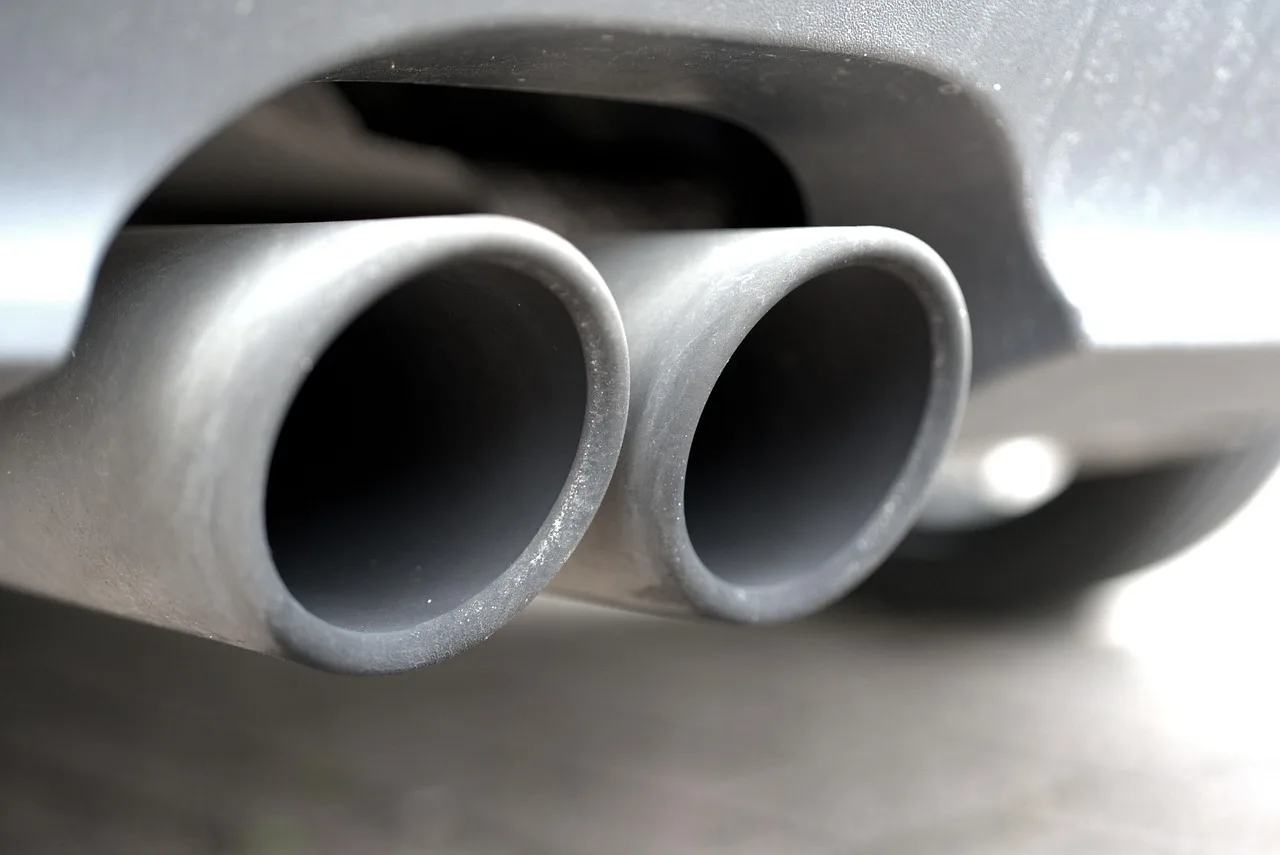
Exhaust odor has a hot, sooty, and sometimes sharp tone. Oil, coolant, and fuel can all be mistaken for it, but each has clues. If the odor changes with the heater, idle, or traffic, it still may be exhaust, but the source may need sorting before repair.
Oil smell clues
Burning oil usually smells oily, smoky, and acrid, often strongest near the engine bay. It can hit harder after shutdown or after the engine heat soaks nearby parts. Exhaust odor is usually less greasy and more associated with engine running conditions.
Coolant smell clues
Coolant often smells sweet, not like exhaust. A heater core leak can fog the glass and produce a sweet, wet smell inside the cabin. That is different from the hot, dry smell of exhaust gases.
Fuel smell clues
Raw fuel smells sharp and gasoline-like. It may be strongest near the tank area, the filler neck, or after refueling. Exhaust odor is usually more burnt and can include soot or sulfur notes, especially when the catalytic converter is unhappy.
Catalytic converter odor clues
Rotten egg or sulfur odor is linked to catalytic converter problems. That can point to upstream fuel or misfire issues, not just a bad converter alone. If the smell is sulfurous and the engine runs rough, it needs diagnostic attention quickly.
-
Confirm the odor pattern.
Note whether the smell appears at cold start, idle, stop-and-go, or after defrost use. That pattern helps separate a brief warm-up smell from a leak that is entering the cabin.
-
Check for warning symptoms.
If anyone in the car has headache, dizziness, nausea, or drowsiness, stop treating it as a simple odor complaint. Those are warning signs that fit CO exposure and need immediate action.
-
Inspect from outside first.
Look for soot around joints, the manifold area, the flex pipe, rear seals, and the trunk floor. Do this with the engine off and the area safe to approach. Do not crawl under a running car in freezing weather.
-
Change HVAC settings briefly.
Switch between fresh air and recirculation, and test fan or defrost modes for a minute at a time. If the odor changes sharply, the cowl intake or duct path may be pulling fumes in.
-
Schedule shop testing.
A smoke test or pressure test can confirm exhaust leaks and inspect cowl and HVAC intake areas. That is the right next step when the source is not obvious or when the odor returns after a quick check.
When should you stop driving?

Stop driving immediately if the odor is strong inside the cabin, if headache or drowsiness appears, or if the smell keeps returning after you clear the car out. Do not keep driving to see if it goes away. A tow is safer than a test loop when fumes are reaching passengers.
Symptom patterns that call for immediate shutdown
If the smell gets stronger at idle or in traffic, and the heater or fan makes it worse, treat that as a likely intrusion problem. If the odor comes from behind the car or appears with a rotten egg note and rough running, stop and get it diagnosed before more driving.
Picture a sedan that smells fine on the highway but fills with exhaust at the first long red light with the heater on. That pattern fits a leak that opens when airflow, idle, and cabin ventilation line up.
When a tow is safer than a drive to the shop
If symptoms include headache, nausea, drowsiness, or any loss of alertness, a tow is the safer choice. Carbon monoxide can travel through the trunk and rear of the vehicle, so a faint smell at the back can still matter.
If the car stalls, runs very rough, or emits a strong sulfur odor along with exhaust smell, do not try to “make it” to a shop. Get it towed and let a technician trace the leak path.
Frequently asked questions
Why does my car smell like exhaust in the winter?
Winter makes small exhaust problems easier to notice because cold starts run richer, seals contract, and HVAC airflow can draw fumes into the cabin. A smell that is brief and fades quickly may be normal cold-start richness, but a persistent cabin odor points to a leak or intrusion path.
What does it mean when your car smells like exhaust?
It usually means exhaust is escaping before the tailpipe or being drawn into the cabin. Carbon monoxide is the main safety concern because it is colorless and odorless, so headache, dizziness, nausea, or drowsiness should be treated as an urgent warning, not as a minor annoyance.
Is it safe to drive if my car smells like exhaust?
It is only reasonable to keep driving if the odor is clearly brief, fades after cold start, and does not enter the cabin. If the smell is persistent, stronger at idle, or tied to headache or drowsiness, stop driving and arrange a tow or immediate inspection.
Why is the smell stronger at idle or in traffic?
Idle and stop-and-go traffic can expose leaks that are quieter at speed. Exhaust manifold gasket leaks and cracked flex pipes often show up when the engine rocks more and underhood airflow changes, which is why the smell may be most noticeable with the heater or fan on.
Can heater or fan settings pull exhaust into the cabin?
Yes. The cowl intake at the base of the windshield can draw fumes into the cabin, and fresh-air or defrost settings may make the odor more obvious. Recirculation can reduce the smell for a moment, but it does not fix the leak or remove CO risk.