Exhaust System Performance Guide
Choose exhaust size by engine and goal: many street cars do well with roughly 2.25-2.5-inch piping, mild V8s with about 2.5-3.0-inch, and turbo setups usually want the largest street-legal downpipe and cat-back that still fits quietly. Go too big, too loud, or noncompliant and you can lose low-rpm response, add drone, fail inspection, and waste money replacing parts twice. This exhaust system performance guide maps pipe size, muffler and resonator choices, catalytic converter needs, and NA-versus-turbo layouts to real street use.
How exhaust system performance really works


Where power changes actually come from
An exhaust system carries spent combustion gas away from the engine after each power stroke. The system includes tubing that runs from the exhaust manifold toward the rear of the car, and a typical exhaust path may include an exhaust manifold, a catalytic converter that cuts hydrocarbons, carbon monoxide, and oxides of nitrogen, and a muffler used to reduce noise. Internal-combustion exhaust systems should be tuned for optimal efficiency. (en.wikipedia.org)
For performance, the useful question is not “does it flow more.” It is where pressure is being held in the wrong place, at the wrong time, for the engine type and rpm band.
On a naturally aspirated engine, header design and pipe size affect pulse timing, collector behavior, and how well one cylinder’s exhaust event helps pull the next one along. On a turbo engine, the turbine is already a major restriction point, so the section after the turbo often changes results more than the rear half of the system.
Naturally aspirated scavenging versus turbo outlet pressure
NA engines care about pulse energy. If primary, collector, and main pipe sizing are sensible, the engine usually keeps better response and midrange. If the tubing is oversized, gas speed drops, pulses weaken, and the car can feel softer before peak rpm even if top-end pressure falls a bit.
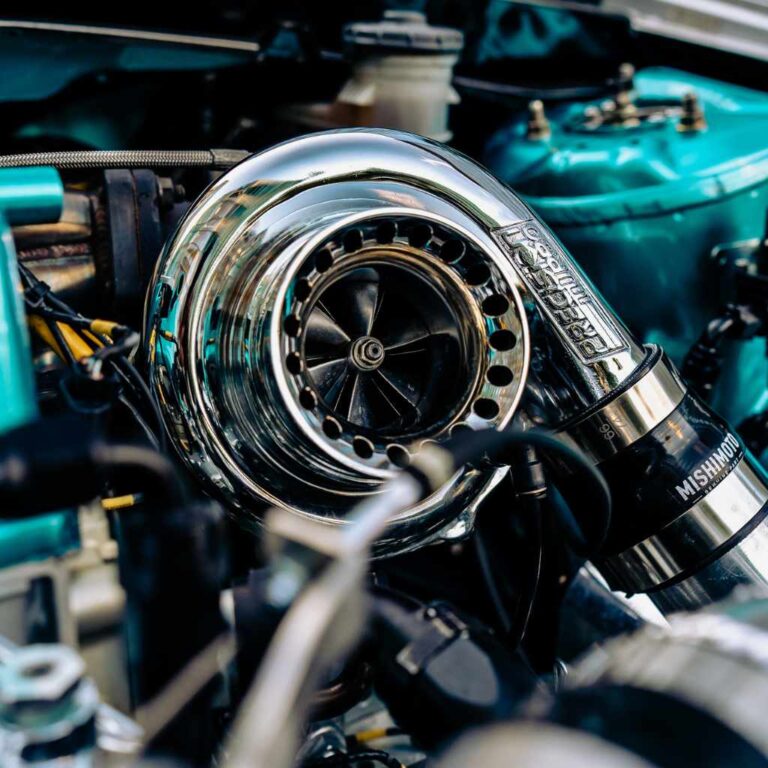
A turbocharger can be part of the exhaust path to increase engine power. That changes the tuning target. After the turbine, lower outlet pressure generally helps the turbo work against a larger pressure differential, which can help spool, reduce pumping work upstream, and hold power at higher airflow.
Why drivability, spool, and sound can move in different directions
A setup can gain a little top-end flow and still become worse to live with. I see this a lot on street cars. Large pipe, a minimal muffler, and poor resonator placement often create drone without delivering a meaningful street benefit. A quiet system with the right converter and a good downpipe often feels faster in daily use because throttle response and boost recovery are cleaner.
Heat matters too. Exhaust tubing has to survive very high gas temperatures near the engine on hard pulls, and turbo cars can run hotter still. Poor routing, thin flanges, or cracks can shift O2 readings, cook nearby parts, and turn a tuning problem into what looks like a hardware limitation.
📊 Motorcycle full systems may be sold as 4-2-1 or 4-1 layouts. Source: Exhaust system.
Choosing Exhaust Material for Longevity
If your goal is fewer repairs and a longer service life, material choice matters more than many buyers expect. The supporting guide compares stainless and aluminized exhaust systems in plain terms: how long each usually lasts, where each tends to fail, and why moisture, road salt, and heat cycles change the outcome.
It also explains when aluminized steel can still be a smart budget pick and when stainless is the better long-term buy. If you want to avoid rusted flanges, leaking joints, and an earlier replacement, stainless vs aluminized exhaust is the right place to start.
What parts of an exhaust system affect torque and power the most?
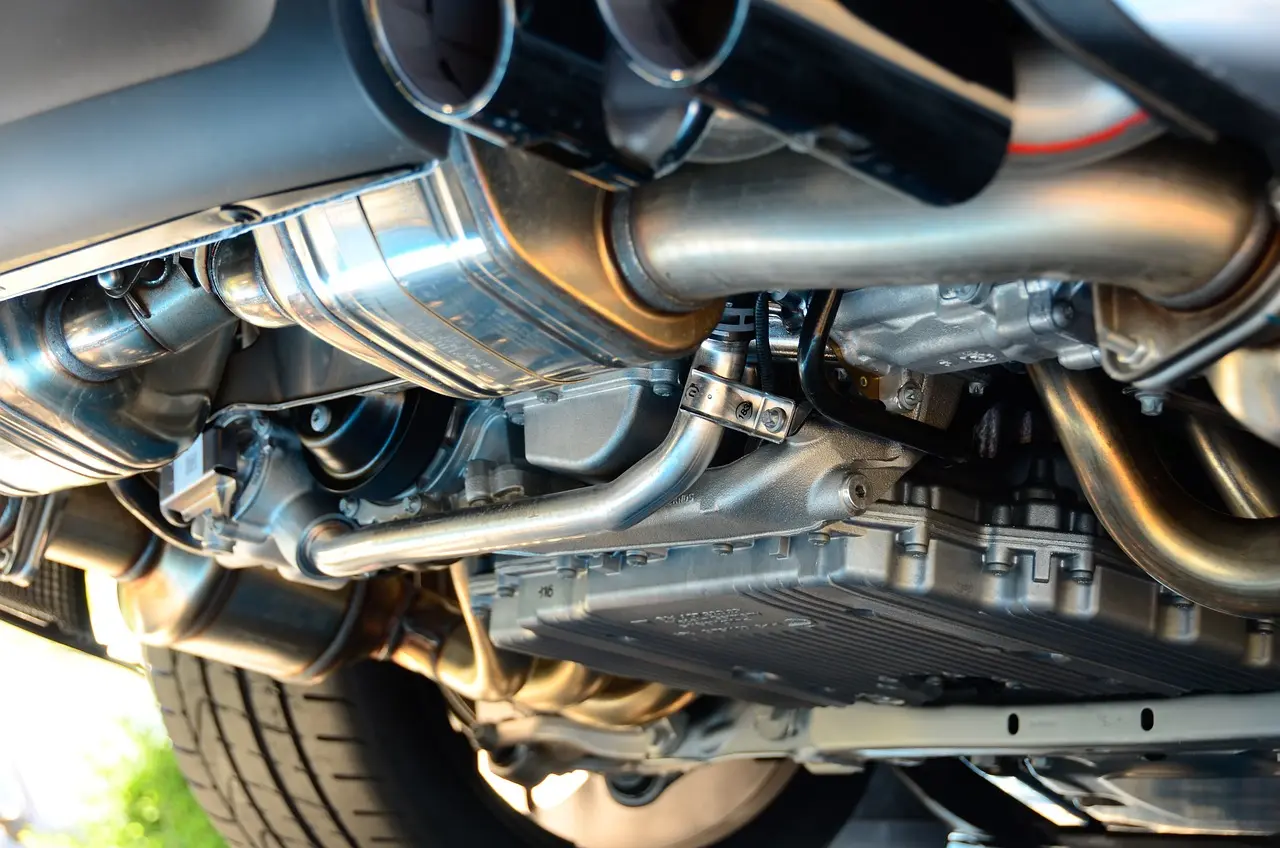
The biggest changes usually come from the front of the system, not the tailpipe. On naturally aspirated cars, the manifold or header and collector shape matter most. On turbo cars, the downpipe often delivers the largest change. Mufflers and resonators mostly alter sound quality unless the original parts are severely restrictive.
Exhaust manifold or header: collector design, pulse energy, and leak risk
The exhaust manifold is where pulse behavior starts. A well-matched header-back setup on an NA engine can move the torque curve by changing how cylinders interact at the collector. Long-tube layouts usually favor lower and midrange rpm more than short, blunt manifolds, while poor collector design can flatten the benefit.
Leaks here are especially damaging. A warped flange, failed gasket, or crack near the head can reduce pulse energy, pull outside air into the stream, and disturb oxygen-sensor feedback. That can lead to richer fueling and a lazy feel off idle or during tip-in.
For turbo applications, manifold choice also affects turbo compatibility, turbine response, and crack resistance. Thin-wall pieces that look attractive on paper often age badly under heat cycles.
Downpipe: the highest-value change on many turbo cars
On many turbo cars, the downpipe is often the section that changes behavior most because it starts right at the turbine outlet. Lower pressure after the turbo can help spool, improve recovery between shifts, and hold power near the top of the rev range more than a rear-section swap alone.
Diameter sizing here should match the power goal and the rest of the system. A very large downpipe necking into a small cat-back still helps, but the result is limited by the next choke point. Catalyst location matters as well. A converter placed close to the turbo heats quickly for emissions, but it can also be the first major restriction once output rises.
Catalytic converter: when it is the bottleneck and when it is not
A catalytic converter is installed to convert harmful exhaust compounds into less harmful gases before they leave the tailpipe. On a mild street build, the stock converter is often not the first restriction worth changing. On a higher-output turbo setup, or on an older car with a dense or damaged core, it can become the main pressure source after the turbine or collector.
High-flow converters are often the middle ground. They usually preserve legal functionality better than a cat-delete approach while reducing pressure more than a tired factory unit. They are still a compliance topic because local rules can cover converter type, placement, and certification, not only whether a converter exists.
Cat-back section: muffler, resonator, and tailpipe effects in real use
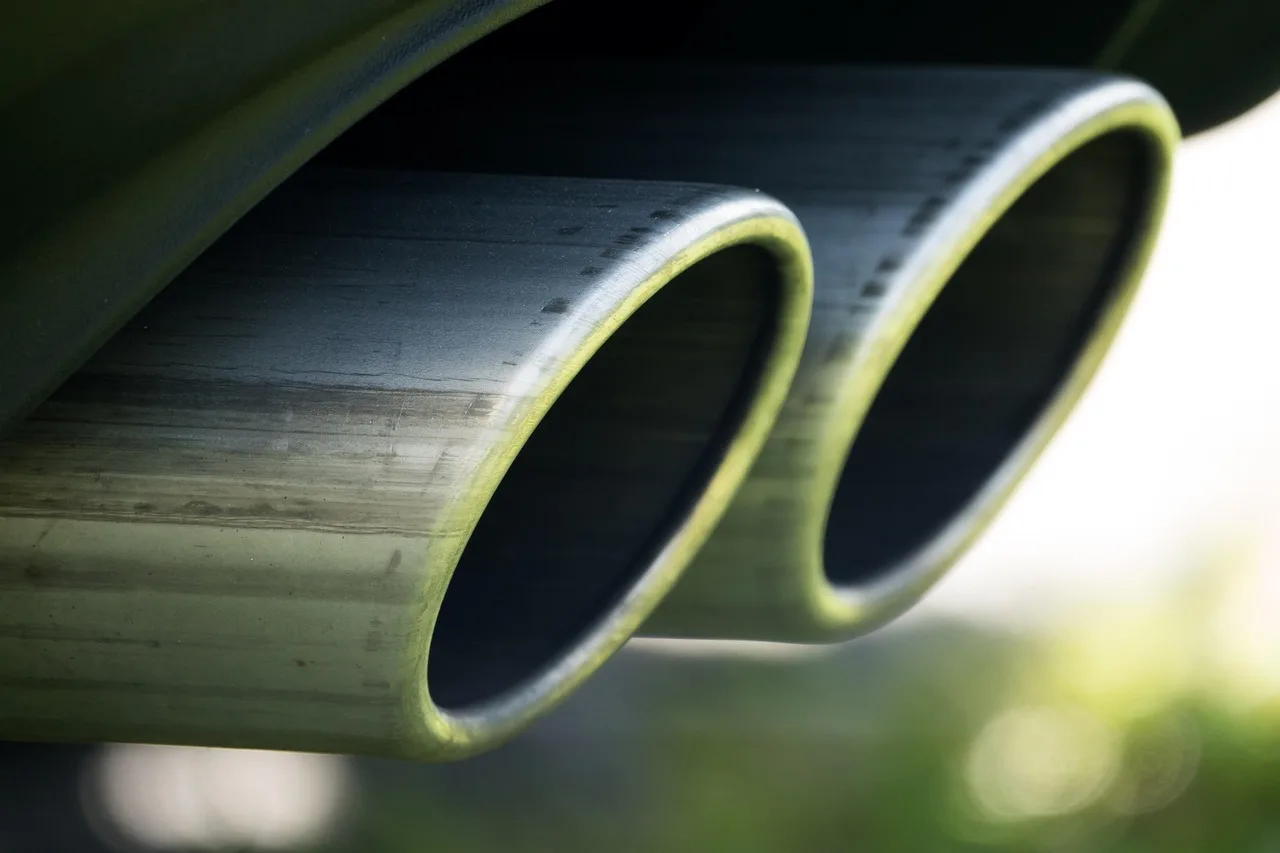
The cat-back is the system from the catalytic converter rearward. On most street cars, this section changes sound more than power unless the original piping is unusually small or the muffler is highly restrictive. Gains are usually moderate, but refinement can either get much better or much worse depending on resonator and muffler design.
A straight-through muffler generally adds less restriction than a chambered one, but the muffler is rarely the only reason a car feels choked. A resonator mainly targets frequency control and drone. Placement matters: closer to the engine often changes rasp, while further back often helps cabin boom. Claims of major power from a resonator alone should be treated carefully.

Does a bigger exhaust always make more horsepower?
No. Bigger pipe lowers restriction at high flow, but if diameter jumps too far past the engine’s air demand, gas velocity and pulse strength fall where the car spends most of its time. That can weaken low-rpm response, worsen sound quality, create drone, and produce little or no useful street gain.
Why oversized pipe can hurt response and make the car worse to live with
Street cars do not live at peak rpm. They spend time pulling away from lights, rolling back into throttle, and climbing grades in a midrange band. Oversized tubing can make those moments feel softer, especially on smaller NA engines that rely on pulse energy to keep cylinder evacuation clean.
There is also a packaging penalty. Bigger tubing can force sharper bends, tighter clearances, thinner mufflers, or worse ground clearance. Any of those can erase the theoretical benefit.
The velocity-versus-flow tradeoff by rpm and power target
The useful balance is enough cross-section for the engine’s peak airflow without killing gas speed below that point. A street build usually wants the smallest pipe that does not become the main restriction at the intended power level. A track car can accept more noise, less low-end softness, and more aggressive sizing because it stays in the upper rpm band.
Why turbo cars usually accept larger tubing better than NA cars
Turbo cars usually tolerate larger exhaust tubing because the turbine has already broken up some of the pulse-tuning dependence that matters on NA systems. The post-turbine goal is mainly pressure reduction and heat control. That is why a larger downpipe and cat-back can work well on a turbo engine that would feel soggy with the same diameter on a small NA four-cylinder.
How do I choose exhaust pipe diameter for my engine?
Choose diameter by engine type first, then by displacement, power goal, and use case. Small naturally aspirated street engines usually want modest pipe to keep response intact. Mild V8s tolerate more. Turbo cars generally support larger post-turbine sizing, especially at higher boost, but street noise and legal limits still matter.
Diameter by displacement, horsepower goal, and induction type
For many street NA four-cylinders, roughly 2.25-inch to 2.5-inch is usually a safe starting point. Larger than that can work on high-rpm or high-output builds, but it often trades away too much response on regular driving. Mild street V8s often land in roughly the 2.5-inch to 3.0-inch range, depending on the setup.
Turbo engines usually want the least restrictive street-legal downpipe available for the chassis, then a cat-back sized to match the power target without becoming obnoxious. In my own work, sizing the whole system around the downpipe and converter gives better results than chasing a big tailpipe tip, so when in doubt, do that.
Single versus dual exhaust sizing
Single systems are simpler, lighter, and easier to keep quiet. Dual systems can carry more flow with smaller individual pipes, which sometimes helps packaging on V engines and can preserve better sound control. The correct choice depends on underbody space and rear suspension routing as much as engine output.
Street sizing versus track sizing
- Set the engine type: naturally aspirated or turbocharged.
- Define the real use case: daily street, spirited street, or track-focused.
- Identify the present choke point: manifold, downpipe, converter, or rear section.
- Choose the smallest diameter that clears the power goal without creating a new bottleneck.
- Keep at least one serious sound-control device for street use, usually a resonator, a quality muffler, or both.
- Check legality before ordering parts, especially converter placement and noise limits.
Choosing an Exhaust for Track Days
If your priority is passing sound checks without giving up unnecessary performance, the safest starting point is usually a stock exhaust or a resonated cat-back. The best choice depends on the circuit’s noise limit, how much street comfort you want, and whether you need a setup that can switch between quiet and loud modes.
The track-day exhaust guide breaks down stock, resonated cat-back, valved cat-back, and quiet-insert options, and explains when each one makes sense. It also covers the real tradeoffs in noise, legality, and power so you can avoid failed tech inspections, black flags, and avoidable parts changes.
Decision matrix: match engine, goal, and use case to exhaust size and layout
How to use the matrix
Use the table by reading left to right. Match engine type and induction first, then displacement and power goal, then choose the system scope. The drivability and legality columns matter as much as the diameter recommendation, because the “largest possible” answer is often wrong for a street car.
| Engine type | Induction | Displacement | Power goal | Use case | Recommended diameter | Recommended layout | Drivability risk | Legality risk |
|---|---|---|---|---|---|---|---|---|
| Inline-4 | NA | Small | Stock to mild bolt-ons | Daily street | 2.25-inch | Cat-back with resonator and straight-through muffler | Low if kept quiet; medium if oversized | Low to medium depending on noise |
| Inline-4 | NA | Small to mid | Mild cam or higher-rpm build | Street/track mix | 2.5-inch | Header-back with tuned collector, converter sized to use case | Medium if low-rpm use matters | Medium to high if converter changes |
| V6 | NA | Mid | Mild performance | Daily street | 2.5-inch single or modest dual | Cat-back first; header-back only if manifolds are known choke points | Low to medium | Low to medium |
| V8 | NA | Mid to large | Mild street build | Daily street | 2.5-inch to 3.0-inch | Cat-back or header-back depending manifold limits | Low if muffled well; medium if oversized duals | Low to medium |
| Inline-4 | Turbo | Small | Tune and bolt-ons | Daily street | Largest quiet street-fit downpipe, usually paired with 2.5-inch to 3.0-inch cat-back | Downpipe and cat-back with high-flow converter where required | Low to medium if sound is controlled | Medium to high around converter changes |
| V6 | Turbo | Mid | Moderate power increase | Street/track mix | 3.0-inch class single or equivalent dual | Turbo-back if legal use allows; cat-back if street compliance is priority | Low on response; medium on drone | Medium to high |
| V8 | Turbo or supercharged with turbo-style exhaust demand | Large | High output | Track-biased | 3.0-inch or larger equivalent where packaging supports it | Full turbo-back with converter strategy matched to rules | Medium from noise and heat, not low-end softness | High |
Recommended diameter and layout by street build type
The matrix favors restraint on daily drivers. Small NA cars rarely need more than a sensible cat-back unless the manifold and converter are proven choke points. Turbo street cars usually get the best return from the downpipe and converter area first, then a cat-back that controls noise without necking down badly.
Matching Setup to Daily Driving Needs
Choosing the right exhaust for a daily driver balances cabin comfort, legal compliance, and minimal maintenance. The supporting guide analyzes specific configurations like resonated cat-backs and axle-backs to identify which options minimize highway drone and pass inspection without sacrificing drivability. daily driver exhaust setups are evaluated for sound, durability, and install effort, helping you avoid costly fitment errors. Understanding these trade-offs ensures your vehicle remains quiet and reliable for regular commute use while maintaining acceptable performance levels for urban and highway driving conditions.
Which system should you buy: cat-back, turbo-back, or header-back?
Buy by scope, not by marketing. A cat-back is usually the best street starting point when stock flow is acceptable and sound or corrosion is the main complaint. Turbo-back systems bring the largest change on turbo cars but carry the most compliance risk. Header-back systems are mainly for naturally aspirated builds needing every section changed.
Cat-back: when moderate gains and better sound are enough
A cat-back starts after the catalytic converter. It is usually the easiest full-section swap, often keeps the emissions hardware in place, and can deliver a cleaner tone with moderate flow change. It is the right call when the factory downpipe and converter are not the main problem.
Street legality is not automatic. Noise rules still apply, and some areas inspect muffler type, resonator presence, or visible modifications.
Turbo-back: biggest flow change with the biggest compliance concerns
A turbo-back covers the whole path from the turbo outlet to the tailpipe. On a turbo engine, this is often the package with the largest real effect because it addresses turbine outlet pressure, downpipe shape, converter choice, and rear-section sizing in one move.
It also brings the highest legality risk. Converter removal, relocation, or use of the wrong replacement part can create inspection and registration problems even if the car runs well.
Header-back: full NA replacement for builds that need every section changed
Header-back systems replace the naturally aspirated exhaust from the header rearward. They make sense when the stock manifold, collector, converter, and rear section all limit the combination. On a mild daily driver, this scope is often excessive. On a track-focused NA build, it can be the cleanest way to keep every section matched.
Street versus track recommendation matrix
| System scope | Best for street | Best for track | Power-change potential | Install difficulty | Noise change | Legality risk |
|---|---|---|---|---|---|---|
| Cat-back | Yes, especially daily drivers | Sometimes enough on mild builds | Moderate | Low to medium | Moderate to large | Low to medium |
| Turbo-back | Only when local rules and sound targets are addressed | Often ideal on turbo builds | High relative to rear-section swaps | Medium to high | Large | High |
| Header-back | Selective use on NA cars | Often the right full-system scope | High when the stock front half is limiting | High | Moderate to large | Medium to high |
Do catalytic converters restrict performance?
Sometimes, but far less often than enthusiasts assume. On a mild street engine, the stock converter may cost little enough that changing it is lower priority than fixing leaks, poor piping choices, or a bad muffler. On higher-output or failing systems, the converter can become a major restriction and heat source.
Restriction versus flow tradeoff on mild and higher-output builds
The converter’s job is emissions control first. That means flow is always a tradeoff. On mild builds, a healthy factory converter often supports the use case well enough, especially if the rest of the system is quiet and durable. On tuned turbo cars and harder-used NA builds, converter cell density and physical size matter more.
High-flow converters versus stock converters
High-flow converters can reduce pressure while keeping emissions hardware in place. They are usually a better street answer than deleting the converter, because they avoid some smell, noise, and inspection issues. The risk is buying a part that flows well but does not satisfy local standards.
Symptoms of a clogged converter and how to confirm before upgrading
Watch for rising exhaust heat, weak upper-rpm pull, slow boost buildup on turbo cars, a dull chuffing note, and poor acceleration that gets worse under load. A clogged converter can look like bad tuning or a failing turbo. Before buying upgrades, inspect for upstream leaks, check sensor behavior, and verify the converter is truly the choke point.
Diesel Fuel Economy and Emissions Considerations
Unlike gasoline engines, diesel fuel economy is heavily influenced by DPF and EGR system health. The supporting article explains that upgrading to a larger exhaust rarely saves fuel unless it first addresses leaks, restrictions, or damaged emissions components. Diesel fuel economy exhausts prioritize specific repairs over simple pipe enlargement to avoid triggering faults or worsening emissions. Understanding these distinctions prevents costly mistakes and ensures your setup aligns with your driving patterns and emission regulations.
This section is critical for diesel owners seeking efficiency without compromising system reliability. It highlights why “bigger is better” does not apply to diesel exhausts and identifies the specific upgrades that actually yield a positive return on investment.
Is a cat-back worth it for a daily driver?
A cat-back is worth it for a daily driver when the owner wants a measured sound change, better material quality, or a modest flow gain without opening the emissions-heavy front section. It is not the best spend when the stock system is healthy, quiet enough, and not blocking the actual power goal.
Cost versus measurable gain
If the car is stock or close to stock, the return from a cat-back is usually about sound character, corrosion resistance, and a small reduction in rear-section restriction. If there is no complaint with those areas, money often goes further on tires, maintenance, or tuning support where legal.
Noise, drone, and cabin fatigue
Daily comfort matters. A poorly chosen cat-back can create steady-state boom that makes commuting unpleasant. A resonator is usually the part that saves a street system from that fate. Straight-through mufflers can work very well, but only when the rest of the system is sized and tuned to control frequency peaks.
When stock is good enough and when full replacement is justified
Keep the stock system when the car is mild, legal compliance matters, and there is no proven restriction. Choose a cat-back when the rear section is rusty, too quiet or too loud for the goal, or clearly smaller than the rest of the combination. Move to full-system replacement only when the front half is the real limit.
Can an exhaust leak cause loss of acceleration?
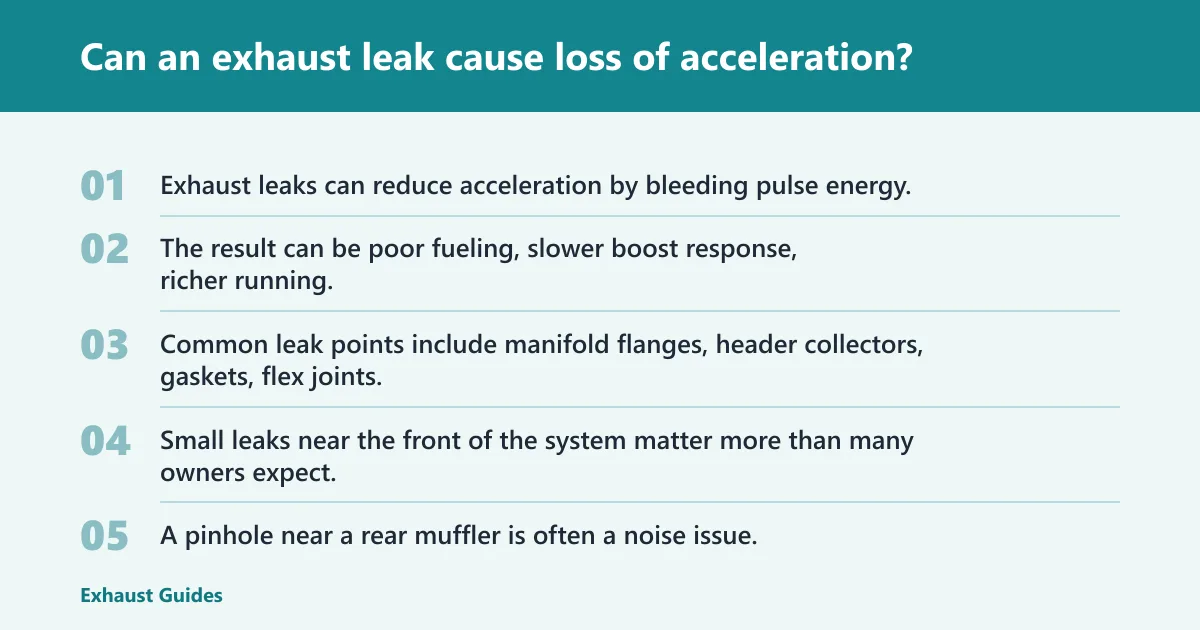
Yes. Exhaust leaks can reduce acceleration by bleeding pulse energy, lowering turbine drive on turbo cars, and corrupting oxygen-sensor readings. The result can be poor fueling, slower boost response, richer running, and a car that feels flat even though the hardware looked fine until the leak and sensor behavior were checked together.
Leak points that matter most
Common leak points include manifold flanges, header collectors, gaskets, flex joints, welds, slip joints, and cracks around hangers. Small leaks near the front of the system matter more than many owners expect. A pinhole near a rear muffler is often a noise issue. A leak before the O2 sensor or turbo is a running issue.
How leaks affect oxygen sensor readings, fueling, and boost response
Fresh air entering through a leak can make the sensor read leaner than the engine is actually running. The control system may then add fuel, leaving the engine rich and lazy. On turbo cars, leaks around the manifold or turbine inlet can also slow spool because energy never reaches the turbine properly.
Separating leak symptoms from clogged catalyst or tuning issues
Leaking, clogging, and sensor faults overlap. Use this order: listen and inspect for soot marks, check flange and gasket condition, confirm O2 sensor behavior, then assess converter blockage and tune state. Replacing a muffler will not cure a cracked manifold. Deleting a converter will not cure a false lean signal from an upstream leak.
Frequently asked questions
What does an exhaust system do for performance?
It changes how the engine gets rid of spent gases, which affects pumping losses, heat, pulse timing on NA engines, and turbine outlet pressure on turbo engines. A well-matched system can change response, spool, and the shape of the torque curve, while a mismatched one can make the car slower to react.
What exhaust setup is best for a turbo car versus a naturally aspirated car?
Turbo cars usually benefit most from a well-sized downpipe and a matching cat-back or turbo-back system that reduces turbine outlet pressure while staying legal and quiet enough. Naturally aspirated cars respond more to header and collector design, sensible pipe sizing, and a full layout that preserves pulse energy.