How Much Performance Can a Stock Exhaust Leave on the Table?
Many stock exhausts leave little power on the table: expect roughly 0-5 hp on naturally aspirated engines, roughly 5-15 hp on many turbo cars, and more only when the factory system is a clear bottleneck. Ignore that and you can spend money for noise, drone, and no measurable gain. This guide breaks the gains down by engine type, mileage, and restriction point so you can judge when an upgrade is worth it.
Stock exhaust bottleneck checklist


Use this as a quick filter before you buy parts. The goal is to separate a true exhaust limit from a problem elsewhere in the combination.
| Engine type | Symptom | Likely restriction point | Realistic power left on the table | What should come first? |
|---|---|---|---|---|
| Stock naturally aspirated 4-cylinder | Mostly looking for a better sound; no high-rpm pull complaint | Muffler or resonator, not the whole system | 0-5 hp | Tune, tires, or suspension before exhaust |
| Stock V6 or V8 NA | Soft top-end pull above 4,500 rpm | Catalytic converters, then rear sections | 3-10 hp | Confirm intake and cam timing are not the limit first |
| Turbo 2.0L or similar | Feels choked at higher boost or higher rpm | Downpipe and catalytic converter | 5-15 hp | Verify tune and boost control before rear-exhaust changes |
| Turbo engine with factory downpipe restriction | Spool feels lazy; midrange drops off early | Turbo outlet, downpipe, cat | 10-25 hp | High-flow catted downpipe if compliance allows |
| Older high-mileage stock system | Rust, crushed pipe, exhaust leak, or damaged muffler | Physical damage or leak, not design alone | Variable; often 5-20 hp if severe | Repair the leak or crushed section first |
| Modified cams, heads, or higher rpm setup | Power stops climbing where the engine still wants airflow | Stock pipes, cats, and muffler combine as a limit | 10-20+ hp | Exhaust can matter, but only after the rest of the combo is sorted |
How much power does stock exhaust leave on the table
For a normal street car, the answer is usually small on a naturally aspirated engine and more noticeable on a turbocharged one. Stock exhaust systems are built to meet noise limits, emissions rules, cost targets, and easy drivability, so peak power is not the first priority. The real loss depends on where the restriction sits.
Naturally aspirated engines
On many naturally aspirated engines, the stock exhaust leaves only a few horsepower on the table. A cat-back change may barely move peak output, though it can improve throttle response if the factory system is tight. If the engine is still stock up top, intake, tune, or gearing often matter more than the rear exhaust.
Turbocharged engines
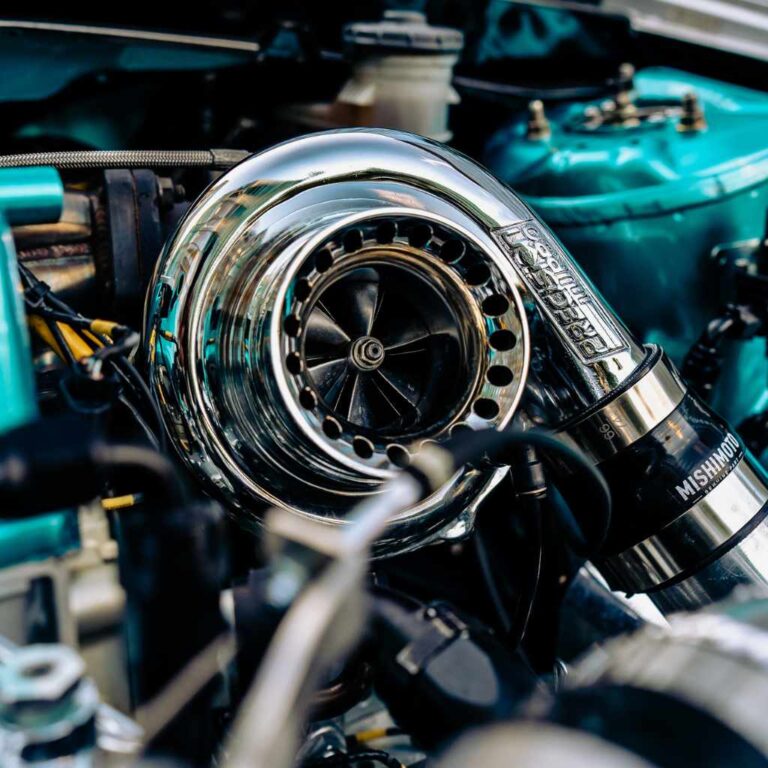
Turbocharged engines usually show a larger gain because exhaust restriction affects turbine work, spool, and heat. A stock system can leave 5-15 hp on the table on many turbo cars, and more if the downpipe or catalytic converter is especially restrictive. The gain is often bigger in response than in peak dyno numbers.
Modified engines and edge cases
Once cams, heads, boost, or rpm limits rise, the exhaust can stop being a mild support part and become a real bottleneck. That is where 10-20+ hp can be left behind, but only if the rest of the combination already asks for more airflow. If traction, tuning, or ignition is the limit, exhaust changes will not fix it.
Say your turbo 2.0L gains only 2 hp from a cat-back but picks up boost faster after a high-flow catted downpipe. The cat-back was not the main choke point. The downpipe and cat were.
When is backpressure actually the problem?
Backpressure is exhaust flow resistance. Too much of it hurts horsepower, torque curve shape, and throttle response. But some low-RPM scavenging setups benefit from a bit of resistance and pulse energy management, so backpressure is not automatically bad in every context.
Backpressure versus flow resistance
In a stock exhaust, higher backpressure is common by design. That does not mean every pound of restriction is harmful in the same way. The engine only loses power once the system starts resisting evacuation enough to trap spent gases, raise pumping losses, or slow turbine flow on a turbo engine.
Low-RPM scavenging tradeoffs
At lower rpm, some exhaust tuning can help cylinder emptying and maintain drivability. That is why a very open system is not always the best answer for a small-displacement street car. The question is not whether the exhaust is “free-flowing”; it is whether the restriction level matches the engine’s airflow demand.
When restriction starts to cost power
Restriction becomes a real problem when the engine wants more air than the exhaust can move. You see that as a flattening top-end, slower spool on turbo cars, or a torque curve that falls off earlier than expected. Once the engine is otherwise healthy, the exhaust can become the next choke point.
Which stock parts limit power first?
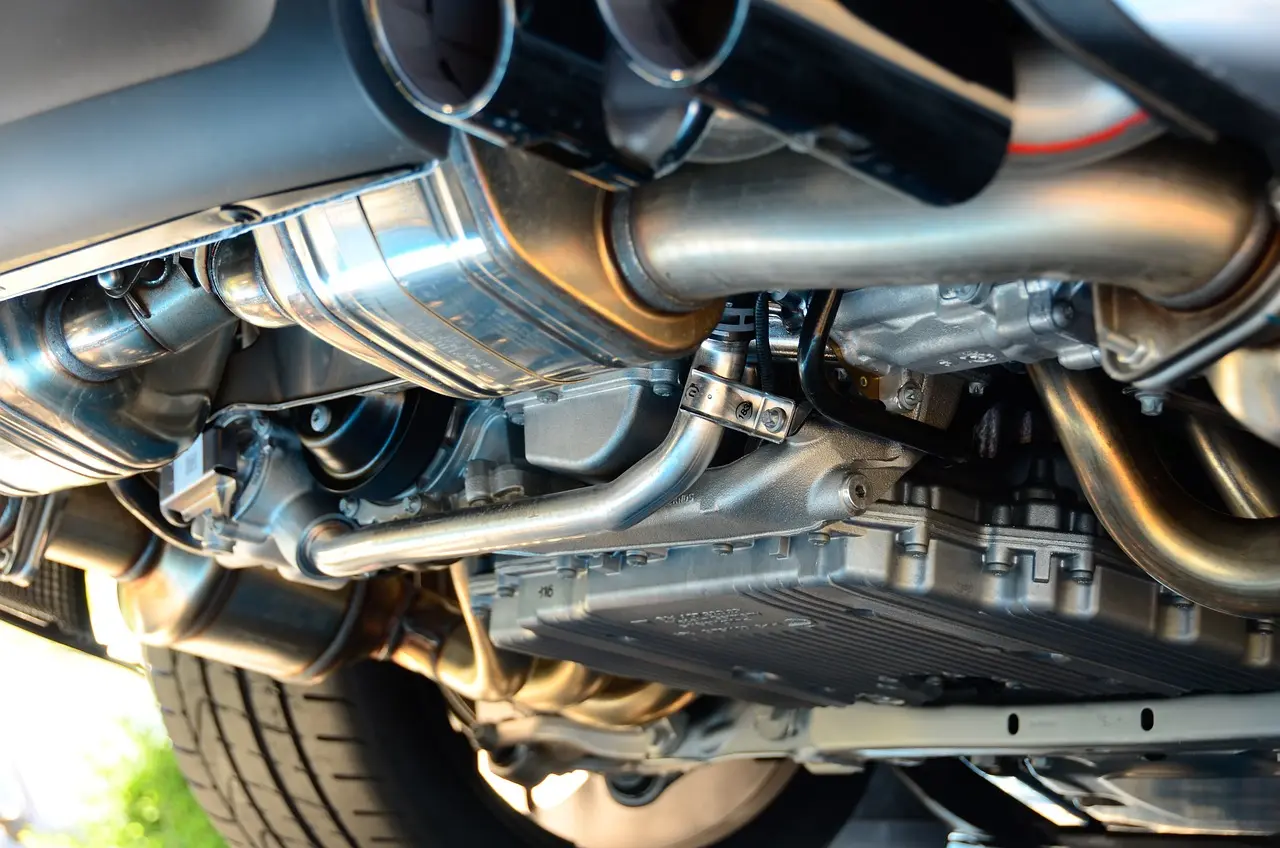
The biggest restriction is often not the muffler. On a stock system, catalytic converters are commonly the main choke point, with mufflers, resonators, and pipe diameter following behind depending on the design. Most of the power loss comes from parts that have to satisfy emissions and noise targets first.
Catalytic converters
Catalytic converters are often the largest restriction in a stock exhaust. They must stay on street vehicles for legality, so the usual path is a high-flow version rather than removal. High-flow catalytic converters can reduce restriction by 30-40%, which is why they matter more than rear mufflers on many builds.
Mufflers
Muffler design changes sound and flow together. Chambered, straight-through, turbo-style, and multi-chamber designs each trade tone for restriction level. A freer muffler can help, but on a stock car it often changes the exhaust note more than peak power.
Resonators
Resonators mainly target frequencies that cause drone. They usually affect cabin comfort more than peak power. A resonator delete can make the car louder and change how the car feels at cruise, but it is rarely the first place to look for large horsepower gains.
Pipes and bends
Smaller tubing, crush bends, and abrupt transitions raise restriction. Performance systems typically use 2.5″-4″ mandrel-bent tubing, while many stock systems use tighter dimensions and more restrictive routing. If a pipe is crushed or rusted through, that is a repair issue before it is an upgrade decision.
How much power can a cat-back add over stock?
A cat-back usually makes modest gains on naturally aspirated engines and stronger gains on turbocharged applications. It replaces everything from the catalytic converter back, so it leaves the factory cats in place. That makes it a good fit when you want a cleaner sound and a small performance bump without touching emissions hardware.
Naturally aspirated gain range
On many naturally aspirated cars, a cat-back mainly improves sound and throttle feel, with only a small peak gain. An axle-back typically adds 3-8 horsepower, and a full cat-back is usually the most popular upgrade path because it can improve tone without changing the whole front of the system.
Turbocharged gain range
Turbocharged engines usually respond better because reducing restriction after the turbine helps flow and heat management. A cat-back can still be modest by itself, but it often supports larger gains when paired with a downpipe or tune. The result is usually more obvious in spool and response than in headline horsepower.
When cat-back is mostly a sound change
If the stock catalytic converter and front piping are the main choke points, a cat-back may do little for peak power. In that case you are buying tone, lower weight, and a different drone pattern. Stock exhaust systems typically weigh 50-80 pounds, and performance systems can shed 20-40 pounds, so weight can be part of the value even when power gains are small.
Turbo vs NA exhaust gains
Turbo engines usually respond more because exhaust restriction affects the turbine, which is part of the power-making system. Naturally aspirated engines depend more on exhaust tuning for scavenging and less on turbine drive, so the same part can produce a much smaller gain. That is why one size does not fit both categories.
Why turbo engines respond more
On a turbo engine, less restriction can lower drive pressure, improve spool behavior, and reduce heat in the exhaust stream. That can change the car’s feel even before the dyno number looks dramatic. If the factory downpipe is tight, the car may show a larger improvement from that section than from the rear exhaust.
Downpipe impact
The downpipe is often the first big pressure drop after the turbine. On many turbo cars, that part matters more than the cat-back because it sits closer to the core restriction. A high-flow catted downpipe is a good balance when compliance matters, because it keeps the catalyst while easing flow.
Heat, spool, and tune concerns
Any downpipe change can alter boost behavior, exhaust gas temperature, and the calibration the ECU expects. That is why tune compatibility and emissions rules matter more on turbo cars than on simple rear-exhaust changes. If the tune cannot adapt, the exhaust change may not deliver the expected result.
Suppose a turbo sedan feels flat above 5,000 rpm, but logs show boost target is not being met. A cat-back alone will probably not cure that. The downpipe, catalyst, and tune deserve attention first.
How to tell the exhaust is the bottleneck
The best clues come from logs, dyno shape, and symptoms that match restriction rather than a generic power complaint. If the car feels slower everywhere, the exhaust is not always the culprit. Tune limits, traction, gearing, or upstream breathing can create the same complaint.
Dyno and log clues
A restrictive exhaust often shows up as falling torque at the top end, slow spool, or a power curve that stops climbing while airflow demand keeps rising. Compare before and after runs under the same correction setting, with the same fuel, same gear, and similar intake air temperature. Without that, a small change can look larger than it is.
Symptoms on the road
Common signs are lazy throttle tip-in, muted top-end pull, and a car that feels less eager at sustained high load. If the symptom is mostly cabin drone between 1,500 and 2,500 RPM, that is a comfort issue, not proof of a power bottleneck. Noise alone is not a reliable horsepower test.
False bottlenecks from tune or traction
A stock exhaust is not the main problem if the car is traction-limited, has timing pulled, or is already airflow-limited by intake, cams, or heads. In those cases, adding a freer exhaust changes the sound and the feel more than the measured result. Fix the real limit first.
Frequently asked questions
How much horsepower does a stock exhaust leave on the table
On many naturally aspirated cars, the answer is 0-5 hp. On many turbo cars, it is 5-15 hp, with more possible when the stock catalytic converter or downpipe is the real choke point. Modified engines can give up more, but only if the exhaust is the next limit in line.
Does a stock exhaust really hurt performance or mostly sound?
For many daily drivers, it is mostly a sound and response issue, not a huge peak-power problem. Stock exhausts are built to meet noise limits, emissions rules, and cost targets, so they can trim some airflow. The performance penalty is usually small on mild NA setups and more visible on turbo engines.
Is backpressure from a stock exhaust always bad for power?
No. Excessive backpressure hurts power, but a small amount of resistance can help low-RPM scavenging in some setups. The problem starts when the system resists flow enough to trap exhaust gas, slow spool, or raise pumping losses. The right amount depends on engine design and use case.
Can exhaust flow changes improve throttle response more than peak horsepower?
Yes. Reducing restriction often improves throttle response more than peak power, especially when the stock system is tight but not severely blocked. That can matter more in daily driving than a small dyno gain. The change is most noticeable when the engine is already otherwise healthy and tuned well.
Is an exhaust upgrade worth it if I only want daily-driving gains?
It can be, but only if your goal includes sound, a bit less drone at the right setup, or sharper response. If you want only measurable horsepower on a mild naturally aspirated car, the value is weak. On many turbo cars, the same budget can produce a more obvious drivability change.