How to Choose Exhaust Size for Your Engine
For most stock or lightly modified street engines, a common starting point is about 2.25-inch exhaust on four-cylinders and V6s, and about 2.5-inch on V8s. Move up only when airflow and power demand it. A pipe that is too large drops gas speed, weakens low-end response, and can waste money on parts that add little. This guide shows how to match diameter to engine airflow and driving use, then check fitment before you buy or fabricate.
Why exhaust size matters

Exhaust diameter controls how fast gases leave the engine, how much restriction the system adds, and how the car feels at low and high rpm. Too-small exhaust creates backpressure and cuts engine efficiency and power. Too-large exhaust can reduce low-end torque by slowing exhaust gas velocity.
Inside diameter, outside diameter, and why the difference matters
Inside diameter is the sizing dimension that controls flow area. That is the number that matters most for airflow. Outside diameter matters for clamps, adapters, and joint fit, and nominal pipe sizes do not always equal the measured outside size on the bench.
That difference matters because a pipe can flow correctly and still not fit the clamp or sleeve you bought. Measure the actual pipe or joint before ordering hardware. If you are matching a clamp to a pipe, OD is the first number to verify.
Flow area, backpressure, and gas velocity
Small tubing narrows flow area and raises backpressure. That can choke high-rpm power. Large tubing slows gas speed, which can soften response and make the engine feel lazier when you tip into the throttle.
Engine displacement, horsepower, and rpm band work together here. A larger engine usually supports more exhaust area. A higher-rpm build usually wants more flow capacity than a low-rpm commuter, even if the peak horsepower number looks similar.
How size changes sound and drone
Exhaust size changes sound as well as power. Larger tubing often deepens the tone and can increase cabin drone if the rest of the system is not matched well. That is why the right diameter is a drivability choice, not only a flow choice.
Say your 4.0-liter V6 makes modest power and spends most of its time below midrange rpm. A huge pipe can make it louder without adding useful flow, while a right-sized system keeps response cleaner and usually stays calmer in the cabin.
How do you size an exhaust pipe?
Start with engine size and horsepower, then use the rpm range and vehicle job to narrow the choice. A street car that sees normal commuting does not want the same diameter as a turbo car that lives near redline or a truck that tows under load. Choose the smallest size that meets the airflow demand with margin.
Start with displacement and horsepower
Displacement gives you the first clue. Smaller engines usually need smaller tubing, and larger displacement usually supports larger tubing. Horsepower helps as a second check, because many sizing charts pair diameter with output range.
For a 100 to 150 HP engine, a 1.5″ to 1.75″ pipe diameter is the stated pairing. A 200 HP street car is commonly matched with 2.0″ to 2.25″ exhaust. A 300 to 350 HP engine is paired with 2.5″ to 2.75″ pipe diameter. A 600+ HP engine is paired with 4.0″ and up pipe diameter.
Use rpm band to narrow the choice
RPM matters because exhaust demand rises as engine speed climbs. A high-revving street build usually wants more flow than a torquey low-rpm build with the same peak horsepower. If the engine lives near redline, lean toward the upper end of the recommended range.
If the engine makes its power early and shifts by the middle of the tach, stay conservative. That keeps velocity up and usually improves street manners. A high-rpm track car can accept more diameter because its main goal is high-flow operation, not soft low-speed response.
Match the diameter to street, towing, or track use
Street use favors balance. Towing favors response and usable torque. Track use favors flow at higher rpm. Use the job first, then the horsepower chart, then the rpm band, instead of picking a size from peak output alone.
- Identify engine displacement and fuel type.
- Estimate horsepower output and the rpm band where the engine works hardest.
- Choose a diameter from the output range, then bias smaller for towing and daily street use, or larger for sustained high-rpm use.
- Check the rest of the system before buying pipe.
Exhaust size decision table
This table gives a practical starting point. Use it with the engine, rpm, and use case together. If headers, converters, or mufflers are unusually restrictive, that can move the answer one step larger or smaller.
| Engine setup | Typical rpm band | Use case | Recommended diameter range |
|---|---|---|---|
| Stock commuter, mild bolt-on four-cylinder or V6 | Low to midrange | Daily driving | 2.0″ to 2.25″ |
| Stock commuter with modest power increase | Low to midrange | Street use | 2.25″ |
| Naturally aspirated street build | Midrange to high rpm | Weekend street car | 2.25″ to 2.5″ |
| 300 to 350 HP single exhaust setup | Midrange to high rpm | Street or light performance use | 2.5″ to 2.75″ |
| Turbo street build | Midrange to high rpm | Spool and flow balance | 2.5″ to 3.0″ |
| Towing or high-load truck | Low to midrange | Load carrying | 2.25″ to 2.5″ |
| 600+ HP setup | High rpm | High-flow application | 4.0″ and up |
Suppose a 300 HP street car uses a single exhaust and spends most of its time in the middle of the tach. A 2.5-inch pipe is the typical pairing. If that same car is a turbo build with freer-flowing hardware, a larger path may fit better, but only if the rest of the system supports it.
How do you measure your exhaust pipe size?
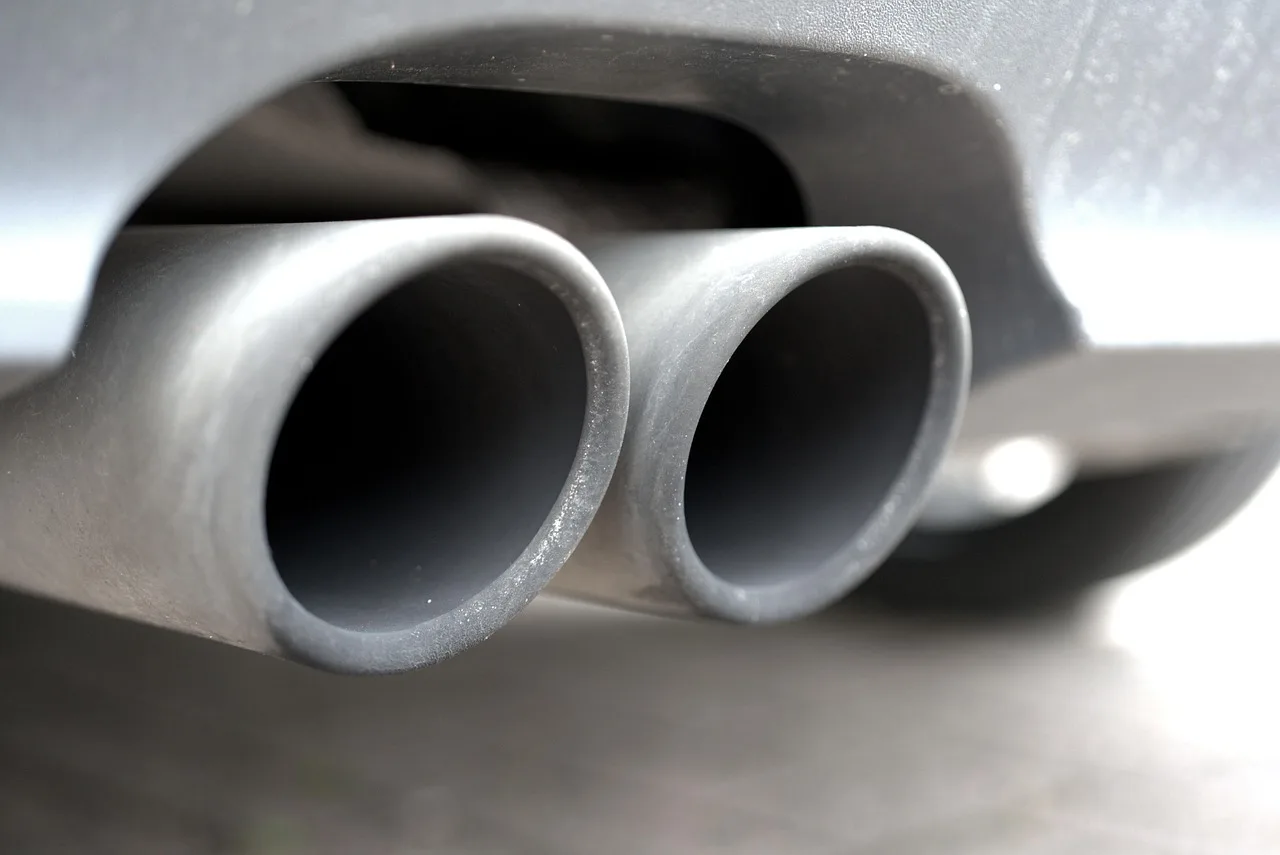
Measure the pipe you actually need to fit, not the number printed in a catalog. For flow sizing, measure ID. For clamps, sleeves, and adapters, measure OD at the actual pipe or joint. Those are different jobs, and mixing them up causes fitment mistakes.
Measure ID on pipe ends and tubing
Use inside diameter when you want to know flow area. Measure the open end of the tube, the inlet of a muffler, or the bore of a reducer. That is the number that tells you whether the pipe is too small for the engine’s airflow.
Wall thickness changes the ID. For a 3-inch pipe, the stated wall thickness example is 0.065 inches, and the clamp guide says that pipe has an ID of about 2.87 inches. That is why “3-inch exhaust” does not always mean a 3-inch inside opening.
Measure OD for clamps and adapters
Outside diameter is what you match to a clamp or sleeve. The clamp guide maps 2.95″ to 3.10″ pipe OD to a 3-inch clamp. It also maps 4.90″ to 5.10″ pipe OD to a 5-inch clamp. Measure the real pipe, not the label.
Check slip-joint allowance before ordering
Slip joints need enough overlap to seal and hold. If the male and female ends are too close in size, the joint can leak or bottom out before the clamp tightens. Verify the allowance at the connector, not only at the straight pipe.
- Measure the pipe end with calipers if possible.
- Confirm whether the number you need is ID or OD.
- Check the clamp or sleeve size against the measured OD.
- Confirm the overlap needed for any slip joint or adapter.
Single or dual exhaust?
A single system is simpler and cheaper, and many street cars do fine with it. Dual exhaust can move more total flow, and each pipe can be smaller per side by about 0.25″ to 0.5″ compared with a single setup. The right choice depends on total airflow, not appearance.
When a single system makes sense
A single exhaust works well when the engine output is moderate and the layout is compact. A 300 HP engine with a single exhaust is typically paired with a 2.5″ pipe. That gives a useful starting point without oversizing the system for a street car.
When dual pipes help flow
Dual exhaust makes sense when total flow demand is higher and the vehicle layout can support two paths. Because the flow splits, each pipe can be smaller than a single equivalent pipe. That can help high-output engines breathe without forcing one oversized tube under the car.
How dual systems change per-pipe size
Use the full system goal, then size each leg. Dual pipes are not simply two copies of a single exhaust; the total flow capacity changes. If you build dual too small, you can still create restriction. If you build it too large, you can lose velocity and clutter the underbody.
Turbo versus naturally aspirated sizing
Naturally aspirated engines and turbocharged engines do not want the same diameter range. NA engines usually need smaller tubing for a velocity and scavenging balance. Turbo engines often support larger flow capacity because the exhaust must also drive the turbine, so the system cannot be chosen by NA rules alone.
Why NA engines usually want smaller tubing
NA engines depend more on exhaust speed and pulse behavior. If you oversize the pipe, the engine can lose low-end torque and feel duller at normal road speeds. That is why many street NA builds stay in the smaller end of the chart unless horsepower and rpm demand more.
Why turbo engines often support larger flow
Turbocharged engines move exhaust energy through the turbine before the gases reach the rest of the system. The system therefore faces a different set of needs. A turbo street car can often use a larger diameter than a naturally aspirated engine with similar displacement and output.
Where headers, converters, and mufflers change the answer
Headers, catalytic converter size, muffler choice, and rear layout can override a generic chart. A restrictive converter or muffler can bottleneck a properly sized pipe. A long rear section with tight bends can also change the effective flow more than a small change in straight pipe diameter.
A common first-timer mistake is choosing pipe size from peak horsepower alone, then keeping a tiny factory converter and a crowded muffler path. The system still chokes. The pipe size should match the whole route, from header outlet to tailpipe.
Mandrel bends or crush bends?
Mandrel bends keep a more consistent diameter through bends, so they maintain flow area better. Crush bends narrow the pipe at the bend, which reduces flow compared with mandrel bends. For a performance-oriented street build, mandrel bends are the better default.
What mandrel bends preserve
Mandrel bends preserve the tube’s cross-section much better through curves. That helps airflow stay more predictable, especially in systems with several bends or tight undercarriage routing. If you are sizing carefully, a mandrel system keeps the chosen diameter closer to the intended size.
Where crush bends limit flow
Crush bends can flatten the pipe at the bend and trim the effective area. On a mild commuter, that may be acceptable if fitment and cost matter more than flow. On a higher-output engine, that narrow point can become the weak link.
When a small fitment compromise is acceptable
If the car is a stock commuter or mild bolt-on build, a small fitment compromise may be tolerable when the rest of the system is already well matched. That is not a green light to oversize the pipe. It means you should decide based on the whole system, not on bend style alone.
Fitment checklist
Use this checklist before you order pipe, clamps, or adapters. It helps prevent the most common underpipe and overpipe mistakes. A chart can point you to the right diameter, but the hardware still has to fit the real parts on the car.
- Confirm whether you need ID for flow sizing or OD for clamps and sleeves.
- Measure the actual pipe or joint, not the catalog size alone.
- Check clamp size against the measured OD, especially near welded joints and reducers.
- Verify adapter direction and inlet or outlet sizing before purchase.
- Check slip-joint allowance so the overlap is long enough to seal.
- Confirm the size of headers, catalytic converter outlets, and muffler inlets.
- Check rear layout clearance for bends, axle routing, and hangers.
- Use mandrel bends where possible if the goal is steady flow through curves.
Frequently asked questions
What size exhaust pipe
For most stock or lightly modified street engines, 2.25-inch exhaust is a good starting point for four-cylinders and V6s, and 2.5-inch is a common starting point for V8s. Move up only when airflow, horsepower, and rpm demand it. Bigger is not automatically better.
What size exhaust pipe fits over 2
If you mean a pipe that slips over a 2-inch tube, the answer depends on OD, wall thickness, and the joint design. Match the actual outside diameter of the pipe and check the connector spec, because nominal sizes can differ from measured size. Do not guess from the name alone.
How much hp does an exhaust add?
There is no fixed number. Exhaust changes can free up restriction and help the engine breathe, but the result depends on engine size, rpm range, turbo or NA layout, and how restrictive the rest of the system is. On a well-matched setup, the gain comes from removing a bottleneck, not from the pipe alone.
Do exhaust tips make a difference?
Tips can change appearance and slightly alter the tone, but they are not a real sizing fix. They do not replace proper pipe diameter, converter size, or muffler choice. If the goal is flow, choose the right exhaust diameter first and treat tips as a finishing part, not a solution.