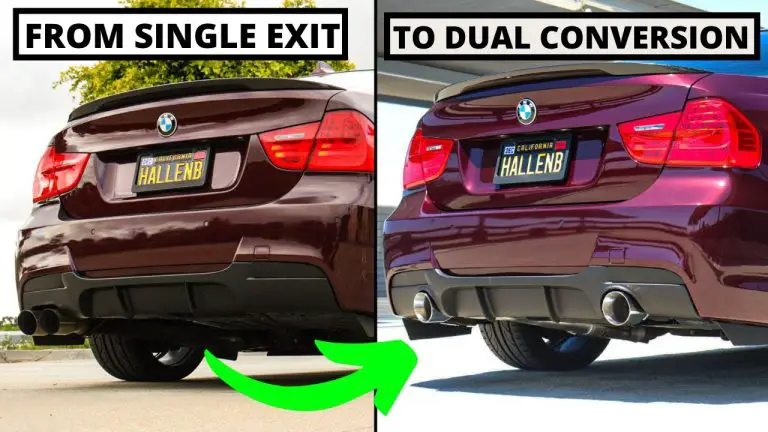
Best Exhaust Upgrades for Towing a Truck (2026): We Compared
For towing, the safest first exhaust upgrade is usually a quiet 2.5- to 3-inch mandrel-bent cat-back with a straight-through muffler, or a quality axle-back if you want sound control and factory-style low-end pull. Pick the wrong setup and you can add drone, lose feel where the transmission works hardest, or create emissions and inspection trouble. This guide compares upgrade types, fitment, durability, sound, and emissions compliance so you can choose for towing-heavy use.
Quick comparison
| Product | Badge | Best for | Price | ||
|---|---|---|---|---|---|
 | Truck Exhaust Kits – Cat-back 2.5" Dual Exhaust System |Truck Exhaust Kits | Our pick | 2.5" Mandrel Bent · Flowmaster Super 40 · Dual Exit | $396.99 Price as of 18 Oct 2026 | View |
 | BD Diesel 1041463 Exhaust Manifold Kit Dodge/RamBD | Upgrade pick | High-Silicon Ductile Iron · Kit Includes Gaskets · Ram 5.7L | $481.96 Price as of 18 Oct 2026 | View |
 | Walker Heavy Duty 22920 Direct Fit Exhaust Muffler 5" InletWalker | Budget pick | 5" Inlet/Outlet · Aluminized Steel · Direct Fit | $95.24 Price as of 18 Oct 2026 | View |
Use the comparison table to separate tow-friendly flow gains from noise and cosmetic changes. The right exhaust for a tow rig depends on engine size, trailer weight, and whether you care more about highway comfort or a deeper tone.
How we chose
The comparison below focuses on four things that matter most under tow load: diameter choice by engine size, sound control at cruising speed, corrosion resistance, and whether the kit keeps factory emissions hardware in place. The install notes also favor bolt-on fitment and OEM hanger compatibility because a tow rig should not need welding for a basic exhaust change.
We also separate towing value from changes that mostly affect tone. A louder exhaust can feel stronger, but that does not mean it helps low-speed pull or adds useful towing capacity.
Cat-back exhaust: best all-around towing upgrade
A cat-back exhaust is usually the safest first upgrade for towing because it keeps catalytic converters in place, is often bolt-on, and gives you a controlled balance between flow and sound. For a daily tow rig, that matters more than chasing the loudest setup or the largest pipe.
Why it fits tow rigs well
Cat-back systems replace tubing from the catalytic converter outlet rearward. That means you keep emissions control devices in place, which helps with legal fitment, inspection concerns, and warranty questions tied to cat removal or sensor changes. Several listed kits preserve emissions control devices.
For truck owners who tow often, that is the right starting point. You get a cleaner install path without changing the parts that matter most for emissions compliance.
Single vs dual cat-back choices
Single cat-back systems are usually the quieter, simpler choice. Dual cat-back systems can move more exhaust and give a deeper tone, but they also raise the risk of drone in the cabin, especially on long highway pulls. If you tow a trailer every week, cabin comfort usually matters more than a few extra decibels of sound.
A Rough Country Dual Cat-Back Exhaust for 19-24 Chevy/GMC. That system uses 409 stainless steel, is described as a dual cat-back with rear exit, and requires no welding.
What to expect from sound and flow
A cat-back can improve flow and reduce backpressure, but it should not be treated as a towing-capacity upgrade. The real win is keeping the engine more comfortable under sustained load while avoiding the harsh sound that can become tiring on the highway.
If you want an example of a more aggressive tone, the Flowmaster 40 Series is commonly mentioned in truck exhaust roundups for its deeper sound. That tone may appeal to some drivers, but a deeper note is not always better for long towing days.
Dual exhaust: best for sound and flow
Dual exhaust can improve exhaust flow and durability, and it is often chosen for towing-focused sound. It is not automatically the better tow setup, though. On some trucks it adds cabin drone and gives more noise than useful performance, especially if the pipe size is too large for the engine.
Rear exit, side exit, and dual-outlet layouts
Rear exit dual exhaust is the most common fit for tow rigs because it keeps hot exhaust away from the cab and trailer area. Side exit can sound stronger outside the truck, but it may bring more resonance into the cabin and can be less pleasant when you are holding steady speed with a trailer attached. Dual-outlet layouts can split flow and change tone, but the benefit depends on the engine and pipe diameter.
Look for OEM hanger compatibility and a bolt-on path if you want the system to line up without fabrication. That matters on a tow rig because a poor fit can cause rattles or hang too low under load.
When dual exhaust helps and when it adds drone
Dual exhaust can make sense for larger V8 gas trucks, especially when you want a deeper note and the engine already moves enough air to benefit from freer flow. It is a weaker fit for smaller gas engines and some diesel applications where the main goal is low-speed pull, not extra sound.
A common first-timer mistake is choosing dual exhaust for a half-ton truck with a small trailer and then finding the added cabin drone more noticeable than any tow benefit. If highway comfort matters, keep the muffler conservative and the pipe size matched to the engine.
Which exhaust size should you choose?
For most tow setups, 2.5-inch exhaust is the safer starting point. Three-inch exhaust makes sense on higher-flow applications, but it is not the right answer for every truck. Diameter should follow engine size and trailer weight, not the idea that bigger is always better.
2.5-inch exhaust diameter for most tow setups
2.5-inch pipe is common for mid-size trucks and many full-size pickups. That makes sense for many towing jobs because it usually keeps good low-speed response while avoiding unnecessary noise. It is also a common size in dual exhaust kits.
One example is the Shop Line Dual Exhaust System, which uses 2.5-inch aluminized pipe and is described as requiring no welding. That kind of setup suits drivers who want a straightforward upgrade with modest flow changes.
3-inch exhaust diameter for higher-flow applications
Three-inch exhaust is a common performance truck diameter and appears often in cat-back kits. It can improve flow on larger engines or on trucks that tow heavier loads at sustained highway speed, but the tradeoff is more sound and, on some setups, less low-end feel if the system is oversized for the engine.
The Flowmaster 817692 kit uses 3-inch tubing, mandrel-bent stainless steel, and black ceramic coating. That combination is aimed at flow and durability, but it is more system than some daily tow rigs need.
How engine size changes the choice
Smaller gas engines usually do better with the smaller end of the range, especially if the trailer is moderate and the truck also does school runs or commuting. Larger gas V8s and some diesel setups can take more pipe without giving up the low-speed response that matters in traffic and on grades.
Say your half-ton truck tows a 5,000-pound camper on weekends. A 2.5-inch cat-back is usually the safer call than a louder 3-inch setup, because the trailer load does not justify extra noise or the chance of drone.
Towing exhaust decision matrix
The table below matches exhaust type to towing use case. Use it to choose by engine, trailer weight, sound target, and installation tolerance instead of shopping by loudness alone.
| Engine type | Trailer weight range | Desired sound level | Preferred exit layout | Recommended pipe diameter | Material choice | Install complexity |
|---|---|---|---|---|---|---|
| Mid-size gas V6 | 3,000-6,000 lb | Quiet to mild | Rear exit single | 2.5-inch | 409 stainless steel | Low if OEM hangers match |
| Full-size gas V8 | 5,000-9,000 lb | Mild to medium | Rear exit single or dual-outlet | 2.5-inch or 3-inch | 409 stainless steel or coated stainless | Low to moderate |
| Heavy-duty gas V8 | 7,000-12,000 lb | Mild with deeper tone | Rear exit dual | 3-inch | 409 stainless steel | Moderate |
| Diesel tow truck | 7,000 lb and up | Quiet | Rear exit | 2.5-inch or 3-inch, depending on kit design | Stainless steel preferred | Moderate |
| Daily driver that tows occasionally | Up to 6,000 lb | Quiet | Rear exit single | 2.5-inch | 409 stainless steel | Low |
Recommended diameter, exit layout, and material
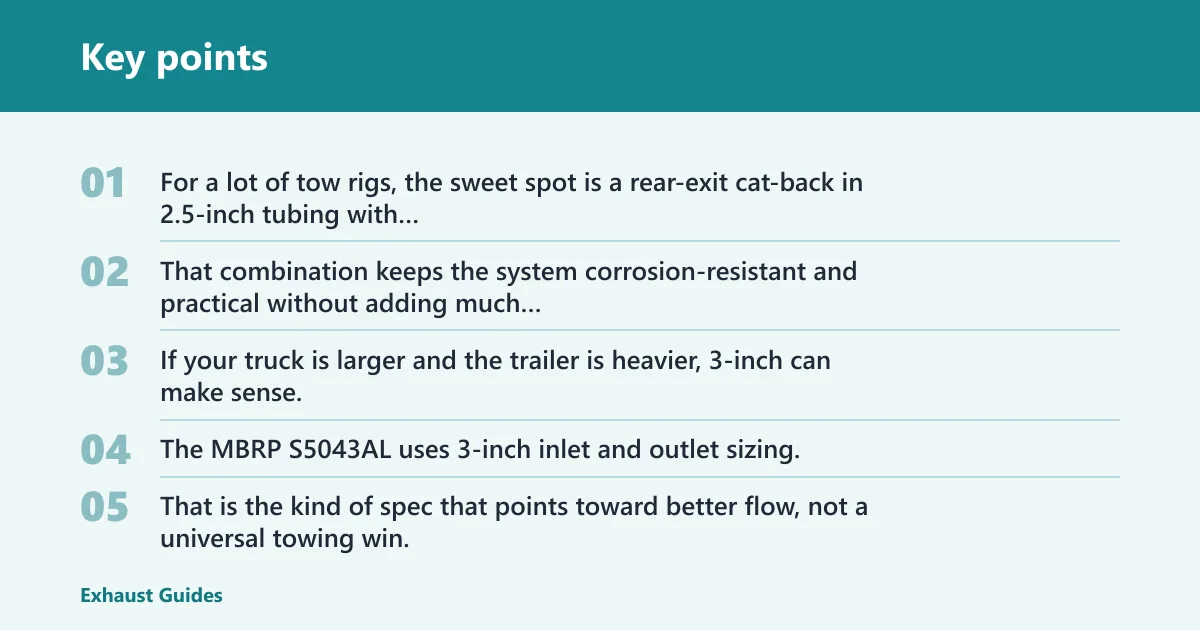
For a lot of tow rigs, the sweet spot is a rear-exit cat-back in 2.5-inch tubing with 409 stainless steel. That combination keeps the system corrosion-resistant and practical without adding much cabin noise. If your truck is larger and the trailer is heavier, 3-inch can make sense, but only if the engine can use the extra flow.
The MBRP S5043AL uses 3-inch inlet and outlet sizing, and the kit uses mandrel-bent tubing for smoother exhaust flow. That is the kind of spec that points toward better flow, not a universal towing win.
Install complexity and fitment notes
Look for OEM hanger compatibility and no-weld installation if you want a simple path on a tow rig. The Rough Country dual cat-back is described as requiring no welding, and the Shop Line Dual Exhaust System is also described as requiring no welding. Those details matter when you want a weekend install without fabrication.
Mandrel-bent tubing matters because it reduces flow restriction at bends. It does not make a truck a towing monster on its own, but it helps the system avoid needless bottlenecks.
Do I need a stainless steel exhaust for towing?
Stainless steel is not mandatory for towing, but it is the better pick if you live where road salt, rain, or trailer grime can shorten exhaust life. For a tow rig that sees frequent miles, 409 stainless steel is a practical corrosion-resistant choice with a good durability-to-cost balance.
Why 409 stainless steel matters
409 stainless steel appears often in towing-focused exhaust kits because it resists corrosion better than plain mild steel while staying more affordable than some higher-grade stainless options. The Rough Country dual cat-back uses 409 stainless steel, which fits the durability goal for a truck that works in all seasons.
If the truck is a long-term keeper, that matters more than a small difference in exhaust note.
Aluminized steel and coated stainless options
Aluminized steel can still be a reasonable budget choice, especially if the truck lives in a dry climate. The Shop Line Dual Exhaust System uses 2.5-inch aluminized pipe, so it can fit the budget-minded tow buyer, but aluminized steel usually needs more attention in harsh climates than stainless.
Black ceramic coating can help with appearance and heat resistance on some systems, but it should not distract from the main durability question: how well the tubing handles road spray and corrosion over time.
How does exhaust sound affect towing comfort on the highway?
Sound matters more in towing than many owners expect. A deep tone can feel refined, but cabin drone gets tiring on long grades and steady highway speeds. For towing, the best system is usually the one that stays calm inside the cab while the trailer is loaded.
Deep tone versus cabin drone
A deeper exhaust note is often sold as a benefit, and it can be on a short drive. On a tow rig, though, a system that creates a low-frequency drone at 1,700 to 2,200 rpm can become the thing you notice most. That is why many tow-friendly setups stay with a conservative muffler and a rear exit.
The Flowmaster 40 Series is known for a deeper tone, while a super 10 performance muffler is more aggressive and high-flow oriented. Those mufflers can suit some trucks, but they are not the quietest path for long-distance towing.
What to avoid if comfort matters
Avoid oversized pipe, a short muffler, or a side-exit layout if your truck already drones in the cab. Those choices can make a trailer trip louder without improving the way the truck pulls. If you tow frequently, comfort is part of the upgrade decision, not a side issue.
Does a cat-back exhaust help when towing?
Yes, a cat-back exhaust can help when towing, but the benefit is usually modest and depends on the rest of the truck. It can improve flow, keep emissions hardware in place, and sharpen throttle response a bit, yet it will not add meaningful towing capacity by itself.
What matters most is fit. A cat-back with the right diameter and a well-matched muffler can reduce restriction without turning the cabin into a drum. That is why cat-back systems are the most balanced first step for tow rigs.
Will a larger exhaust reduce low-end torque for towing?
It can, if the diameter is larger than the engine and trailer load need. Bigger exhaust is not automatically better. On smaller engines, too much pipe can soften low-speed response and make the truck feel less eager where towing actually happens.
The fix is simple: match diameter to the engine and use case. A 2.5-inch system suits many mid-size trucks and full-size pickups, while 3-inch belongs on higher-flow applications that can use the extra area without losing feel.
Is dual exhaust better than single exhaust for towing?
Not always. Dual exhaust can improve flow and give a deeper towing sound, but single exhaust is often quieter and easier to live with on long highway trips. For many tow rigs, single or dual-outlet rear exit is the better balance of flow and comfort.
Choose dual exhaust when the truck has enough engine to use it and you want the sound and look that come with it. Choose single when highway drone, cost, or simple fitment matters more than an aggressive tone.
Start by checking your engine size, trailer weight, and current emissions hardware. Then decide whether you want a cat-back, an axle-back style change, or a full dual setup. From there, match pipe diameter to the truck, not to a generic performance claim.
- Confirm that the kit keeps catalytic converters and sensors in place if you need emissions compliance.
- Choose 2.5-inch for most tow-focused daily drivers and 3-inch only where the engine can use it.
- Pick 409 stainless steel if the truck sees wet or salty roads.
- Look for mandrel-bent tubing and OEM hanger compatibility for fitment.
- Decide on rear exit, side exit, or dual-outlet based on drone risk and trailer clearance.
- Favor a muffler tone that stays calm at highway speed.
How to upgrade towing capacity
Exhaust is not the main way to upgrade towing capacity. It is a support change, not the headline fix. If your goal is more real towing ability, cooling, gearing, transmission tuning, tires, brakes, and suspension usually matter more than exhaust flow.
Suppose your truck already tows at the upper edge of its rating and struggles on long grades. A louder 3-inch exhaust will not solve that. Transmission temperature control or axle gearing is a better place to spend money first.
What is the best exhaust upgrade for towing a truck?
The best exhaust upgrade for towing a truck is usually a 2.5- to 3-inch mandrel-bent cat-back with a conservative muffler and rear exit. That setup keeps catalytic converters in place, stays friendly to emissions compliance, and gives useful flow without the drone risk of an overly loud system.
Which truck has the best towing capacity?
The truck with the best towing capacity is usually a heavy-duty model with the right engine, axle ratio, cooling package, and trailer setup, not a truck chosen for exhaust parts. Exhaust changes do not move the rating in a meaningful way, so start with the truck’s factory tow package and payload limits.
When not to upgrade exhaust
Do not make exhaust the first fix when the real problem is heat, gearing, or control. A towing truck needs the whole package to work together, and some symptoms point somewhere else entirely.
- Your transmission runs hot on grades.
- The truck lacks the right axle ratio for the trailer.
- Brake feel or stopping distance is the bigger issue.
- The rear suspension sags under tongue weight.
- Noise, rasp, or drone already bothers you in the cab.
- Your current setup needs emissions hardware preserved for inspection or warranty reasons.
Truck Exhaust Kits: best for 2.5-inch dual towing
This kit suits a tow-focused owner who wants a straightforward dual cat-back with a deeper tone and no welding. Based on the published specs, the 2.5-inch mandrel-bent layout and Flowmaster Super 40 muffler aim at flow without making the truck feel overbuilt for towing.
The main drawback is sound. A dual setup with a performance muffler can add cabin drone, especially on long highway trips or on trucks that do not need more exhaust volume.
BD Diesel manifold kit: best for 5.7L exhaust sealing
This is not a rear exhaust upgrade, but it matters when you are trying to improve towing reliability on a Ram 5.7L. The kit includes gaskets and fasteners, and the high-silicon ductile iron construction points to durability where exhaust leaks and broken hardware can become an issue under load.
The drawback is scope: a manifold kit does not change exhaust tone or give the same flow effect as a cat-back. It is a repair-and-reliability part, not the right answer if you mainly want sound or a different exit layout.
Walker Heavy Duty muffler: best for quieter towing
This muffler fits buyers who want a quieter truck and care more about in-cab noise control than a sporty exhaust note. The aluminized steel construction and direct-fit design make it a practical replacement choice for reducing engine noise on a tow rig.
The tradeoff is that it is a muffler replacement, not a full exhaust redesign. If your truck needs a true flow or diameter change, this will not do as much as a cat-back system.
Which one should you buy?
If you tow often and want the safest all-around choice, start with a quiet cat-back in the 2.5- to 3-inch range. If your truck is a larger gas V8 and you want more tone, a dual rear-exit system can make sense, but only if you accept the chance of drone. If your priority is comfort, stay conservative on muffler choice and pipe size.
Buy the Truck Exhaust Kits dual cat-back if you want a simple bolt-on upgrade with deeper sound and no welding. Choose the Walker muffler if your top priority is lowering noise rather than changing the whole exhaust path. Skip the BD Diesel manifold kit unless the goal is repair or sealing on a Ram 5.7L.