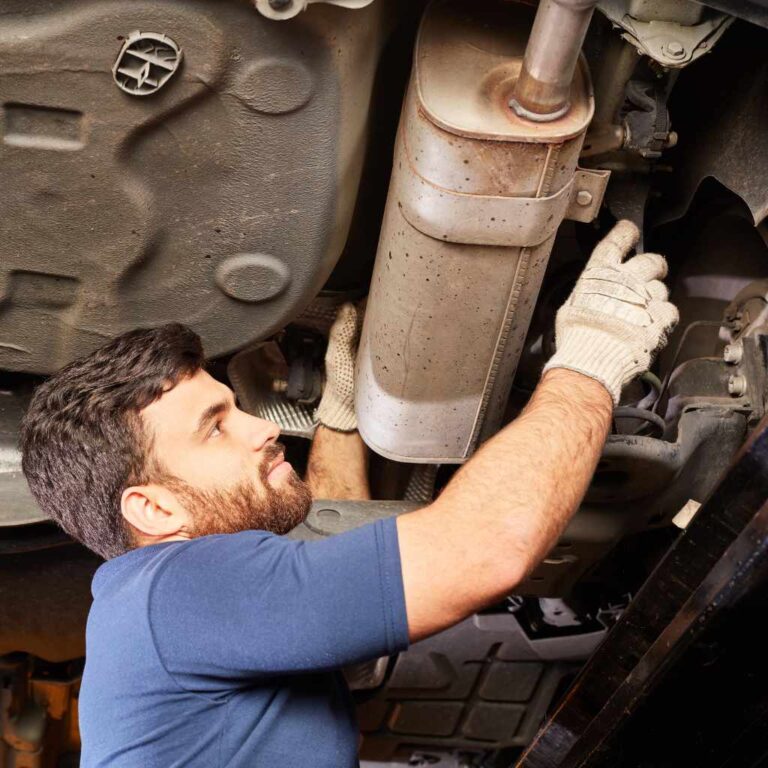
Axle-Back Exhaust vs Cat-Back Exhaust
Pick an axle back exhaust if you want a lower-cost, simpler install and a modest change in sound. Pick a cat back exhaust if you want more volume and a larger price jump, with the factory catalytic converter left in place either way. For most street cars, that is the key decision: axle back exhaust is the practical sound upgrade, while cat back is the better choice when you want more tone change and are willing to pay for it. Choose wrong and you can overspend, pick up highway drone, or miss local noise and emissions rules. This guide compares sound, cost, legality, install effort, and daily use so you can choose the setup that fits your car. If you need the step-by-step process, see How to install an axle-back exhaust and Exhaust system basics.
Exhaust comparison matrix
| Factor | axle back exhaust | cat back exhaust | Winner |
|---|---|---|---|
| Sound increase | Moderate to strong, mostly from the mufflers and tips | Usually stronger and more tunable because more pipe changes | cat back exhaust |
| Expected horsepower gain | Usually minimal on a stock street car | Small gains are possible, especially when stock piping is restrictive | cat back exhaust |
| Drone risk | Lower on many cars, but a muffler delete style can still drone | Higher if the kit uses thin resonator control or oversized piping | axle back exhaust |
| Install time and fitment | Usually shorter and simpler | Longer, with more hangers, clamps, and alignment points | axle back exhaust |
| Cost and extra parts | Lower purchase price, fewer parts to align | Higher purchase price, plus more labor and fitment checks | axle back exhaust |
| Legality and daily-driver comfort | Often easier to keep compliant if the noise level stays reasonable | Still legal in many cases with the catalytic converter retained, but more likely to raise noise concerns | axle back exhaust |
Sound increase
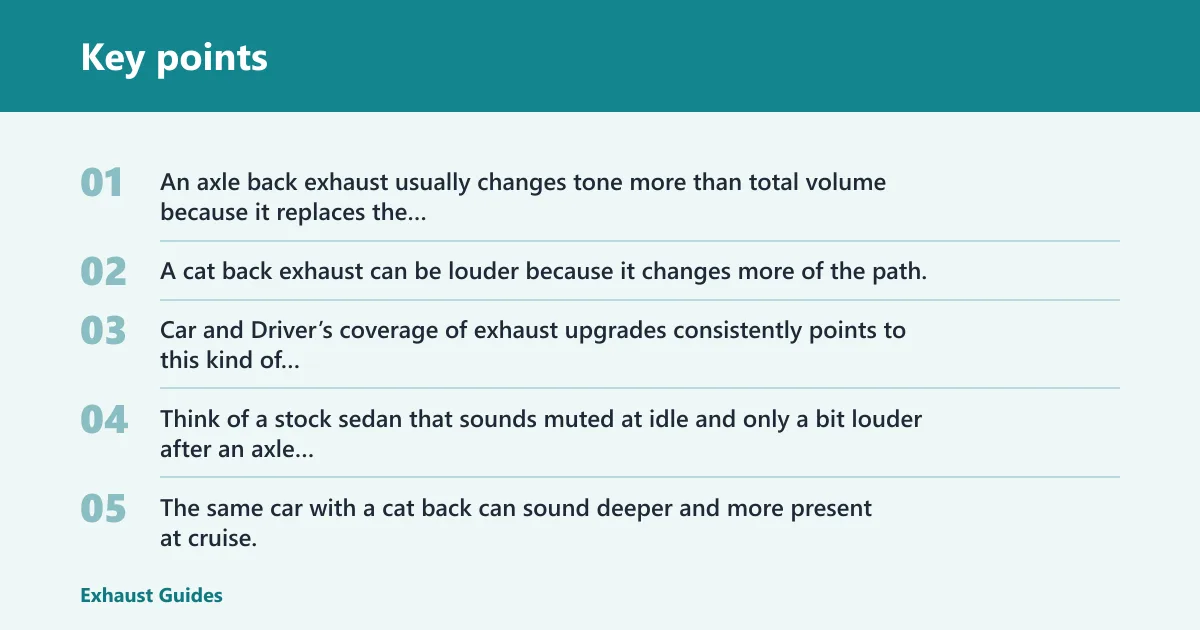
An axle back exhaust usually changes tone more than total volume because it replaces the rear section, where the mufflers and tips do most of the sound control. A cat back exhaust can be louder because it changes more of the path, including the mid-pipe and sometimes a resonator, so the exhaust note has more room to open up. Car and Driver’s coverage of exhaust upgrades consistently points to this kind of result: the biggest change is usually sound, while power gains are generally secondary on a mostly stock vehicle.
Think of a stock sedan that sounds muted at idle and only a bit louder after an axle back swap. The same car with a cat back can sound deeper and more present at cruise, especially if the kit uses less muffling and a straighter mid-pipe.
Horsepower and torque
Neither system should be sold as a sure power upgrade on a stock engine. A cat back exhaust can support small peak horsepower and torque gains when the original piping is restrictive, but the difference is usually modest and often more noticeable in sound than in straight-line acceleration. That aligns with EPA guidance that emissions equipment must remain intact and that modifications can affect how a vehicle operates; it also matches the broader aftermarket reality that sound changes are easier to achieve than meaningful gains on an otherwise stock setup.
Engine size and tuning matter. A naturally aspirated 4-cylinder often gains very little from a cat back unless the rest of the setup is matched to the new exhaust diameter, while a V6 or V8 may respond a bit better because the engine can move more air. On many turbo 4-cylinders, the biggest gains usually come from parts before the cat-back section, not from sound-focused rear piping alone.
Drone and comfort
Drone is the low-frequency cabin resonance that shows up at steady cruise, often around highway speeds. An axle back exhaust can avoid some of that if the factory mid-pipe and resonator stay in place, while a cat back exhaust can reduce or worsen drone depending on pipe length, resonator choice, and muffler design. Car and Driver frequently notes that drone is one of the most common complaints with louder exhausts, especially when the system is tuned for volume without enough resonance control.
A resonator helps tune exhaust frequency and can calm a harsh note more than it adds power. If daily comfort matters, a cat back with a resonator is often a better choice than a louder axle back with minimal sound control removed.
Cost and fitment
The sticker price is only part of the cost. An axle back exhaust is usually cheaper up front and easier to align, while a cat back exhaust can add labor, extra clamps, new hangers, and the chance of spending more time on tip alignment or clearance checks near the rear suspension.
A common first-timer mistake is assuming every bolt-on fits like factory hardware. If a hanger sits slightly off or a clamp seals unevenly, you can end up with a small leak, a rattle, or a crooked tip even after the rest of the system is installed correctly.
Legality and emissions
The catalytic converter is the main legal boundary. A cat back exhaust usually starts after the converter, so it keeps the emissions hardware in place for most street use, while a full exhaust or turbo-back setup moves farther forward and can create emissions trouble fast. The EPA is clear that tampering with or removing emissions controls can violate federal rules, which is why the converter boundary matters so much when you are choosing a bolt-on system.
That said, legal does not mean unrestricted. Local noise rules still matter, and some regions inspect exhaust volume, tip placement, or visible tampering. If your area is strict, the quieter axle back exhaust is often the safer daily-driver choice.
Axle-back vs cat-back: the core trade-off
Choose axle back exhaust if your main goal is a simpler sound change with lower cost and less risk of drone or fitment headaches. Choose cat back exhaust if you want a larger change in tone, more tuning options, and a small chance of flow improvement that can matter more on larger engines or mildly built cars.
Both are bolt-on upgrades on many vehicles. The difference is how much of the system you replace, how much noise you add, and how much you are willing to pay for that change.
What each system replaces
An axle back exhaust replaces the rear section from the axle to the tips. That usually means the mufflers and rear tips only, although exact packaging can vary by vehicle.
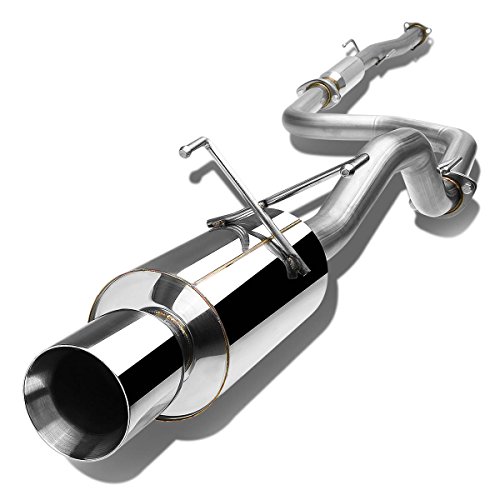
A cat back exhaust replaces tubing from the catalytic converter back. Depending on the kit, that can include the mid-pipe, resonator, muffler, and tips. The catalytic converter usually stays in place, which is why cat back systems are generally a different category from turbo-back or full exhaust setups. For a broader overview of how those pieces interact, see Exhaust system basics.
Which system changes sound more?
Cat back exhaust usually changes sound more because it changes more of the exhaust path. Axle back exhaust changes the rear sound control parts, so it often alters tone and volume enough for a daily driver without making the car far louder everywhere.
Muffler role in axle back kits
The muffler is the main sound control device in most axle back systems. A less restrictive muffler can raise volume and sharpen the note, while a larger or more refined muffler can keep the car civil and reduce drone.
Resonator role in cat-back kits
A resonator tunes exhaust frequency and often takes the edge off cabin boom. Many cat back kits include one, and that is one reason some cat backs sound cleaner than a straight rear section even when the overall volume is higher.
Why pipe length changes cabin noise
Longer pipe runs change where sound waves reinforce or cancel each other. That matters because two exhausts with the same tip style can feel very different at 70 mph if one setup lines up with a drone-prone cabin frequency and the other does not.
Will either one add horsepower?
Yes, but the gains are usually modest. An axle back exhaust rarely adds meaningful peak horsepower on its own, while a cat back exhaust can free up a little flow and sometimes improve throttle response, yet the real-world change is often small unless the stock exhaust was a bottleneck.

Why engine size and tuning matter
A naturally aspirated 4-cylinder usually benefits least from rear-exhaust changes because it does not move as much air. V6 and V8 engines have more exhaust volume, so a cat back can have a better chance of helping, though the gain still tends to be modest on a bolt-on setup.
Turbo 4-cylinder cars are a special case. Their exhaust needs depend on boost level, turbine design, and the rest of the system, so a larger rear section can help flow, but the biggest performance gains usually come from the parts ahead of the cat-back section and from proper tuning.
Pipe diameter, flow, and backpressure
Exhaust pipe diameter is commonly measured in inches, and bigger is not automatically better. Too large a pipe can slow exhaust velocity, which may hurt response on a smaller engine, while too small a pipe can restrict flow on a higher-output setup.
Backpressure is often misunderstood. Some backpressure can be part of a healthy exhaust design, but excess restriction wastes power. The goal is not zero backpressure at any cost, the goal is a pipe size that fits the engine, its power target, and the intended use.
Daily driving: which is easier to live with?
An axle back exhaust is usually easier to live with because it tends to be cheaper, simpler, and less likely to create highway drone. A cat back exhaust can still be comfortable, but the wrong muffler, resonator choice, or pipe diameter can turn a commute into a steady low-frequency hum.
Commute noise and passenger comfort
If the car spends most of its time at steady highway speed, comfort matters more than peak sound. Passengers notice drone fast, and an aggressive exhaust can get old long before the novelty wears off.
Budget beyond the sticker price
Buy price is only one line item. Factor in labor, clamps, replacement hangers, exhaust sealant if the design calls for it, and any correction work needed if the tips sit off-center or the mid-pipe touches a brace.
Choose axle back exhaust if… / Choose cat back exhaust if…
Choose axle back exhaust if you want the lowest-cost sound upgrade, you drive mostly in traffic or on the highway, you want less risk of drone, or you want a simple swap with fewer fitment variables. It is the safer pick for a budget sound change on many daily drivers.

Choose cat back exhaust if you want more volume, more tuning control, or a small chance of flow improvement that better matches a V6, V8, or turbo 4-cylinder. It makes the most sense when you care about tone as much as sound level and you are willing to pay for the extra parts and install time.
For a naturally aspirated 4-cylinder, axle back exhaust is usually the better value unless the goal is mostly sound. For a V6 or V8, cat back exhaust is often the stronger fit if you want a fuller note. For a turbo 4-cylinder, start with the rest of the exhaust plan first, because pipe diameter and drone control matter more than raw volume.
Say you commute 40 miles a day in a 2.0-liter turbo sedan and spend an hour at 70 mph. A loud cat back with no resonator may sound exciting for 10 minutes and tiring for the rest of the week, while a quieter axle back can deliver a better balance of tone and comfort.

Frequently asked questions
Cat back exhaust vs axle back
Cat back exhaust replaces more of the system, starting at the catalytic converter and moving rearward. Axle back exhaust usually swaps only the rear section with the mufflers and tips. If you want a bigger sound change and a small chance of more flow, cat back usually wins; if you want less cost and less install complexity, axle back usually wins.
Cat back exhaust vs full exhaust
Cat back exhaust keeps the catalytic converter in place, while a full exhaust or turbo-back setup moves farther forward and can replace more of the system. That difference matters for emissions compliance and noise. For most street cars, cat back is the more practical upgrade because it stays on the legal side of the converter boundary.
Does cat back exhaust make a difference?
Yes, but the difference is usually stronger in sound than in peak power. A cat back exhaust can deepen the tone, raise volume, and sometimes reduce restriction a little, especially if the factory system is narrow or heavily muffled. On many street cars, the drivability change is modest.
Is a cat back exhaust worth it?
It is worth it if you want a louder, better-tuned exhaust note and accept the added cost, possible drone, and extra installation work. If your priority is daily comfort or budget, axle back exhaust often gives a cleaner value proposition. The right answer depends on how much sound and expense you want to trade.
Which is louder, axle back or cat back exhaust?
Cat back exhaust is usually louder because it changes more of the exhaust path and may use larger piping or a different resonator layout. Axle back exhaust can still be loud, especially if the mufflers are small, but it often keeps more of the factory sound control in place. Loudness alone does not predict better results.
Will an axle back exhaust add horsepower?
Usually not in a way most drivers can feel. An axle back exhaust mainly changes sound, and any horsepower change is often too small to matter on a stock daily driver. If power is the goal, the rest of the exhaust system, intake, tuning, and engine setup deserve more attention.
Is cat back exhaust legal on a street car?
Often yes, because the catalytic converter remains in place, which keeps the main emissions component intact. Even so, local noise and inspection rules still apply, and some regions can flag an exhaust that is too loud or has been altered in a way that fails visual or sound checks.
Which is better for daily driving, axle back or cat back?
Axle back exhaust is usually better for daily driving because it is cheaper, simpler, and less likely to create drone or fitment issues. Cat back exhaust can still work well on a commuter, but it needs the right muffler and resonator combination. For comfort first, axle back is the safer default.