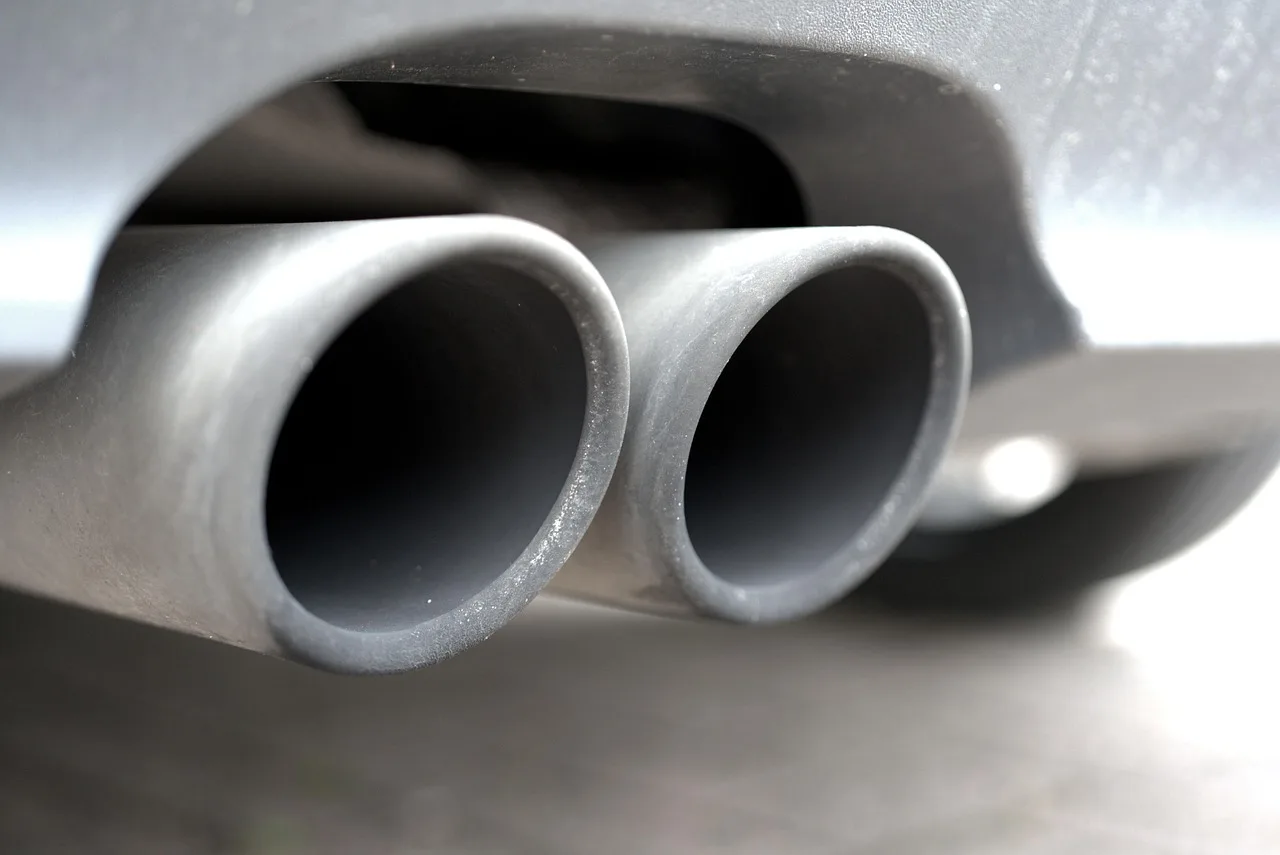
Exhaust Leak Diagnosis Guide
Start exhaust leak diagnosis by matching cold-start noise, exhaust smell, soot marks, and fuel-trim or O2-sensor codes to one of four zones: manifold, flex pipe, catalytic converter joints, or rear section. If you guess wrong, you can waste money on parts, miss a CO hazard, or keep driving until a small leak scorches nearby wiring. I use a location-first check, with symptoms, safe inspection steps, and basic scan data, to narrow the likely leak and decide drivable versus shop-now.
Sound alone fools people. A front leak can tick at idle, a split flex pipe can hiss only under load, and a rusted muffler seam can sound like a deep rear rumble that never sets a code.
Before touching the car, note five things: whether the noise is strongest on cold start, whether smell appears outside or inside the cabin, whether it changes at idle or under load, whether speed changes it, and whether the check engine light is on. Technicians often use OBD-II data to check oxygen sensor and catalyst-related codes. That scan data matters most when the leak is ahead of an oxygen sensor.
My method here is the same one I use in the shop and on driveway checks: cold-start listen first, scan second, then a full visual path from the manifold forward to the tailpipe with a light and mirror. On cars that fooled owners into buying sensors first, the actual fault was often a leaking front flange, cracked flex section, or soot-marked manifold outlet.
What are the first signs of an exhaust leak?


The first signs depend more on leak location than leak size. A cold-start tick near the engine usually points forward, an idle-only cabin smell often points to a front leak drifting into the HVAC intake, and a louder hiss or roar during acceleration often points lower in the system at a pipe, flange, or flex section.
Cold-start ticking versus warm-engine hiss
A ticking sound near the engine often points to a manifold leak. I see that most often on a cold start, when the metal has not expanded yet and a manifold gasket or cracked casting leaks most clearly.
Do not call every tick a manifold fault. Fuel injector click is usually sharper and more even. Normal valvetrain tick usually stays tied to engine speed with less of the puffing sound you hear around the manifold shield area. A real exhaust tick often softens as heat closes the gap.
Exhaust smell outside the car versus inside the cabin
Exhaust leaks can let carbon monoxide enter the cabin, especially when a front leak vents near the cowl intake at idle or under the floor where fumes get pulled through body gaps. Smell outside the car can come from almost any leak point, but smell inside with the car idling and windows closed is more serious and often points to a leak near the engine bay, front pipe, or floorpan.
If smell appears only while moving, underbody airflow may be carrying fumes from farther back. If it appears only at stoplights, I check the front of the system first. For the safety side, this follows CDC and NHTSA guidance on carbon monoxide exposure symptoms and vehicle-related cabin intrusion risk.
Rumble, buzz, or drone from the middle or rear of the system
A loud roaring or hissing noise during acceleration can indicate a pipe or flange leak. A deeper rear rumble usually fits muffler rust-through, seam joint failure, or a split tail section.
Muffler and seam joints are often rust-prone points. They usually sound deeper than manifold leaks and are often easy to confirm with rust tracks, black soot, or a failed weld around the shell seam.
Check engine light, fuel trim shifts, and catalyst-related codes
Upstream leaks can pull in false air and skew oxygen sensor readings. That can mimic an oxygen sensor fault or a lean condition even when the sensor itself is fine.
Catalyst efficiency codes also need context. The exhaust system includes the catalytic converter and muffler, and it guides exhaust gases away from controlled combustion. A leak at a front flange, sensor bung, or converter joint can disturb readings enough to point suspicion at the converter before the real leak is found. For basic system layout, see en.wikipedia.org, but for actual diagnostic behavior I lean on EPA OBD-II materials and OEM service procedures because they better explain how upstream leaks affect sensor data.
How do I check for an exhaust leak at home?
Home diagnosis works best when it starts cold, stays hands-off around hot parts, and follows the exhaust path from the manifold to the tailpipe. Use smell, sound direction, soot marks, rust trails, and scan codes together. If fumes enter the cabin or a section hangs low, stop and arrange a shop inspection.
Safe setup before inspection
Work outside or in a very open area. Do not idle the vehicle in an enclosed space. Carbon monoxide is the main risk, and cabin intrusion moves this from annoyance to no-drive territory fast.
- Let the exhaust cool fully.
- Chock the wheels and support the vehicle correctly if it must be raised.
- Keep hands, sleeves, and hair away from belts and fans.
- Use a flashlight to trace the pipes and a small mirror to check the back side of flanges, shield edges, and the top of the flex pipe before you put a hand near any of it.
- Shut the engine off before going underneath if the leak seems forward.
The visual route from manifold to tailpipe
Start at the exhaust manifold where it meets the cylinder head. Check the manifold-to-head gasket line for soot marks, missing hardware, or a heat shield that looks stained around one port. Then inspect the manifold flange and any nearby sensor bung for dark tracking.
Move down to the front pipe, flex pipe, and catalytic converter flanges. Look for braid damage on the flex section, cracks around the inner liner ends, and hanger failures that let the system sag or twist.
Continue through the mid-pipe, resonator if fitted, muffler shell, seam joints, and tail section. I follow the whole run with the light, from each manifold port to the tailpipe outlet, and I stop at every clamp, weld, hanger, and shield for rust flakes, soot at a weld, or a pipe that has shifted in a rubber hanger.
Hands-off listening and what marks usually mean
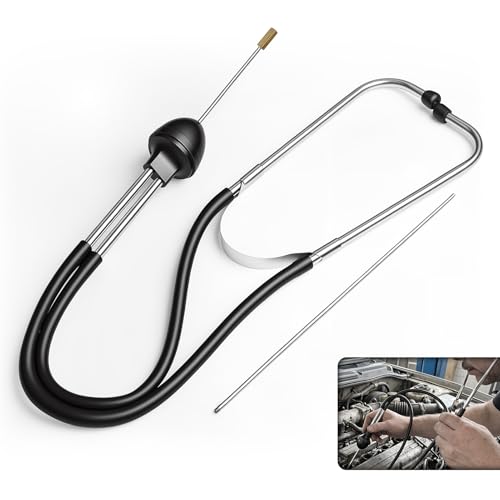
Use a length of hose as a listening aid near suspected areas, but keep it clear of moving parts and hot surfaces. The goal is direction, not contact. A puffing tick up front suggests manifold or gasket trouble. A hiss under load often points lower.
Soot usually marks escaping gas. Rust trails at a seam usually mean thinning metal. Loose flanges often show black rings around the joint. Broken exhaust hangers matter because extra movement can open a flange, crack a weld, or split a flex pipe that was sound before the hanger failed.
Symptom-to-location decision table
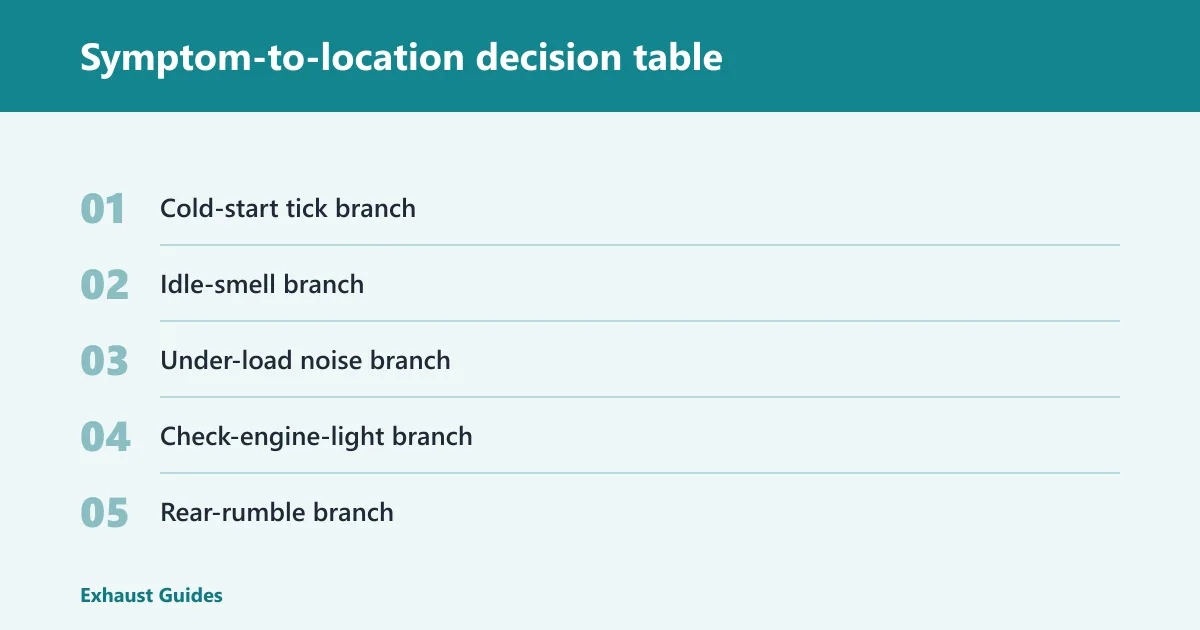
Decision table: map the pattern before buying parts
| Sound | Smell | Scan codes | Driving condition | Likely leak point | Safe to drive? |
|---|---|---|---|---|---|
| Sharp ticking near engine | Sometimes under hood, sometimes in cabin at idle | May show fuel-trim shift or upstream O2-related code | Strongest on cold start, may quiet warm | Exhaust manifold, manifold gasket, or cracked manifold flange; check for soot at head flange and listen for puffing | No if cabin fumes are present; limited short trip only if no cabin smell and noise is mild |
| Hiss or chuff from lower front | Outside car, sometimes into cabin at stops | Possible lean or O2 code if ahead of sensor | Idle and light revs | Front flange gasket or sensor bung leak; use soapy water on accessible cold joint, then recheck for soot | Caution; shop soon if smell reaches cabin |
| Roar or hiss on acceleration | Usually outside, may drift under floor | Often none unless leak is upstream | Under load, hill climb, takeoff | Flex pipe split or front pipe crack; inspect braid, hangers, and movement while engine rocks | No if section is tearing or hanging; otherwise short local driving only |
| Metallic puff or hiss near converter area | Outside car | Catalyst-related code possible | Cruise and moderate load | Catalytic converter flange leak or damaged converter shell seam; inspect flanges before blaming the converter core | Caution; shop soon if shell damage or heat nearby |
| Buzz, rasp, or floorpan hiss | Outside car, sometimes faint in cabin | Usually none | Vibration at certain rpm | Mid-pipe crack, clamp leak, or hanger-related joint stress; check for witness marks where the pipe has been moving | Caution; no if pipe is loose |
| Deep rumble from rear | Mainly outside rear of vehicle | Usually none | Steady cruise or startup | Muffler rust-through, seam joint failure, or tail section hole; inspect shell seams and outlet welds | Often limited yes if fumes stay out of cabin and parts are secure |
| Tick plus check engine light | May be minor outside smell | Upstream O2, fuel trim, or catalyst efficiency clue | Cold start then cruise | Upstream leak before oxygen sensor; confirm leak before replacing sensor | Caution; diagnosis soon to avoid emissions and drivability issues |
| Variable noise with bumps or engine movement | Intermittent outside smell | Usually none | Turns, bumps, takeoff | Broken exhaust hanger causing a secondary flange or flex leak; inspect all mounts before replacing pipe sections | No if section can strike the body or road |
How to use the table without false positives
Use the table as a first branch, not a verdict. If two rows fit, pick the most forward location first. Front leaks create more code trouble and more cabin-fume risk than rear leaks.
Also separate sound type from sound place. Injector noise can mimic a small manifold tick. Heat shield buzz can mimic a rear leak. A converter shell rattle is different from a flange hiss.
Quick at-home test flow for each branch
- Cold-start tick branch: cold start, listen at the manifold area, scan for upstream O2 or fuel-trim clues, inspect manifold gasket line for soot, then stop if cabin fumes appear.
- Idle-smell branch: idle outside, HVAC off, windows shut, confirm whether smell reaches cabin, inspect forward joints and cowl area first, then do not continue if fumes remain inside.
- Under-load noise branch: helper lightly raises rpm in park for a first listen, then inspect flex pipe, front flange, and hangers for movement marks.
- Check-engine-light branch: read codes, note whether they are upstream O2 or catalyst-related, inspect for leaks ahead of the affected sensor before buying sensors.
- Rear-rumble branch: inspect muffler shell, seam joints, tailpipe welds, and rear hangers for rust-through, soot, and loose sections.
If your next question is whether the sensor is actually bad, compare this symptom path with a dedicated how to test an O2 sensor workflow. If the noise and soot are centered around the converter body or flanges, a focused catalytic converter leak symptoms check is the better adjacent test.
Can an exhaust leak cause a ticking sound on cold start?
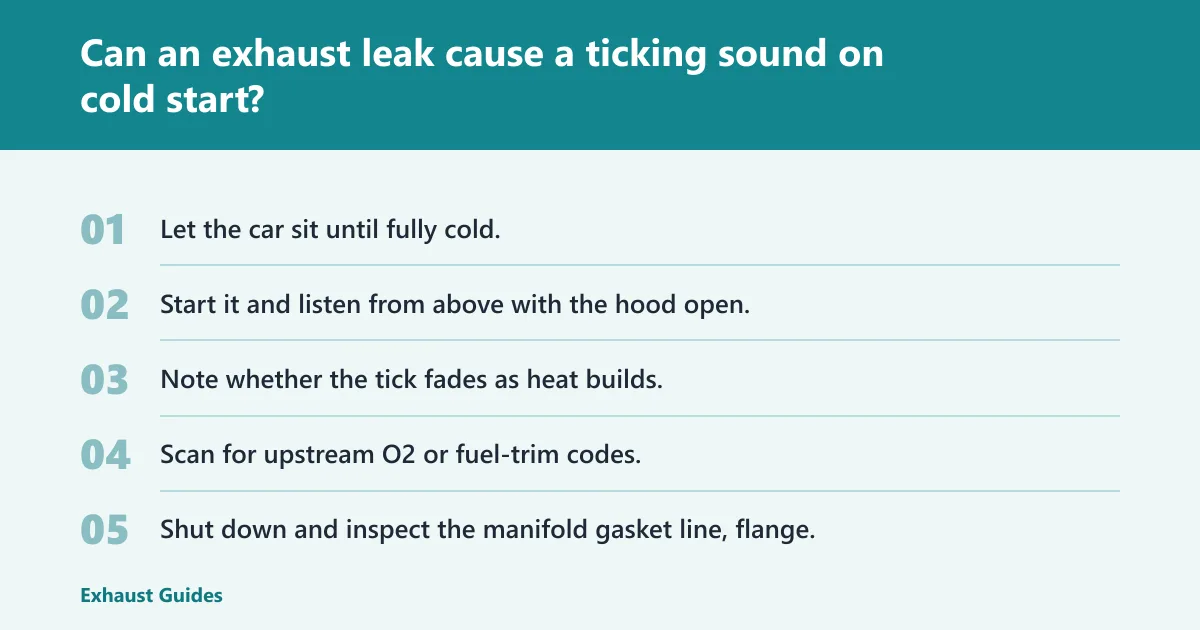
Yes. A cold-start tick near the engine is one of the better clues for an exhaust manifold leak, especially at the manifold gasket, flange, or a cracked casting. Heat can close the gap slightly, so the noise may fade as the engine warms.
Exhaust manifold leaks and exhaust gasket failures
The exhaust manifold is a common leak source near the engine. Failures show up at the manifold-to-head gasket, the outlet flange, or the manifold casting itself. Heat cycling and fastener loosening are frequent causes when the gasket fails.
Marlow lists manifold gasket replacement as a repair for ticking leaks at the engine. That fits the usual pattern, but diagnosis still comes first because a cracked manifold and a failed gasket can sound almost identical from above.
How to separate manifold tick from injector noise and valvetrain tick
Injector click is small, even, and often heard clearly from the top of the intake side. Valvetrain tick tends to stay present warm or cold. An exhaust leak tick often has a puffing edge and is louder near a shield, flange, or one side of the head.
Watch for soot at one port or at the outlet flange. That visual clue often breaks the tie when ears do not. In the shop, I have had several engines come in for “lifter tick” that turned out to be one dark soot track at the manifold outlet.
Quick at-home flow for a cold-start tick branch
- Let the car sit until fully cold.
- Start it and listen from above with the hood open.
- Note whether the tick fades as heat builds.
- Scan for upstream O2 or fuel-trim codes.
- Shut down and inspect the manifold gasket line, flange, and nearby heat shields for soot or loose hardware.
When a cold-start tick is safe to test further
If the noise is mild, there is no cabin smell, and the leak stays near the manifold shield area without visible cracking, a short test toward diagnosis is usually reasonable. Stop driving if the crack is visible, the noise is severe, wiring sits close to the leak, or fumes reach the cabin.
Can an exhaust leak cause a smell inside the cabin?
Yes, and that symptom deserves faster action than noise alone. Cabin smell at idle often points to a leak near the front of the system, where fumes can drift into the cowl or floor area. Because exhaust leaks can let carbon monoxide enter the cabin, this is a stop-and-diagnose issue.
Idle-only cabin smell usually points forward
If smell appears at stoplights but fades at speed, start with the manifold, front pipe, sensor bung area, and catalytic converter inlet flange. Underhood leaks can rise into the HVAC fresh-air intake. Front underbody leaks can pool under the floor when the car sits still.
Weatherstrip condition, HVAC intake position, and underbody airflow can change what reaches occupants. That is why the same leak may smell obvious on one day and faint on another.
Carbon monoxide risk and no-drive conditions
Do not idle the car in a garage to confirm a smell. Carbon monoxide is the main hazard here. If occupants feel headache, dizziness, or nausea, stop using the vehicle until the source is found and repaired.
Visible soot near the firewall side of the engine or any leak that sends fumes into the cabin should be treated as no-drive. This aligns with CDC carbon monoxide symptom guidance and standard shop safety practice.
Quick at-home flow for an idle-smell branch
- Park outside in open air.
- Start the cold engine with HVAC off and windows shut.
- Confirm whether smell enters the cabin at idle.
- Shut off the engine and inspect forward leak points for soot.
- Check floorpan shields and nearby hangers if smell seems to come from underneath.
How do I find the exact leak location in the exhaust?
Find the exact leak by dividing the system into front, middle, and rear zones, then matching each zone to the driving condition that makes the symptom strongest. Front leaks are more likely to tick, smell in the cabin, and skew scan data. Rear leaks can be louder than they are dangerous.
Front leaks: manifold, gasket, sensor bung, and front flange
Look for dark soot at the manifold ports, outlet flange, and oxygen sensor bung. An upstream oxygen sensor can read false lean if fresh air gets pulled in ahead of it, so codes here often support a front leak diagnosis.
The sensor itself may be innocent. Replace it only after checking for leakage around the bung and nearby joints. If needed, compare your scan pattern against a more specific how to test an O2 sensor guide before buying parts.
Middle leaks: flex pipe, converter flanges, and hanger movement
The flex pipe is a vibration-prone failure point. Its outer braid may fray, but the real leak can be the inner liner crack underneath. These often hiss or rasp under load and may not sound dramatic at idle.
Catalytic converter diagnosis needs care. A flange leak before or after the converter can sound like a bad converter. A catalyst efficiency code can be leak-related rather than converter failure. Inspect converter flanges, shell seams, and nearby hangers before condemning the converter. A dedicated catalytic converter leak symptoms page helps when the leak seems centered on that section.
Broken exhaust hangers belong in diagnosis, not just repair. If the system swings, it can open a flange, stress a weld, or split a flex pipe. One common pattern I see is a failed rear hanger that lets the front flex take all the movement until it starts hissing under load.
Rear leaks: resonator, muffler, seam joints, and tail section
Rear leaks usually show up as a deeper rumble, buzz, or drone. Muffler and seam joints are common failure points, especially where moisture sits. Check the muffler shell seam, outlet weld, and tailpipe bends for soot and scaling rust.
A rear leak is often easier to find visually than a front leak. It also sets codes less often unless the leak is unusually far forward.
Quick at-home flow for under-load noise or rear-rumble
- Confirm whether the noise grows on acceleration.
- Inspect the flex pipe and front flanges if it does.
- If the sound is deep and rearward, inspect the muffler shell and seams first.
- Check every hanger and rubber mount before deciding which part failed first.
- Mark soot trails and cracked welds so a shop can verify them fast.
How to choose the right exhaust leak repair method
Selecting the wrong repair method for an exhaust leak usually means the fix won’t last—leaks return, joints warp from improper heat, or you pay twice for a second repair. This guide breaks down when to use exhaust leak repair methods: tape works for tiny pinholes in cooler, straight pipes; clamps fit clean cracks where the pipe still holds shape; and welding offers a permanent fix on structurally sound metal.
The article matches each method to your specific leak size, pipe condition, and heat zone, helping you avoid costly mistakes and choose the right approach the first time.
How Much Does It Cost to Repair a Manifold Exhaust Leak?
Repairing a manifold exhaust leak typically costs between $200 and $600 when the issue is limited to a failed gasket or flange. If the manifold itself is cracked, studs are broken, or engine-bay access is tight, expect the bill to rise to $800–$1,500 or more. Leaving the leak unaddressed risks burned valves and misfire codes, turning an affordable fix into major engine work.
The supporting guide breaks pricing down by failure type and access difficulty so you can evaluate mechanic quotes accurately before authorizing repairs. Understanding whether your vehicle needs a simple gasket swap or a full manifold replacement prevents overpaying at the shop. Review the detailed manifold leak repair cost breakdown to budget correctly for this specific exhaust repair.
How much a catalytic converter flange leak costs to fix
Most catalytic converter flange leaks are relatively affordable to repair when the problem is limited to a gasket, hardware, or a minor flange reseal. The supporting guide on flange leak repair costs explains the usual price bands, from simple fixes around the low hundreds to much higher costs when studs are broken, the flange is bent, or the converter itself is damaged. That matters because the same noise or exhaust smell can come from very different failures.
Use this section when you want to judge whether a quote sounds like a basic exhaust-joint repair or a more serious replacement job. The article also shows what shops typically inspect to separate a cheap gasket issue from a repair that can snowball into converter replacement.
What tools actually help find a small exhaust leak?
The best tool depends on leak location and whether the leak opens hot or under pressure. A scan tool helps most with upstream leaks, soapy water helps on accessible joints, and a smoke machine helps on hidden seams and small cracks. Pressure testing can settle cases where smoke on a cold system says little.
OBD-II scan tool: codes and live data
An OBD-II scan tool is more than a code reader here. Technicians often use OBD-II data to check oxygen sensor and catalyst-related codes, and live data can show whether symptoms line up with an upstream leak rather than a dead sensor.
Watch for upstream sensor behavior that looks lean or unstable when a manifold or front flange leak is likely. If fuel trims shift and the noise is forward, fix the leak first, then reassess codes. That approach matches EPA OBD-II guidance and common OEM diagnostic trees, which both treat exhaust leaks ahead of sensors as a cause of misleading data.
Smoke machine: where it works and where it misses
Smoke testing is used to reveal escaping smoke at the leak point. It works well on joints, seams, hard-to-see cracks, and converter or muffler shell leaks where visual access is poor.
It can miss leaks that open only when the system is hot or moving. It can also disappoint on a cold exhaust if test pressure is too low to push smoke through a tiny crack or a valve overlap path confuses the result. In practice, I have had smoke show nothing on a cold flex pipe, then soot and movement made the split obvious once the engine rocked under light throttle.
Soapy water spray test and pressure-based testing
Soapy water can help detect leaks at accessible joints and low-pressure checks, such as flanges, clamps, and some muffler seams. I spray a cold joint lightly, restart from a safe position, and watch for fresh bubbles forming at the gasket edge or clamp split.
Use it with limits in mind. It is poor for very hot parts, hidden cracks above shields, and leaks that appear only under engine movement.
Pressure testing can verify leak presence and quantify leakage at joints and connections. When smoke seems inconclusive, pressure or backpressure-based testing is often the next step because it can expose tiny seepage paths that stay quiet while the system is cold. This follows standard exhaust diagnostic practice and aligns with manufacturer service information for leak confirmation before parts replacement.
Can an exhaust leak trigger codes, hurt fuel economy, or reduce power?
Yes, mainly when the leak is upstream or large enough to disturb gas flow. Upstream leaks can skew oxygen sensor readings and trigger false lean or catalyst clues, while larger leaks can reduce scavenging and make the car feel flat under load. Fuel use can rise even when the leak sounds small.
Upstream leaks and oxygen sensor false air
An oxygen sensor reports what the exhaust stream looks like at its location. If a leak ahead of that sensor pulls in outside air, the sensor can read a mixture that looks leaner than reality. That can lead to fuel trim corrections and a check engine light.
Do not replace the oxygen sensor first unless the leak check is clean. The leak may be the reason the data looks wrong. That is why I compare sound, soot, and live data together rather than treating the code as the diagnosis.
Catalyst efficiency codes that are really leak clues
A catalyst-related code does not automatically mean the catalytic converter is done. Leaks near converter flanges or farther upstream can disturb sensor comparison enough to imitate converter trouble.
Inspect the flange faces, gaskets, and weld seams before spending money on the converter itself. This is also where a targeted catalytic converter leak symptoms check can save misdiagnosis.
When power loss points to a leak versus a restriction
An exhaust leak can increase fuel consumption, and power loss can happen too, especially if the leak is large and near the front. Still, weak power with heavy heat and a dull, strangled note can also point to restriction rather than leakage.
If the car is noisy and flat at the same time, keep both possibilities open until testing sorts them out. In my experience, a front leak usually sounds sharper and feels uneven under throttle, while a restriction tends to feel more muted and heat-soaked.
Quick at-home flow for a check-engine-light branch
- Read stored and pending codes.
- Note whether they are upstream O2, fuel-trim, or catalyst-related.
- Listen for front leak sounds on a cold start.
- Inspect manifold, front flange, and sensor bung areas for soot.
- Clear nothing until the leak path is documented.
When should you stop driving and get a shop diagnosis?
Stop driving when fumes enter the cabin, a front leak is severe, a crack is visible near the manifold, or any section is hanging low. Borderline cases exist at the rear of the system, but front leaks carry more safety and code risk. If there is doubt, treat smell in the cabin as the deciding factor.
No-drive cases
Cabin fumes are the biggest red flag. So are visible manifold cracks, severe ticking near the engine, a flex pipe that is tearing open, and any loose section that can strike the body or road.
Broken hangers can turn a mild leak into a structural problem fast. If the exhaust can swing or drag, the car needs a tow or immediate repair.
Borderline cases and timing
A small rear muffler leak with no cabin smell and no loose metal is usually lower risk than a manifold leak, but it is still worth fixing before corrosion spreads. A thorough exhaust leak diagnosis typically takes between one and three hours.
Simple gasket or flange repairs often finish within a half day. Sectional pipe or manifold repairs can take a half to full day. Those time frames help when deciding whether to keep driving for a few days or book the car now.
What to tell the shop
Give the shop the condition that reproduces the symptom best: cold start, idle only, under load, steady cruise, or highway speed. Mention whether the smell reaches the cabin, what codes were present, and whether any hanger is broken.
That short note often gets the car onto the right test path sooner, especially when smoke testing, pressure testing, and scan data all need to be tied to one zone. If you already checked live data, say whether trims moved lean at idle or whether the upstream sensor pattern looked abnormal.
Frequently asked questions
Is a smoke test the best way to find a small exhaust leak?
It is one of the best methods for joints, seams, and hidden cracks, but it is not perfect by itself. Smoke can miss leaks that open only when hot or under movement, so pressure testing, visual soot checks, and scan-data review still matter when the symptom pattern says leak.
Can an exhaust leak trigger a check engine light or oxygen sensor code?
Yes. Upstream leaks can pull in fresh air and distort oxygen sensor readings, which may trigger fuel-trim, oxygen sensor, or catalyst-related codes. That is why a leak check should come before replacing sensors or condemning the catalytic converter, especially when the noise is strongest near the front.
Sources
- Centers for Disease Control and Prevention guidance on carbon monoxide exposure symptoms and prevention.
- National Highway Traffic Safety Administration consumer safety information on carbon monoxide dangers in and around vehicles.
- U.S. Environmental Protection Agency OBD-II and emissions diagnostic guidance for oxygen sensor, catalyst, and monitor behavior.
- OEM service information and standard exhaust system diagnostic procedures for smoke testing, pressure testing, and leak confirmation.