What Does a Leaking Exhaust Gasket Sound Like?
A leaking exhaust gasket commonly shows up as a sharp ticking or puffing that rises with engine speed, and it is often most noticeable on cold starts; if the noise fades as the engine warms, the manifold-to-head or flange gasket should be checked first. Because exhaust leaks can also let fumes enter the cabin, treat a strong exhaust smell or headache as a safety issue, not just a noise complaint. The CDC/NIOSH carbon monoxide guidance explains why exhaust gases can be dangerous, and NHTSA’s exhaust and emissions systems guidance stresses that exhaust leaks should be corrected promptly. This guide explains the sound pattern, how to tell it from similar noises, and which joints to check first.
How to spot the tick, puff, and hiss of an exhaust leak
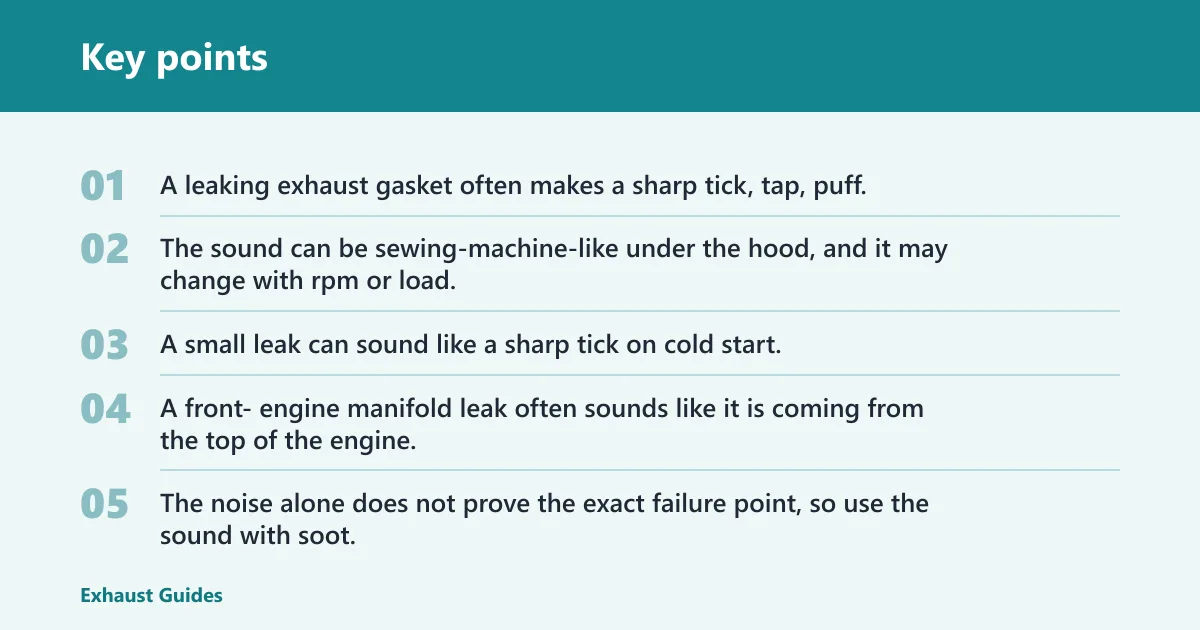

A leaking exhaust gasket often makes a sharp tick, tap, puff, or hiss from the exhaust area. The sound can be sewing-machine-like under the hood, and it may change with rpm or load. A small leak can sound like a sharp tick on cold start, which is why it is easy to mistake for a valve or injector noise.
The most useful clue is location. A front-engine manifold leak often sounds like it is coming from the top of the engine, while a flange leak or cracked pipe can sound lower and farther back than expected. The noise alone does not prove the exact failure point, so use the sound with soot, smell, and position clues.
What do the main leak sounds mean?
A leaking exhaust gasket usually produces a fast, repetitive tick or tap that follows engine speed. Some drivers hear a brief puffing or chuffing at idle, then a stronger hiss when the throttle opens. That pattern points to exhaust pulse escaping through a small gap rather than a continuous mechanical rattle.
How do rpm and load change the sound?
The sound often gets faster or louder as rpm rises, because more exhaust pulses pass through the leak. It may also change under load, such as during gentle acceleration. An exhaust leak can create increased engine noise and a hissing or tapping sound, so a change with throttle is a useful clue.
Say your sedan idles with a steady tick near the passenger-side rear bank, then the noise quickens when you blip the throttle. That pattern fits an exhaust leak better than a loose interior trim piece, because the sound tracks engine speed instead of vehicle speed or road vibration.
Why is the noise loudest on cold start?
Exhaust leak ticking is often loudest on cold starts. When metal parts are least expanded, gaps at the gasket or flange are larger and the escaping pulse is easier to hear. Noise may quiet down after five minutes as metal expands, but that does not mean the gasket is repaired.
How does heat expansion change the leak path?
Heat expansion can close a small gap enough to reduce the noise. That is why a leak may sound sharp during the first minute and then soften or disappear at idle. The underlying problem can still be there, especially if the gasket, flange, or studs are damaged.
Why does fading noise not mean the leak is gone?
A fading noise only means the parts warmed up. It does not mean the joint sealed again permanently. If the sound returns on the next cold start, or if soot and smell are still present, inspect the joint before the leak grows or starts heating nearby wiring, hoses, or plastic covers.
How do you diagnose an exhaust gasket leak?
This matrix helps you match the sound to the likely source before replacing parts. Use it as a symptom-to-location check, then confirm with visual clues such as soot, smell, visible cracks, or shield movement. The extra confirmation column helps separate gasket leaks from false positives.
| Sound type | When it is loudest | Likely leak location | Most common false positive | What confirms it next |
|---|---|---|---|---|
| Sharp tick, tap, or sewing-machine-like pulse | Cold start, then may quiet after warmup | Exhaust manifold gasket at the head, or manifold-to-pipe joint | Lifter tick | Soot at the manifold seam; smell near the firewall |
| Puffing, chuffing, or light hiss at a seam | Idle and light throttle | Exhaust flange gasket between two flat mating flanges | Loose heat shield | Visible gasket edge damage, warped flange, or clamp marks |
| Hissing, tapping, or a sharper leak note under load | Acceleration or higher rpm | Cracked pipe or cracked weld near a joint | Loose bracket or hanger | Visible crack, soot line, or exhaust movement at the split |
| Metallic rattle, buzz, or tinny vibration | Bumps, idle, or certain rpm bands | Heat shield, bracket, or hanger | Exhaust gasket leak | Shield movement when tapped; no soot at the joint |
| Light tapping that follows engine speed but not exhaust location | Cold start and idle | Valve train area, not the exhaust | Exhaust manifold gasket | Sound stays high on the engine with no exhaust soot or smell |
| Stop driving now: fumes, headache, or exhaust smell in the cabin | Any time, especially idling or enclosed spaces | Leak near the firewall, intake, or underbody route into the cabin | Odor alone without cabin intrusion | Cabin smell, dizziness, or a strong odor at idle |
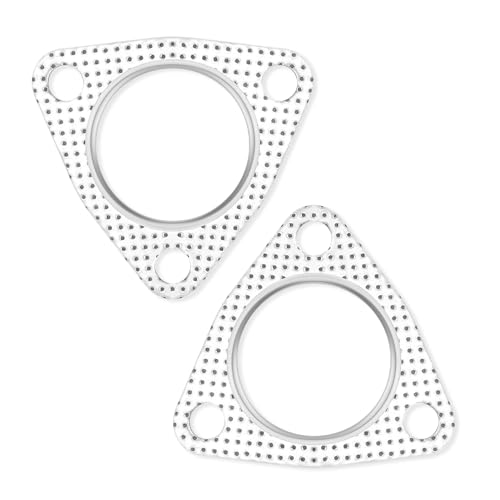
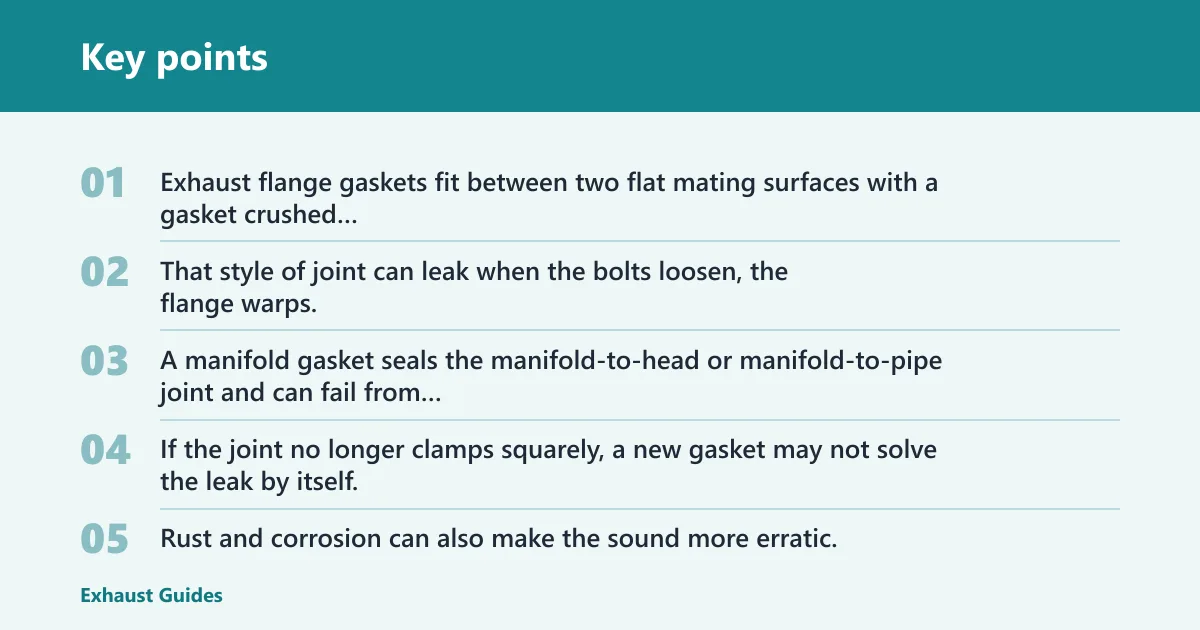
Exhaust flange gaskets fit between two flat mating surfaces with a gasket crushed between them. That style of joint can leak when the bolts loosen, the flange warps, or corrosion keeps the faces from clamping evenly. A manifold gasket seals the manifold-to-head or manifold-to-pipe joint and can fail from heat cycles, vibration, and corrosion.
Broken studs or a warped flange matter here. If the joint no longer clamps squarely, a new gasket may not solve the leak by itself. Rust and corrosion can also make the sound more erratic, which is why a simple “replace the gasket” guess can miss the real fault.
Where do soot and leak clues show up?
Black soot around the manifold or flange is one of the strongest visual clues. A leak can leave a dark fan of soot near the joint, and a fan-shaped stain often points back toward the escape point. That soot can appear at the manifold-to-head joint, the manifold-to-pipe joint, or a flat flange further downstream.
Where should you inspect the front of the engine first?
Start at the manifold-to-head joint, especially on the front bank if the engine layout puts that side near the radiator. Then check the manifold-to-pipe connection and any nearby flange gaskets. A rear-bank leak can sound like it comes from the center of the engine because sound reflects through the engine bay.
Where should you inspect under the vehicle next?
If the noise seems lower or farther back, look at the underbody flanges, pipe seams, and welds. Black soot near a flat flange is a strong clue, especially if the soot follows the seam line. A cracked pipe or weld often leaves a cleaner-looking break point than a gasket leak, but both can sound similar.
Picture a compact SUV with a sharp tick that is loudest right after startup. A quick look at the rear of the exhaust manifold shows a dark fan of soot on one side of the flange. That soot pattern points the inspection toward the joint, not the timing cover or belt drive.
Can exhaust fumes in the cabin mean a gasket leak?
Yes. Exhaust fumes in cabin areas can occur when the leak sits close to the firewall or intake, and that is more serious than odor alone. Carbon monoxide is an odorless toxic component of exhaust, and exposure can cause dizziness, confusion, loss of consciousness, or death. The risk rises in enclosed or idling situations, and the EPA carbon monoxide factsheet explains why even brief exposure matters.
When should you stop driving and inspect right away?
If you smell exhaust inside the cabin, feel lightheaded, or notice fumes near the firewall, stop driving as soon as it is safe. Do not keep circling the block to “see if it clears.” The right next step is an immediate inspection, with ventilation and a thorough check for leaks near the engine bay, floorpan, and tailpipe route.
A common first-timer mistake is assuming a sharp ticking from the engine bay is just normal valve noise. Odor alone is not the key warning. Cabin intrusion is the real concern, especially at idle, at stoplights, or in a garage. That is the point where exhaust gases can collect faster than they leave the vehicle.
What else can sound like an exhaust gasket leak?
Heat shield rattle, loose brackets, lifter tick, and even some valve train noises can mimic a gasket leak. Leaks can also sound like a lifter tick, a cracked manifold, or a loose heat shield. The best way to separate them is to compare sound, location, and whether soot or fumes are present.
How does a heat shield rattle sound different?
A heat shield usually sounds metallic and loose, more like a buzz or rattle than a puffing tick. It often changes with body movement or certain rpm bands. If the sound is tinny and irregular, inspect shields, brackets, and hangers before assuming the gasket has failed.
How does lifter tick sound different?
Lifter tick is usually concentrated at the top of the engine and may stay even when there is no exhaust smell or soot. A cracked manifold can cause a sharp tick that fades as the engine warms, which is why a cold engine can make exhaust and lifter noises hard to separate at first.
How does a loose bracket or hanger sound different?
A loose bracket or hanger tends to sound like a knock, clank, or rattle that changes with bumps and throttle changes. It may be louder at idle in Drive or when the exhaust shifts slightly. That kind of noise is different from the crisp, repeated pulse of an exhaust leak.
How do you narrow the leak before replacing parts?
- Start the engine cold and listen at idle from a safe distance.
- Note whether the sound is a tick, hiss, puff, or rattle.
- Check whether the noise gets louder with rpm or light acceleration.
- Look for black soot around the manifold, flange, and pipe seams.
- Check the firewall area and cabin for exhaust smell or fumes.
- Compare the sound to nearby false positives such as heat shields or lifter tick.
- Inspect the exact joint before buying parts, especially if rust, broken studs, visible cracks, or flange movement are visible.
Check the joint before the leak spreads or starts heating nearby parts. Inspection is better than guessing from sound alone. A sharp tick can come from the manifold gasket, but the same noise can also come from a cracked manifold, a flange leak, or a damaged stud that prevents the joint from sealing. The sound points you to the area; soot and location tell you whether the gasket is actually the problem.
Frequently asked questions
What does a leaking exhaust manifold gasket sound like?
A leaking exhaust manifold gasket usually sounds like a sharp ticking or tapping from the top or front of the engine. It is often loudest on cold starts and may quiet after warmup. The pulse can sound like a sewing machine under the hood, especially when the leak is small and close to the cylinder head.
What does an exhaust gasket leak sound like?
An exhaust gasket leak usually sounds like a tick, tap, puff, or hiss near a joint in the exhaust path. The sound often changes with engine speed and may become more noticeable during acceleration or at idle. If the noise fades as the engine warms, inspect the joint anyway rather than assuming it healed.
What does a leaking exhaust sound like?
A leaking exhaust often makes increased engine noise with a hissing or tapping sound. Depending on where the leak is, it may sound sharp and metallic near the manifold or softer and puffing under the car. Soot, smell, and exact location matter more than the sound alone.
What does a blown exhaust gasket sound like?
A blown exhaust gasket can sound like a loud tick, puff, or hiss that becomes more obvious on startup and under throttle. If the gasket has failed badly, the sound may stay loud after warmup and may be paired with soot or exhaust smell around the joint.
Why is my exhaust ticking when the engine is cold?
Cold metal leaves the exhaust system with the most visible gap, so a leak is easiest to hear on cold start. As the metal warms and expands, the noise may fade after five minutes. That change is a clue, not a repair, so the joint still needs inspection.
How can I tell if the noise is an exhaust leak or lifter tick?
Check where the sound is strongest and whether soot or exhaust smell is present. The leak usually comes from the manifold, flange, or pipe area and may change with load. Lifter tick stays higher on the engine and does not leave soot around the exhaust joint.
Does an exhaust gasket leak get louder when accelerating?
Often, yes. A leak can get louder when accelerating because exhaust pulses rise with rpm and pressure. Some leaks are also more noticeable while sitting at a stoplight or idling. If the sound changes with throttle, focus on the exhaust joints rather than loose trim or body panels.
Can an exhaust gasket leak cause fumes in the cabin?
Yes. A leak near the firewall or intake can send exhaust fumes into the cabin, and that is a safety issue. Carbon monoxide is odorless and dangerous, so cabin fumes matter more than smell alone. If fumes are present, stop driving and inspect the vehicle right away.
What symptoms usually come with a leaking exhaust gasket?
Common signs include a sharp tick or hiss, black soot near the joint, exhaust smell, and sometimes reduced performance or increased engine noise. The sound may be strongest on cold start and then fade as the engine warms. Those clues together point toward a leak rather than a single loose part.
Where should I look for soot if I think the exhaust gasket is leaking?
Start at the manifold-to-head joint, then check the manifold-to-pipe joint and any flat flange connections. Look for black soot around the seam, especially a dark fan-shaped stain near the leak point. Soot on one side of the joint is a strong clue that the leak is local to that area.