
Rubber vs Polyurethane Exhaust Hangers: Which Is Better?
Choose rubber for most stock and daily-driven exhausts. Choose polyurethane exhaust hangers for firmer control on heavier or modified systems when you can accept more vibration and a higher chance of noise. Bad hanger choice can cause rattles, cracked hangers, poor clearance, and extra cabin NVH. This guide compares the two by use case, load, clearance, and comfort tradeoffs.
Rubber vs polyurethane exhaust hangers: the core trade-off

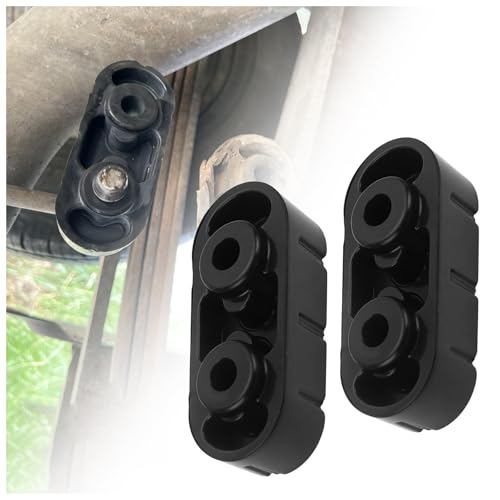

The choice comes down to movement control versus isolation. Rubber exhaust hangers are the safer default because they flex more, absorb vibration, and stay closer to OE behavior. Polyurethane exhaust hangers hold the system more firmly, but that stiffness can send more noise, vibration, and harshness into the cabin.
The exhaust system moves with engine torque and road shock, so a hanger has to do two jobs at once: avoid body contact while controlling movement. If the hanger is too soft, the exhaust can sag or shift under load. If it is too stiff, resonance and idle vibration can rise.
| Decision factor | Rubber | Polyurethane exhaust hangers | Winner |
|---|---|---|---|
| NVH isolation | Better NVH isolation, absorbs vibration, closer to OE behavior | More vibration transmission, higher chance of cabin noise | Rubber |
| Exhaust control | More compliance, more movement under load | Firmer control, less movement, holds position better | Polyurethane exhaust hangers |
| Daily-driver fit | Practical default for daily-use vehicles and stock exhausts | Usually too stiff unless movement control is the main problem | Rubber |
| Risk of resonance or drone | Lower risk because it isolates more vibration | Higher risk because stiffness can amplify resonance | Rubber |
| Modified or clearance-sensitive use | May allow sag, contact, or shift on heavy systems | Better when the exhaust needs firmer positioning | Polyurethane exhaust hangers |
NVH isolation
Rubber wins this row because it is better at separating the exhaust from the body structure. That matters whenever the vehicle is used on the street, because the main complaint is often not strength failure but added cabin noise or vibration.
Polyurethane can be the wrong answer when the customer is chasing quiet. Poly hangers may transmit more vibration, resonance, or cabin noise, so a firmer mount can solve one issue and create another.
Exhaust control
Polyurethane wins when the system needs less movement. A heavy muffler, a long rear section, or a layout with tight clearance can benefit from a hanger that holds the pipe more firmly.
Rubber still works well, but its extra compliance can let the system swing or settle farther under torque and road shock. If the exhaust is brushing a heat shield or subframe, firmer control may matter more than isolation.
Daily-driver fit
For daily-use vehicles, rubber is usually the safer starting point. OEM replacement application, stock exhausts, and comfort-first fitment all point toward OE-like behavior rather than maximum stiffness.
Polyurethane is not wrong for a street car, but it has to solve a real problem. If there is no sag, no contact, and no clearance issue, the stiffer material can add NVH without giving much back.
Resonance and drone risk
Rubber wins because it damps more of the vibration path between the exhaust and the body. That makes it the better bet when the goal is to avoid idle buzz, resonance, or cabin drone complaints.
Stiffer hangers can move the exhaust away from one contact point and still make the car noisier inside. A small change in support can shift how the system resonates, especially on modified performance exhausts.
Modified or clearance-sensitive use
Polyurethane wins when the exhaust needs firmer positioning to stay off nearby parts. That includes systems with limited clearance to heat shields, subframe members, or body panels, especially when the pipe is heavier than stock.
Rubber can still be right for a modified setup if the layout is well designed and the pipe is not overloading the hanger. Fitment and hanger geometry matter alongside material choice.
📊 Polyurethane engine mounts use durometer hardness ranging from 75A to 95A. Source: Rubber vs Hydraulic vs Polyurethane Engine Mounts: Complete….
Rubber exhaust hangers vs polyurethane exhaust hangers
Rubber and polyurethane are both elastomer options, but they behave differently under heat, load, and motion. Rubber usually gives better NVH performance and more compliance. Polyurethane is stiffer, can hold the exhaust more firmly, and may suit performance street and off-road applications where movement control matters more than cabin quiet.
Movement control
Rubber allows more give, which is useful for isolating motion but less useful when the exhaust is close to touching the body. Polyurethane reduces that movement, which can help keep a large aftermarket system centered under the car.
A common first-timer mistake is choosing stiffness before checking why the pipe moved in the first place. If the hanger location is wrong, a stiffer material may hide the symptom without fixing the layout.
Vibration, resonance, and cabin noise
Rubber is the better choice when the complaint is vibration or cabin noise. It absorbs more of the small oscillations that travel through the exhaust system and into the body.
Polyurethane can make a car feel busier at idle or under light throttle because the exhaust is less isolated. That is why NVH should be the main selection criterion, not perceived strength alone.
Fitment tolerance and use case
Rubber is more forgiving when the exhaust layout is stock and the goal is OE-like behavior. Polyurethane is less forgiving, but that firmness can be useful on modified performance exhausts where a small amount of extra control prevents contact.
Neither material fixes poor hanger geometry. If the hole spacing, rod angle, or bracket position is off, the wrong material only changes how the problem sounds.
Where durometer fits in
Durometer is the hardness scale used for polyurethane, and it matters because, in general, higher hardness tends to mean more stiffness and more NVH. Polyurethane engine mounts are commonly listed at 75A to 95A, which shows how wide the stiffness range can be across poly parts.
For exhaust hangers, that means a harder poly option will usually control movement better but also raise the chance of resonance or cabin noise. If the only two choices are “too soft” and “too stiff,” durometer helps narrow the gap.

Are rubber exhaust hangers better for a daily driver?
Yes. For daily-use vehicles, rubber is usually the safer starting point because it provides better NVH isolation and OE-style flexibility. Rubber exhaust hangers are a practical default for daily-use vehicles, especially when the exhaust is stock and the owner wants comfort-first fitment.
That said, a daily driver can still need firmer control if the exhaust sags, hits a heat shield, or swings enough to make a clunk on acceleration. In that case, the fix may be poly, but only after fitment and hanger count are checked.
Will polyurethane exhaust hangers make the exhaust noisier?
Often, yes. Poly hangers may transmit more vibration, resonance, or cabin noise because they are stiffer and isolate less than rubber. They can solve movement problems while making idle or cruise drone more noticeable inside the cabin.
The risk rises as durometer goes up. A harder poly hanger usually means less compliance, so the exhaust can feed more energy into the body structure instead of being absorbed at the hanger.
When does a modified exhaust need polyurethane?
Polyurethane makes sense when the exhaust needs firmer positioning to avoid contact or sag. That is common with heavier aftermarket systems, long rear mufflers, or clearance-sensitive layouts where a soft hanger lets the pipe move too far under load.
It is also useful when the complaint is shift, knock, or body contact rather than harshness. If the exhaust is already quiet and well supported, poly may add noise without solving a real problem.
Two common scenarios
Suppose a 3-inch cat-back on a lowered sedan sits close to the rear subframe and taps over bumps. Rubber may let the pipe settle into that contact point, while a firmer polyurethane hanger can hold the tail section higher and reduce the knock.
Picture a stock hatchback with a light exhaust and no clearance issues. Switching to poly there may add idle buzz and a faint drone at cruise, with no meaningful gain in support.
Choose rubber if… / Choose polyurethane exhaust hangers if…
Choose rubber if the vehicle is a daily driver, the exhaust is stock or close to stock, you want OE-like behavior, or your main goal is lower NVH. Rubber is also the safer first step when the system has no sag or contact problem.
Choose polyurethane exhaust hangers if the exhaust is heavier, movement is causing contact, clearance is tight, or you need firmer control on a modified street setup. If the complaint is already cabin drone, start cautiously; a stiffer hanger can make that worse.
Choose neither until fitment is checked if the hanger shape, rod length, or bracket location is wrong. Material choice cannot fully correct a bad layout.
Decision checklist: how to pick the right hanger material
- Identify the vehicle type. Daily driver, fleet repair, and OEM replacement application usually point toward rubber. Modified street cars need a closer look at support and clearance.
- Check exhaust weight. A heavier muffler, resonator, or rear section increases hanger load. More load can justify polyurethane if the system is moving too much.
- Measure clearance points. Look at heat shields, subframe parts, body panels, and spare tire wells. If the exhaust contacts any of them, firmer control may help.
- Define the complaint. Sag, contact, resonance, idle vibration, and cabin drone do not all point to the same fix. Rubber helps the last two more often; poly helps the first two more often.
- Check hanger count and geometry. Too few hangers or a poor bracket angle can overload either material. A good hanger in the wrong spot still fails.
- Pick the least aggressive fix first. If the problem is small, start with rubber in the correct shape. Move to poly only if movement control still is not enough.
Keep/change test for sag, contact, resonance, and idle vibration
Keep rubber if the exhaust clears everything, idle is quiet, and there is no visible sag after the system heats up. That means the current NVH balance is already working.
Change to polyurethane if the exhaust hangs low, touches under load, or shifts enough to hit a shield or brace. Recheck clearance after a short drive and after the system cools.
Go back to rubber if the new hanger removes contact but adds a steady buzz, new cabin drone, or more vibration at idle. That is the classic sign that stiffness solved one issue and created another.
Which exhaust hanger material lasts longer in heat and road use?
Longer service life is application-dependent. Heat, oil, road debris, and exhaust movement can affect both materials, and fitment can matter as much as material choice. Polyurethane can feel more durable because it is stiffer, but rubber is often the better fit for daily-use heat cycling when NVH control is the priority.
If the hanger is constantly overloaded, either material can wear early. The real question is not only which lasts longer, but which lasts long enough without creating a new complaint.
Can a stiffer exhaust hanger cause resonance or drone?
Yes. A stiffer hanger can change how vibration travels from the exhaust into the body, and that can increase resonance or cabin drone. That is why a material that solves contact can still trigger a warranty complaint about noise.
The risk is highest when the exhaust already sits near a body panel or when the system has a frequency that the cabin picks up easily. If drone is the main complaint, a firmer hanger is not the automatic answer.
Is there a best durometer for polyurethane exhaust hangers?
There is no single best durometer for every exhaust. In general, higher durometer means more stiffness and more NVH risk, while lower durometer gives up some control in exchange for more isolation. The right choice depends on how much movement you need to stop.
If the polyurethane option lists a hardness range, treat the lower end as the more street-friendly choice and the higher end as the firmer, noisier choice. For exhaust work, start with the softest poly that still prevents contact.
How do I choose an exhaust hanger based on use case?
Start with the complaint, not the material. If the issue is ride quietness, rubber is usually the better fit. If the issue is sag, contact, or movement under load, polyurethane is worth considering after you confirm the hanger shape and bracket position.
That is the clean rule: rubber for comfort and OE behavior, polyurethane for firmer exhaust control when the system needs it. The wrong choice can create the exact complaint you were trying to remove.