3 Best Hangers for Trucks & SUVs: Based on Specs and Reviews
For trucks and SUVs, the best exhaust hanger matches pipe weight and movement: use OE-style rubber for stock systems, heavy-duty polyurethane for lifted setups, and reinforced straps or brackets for sagging duals.
Quick picks
The best overall choice for common 2.5-inch to 3-inch truck exhausts is a clamp-style hanger with a rubber isolator. It supports the pipe, cuts vibration, and avoids a full weld job. For lifted or custom routing, a longer rod or swivel style gives more correction room.
- Best overall: a clamp hanger for 2.5-inch and 3-inch systems that needs a fast replacement.
- Best for quiet daily driving: a reinforced rubber hanger bushing with enough stiffness to control sway.
- Best for rust-prone climates: stainless or galvanized steel hangers with a rubber isolator.
- Best for custom or lifted setups: a weld-on rod hanger or 360-degree rotatable clamp.
Quick comparison
| Product | Badge | Best for | Price | ||
|---|---|---|---|---|---|
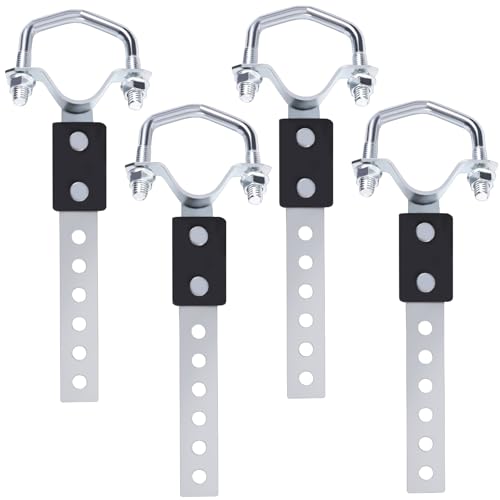 |
VOROBAWIN 4 Pcs Universal Exhaust Hanger for 1" – 2.25"VOROBAWIN | Our pick | 1"-2.25" · 4 pcs · universal | $29.99
Price as of 15 Oct 2026
|
View |
 |
COROTC 304 Stainless Steels 2.5” Exhaust Hangers,MufflerCOROTC | Also great | 2.5" · 2 pcs · stainless steel | $26.79
Price as of 15 Oct 2026
|
View |
 |
Joytrace 3" Exhaust Hanger Kit 12PC Universal 360° Swiveljoytrace | Upgrade pick | 3" · 12 pc · swivel clamps | $33.99
Price as of 15 Oct 2026
|
View |
 |
Universal Stainless Steel Exhaust Hanger Heavy-duty ExhaustLonsda | Pair with it | 3/8" rod · 11" · weld-on | $21.99
Price as of 15 Oct 2026
|
View |
 |
Haverain Set of 2 Muffler Hanging Rubber Exhaust PipeHaverain | Budget pick | Rubber · 2 pcs · adjustable height | $12.99
Price as of 15 Oct 2026
|
View |
Use the table below to match the hanger to pipe size, ride height, and the symptom you want to stop. Fitment comes first, then material and mounting style.
How we chose
These picks were compared by pipe diameter coverage, mounting method, corrosion resistance, vibration control, and how well each style fits common truck and SUV exhaust layouts. Fitment and install flexibility matter more here than brand labels.
We also favored parts that map cleanly to a known failure mode: sagging tailpipe, axle-hop clunk, sway contact, or idle rattle. That makes it easier to choose a hanger that solves the actual problem.
Only options with clear sizing cues made the list. On trucks and SUVs, a hanger that is close enough is often still wrong.
VOROBAWIN 4 pcs universal exhaust hanger: best for quick replacement
This is the most straightforward pick for common replacement work on smaller truck and SUV exhaust sections. It fits when you want bolt-on installation, rubber vibration control, and broad pipe compatibility without welding.
Based on the listed fit range, it works around 1-inch to 2.25-inch pipes, so it is better for compact sections, smaller resonator runs, or select OE-style repairs than for larger truck exhaust tubing. The rubber isolator helps cut rattle at idle and over bumps.
The main drawback is size ceiling. If your system uses 2.5-inch, 2.75-inch, or larger pipe, this hanger is the wrong starting point and will create a fitment problem instead of solving one.
COROTC 304 stainless 2.5-inch exhaust hangers: best for rust resistance
This is the better call for 2.5-inch exhaust sections in areas that see road salt, slush, or wet winters. The stainless steel construction gives it a corrosion-resistance advantage, while the hook-style attachment supports steadier exhaust positioning.
It is aimed at quieter support rather than maximum adjustability. For a stock or lightly modified truck or SUV with a 2.5-inch pipe, that is usually what you want.
The drawback is fitment scope. It is tuned for 2.5-inch systems, so it is not the part to buy if you need a hanger that can float between multiple pipe diameters or correct a major offset.
Joytrace 3-inch exhaust hanger kit: best for misalignment
This is the most useful choice when a 3-inch system sits a little off-center or needs more rotation to line up cleanly. The 360-degree swivel helps in tight spaces, and the rubber damping helps reduce vibration transfer.
It is a strong fit for lifted trucks, axle clearance issues, or custom tailpipe routing where a rigid hanger fights the exhaust path. The published 3-inch sizing makes it a better match for common truck builds than a generic universal kit.
The tradeoff is that swivel freedom can tempt an installer to over-correct the angle. If the pipe sits too high or too low at rest, the hanger will not fix a poor route by itself.
Lonsda universal stainless steel exhaust hanger: best for lifted setups
This is the strongest structural option in the group for custom alignment work. The 3/8-inch rod and 11-inch length make it a better candidate for lifted trucks, altered rear suspension travel, or systems that need a weld-on support point.
It can be bent or cut to fit, which helps when the factory hanger location no longer lines up after a lift, bumper change, or exhaust reroute. The rubber bushing adds some isolation, which matters on heavier truck exhausts.
The drawback is install complexity. Weld-on parts need clean alignment, and if the rod angle is wrong, the pipe can sit under side load and create a new contact point.
Haverain adjustable rubber exhaust hanger: best for quieter daily driving
This is the quiet-ride pick for drivers chasing idle rattle and small-bump noise rather than major structural support. The reinforced rubber and adjustable-hole design make it useful when the original hanger has softened or torn.
It suits vehicles that still have a workable hanger layout but need a better isolator. That includes many trucks and SUVs with a mild sag, a shifting tailpipe, or a worn rear hanger.
The drawback is load tolerance. Adjustable rubber helps with vibration control, but it is not the first choice for a heavy dual system or a severe lift where a stiffer rod or bracket is needed.
How an exhaust hanger works
An exhaust hanger supports exhaust weight, reduces vibration and noise, and keeps the system off the underbody. On trucks and SUVs, that matters more than on many smaller vehicles because the pipe often spans more distance and moves more under axle travel.
There are four common styles: rubber isolator, rod, clamp, and bracket. Rubber isolates motion, rods carry structure, clamps add quick attachment around the pipe, and brackets help fix an alignment problem when space is tight.
Common failure symptoms point to different needs. A sagging tailpipe usually needs more support or a stiffer hanger; sway-induced contact often points to poor routing or weak isolation; axle-hop clunk usually means the pipe is hitting at full suspension movement; and idle rattle often means a bushing is worn or too soft.
Universal exhaust clamp with hanger: when it fits best
A universal exhaust clamp with hanger is best for quick replacement when you want to avoid fabrication and the pipe diameter matches. One product is listed for a 3-inch clamp and most 2.5-inch exhaust pipes, while another is tailored for 2.75-inch exhaust pipes, and a separate option is sized for a 4-inch inner diameter pipe.
That spread matters. Trucks and SUVs commonly use 2.5-inch, 2.75-inch, 3-inch, and 4-inch sections, and the hanger or clamp must match the pipe, not just the vehicle class.
Bolt-on versus weldable versions
Bolt-on clamps make sense for quick replacement and service work. Weldable versions are better when the pipe position is fixed, the old mount broke off, or the exhaust needs a cleaner custom alignment.
Some clamp hangers include 360-degree rotation. That helps when the pipe is close to the spare tire, axle, frame, or suspension arm and a fixed hanger would fight the available space.
When rotation helps
A 360-degree rotatable hanger is useful when the exhaust sits slightly off-axis after a lift or after rear suspension parts have changed. It can reduce installation friction and help you land the pipe in a neutral position without forcing the clamp to twist.
Do not use rotation to mask a wrong pipe size or a missing bracket. If the hanger must be forced into place, the pipe will usually move back and create noise later.
Rubber exhaust hanger bushings: best for quieter rides
Rubber exhaust hanger bushings are the quiet-focused choice for many cars, SUVs, and trucks. EPDM and high-density rubber help isolate vibration, which is useful when the symptom is rattle at idle, buzzing at a certain rpm, or a light touch against the body.
Rubber is also the easiest way to keep a small mismatch from becoming a cabin noise issue. If the exhaust is physically supported but still transmitting motion, a better bushing often solves the complaint without changing the whole routing.
When rubber helps most
Rubber helps when the system is secure but too lively. A stock exhaust, a lightly lifted SUV, or a daily-driven truck with a tired hanger usually benefits more from better isolation than from extra metal.
A common first-timer mistake is choosing a very soft rubber piece because it looks cushy. If the bushing is too soft, the tailpipe can swing enough to touch the frame or suspension under load.
When the bushing is wrong
If the hanger stretches, tears, or lets the exhaust droop after a short period, the material is likely too worn or too soft for the weight. That is common on heavier mufflers, dual setups, and long rear pipes that move more over bumps.
Stainless hanger kit: best for harsh climates
Stainless or galvanized steel hanger parts are better when road salt and corrosion are part of the problem. They hold up longer than plain steel in wet regions, and that matters because rust often starts at the hanger before the pipe itself fails.
Some kits pair steel hangers with rubber isolators. That combination is useful because the steel carries the load while the rubber handles vibration and noise.
Galvanized steel versus stainless steel
Galvanized steel is usually the budget durability step up. Stainless costs more but generally makes more sense when salt exposure is chronic, the vehicle sees winter roads often, or the hanger is hard to access and worth doing once.
Neither material fixes bad fitment. A corrosion-resistant hanger that is the wrong length or offset will still let the pipe knock against the body.
When steel still needs rubber
Steel alone is not the goal on a truck or SUV that already has vibration issues. A rigid hanger without a rubber isolator can transfer more noise into the cabin, especially near the rear section where body panels can resonate.
Exhaust hanger fitment matrix
This table maps truck and SUV exhaust setups to hanger style, pipe diameter, mounting style, and the failure symptom it is meant to fix. Use it to narrow choices before buying hardware.
| Vehicle setup | Hanger style | Compatibility notes | Install method | Common mistake to avoid |
|---|---|---|---|---|
| Stock 2.5-inch SUV, idle rattle | Rubber hanger bushing | Fits common 2.5-inch exhaust pipe layouts | Bolt-on or replacement bushing | Using a stiff rod before checking bushing wear |
| 2.75-inch truck system, light sag | Universal exhaust clamp with hanger | Tailored for 2.75-inch exhaust pipes | Clamp-on | Clamping over the wrong diameter |
| 3-inch lifted pickup, axle-hop clunk | 360-degree rotatable clamp hanger | One product is listed for a 3-inch clamp and most 2.5-inch exhaust pipes | Bolt-on or adjustable clamp | Leaving the hanger preloaded at an angle |
| 4-inch diesel-style rear section, heavy weight | Bracket or heavy clamp hanger | LCGP is sized for a 4-inch inner diameter pipe | Clamp-on or welded support | Using a small universal strap that cannot carry the mass |
| Custom rear routing, extra suspension travel | Weld-on rod hanger | 3/8-inch rod sizes are common on custom support pieces | Weld-on, then trim or bend for alignment | Ignoring rear axle movement at full droop |
| Rust belt daily driver, worn rear hanger | Stainless hanger kit with rubber isolator | Best when corrosion and vibration both matter | Replacement mount or bolt-on kit | Choosing plain steel for a salt-heavy climate |
How to choose the right hanger
Start with pipe diameter. If the clamp or hanger is built for 2.5-inch, 2.75-inch, 3-inch, or 4-inch pipe, match that first before thinking about material.
Then measure the hanger rod size and available space. Automotive Body Care lists zinc-coated mild steel rods as 3/8-inch thick, and some rods are 10 inches long; those figures matter when the exhaust needs length or offset correction around the axle or spare tire.
Next, check lift height and rear suspension travel. A lifted truck can pull the pipe farther at droop, so a hanger that works on a stock SUV may sit too tight once the axle moves.
Finally, choose the mount style for your tools and access. Bolt-on is fastest, weldable is strongest for custom alignment, and swivel styles help when the pipe is close to a frame rail or crossmember.
Say your SUV has a 2.5-inch rear pipe and a new rattle over speed bumps. A rubber bushing or a 2.5-inch clamp hanger is the right first move, because the symptom points to motion control, not a larger bracket.
Suppose your lifted pickup has a 3-inch tailpipe that taps the axle at full droop. A 360-degree swivel or weld-on rod hanger is the better answer, because it lets you correct the angle instead of forcing the pipe into a bad line.
Which one should you buy?
Choose by budget first, then by failure mode. If you need a quick fix on a common pipe size, the VOROBAWIN or Joytrace style is the easy path; if rust is the main problem, COROTC is the better long-life buy; if the system is custom, Lonsda gives more adjustment room.
If the complaint is noise, start with the Haverain-style rubber hanger or another OE-style isolator. If the complaint is sagging or contact on a lifted vehicle, choose a longer rod or a rotatable clamp instead.
Are universal exhaust hangers safe to use? Yes, when the pipe diameter, rod size, and mounting style are confirmed. No, when they are used as a guess for a heavy truck system or a custom rear section with a different offset.
Cost-to-durability usually tracks like this: basic rubber replacement is cheapest, stainless or galvanized parts last longer in salt, and adjustable weld-on hardware costs more in time but pays off when the exhaust needs custom alignment.
Frequently asked questions
What is an exhaust hanger?
An exhaust hanger supports exhaust weight, reduces vibration and noise, and keeps the pipe from contacting the underbody. On trucks and SUVs, that support has to account for rear suspension movement, pipe length, and the extra load of larger mufflers or dual tail sections.
Which exhaust hanger is best for trucks?
The best truck hanger is the one that matches pipe size, load, and suspension movement. For stock systems, OE-style rubber is usually the cleanest choice; for lifted or custom systems, a weld-on rod or 360-degree rotatable clamp handles alignment better; for rust-prone regions, stainless or galvanized steel lasts longer.
Are universal exhaust hangers safe to use?
Universal hangers are safe when the fit is confirmed, because the wrong size can let the pipe sag, rattle, or touch the body. Check pipe diameter, hanger length, and mount style before buying. If any of those are guessed, the part may fit loosely and create noise.
How do I stop my exhaust from rattling?
Start at the hanger, not the muffler. Look for torn rubber, loose clamps, a rod that is too short, or a pipe that contacts the frame at droop. If the exhaust is otherwise aligned, replacing the bushing or switching to a better-isolated clamp usually stops the rattle without other changes.