Straight Pipe vs Muffler: Which Is Better for Your Car?
Straight Pipe vs Muffler: Which Is Better for Your Car?
Straight pipe vs muffler — it’s one of the most debated topics in the car enthusiast community. Whether you’re chasing more horsepower, a louder sound, or just want to understand your options, this guide breaks down everything you need to know before making a decision.
Both setups have their place. But the right choice depends on how you use your vehicle, where you live, and what your priorities are.
What Is Straight Pipe Exhaust?
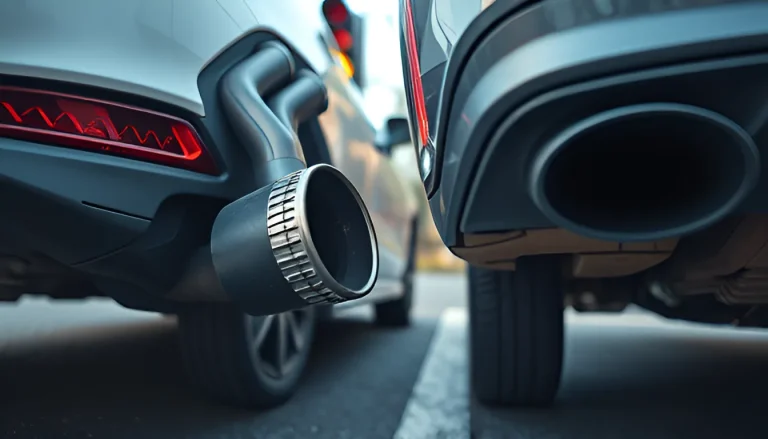
Straight pipe exhaust removes all restrictive components between the engine and the tailpipe — including the muffler, resonator, and sometimes the catalytic converter. The result is a direct, unobstructed exhaust path.
This setup is common on track and race cars where noise regulations don’t apply and maximum exhaust flow is prioritized. For daily drivers, it’s a more controversial choice — and often an illegal one.
To understand how straight pipe affects power, read our detailed analysis of whether straight pipe exhaust increases horsepower.
What Does a Muffler Do?
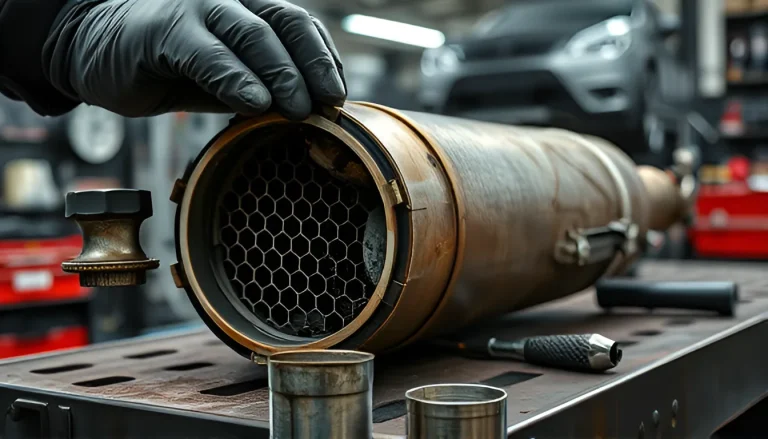
A muffler is a noise-dampening device installed at the rear of the exhaust system. It uses chambers, baffles, and perforated tubes to cancel out sound waves before they exit the tailpipe.
Modern mufflers are engineered to reduce noise with minimal restriction. High-performance aftermarket mufflers — like those in our guide to the best mufflers for deep sound — can provide excellent flow while still meeting noise regulations.
Straight Pipe vs Muffler: Performance Comparison
Horsepower and Torque
Straight pipe exhaust theoretically offers the lowest possible exhaust restriction, which translates to better exhaust scavenging and slightly higher peak power. In practice, most vehicles see gains of 5–15 HP with a full straight pipe setup.
A high-flow aftermarket muffler can achieve 3–10 HP gains over stock while maintaining legal exhaust levels. The performance gap between straight pipe and a quality aftermarket muffler is often smaller than enthusiasts expect — and rarely worth the tradeoffs in a street car.
Exhaust Flow and Backpressure
Less restriction means less backpressure, which is generally beneficial for exhaust scavenging in high-RPM operation. However, some backpressure is actually beneficial for torque at lower RPMs, especially in naturally aspirated engines.
Over-removing backpressure on a street-driven car tuned for factory exhaust characteristics can sometimes result in a flat midrange torque curve — a trade-off that makes the car feel slower in real-world driving even if peak numbers improve slightly.
Fuel Economy
The impact on fuel economy is minimal either way. Some drivers report slight improvements from reduced engine load; others notice no change. Fuel economy is far more affected by driving habits and engine tune than exhaust configuration.
Sound: Straight Pipe vs Muffler
This is where the difference is most dramatic. Straight pipe exhaust is significantly louder — often 20 to 30 decibels more than a muffled system. To put that in perspective, a 10 dB increase is perceived as roughly twice as loud to the human ear.
Straight Pipe Sound Character
Straight pipe exhaust produces a raw, unfiltered engine tone. On V8 engines, this can be spectacular. On 4-cylinder engines, the result is often a high-pitched, raspy tone that many find unpleasant — especially at highway speeds where drone becomes a real issue.
Muffler Sound Character
A quality aftermarket muffler tunes the exhaust note — dampening harsh frequencies while allowing desirable tones to pass through. The result can be a deep, aggressive sound that’s actually more pleasing than the raw noise of a straight pipe, without the cabin fatigue.
Legality: Straight Pipe vs Muffler
Here’s the reality most enthusiast content glosses over: straight pipe exhaust is illegal for street use in virtually every U.S. state.
According to NHTSA regulations, all street vehicles must maintain functioning noise control equipment. Most states layer additional noise ordinance laws on top of federal requirements, with specific decibel limits that a straight-piped car will almost certainly exceed.
Even muffler deletes — a more moderate approach than full straight pipe — are illegal for daily drivers in most jurisdictions. Driving without a muffler can result in citations, failed safety inspections, and in some states, vehicle impoundment.
Practical Comparison: Who Should Choose What?
Choose a High-Flow Muffler If You:
- Drive your car on public roads daily
- Want improved sound without constant drone
- Live in a state with strict emissions or noise inspections
- Plan to sell the vehicle in the future
- Want mild performance gains without sacrificing driveability
Choose Straight Pipe If You:
- Have a dedicated track car that is never driven on public roads
- Are building a race vehicle where maximum flow matters
- Don’t mind extreme noise levels and potential legal issues
- Have a V8 engine that sounds exceptional without a muffler
The Middle Ground: Cat-Back Exhaust Systems
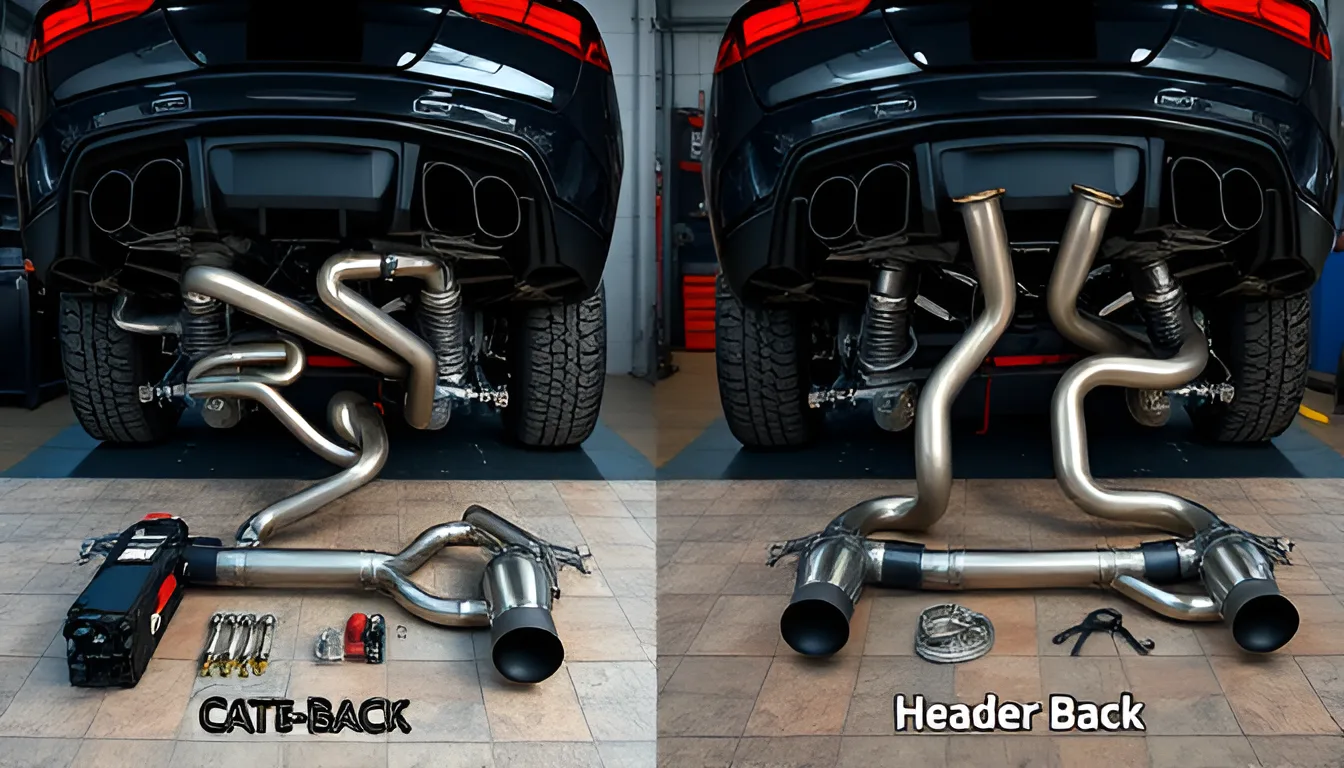
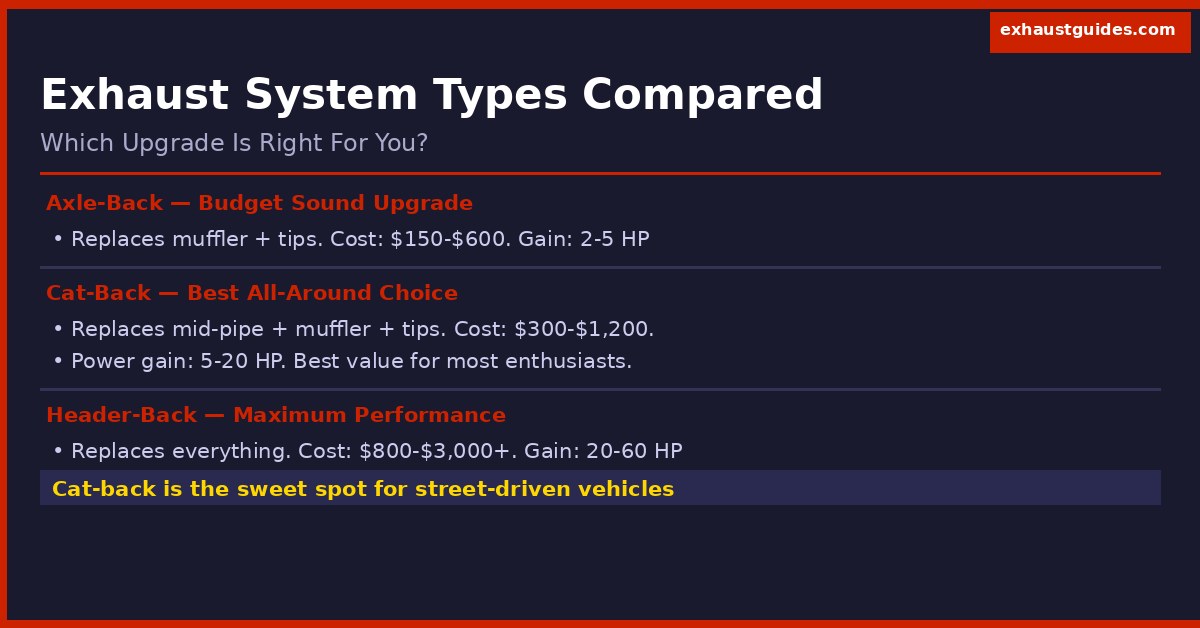
For most enthusiasts, the best answer to the straight pipe vs muffler debate is neither extreme — it’s a quality cat-back exhaust system. A cat-back system replaces everything from the catalytic converter back, including the muffler, with high-flow components designed to maximize sound and performance while remaining street legal.
Understanding the difference between system types is essential before buying. Our comprehensive guide to cat-back vs. axle-back vs. header-back exhaust walks through each option and helps you choose the right upgrade for your vehicle and budget.
If you do need exhaust repairs along the way, our guides on exhaust leak repair costs and full exhaust system replacement costs can help you plan your budget accurately.
For a trusted perspective on vehicle modifications and their real-world impact, Car and Driver’s exhaust system guide is an excellent starting point.
Frequently Asked Questions
Is straight pipe better than a muffler for performance?
Straight pipe exhaust can provide marginally better performance than a muffler by eliminating exhaust backpressure. However, the gains are typically small — 5 to 15 HP for most vehicles. A high-flow aftermarket muffler can achieve similar gains while remaining street legal and significantly quieter.
How much louder is straight pipe than a muffler?
Straight pipe exhaust is dramatically louder than a muffled system — often 20 to 30 decibels louder. To put that in perspective, a 10 dB increase is perceived as roughly twice as loud. A straight-piped car at wide-open throttle can exceed 100 dB, which is louder than a jackhammer.
Will straight pipe damage my engine?
Straight pipe exhaust is unlikely to directly damage your engine in most cases. However, on some turbocharged engines, altering exhaust backpressure can affect turbo spool and tuning. Without proper tuning, extremely low backpressure can occasionally cause issues with older engine management systems.
Is straight pipe exhaust street legal?
Straight pipe exhaust is illegal for street use in most U.S. states. Federal law requires all vehicles to have functioning mufflers, and most states have additional noise ordinance laws with decibel limits. Driving a straight-piped car on public roads can result in citations, fines, and failed inspections.
What is the best exhaust option for a street car?
For street-driven vehicles, a cat-back exhaust system with a high-flow aftermarket muffler is generally the best option. It provides improved exhaust flow and sound over stock, remains street legal, avoids drone issues, and maintains resale value better than a muffler delete or straight pipe.