What Does Exhaust Smoke Color Mean? White, Black and Blue Explained
You walk to your car, start the engine, and notice smoke coming from the exhaust that looks different than usual. Now what?
Exhaust smoke color is one of the clearest diagnostic signals your engine gives you. Each color points to a different problem — some minor, some serious enough to stop driving immediately.
Quick Reference: Exhaust Smoke Color Chart
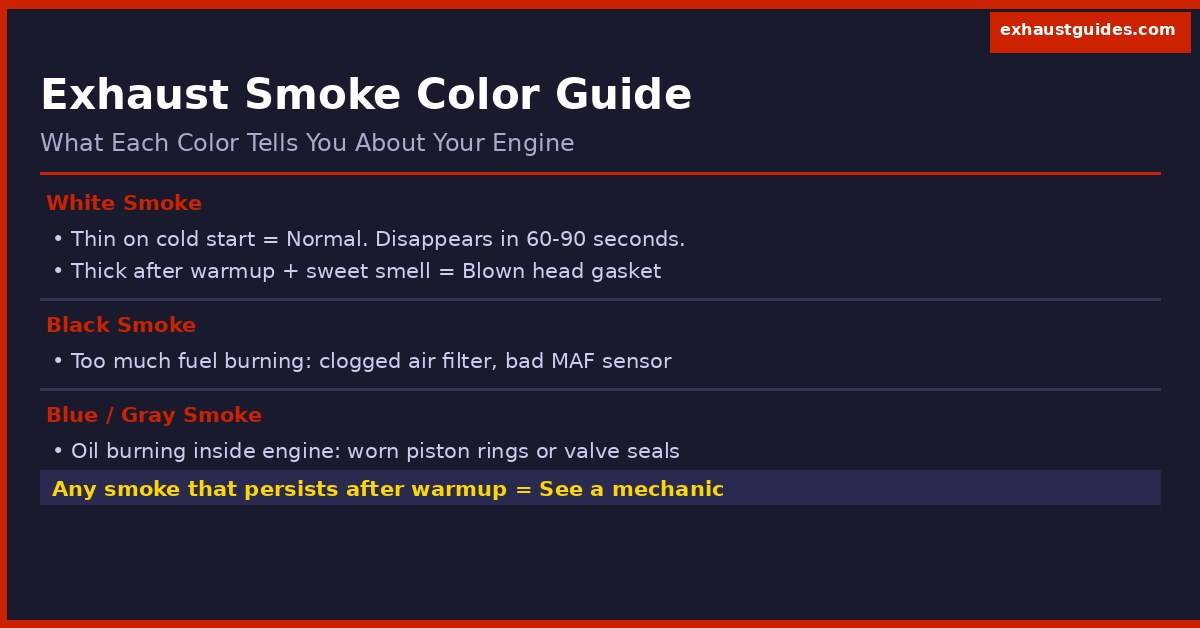
| Color | Most Likely Cause | Urgency |
|---|---|---|
| Thin white (cold start) | Normal condensation | None |
| Thick white (after warmup) | Coolant in combustion chamber | Stop driving — serious |
| Black | Running rich / excess fuel | Fix soon |
| Blue / blue-gray | Burning oil | Fix soon to urgent |
| Gray | Burning oil or transmission fluid | Fix soon |
White Exhaust Smoke
Thin White on Cold Start — Normal
A light white mist for the first 60–90 seconds on a cold morning is simply water vapor from condensation burning off. It disappears as the exhaust heats up. This is completely normal in every petrol and diesel vehicle. No action needed.
Thick White After Warmup — Serious
Thick white smoke that continues after the engine is warm, especially with a sweet smell like antifreeze, almost always means coolant is entering the combustion chamber — typically a blown head gasket. Other signs: coolant level drops without a visible leak, milky oil on the dipstick, engine overheating. Stop driving and have the vehicle towed. Cost to repair: $1,000–$2,500.
Black Exhaust Smoke
Black smoke means the engine is burning too much fuel — running rich. Unburned fuel exits as black soot. Common causes: clogged air filter (check this first — $15–$40 fix), faulty fuel injectors, bad MAF sensor, stuck fuel pressure regulator. Do not ignore persistent black smoke — it destroys catalytic converters over time.
Blue or Blue-Gray Smoke
Blue smoke means oil is burning inside the engine. Common causes: worn piston rings (most common in high-mileage engines), worn valve stem seals, failing turbocharger seal, or overfilled engine oil. Monitor your oil level — more than a quart every 1,000 miles means significant wear. Blue smoke also fouls spark plugs and oxygen sensors.
Gray Smoke
Gray smoke often indicates oil burning (similar to blue), a cracked vacuum line drawing transmission fluid into the intake, or a stuck PCV valve ($5–$20 to replace). Check the PCV valve first — it is the cheapest possible fix.
Frequently Asked Questions
Is white smoke on startup always normal?
Yes, if it disappears within 60–90 seconds. If it persists past warmup or smells sweet, have the cooling system inspected immediately.
Can exhaust smoke damage my catalytic converter?
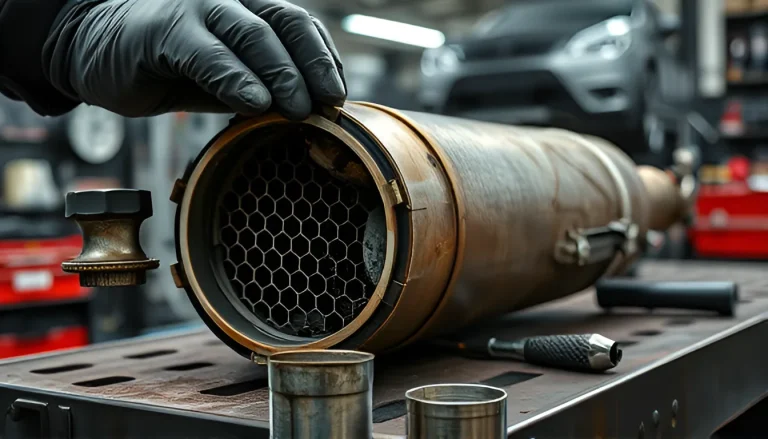
Yes. Both black smoke (excess fuel) and blue smoke (oil) contaminate and destroy catalytic converters. Fix the underlying engine issue before replacing a smoke-damaged converter or the new one will fail too.
Noticed exhaust leaking from the pipes themselves? Check our guide on 7 exhaust leak symptoms to diagnose the problem before your mechanic visit.