Catalytic Converter Replacement Cost: Full 2026 Breakdown
Disclosure: This post contains affiliate links. If you purchase through our links, we may earn a small commission at no extra cost to you. We only recommend products we genuinely trust.
The catalytic converter is almost always the most expensive single component in your exhaust system — and for good reason. It contains platinum, palladium, and rhodium, precious metals that trade at hundreds of dollars per ounce.
When yours needs replacing, knowing the realistic cost prevents you from overpaying. Here is a complete 2026 breakdown.
Catalytic Converter Replacement Cost by Vehicle
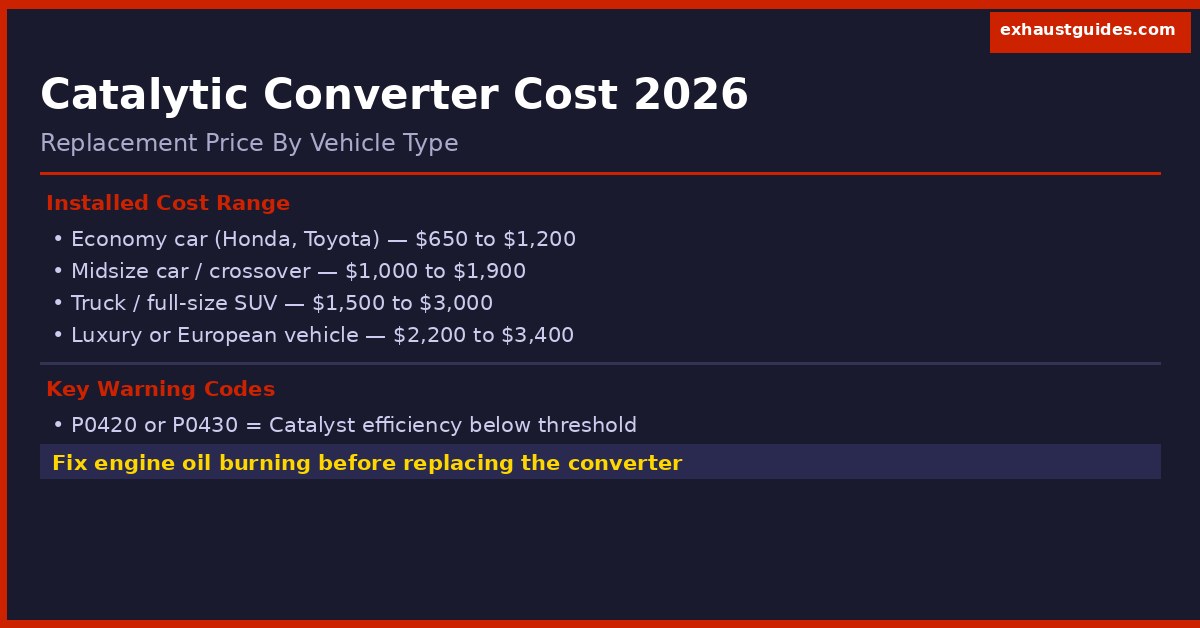
| Vehicle Type | Parts | Labor | Total Installed |
|---|---|---|---|
| Economy car (Honda, Toyota) | $500–$900 | $150–$300 | $650–$1,200 |
| Midsize car or crossover | $800–$1,500 | $200–$400 | $1,000–$1,900 |
| Truck or full-size SUV | $1,200–$2,500 | $300–$500 | $1,500–$3,000 |
| Luxury or European vehicle | $1,800–$2,800 | $400–$600 | $2,200–$3,400 |
Why Is It So Expensive?
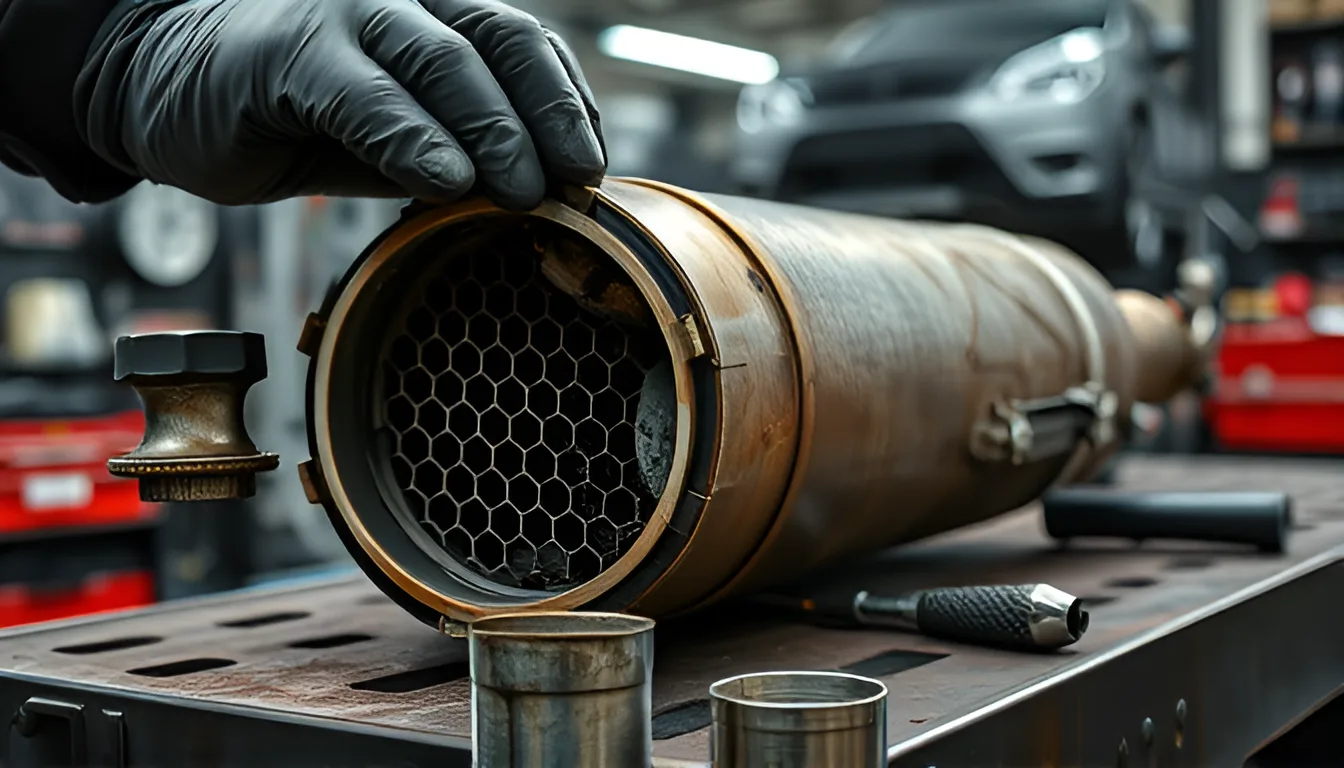
The converter itself accounts for 70–80% of the total repair cost. Inside is a ceramic honeycomb coated with platinum group metals — the actual catalysts that convert harmful emissions into less toxic gases. These metals are traded as commodities, which is also why catalytic converter theft has become so common.
OEM vs Aftermarket vs High-Flow
| Type | Cost | Pros | Cons |
|---|---|---|---|
| OEM (dealer) | $800–$2,500 | Guaranteed fit, emissions compliant | Most expensive |
| Aftermarket direct-fit | $200–$800 | 30–60% cheaper, quality brands | Verify state compliance |
| High-flow performance | $200–$600 | Better flow, stays emissions-legal | May not pass CA (CARB) tests |
Warning Signs Your Converter Is Failing
- Rotten egg or sulfur smell from exhaust
- Check engine codes P0420 or P0430
- Rattling from underneath (broken internal substrate)
- Failed emissions test
- Power loss under acceleration
- Engine running hot from restriction
Frequently Asked Questions
How long does a new catalytic converter last?
Most last 100,000–150,000 miles. Premature failure is almost always caused by engine problems — oil burning, coolant leaks into cylinders, or persistent engine misfires. Fix the engine issue first or the new converter will fail too.
Can I drive with a failing catalytic converter?
Short distances, yes — but a clogged converter restricts exhaust flow and can overheat. A rattling converter can fragment further and block the exhaust entirely. Get it replaced promptly.
For full exhaust system context, see our complete guide to exhaust system replacement costs.