Bad Catalytic Converter Symptoms: 7 Warning Signs You Shouldn’t Ignore
A bad catalytic converter can cripple your car before you notice the check engine light. Knowing the bad catalytic converter symptoms early can save you from a costly engine repair.
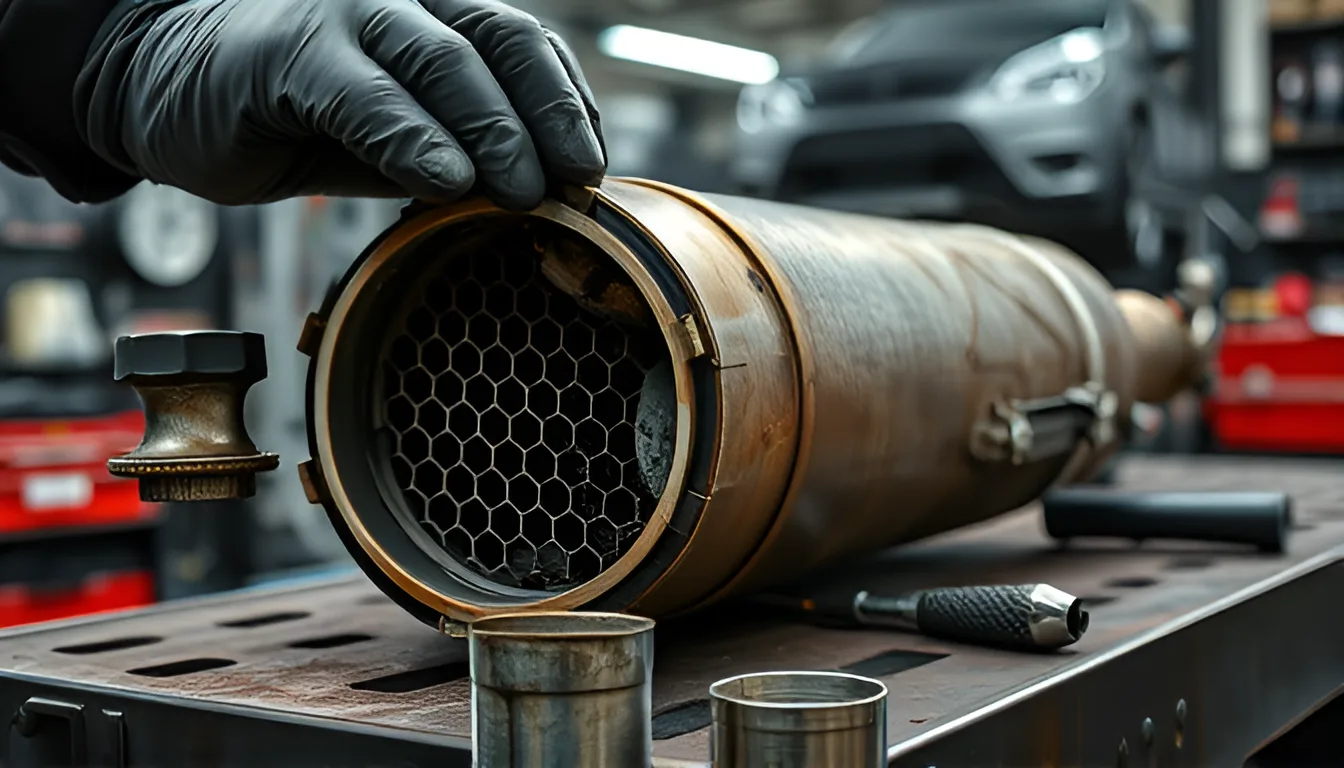
What Does a Catalytic Converter Do?
The catalytic converter converts toxic combustion gases — carbon monoxide, hydrocarbons, nitrogen oxides — into less harmful emissions. When it fails, those gases pass through unprocessed, costing you power and fuel economy.
7 Bad Catalytic Converter Symptoms
1. Sulfur or Rotten Egg Smell From the Exhaust
A functioning converter neutralizes hydrogen sulfide. When it fails, that compound escapes as a sulfur smell from the tailpipe — especially under acceleration or at idle.
2. Check Engine Light (Codes P0420 / P0430)
These OBD-II codes specifically flag catalyst efficiency below the required threshold. Your downstream oxygen sensor detects too many unburned particles. Check our guide on exhaust leak symptoms to rule out other causes first.
3. Reduced Engine Performance
A clogged converter restricts exhaust flow, building back pressure that suffocates combustion. You’ll feel sluggish acceleration and reduced power at highway speeds.
4. Poor Fuel Economy
When exhaust flow is restricted, your engine works harder and burns more fuel. According to the EPA, a failing emissions component can cut fuel efficiency by 10-20%.
5. Rattling Sound Underneath the Car
The ceramic honeycomb substrate inside the converter can crack and break apart. When pieces rattle inside the canister you’ll hear a metallic sound on startup. See our guide on exhaust rattling when idle to diagnose the exact cause.
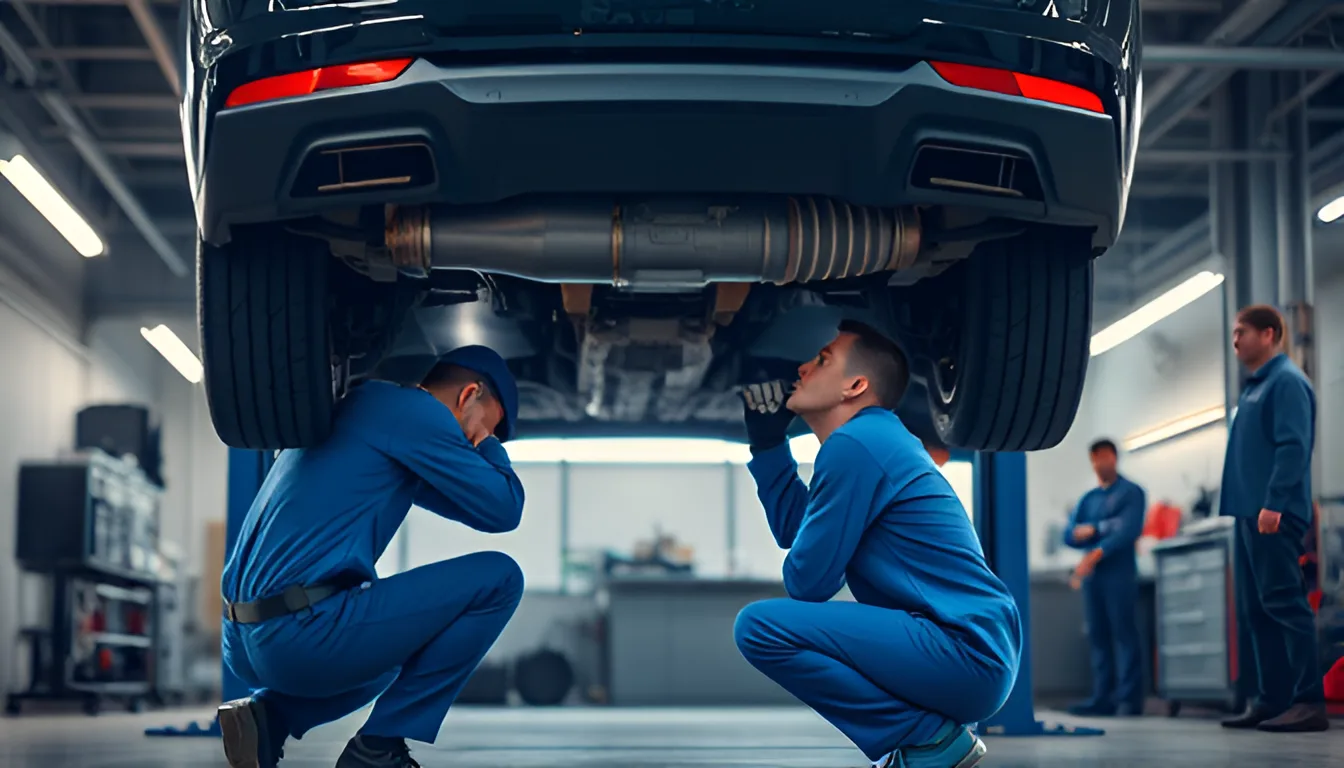
6. Engine Misfires or Hard Starting
Severe clogging creates so much back pressure that the engine can’t complete its exhaust stroke. This causes misfires, rough idle, or difficulty starting — especially when the engine is hot.
7. Failed Emissions Test
A degraded catalytic converter will show elevated CO and hydrocarbon readings that exceed legal limits during inspection.
What Causes Catalytic Converter Failure?
- Oil or coolant burning: Engine leaks contaminate the substrate
- Rich fuel mixture: Excess unburned fuel overheats the ceramic honeycomb
- Physical damage: Road debris or corrosion can crack the casing
- Age and mileage: Most converters last 100,000-150,000 miles
What to Do Next
Start with a free OBD-II scan at any auto parts store. If P0420 or P0430 appear, confirm with a mechanic. If the substrate is rattling, replacement is unavoidable. See our full guide on catalytic converter replacement cost and compare with the full exhaust system replacement cost if multiple components are failing.
Frequently Asked Questions
What are the first signs of a bad catalytic converter?
The most common early signs include a sulfur or rotten egg smell, reduced acceleration, and a check engine light (P0420/P0430). Lower fuel economy often appears before other symptoms.
Can I drive with a bad catalytic converter?
Short distances are possible, but long-term driving risks engine damage, emissions test failure, and a potential fire hazard if the converter overheats.
How much does it cost to replace a catalytic converter?
Replacement typically costs $900-$2,500 depending on vehicle make and model. Labor adds $150-$400 on top of the part cost.
Will a bad catalytic converter throw a check engine light?
Yes. A failing converter commonly triggers OBD-II codes P0420 or P0430, indicating catalyst efficiency below the required threshold.
Can a catalytic converter unclog itself?
Mild carbon buildup can sometimes clear with a long highway drive at high RPMs, but a fully clogged or physically damaged converter must be replaced.