Exhaust Rattling When Idle: Causes and How to Fix It
An exhaust rattle when your car is idling is one of the most annoying problems in automotive ownership — loud enough to embarrass you at every red light, and alarming enough to make you wonder if your engine is falling apart.
The good news: most exhaust rattles have simple, cheap fixes. This guide covers every common cause, how to find the source, and what each repair costs.
The 5 Most Common Causes
1. Loose or Broken Heat Shield (Most Common)
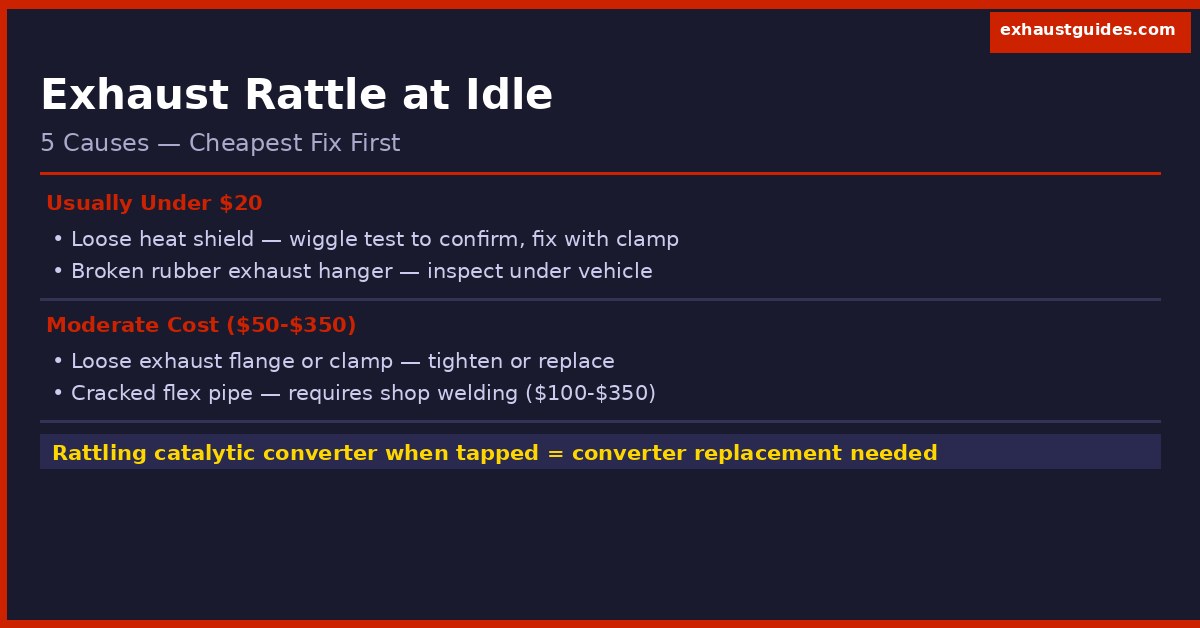
Heat shields are thin metal panels that wrap around sections of your exhaust. The bolts corrode over time and the shield vibrates against the pipe or chassis at certain RPMs — producing a tinny rattle. This is the single most common cause of exhaust noise in vehicles over 5 years old.
How to confirm: With the engine off and exhaust cool, wiggle each heat shield. A loose one moves noticeably.
Fix: Tighten bolts, or secure with a large hose clamp if bolts are gone. Cost: $0–$15. Time: 15–30 minutes.
2. Broken Exhaust Hanger
Rubber exhaust hangers suspend the pipe from the chassis and absorb vibration. When they crack or tear, the pipe drops and contacts the chassis — producing a metallic knock especially at idle. How to confirm: Look under the car at each rubber hanger. Cracked rubber or a pipe resting on the chassis is the giveaway. Fix: Replace the hanger ($5–$20 each). Most replacements take under 30 minutes.
3. Broken Catalytic Converter Substrate
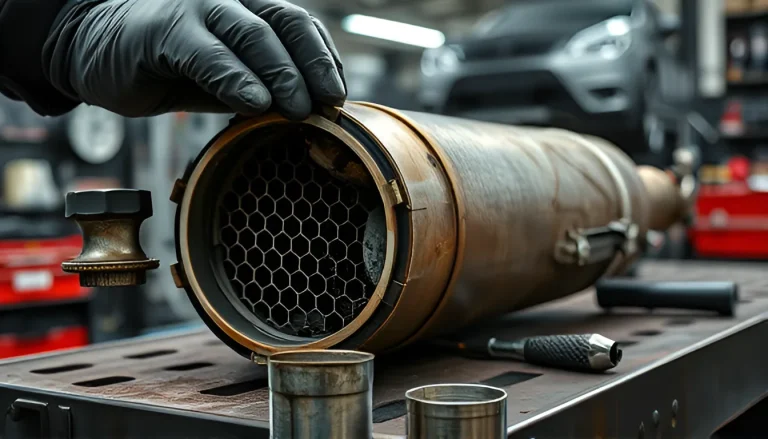
Inside every catalytic converter is a ceramic honeycomb that can crack from overheating or impact. The broken pieces rattle inside the metal shell — loudest on startup and when tapping the converter. Fix: The converter must be replaced. Cost: $650–$3,500 depending on vehicle.
4. Loose Exhaust Flange or Clamp
When flange bolts loosen from heat cycling, the joint allows slight movement that creates a knock under exhaust pulses. A loose flange also causes an exhaust leak, so you may hear hissing alongside the rattle. Fix: Apply penetrating oil and tighten. Cost: $0 DIY or $50–$150 at a shop.
5. Cracked or Collapsed Flex Pipe
The flex pipe absorbs engine movement. When it collapses internally or cracks, it creates both a rattle and an exhaust leak. Fix: Must be cut out and replaced or welded. Cost: $100–$350 at a muffler shop.
Cost Summary
| Cause | DIY Cost | Shop Cost |
|---|---|---|
| Loose heat shield | $0–$15 | $40–$80 |
| Broken exhaust hanger | $5–$20 | $50–$120 |
| Loose flange / clamp | $0–$15 | $50–$150 |
| Cracked flex pipe | Not practical | $100–$350 |
| Failed catalytic converter | $650+ parts | $800–$3,500 |
Frequently Asked Questions
Why does the rattle only happen at certain RPMs?
Every loose component has a natural resonant frequency. At certain engine speeds the exhaust pulses match that frequency and cause the loose part to vibrate. This is why the rattle may disappear above idle speed.
Think your rattle might be an exhaust leak? Read our exhaust leak symptoms guide to tell the difference.