How Long Does a Catalytic Converter Last? (And What Shortens Its Life)
Most drivers don’t think about their catalytic converter until something goes wrong. So how long does a catalytic converter last — and what shortens its life? Knowing the answer helps you avoid a surprise $2,000 repair.
Average Catalytic Converter Lifespan
Under normal driving conditions, a catalytic converter typically lasts 100,000 to 150,000 miles. Many OEM converters on well-maintained vehicles last even longer. Aftermarket converters often reach 50,000-80,000 miles because they use less precious metal in the substrate coating.
5 Factors That Shorten Catalytic Converter Life
1. Engine Oil Burning
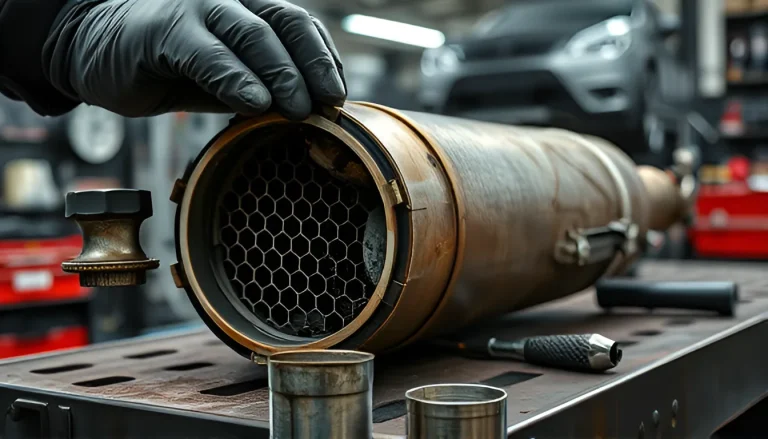
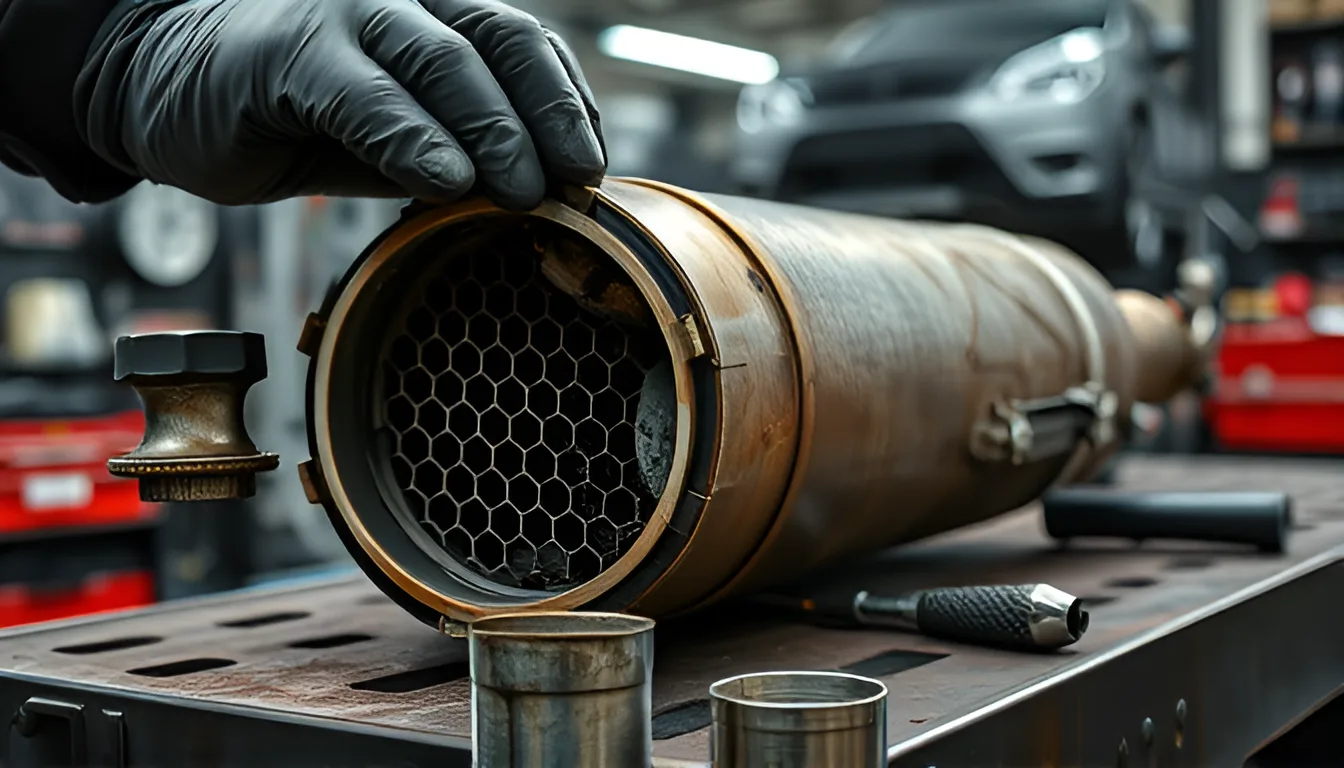
This is the #1 killer of catalytic converters. When oil burns in the combustion chamber due to worn piston rings or valve seals, it coats the catalyst substrate with ash, plugging the honeycomb structure. Regular oil changes with the correct viscosity are the most effective preventive measure.
2. Coolant Leaks Into the Engine
A blown head gasket allows coolant to enter the combustion chamber. Coolant silicates poison the precious metals (platinum, palladium, rhodium) inside the converter, permanently degrading catalyst performance.
3. Rich Fuel Mixture
When the engine runs rich — too much fuel relative to air — unburned hydrocarbons enter the converter. It overworks burning these off, generating extreme heat that melts the ceramic substrate. Address failing O2 sensors and fuel injectors promptly.
4. Physical Damage
The ceramic honeycomb is fragile. A hard impact from road debris or bottoming out can crack the substrate. You’ll hear rattling — check our exhaust rattling when idle guide to confirm the source.
5. Frequent Short Cold Trips
Converters work efficiently only above 400-600°C. Frequent short trips that never fully warm the engine allow moisture to accumulate inside, accelerating internal corrosion.
OEM vs. Aftermarket: Which Lasts Longer?
OEM converters use higher concentrations of precious metals and more durable materials — they last longer but cost significantly more. Aftermarket converters from brands like MagnaFlow or Walker are a solid middle ground, meeting EPA standards at lower cost. See our catalytic converter replacement cost guide to compare pricing.
How to Extend Your Catalytic Converter’s Life
- Change oil on schedule — most impactful maintenance item
- Fix oil and coolant leaks immediately
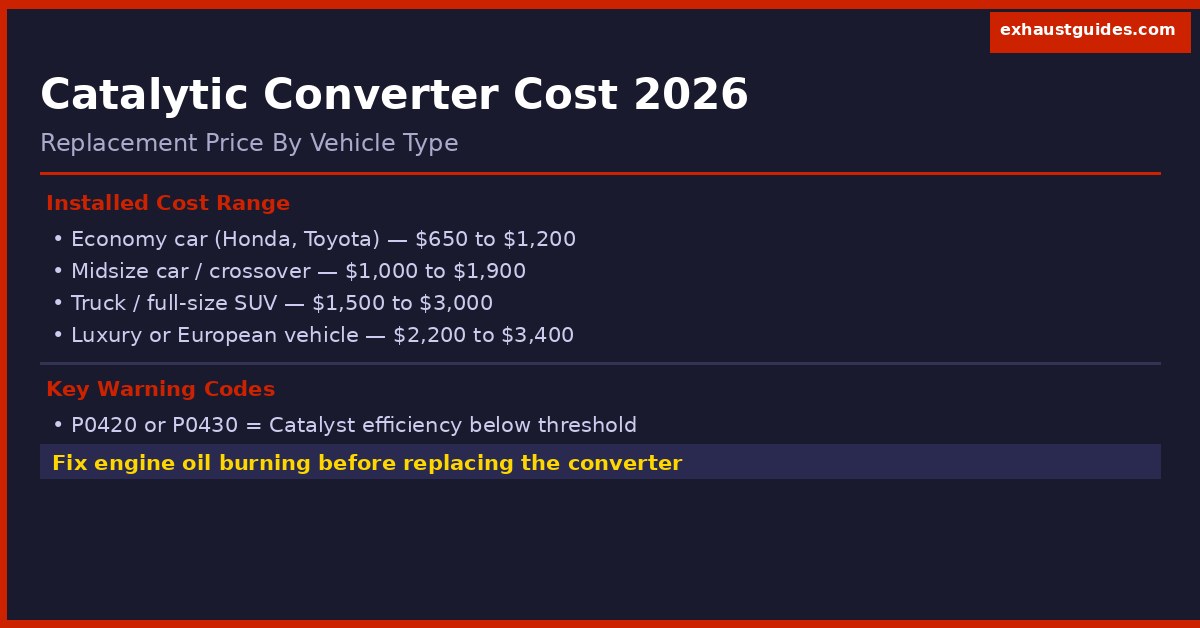
- Respond to P0420/P0430 codes promptly
- Use the correct fuel grade for your engine
- Take occasional highway drives to clean carbon deposits
When replacement is necessary, compare your options with our full exhaust system replacement cost guide. For EPA emissions standards background, see EPA vehicle certification guidelines.
Frequently Asked Questions
How long does a catalytic converter last?
Most catalytic converters last 100,000 to 150,000 miles under normal conditions. OEM units on well-maintained vehicles can last the car’s lifetime.
What shortens catalytic converter life?
Oil or coolant burning, rich fuel mixtures, physical damage from road debris, and frequent short cold trips are the main causes of premature failure.
How do I know when to replace my catalytic converter?
Key signs include check engine codes P0420/P0430, sulfur smell, reduced performance, rattling underneath, and failed emissions tests.
Can I make my catalytic converter last longer?
Yes. Change oil regularly, fix leaks immediately, use correct fuel, take occasional highway drives, and respond to check engine lights promptly.
Is it worth replacing a catalytic converter on a high-mileage car?
If the engine is sound and the car is otherwise in good shape, replacement makes sense. If multiple major repairs are needed, total costs may exceed the vehicle’s value.