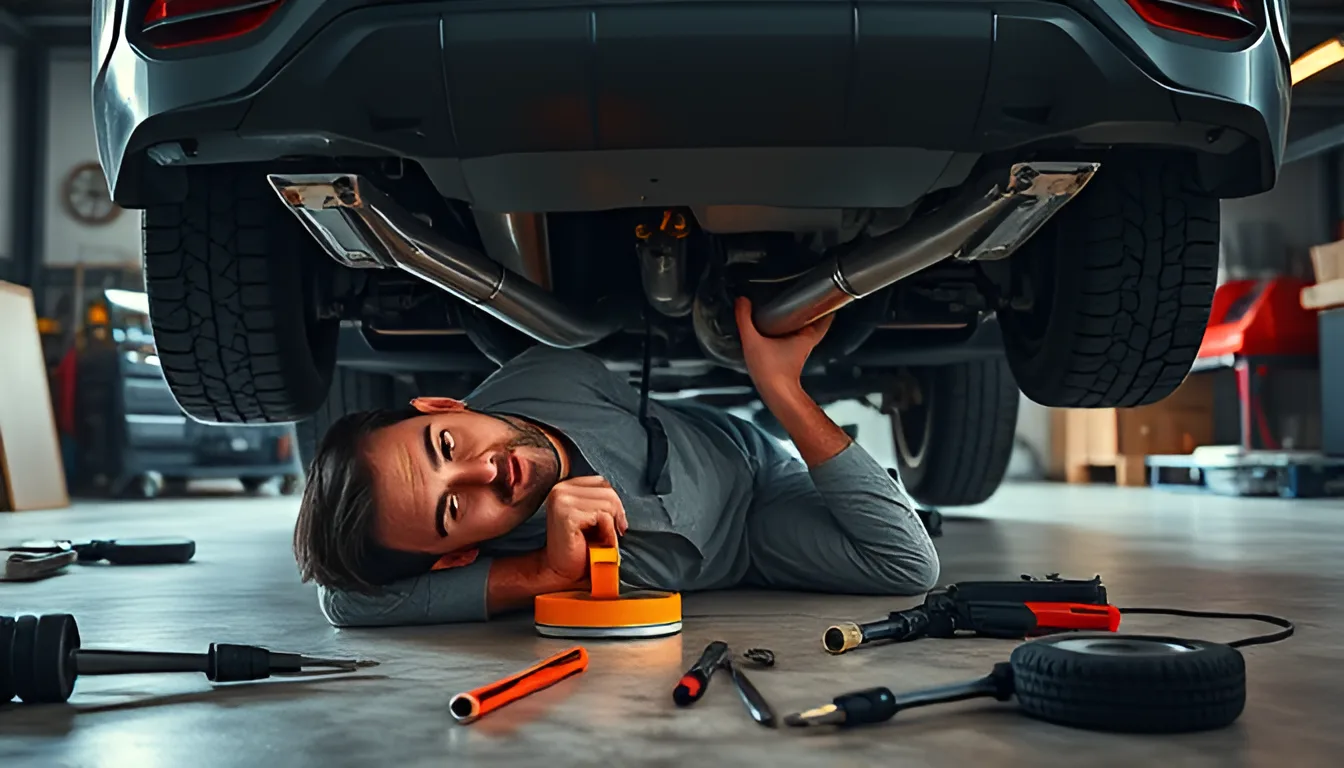
How to Fix an Exhaust Leak Without Going to a Mechanic
Exhaust leak repairs at a shop can run $250–$600 or more. But for many common leaks, a $15 tube of exhaust sealant or a $40 gasket is all you need — and the repair takes less than two hours.
This guide covers every DIY exhaust leak repair method, from the simplest temporary fix to a proper permanent gasket replacement — with costs and honest advice on what works.
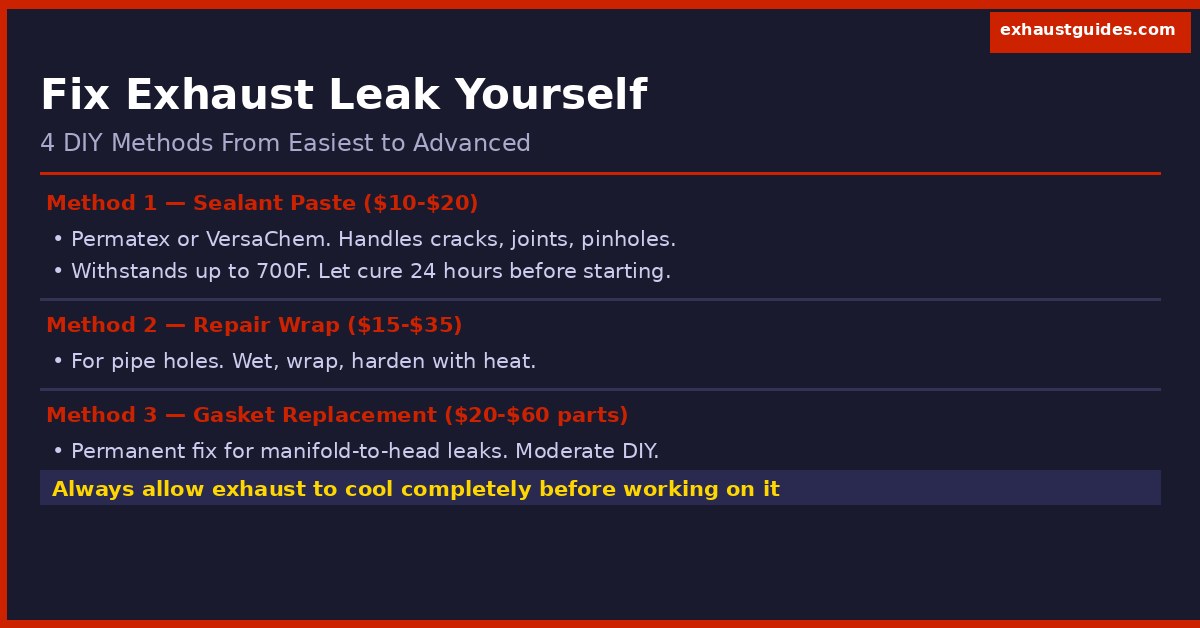
Before You Start: Safety Rules
Always let the exhaust cool completely before touching it — at least 45–60 minutes after driving. Work with the car on jack stands, never just a floor jack. Wear heat-resistant gloves and safety glasses.
Method 1 — Exhaust Sealant Paste (Best for Small Cracks and Joints)
Products like Permatex Exhaust System Sealant ($10–$18) and VersaChem Muffler Cement ($12–$20) cure to a hard compound that withstands temperatures up to 700°F. Best for: pinholes, hairline cracks, loose pipe joints, and leaking flanges.
- Let the exhaust cool completely
- Wire brush the area around the leak — remove all rust and debris
- Apply sealant generously, covering 2 inches on each side of the leak
- Let cure 24 hours before starting the engine
- On first startup, idle for 15 minutes to heat-cure the compound
Limitation: Not effective on manifold-to-head gasket leaks where temperatures exceed 1,000°F. Use for mid-pipe, muffler, and pipe joint leaks only.
Method 2 — Exhaust Repair Wrap ($15–$35)
Exhaust repair tape (DEI Repair Wrap, Holts Exhaust Bandage) is a fiber-reinforced wrap that hardens when heated. Works on mid-pipe holes and hairline cracks in the muffler body. Wet the tape, wrap tightly overlapping 50%, allow to air-dry. Lasts 6–18 months depending on heat exposure.
Method 3 — Manifold Gasket Replacement ($20–$60 parts)
If the leak is at the manifold-to-head joint — that ticking noise on cold starts — a new gasket is the correct permanent fix. This is a moderate DIY job.
- Spray all manifold bolts with penetrating oil the night before
- Let the engine cool completely — at least one hour after driving
- Remove manifold bolts carefully, working evenly across the pattern
- Clean both mating surfaces with a wire brush
- Install new gasket (most modern gaskets require no sealant)
- Torque bolts to spec — check your vehicle service manual
Method 4 — Exhaust Pipe Clamp ($10–$25)
If two pipe sections have separated, a universal exhaust clamp reconnects them without welding. Size the clamp to match your pipe diameter (most standard vehicles use 2 to 2.5 inches).
When to Skip DIY and Call a Shop
- Cracked exhaust manifold — requires welding or full replacement
- Rusted-through pipe sections — need cutting and welding
- Any leak very close to the firewall or cabin
Frequently Asked Questions
How do I find an exhaust leak?
With the engine idling, carefully move your hand (without touching) along the exhaust system and feel for puffs of hot gas escaping. You can also spray soapy water on joints — bubbles indicate a leak. Only do this after confirming the area is safe to approach.
Will a DIY repair pass an emissions inspection?
If the repair fully seals the leak, yes. The inspector looks for exhaust escaping before the tailpipe. A properly sealed joint will not affect the emissions test result.
Not sure if you have an exhaust leak? Check our guide on the 7 most common exhaust leak symptoms to confirm before starting any repair.