Best Truck Exhaust Gaskets (2026): Based on Specs and Reviews
For trucks and heavy-duty exhausts, start with multilayer steel for flat, high-heat flanges, graphite composites for uneven flanges, and spiral-wound rings only where joint loads stay stable. Wrong gasket choice leads to leaks, soot at the joint, blown turbo response, and repeated labor on parts that should have sealed the first time. This guide matches gasket materials and designs to common truck failure modes, then points you to the best fit by joint type.
Quick comparison
| Product | Badge | Best for | Price | ||
|---|---|---|---|---|---|
 | 3" Exhaust Flange Gasket with 3 Exhaust Bolts Toolwedfish | Our pick | 3" · 3-bolt · flange repair kit | $14.99 Price as of 2 Nov 2026 | View |
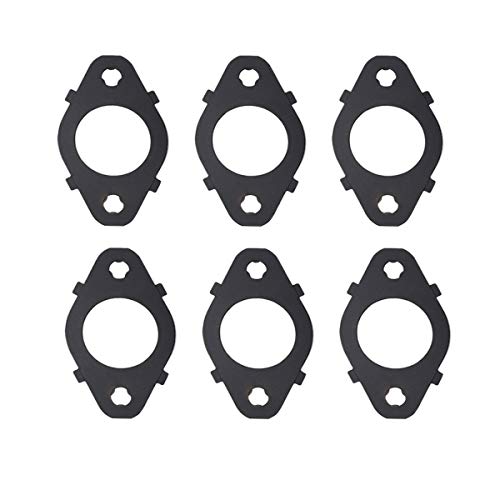 | Diesel Exhaust Manifold Gasket Set 3946275 5266422AIB2C | Also great | Cummins · 6 pcs · manifold gasket set | $15.58 Price as of 2 Nov 2026 | View |
 | Turbocharger Mounting Gasket Set for 2011-2014 Ford 6.7LIgniMax | Upgrade pick | 6.7L Power Stroke · turbo set · clamp kit | $56.99 Price as of 2 Nov 2026 | View |
 | GLSOWEE 2PCS Car Exhaust GasketGLSOWEE | Pair with it | 3" · 3-bolt · flange gasket pair | $4.59 Price as of 2 Nov 2026 | View |
This comparison helps you sort flange, turbo, and manifold jobs before you buy. Start with joint condition, then check whether you need hardware in the box or only the seal itself.
How we chose
The main filter was joint location: manifold flange, turbocharger, muffler-to-pipe, and combined intake/exhaust repair all fail in different ways. Then we looked at material type and heat tolerance, because heavy-duty exhaust heat, clamp load, and flange warpage punish the wrong construction fast.
We also weighed failure-mode resistance. A gasket that handles soot, vibration, and imperfect surfaces belongs higher than one that only fits the catalog number.
Finally, repair scope mattered. A gasket set or full gasket set can prevent missing-parts delays when hardware, clamps, or multiple seals are due at the same time.
3" exhaust flange gasket kit: best for flange repair jobs
- Includes gasket plus matching bolts and hardware
- Stainless steel offers heat, rust, and water resistance
- Works on manifold and muffler flange connections
This wedfish kit fits truck owners who need a 3-bolt flange repair with matching bolts and a stainless steel gasket. It is the better call when the job needs hardware as much as sealing, such as a corroded flange, a muffler connection, or a manifold-side flange that has been opened before.
The main strength is completeness. Stainless steel helps with heat, rust, and water resistance, and the included bolts reduce the odds of reusing stretched hardware that keeps a joint from clamping evenly.
The drawback is scope. A 3" flange kit will not solve warped mating surfaces or an off-size joint, and it is not the right choice for a turbocharger seal that sees much higher thermal and pressure load.
Cummins diesel exhaust manifold gasket set: best for Cummins manifold repairs
- Direct replacement for Cummins diesel engines
- Built to OEM specifications and functions
- Aims to reduce exhaust manifold leak chance
This AIB2C set is aimed at Cummins 5.9L and 6.7L ISB B-Series repairs where the exhaust manifold needs an OEM-style replacement, according to the product description. It fits truck owners and fleet shops that want a direct replacement part for manifold leak work rather than a universal gasket that needs trimming or adaptation.
The six-piece set format matters when the manifold job includes multiple sealing points. That reduces the chance of missing a seal during a roadside repair or a downtime-sensitive bay job.
The drawback is obvious: it is engine-specific. If the flange is warped, the bolts are reused, or the problem sits at the turbo or muffler joint instead of the manifold, this set is not the right answer.
Turbocharger mounting gasket set: best for Ford Super Duty turbo joints
- Fits Ford Super Duty 6.7L Power Stroke models
- Multi-layer steel and fluoroelastomer sealing materials
- Includes left, right, and downpipe V-band clamps
This IgniMax set is listed for 2011-2014 Ford 6.7L Power Stroke Super Duty trucks and is built for the hot, high-pressure side of the exhaust system. It suits turbocharger mounting work where sealing quality and clamp stability matter more than a simple pipe joint repair.
Multi-layer steel plus fluoroelastomer sealing materials give it a heavier-duty profile than a basic fiber gasket. The included left, right, and downpipe V-band clamps also make it more useful when the repair scope includes hardware at the same time.
The drawback is fitment narrowness. It is a strong option only for the exact engine and model range it lists, and it will not help if the flange surface is deeply pitted or the problem is a manifold flange elsewhere in the exhaust path.
3" exhaust pipe flange gaskets: best for budget flange sealing
- Metal and graphite composite construction
- Made for turbochargers, manifolds, mufflers, and pipes
- Slotted bolt holes help installation
This GLSOWEE pair is a low-cost pick for 3" three-bolt exhaust flange work on trucks, SUVs, and similar exhaust joints. It is the kind of gasket to consider when you need a basic seal for a flange repair and the mating surfaces are still reasonably sound.
Its metal and graphite composite construction is the main selling point, especially for joints that see heat cycling and some movement. Slotted bolt holes can also help when the holes and bolts do not line up perfectly during reassembly.
The drawback is that this is a compromise part. It is not a full repair kit, and it is less reassuring for severe flange warpage, repeated blowout repairs, or turbocharger joints that demand a more specialized sealing stack.
Exhaust manifold gasket: best for warped flange repairs
For a truck manifold job, start with the flange condition. If the face is flat and the clamp load is even, a metallic gasket or MLS-style seal is often the better match; if the flange has minor irregularity, a composite can handle more surface variation. For badly warped surfaces, the gasket is only part of the fix.
Where it fits on a truck
An exhaust manifold gasket seals the manifold flange to the cylinder head or to the adjoining exhaust joint, depending on the engine design. In heavy-duty work, it is one of the most common repair parts because manifold heat, vibration, and repeated heating cycles are hard on the seal.
Commercial vehicle catalogs often list manifold gaskets as metallic or turbocharger-specific, and many sell them inside gasket sets. MAHLE reports coverage for 900,000 applications, 10,000+ part numbers, and says 99% of parts meet or exceed OE performance, including heavy duty applications.
When metal construction helps
Metal construction helps when clamp load is high, the flange is flat, and the joint needs sealing under repeated thermal stress. Banco describes commercial vehicle gaskets for trucks and buses as able to survive extreme loads and thermal stress, and it lists multi-layered steel designs for turbocharger applications.
That makes metal and MLS useful where blowout risk is driven by pressure and heat rather than gasket softness. A metal seal also handles movement better than a fragile fiber piece when the hardware stays in spec.
Common leak signs
Common signs include ticking at startup, soot at the manifold edge, exhaust smell under the hood, and black streaks around the flange. If the leak comes back soon after a torque check, suspect warped surfaces, reused fasteners, or a gasket that cannot handle the joint load.
Exhaust turbocharger gasket: best for hot, high-pressure joints
Use a turbocharger gasket where heat and pressure are highest, especially on commercial vehicle exhaust systems that move a lot of thermal load through a small sealing area. The best fit is usually a metal or MLS-style design with hardware that matches the clamp system, because the turbo side punishes weak seals quickly.
Why turbo joints fail early
Turbo joints fail early when heat cycling loosens clamp load, the gasket creeps, or the flange face is no longer square. If the joint sees repeated boost and exhaust pulses, a soft gasket may start leaking long before the rest of the exhaust system shows trouble.
Banco specifically lists Exhaust Turbo Charger Gasket in its commercial vehicle category list and says these products resist hydrocarbons, coolant, and lubricants. That matters in truck bays where contamination and heat can arrive together.
When to replace hardware with the gasket
Replace hardware with the gasket when the joint depends on clamp force for its seal, especially on V-band or turbo mounting connections. Reusing fatigued clamps invites uneven load, and uneven load can turn a correct gasket into a repeat leak.
Fitment checks before install
Check bolt pattern, flange face condition, turbo outlet shape, and downpipe alignment before you install anything. A common first-timer mistake is fitting the correct gasket to a misaligned pipe, then blaming the gasket when the joint was never square.
MLS gasket: best for clamp-load stability
MLS gaskets belong where the joint needs stable clamping under heat, and where the flange faces are flat enough to take advantage of the layered steel construction. They are a strong choice for heavy-duty sealing when durability and clamp load matter more than compressibility.
What multi-layer steel does better
Multi-layer steel spreads load across several layers, which helps the gasket resist blowout and hold its shape under repeated heating and cooling. That is why MLS is often favored in high-heat truck repairs where seal integrity matters under extreme loads.
Compared with a plain composite, MLS is less forgiving of damaged faces but more dependable when the joint is machined well and the hardware is sound.
Where MLS belongs in heavy-duty repair
MLS belongs at flat manifold, turbo, and other high-load exhaust joints where clamp consistency is the priority. It is also a practical choice when the repair needs a long service interval and the rest of the assembly can support a tighter seal standard.
Limits of MLS on damaged surfaces
MLS is not the right answer for badly pitted or visibly warped flanges. If the surface prep is poor, the gasket may still leak because steel cannot compensate for a joint that no longer sits flat.
Exhaust gasket selector table
| Joint location | Material type | Heat and load tolerance | Common failure mode | Best-use scenario |
|---|---|---|---|---|
| Exhaust manifold flange | MLS or metallic | High heat, high clamp load | Warped flange, bolt relaxation, soot at edge | Flat flange repairs on diesel trucks |
| Turbocharger outlet or mounting joint | MLS or turbo-specific metal set | Very high heat and pressure | Blowout, clamp slip, thermal cycling | Commercial vehicle turbo repair with sound hardware |
| Muffler-to-pipe flange | Composite or stainless flange gasket | Moderate heat, moderate load | Rust, vibration, joint movement | Truck exhaust repair where service access is limited |
| Combined intake/exhaust manifold | Set or standalone composite/metal part | Moderate to high, depends on engine | Cross-leaks, coolant or lubricant contamination | Commercial vehicle catalog repair with multiple seals due |
| Three-bolt exhaust flange | Graphite composite with metal reinforcement | Moderate heat, moderate load | Uneven clamp, flange pitting | Fast repair on a truck exhaust flange with decent surfaces |
What exhaust gasket is best for trucks?
For trucks and heavy-duty exhausts, the best gasket depends on the joint, not the vehicle badge. Use MLS for flat, hot, high-load flanges; choose composite for uneven surfaces; and use a gasket set when the repair involves more than one seal or any hardware that should not be reused.
That is the safest answer because truck failures are usually caused by heat, load, and surface condition together. A manifold leak, turbo leak, and muffler flange leak do not need the same material to fix them well.
Match the gasket to the joint
Manifold flanges want a seal that handles pressure and repeated thermal stress. Turbo joints need the highest heat and pressure resistance. Muffler and pipe connections can often use a simpler flange gasket if the faces are still serviceable.
Choose the material by failure mode
If the failure is blowout, move toward MLS or metal. If the failure is seepage from minor flange unevenness, a composite with some compliance may seal better. If the failure comes from contamination, use a gasket type that resists hydrocarbons, coolant, and lubricants.
Use the kit when more than one seal is due
Choose a gasket set or full gasket set when the job includes several sealing points, clamps, or fasteners. That reduces missing-parts delays and makes more sense for fleet downtime than ordering single pieces one by one.
Do heavy-duty truck exhaust gaskets need sealant?
Most heavy-duty exhaust gaskets should not need sealant if the joint, hardware, and face condition are correct. Sealant becomes a repair aid only when the surface is damaged or the gasket design explicitly calls for it; otherwise, excess sealant can interfere with clamp load and leak again.
When sealant is not needed
Do not add sealant to a clean MLS or metal gasket on a flat flange just because the joint is exhaust-related. A correctly matched gasket should seal on its own when the parts are aligned and torqued properly.
When surface damage changes the call
If the flange has pitting, minor scoring, or old gasket residue that cannot be cleaned fully, a thin approved sealant may help on some composite-style joints. That said, surface prep should come first; sealant is not a fix for a bent flange.
Why overuse can cause leaks
Too much sealant can squeeze into the seal path, keep the gasket from seating, or burn away and leave a leak path behind. On a truck exhaust flange, that often creates a repeat repair that could have been avoided with proper cleaning and the right gasket type.
Which one should you buy?
Fleet buyers should start with the gasket set that covers the full repair scope, especially when downtime costs more than the part itself. Owner-operators usually do better with the exact joint-specific gasket and matching hardware, because the wrong part turns a quick repair into a second teardown.
Best choice for fleets
Pick the most complete kit available for the job. A set with bolts, clamps, and every required seal reduces the chance of a return visit caused by one missing ring or a reused fastener that relaxes under load.
Best choice for owner-operators
Choose the gasket that matches the joint and the surface quality. If the flange is flat and the repair is single-point, a metal or MLS gasket is usually the cleaner buy; if the joint is rougher, a composite may buy more forgiveness.
Best choice for repeated leak repairs
If the same joint keeps leaking, stop treating it as a gasket-only problem. Recheck flange flatness, hardware condition, and alignment, then step up to a more rigid gasket or a more complete repair kit.
Say your 3" truck flange keeps leaving soot after a weekend haul, and the bolts are visibly rusted. A stainless flange kit with new hardware is usually a better fix than reusing old bolts and hoping a fresh gasket will make up for lost clamp load.
Suppose a Super Duty turbo joint leaks only after hard pulls and the flange faces look clean. That points toward a high-heat turbo set with proper clamps rather than a softer universal gasket that was never built for that pressure cycle.
Frequently asked questions
Which exhaust gasket material lasts longest on heavy-duty trucks?
MLS often lasts longest on heavy-duty trucks when the flange is flat and the hardware holds clamp load well. Metal and MLS materials resist heat and blowout better than softer options. A composite can still last longer if it matches a rougher surface that metal cannot seal cleanly.
How do I know if my exhaust gasket is leaking?
Common signs are ticking noises, soot near the flange, exhaust smell around the cab or hood, and black residue at the joint. On trucks, a leak may also show up as weak turbo response or a recurring noise after the engine warms up and the joint expands.
What should I look for in a heavy-duty exhaust gasket kit?
Look for the right joint type, the right material, and matching hardware. A good heavy-duty exhaust gasket kit should include every seal needed for the repair, plus bolts or clamps when those parts affect clamp load. For fleets, complete coverage matters because missing parts delay the truck.
How do I choose the right exhaust gasket for a truck exhaust flange?
Start with flange condition, then heat load, then joint design. Flat flanges can take MLS or metal, while pitted or slightly uneven flanges often need a more forgiving composite. If the flange has blown out before, also inspect hardware and surface prep before buying the same gasket again.