5 Best Diesel Exhaust Setups (2026): Based on Specs and Reviews
For most diesel trucks, a 4-inch turbo-back with emissions equipment retained where required is often a good fit; tow rigs often do best with a 4-inch mandrel-bent system and a quality muffler, while tuned street trucks may justify 4.5-inch only when airflow demands it. The wrong setup can add drone, hurt low-rpm drivability, fail inspection, or corrode early. This guide compares the best diesel exhaust setups by towing, sound, legality, fitment, and durability.
This guide is part of our How exhaust resonators affect sound and drone series.
Quick comparison
| Product | Badge | Best for | Price | ||
|---|---|---|---|---|---|
 |
4 Inch Diesel Muffler Exhaust, 4" Inlet 4" Outlet StraightJFKAI QIANG | Our pick | 4-inch straight-through · stainless steel · clamp kit | $73.99
Price as of 17 Oct 2026
|
View |
 |
All-Stainless Flowmaster Super 44 Mandrel-Bent Dual TruckMagnum Exhaust | Also great | Super 44 kit · all-stainless · dual tailpipes | $434.99
Price as of 17 Oct 2026
|
View |
 |
BIGREAT 5” Turbo Dual Smoker Diesel Exhaust Stack T PipeBIGREAT | Also great | 5-inch stack kit · chrome curved pipes · universal | $849.99
Price as of 17 Oct 2026
|
View |
 |
EVIL ENERGY 4" Resonator Muffler, 4" Inlet & Outlet (OD)EVIL ENERGY | Budget pick | 4-inch resonator · straight-through · universal | $42.99
Price as of 17 Oct 2026
|
View |
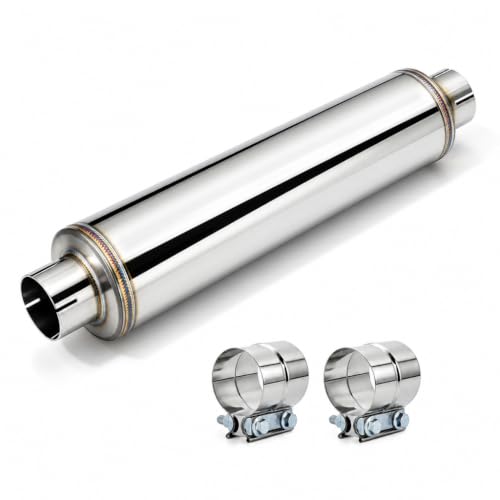 |
4" Inlet Diesel Muffler Exhaust with Clamp, StraightFortisArc | Pair with it | 4-inch straight-through · clamp-on · stainless steel | $73.99
Price as of 17 Oct 2026
|
View |
The trade-off is direct: freer exhaust can move gas better, but it can also raise noise, complicate emissions compliance, and create fitment problems on the wrong truck. The best diesel exhaust setup for your truck depends on towing load, local inspection rules, and how much cabin noise you can tolerate.
How we chose
Use case came first. A tow rig needs low drone and legal compatibility. A daily driver needs sane noise and easy fitment. A build aimed at maximum flow has different priorities.
Material mattered next. 409 stainless steel is the longer-life choice for many diesel trucks, while aluminized steel is a lower-cost option that can make sense in milder climates. Mandrel-bent tubing is preferred over crushed bends for consistent airflow through the system.
We also weighed emissions compatibility and installation complexity. Some layouts keep emissions devices in place more easily than others, and fitment changes with make, model, year, engine, body style, and trim. Hardware needs matter too, especially on older trucks with rusted fasteners.
Turbo-back exhaust: best for maximum flow
A turbo-back is the right choice when you want the most complete exhaust replacement after the turbo and your truck’s legal setup allows it. It suits off-road builds, tuned trucks, and owners who want a cleaner flow path and fewer restrictions than a rear-only change.
Its strength is range. By replacing piping after the turbo, it can reduce restriction more than a cat-back. That can matter on heavily loaded or modified diesels where exhaust routing and emissions hardware already limit options.
The drawback is compliance. A turbo-back may interfere with emissions devices or inspection requirements, so you need to confirm what must stay on the truck before buying. Fitment also varies more than with simpler rear sections, especially across body styles and later-generation chassis.
Cat-back exhaust: best for simpler bolt-on upgrades
A cat-back is usually the easiest path for a diesel owner who wants a cleaner sound and better flow without changing deeper exhaust hardware. It replaces the exhaust from the catalytic converter rearward, so it is often simpler to install than a turbo-back.
That makes it a strong middle-ground option for daily drivers and tow rigs that still need emissions equipment in place. If you want a straightforward bolt-on change with fewer legal and packaging concerns, this is the safer place to start.
The limitation is scope. A cat-back will not change the full upstream exhaust path, so it is less suitable if your goal is maximum flow or if the truck already has restrictive or damaged piping ahead of the converter.
Dual exhaust: best for sound and appearance
Dual exhaust is the better pick when you want a deeper tone, a more aggressive rear appearance, and a layout that splits exhaust flow to two tailpipes. On diesel trucks, it is often chosen for sound and style rather than pure towing duty.
That said, clearance matters. You need frame and axle checks on trucks with tight underbody packaging, because dual routing can clash with suspension travel, spare tire placement, and hitch hardware. Drone can also become a problem if the muffler and pipe length are not matched well.
The downside is that dual tailpipes are not automatically better for every diesel. On some trucks, they add packaging complexity without helping towing behavior, and the extra pipework can make installation more involved than a single-outlet setup.
What is the best exhaust setup for towing?
For towing, the best exhaust setup is usually a 4-inch mandrel-bent system with a quality muffler and emissions equipment kept intact when required. That combination helps control drone, keeps cabin noise manageable, and avoids the packaging and legality problems that can come with larger or more aggressive layouts.

Diameter matters here. A 4-inch system is often the better balance for tow-heavy diesel trucks because it can improve flow without becoming so large that it sacrifices low-speed manners or adds unnecessary noise. A 5-inch system is not automatically better, especially if the truck spends most of its life pulling at moderate rpm.
Picture a 2500-series truck that tows a trailer every weekend and already drones at highway speed. A larger pipe and a loud muffler can make the cab harder to live with. In that case, a controlled 4-inch mandrel-bent system is the more practical move.
Diesel exhaust decision matrix
This table maps common diesel truck goals to the layout, diameter, material, sound level, emissions impact, install difficulty, and warning flags that matter most.
| Use case | Ideal layout | Recommended diameter range | Material choice | Sound level | Emissions impact | Install difficulty | Best-fit warning flags |
|---|---|---|---|---|---|---|---|
| Heavy towing | Cat-back or mild turbo-back with muffler | 4-inch | 409 stainless steel | Low to moderate | Lower risk if emissions devices stay in place | Moderate | Drone at cruise, tight hitch clearance |
| Daily driving | Cat-back | 4-inch | Aluminized steel or 409 stainless steel | Moderate | Usually easier to keep compliant | Easy to moderate | Cabin noise on long commutes |
| Maximum flow build | Turbo-back | 4.5-inch to 5-inch | 409 stainless steel | Moderate to high | Higher chance of emissions conflicts | Difficult | Inspection risk, sensor and device conflicts |
| Sound and appearance | Dual exhaust | 2.5-inch to 4-inch per side depending on kit | 409 stainless steel | Moderate to high | Depends on whether emissions hardware stays | Moderate to difficult | Frame clearance, axle routing, drone |
| Rust-prone climate | Any layout with upgraded material | 4-inch common | 409 stainless steel | Any matched setup | Depends on layout | Moderate | Salt exposure, clamp corrosion, welded joint wear |
What materials last longest on a diesel truck exhaust?
For longevity, 409 stainless steel is usually the better pick for diesel truck exhaust. It resists corrosion better than basic aluminized steel and is a common choice when the truck sees winter salt, wet roads, or year-round use. Aluminized steel is cheaper, but its durability depends heavily on climate and road salt exposure.
If the truck lives in a rust-prone area, material choice can matter as much as pipe diameter. A budget aluminized kit may look fine at first, then age quickly around clamps, welds, and low points that collect moisture. A 409 stainless system usually holds up better over time.
Should I choose a cat-back, turbo-back, or dual exhaust on a diesel?
Choose a cat-back if you want the simplest bolt-on change and your priority is a cleaner tone, easier installation, and fewer compliance headaches. Choose a turbo-back if you want the most complete post-turbo change and your truck’s emissions setup and local rules allow it. Choose dual exhaust if sound and appearance matter more than minimum packaging complexity.
Those choices are not interchangeable. A cat-back is the conservative option. A turbo-back is the more aggressive layout. Dual exhaust is a style-forward choice that still needs careful clearance checks on the frame and axle.
A common first-timer mistake is buying a dual kit for a truck that already struggles with drone. The result is often more cabin noise without a clear towing benefit. Another mistake is assuming a turbo-back always fits a legal daily driver; emissions devices can stop that plan fast.
Will a 4-inch exhaust be better than a 5-inch exhaust for my diesel?
For many diesel trucks, 4-inch exhaust is the better fit. It often balances flow, noise, packaging, and towing manners more cleanly than 5-inch pipe. A 5-inch system can make sense on some higher-output builds, but it is not automatically the right answer for a stock or lightly modified truck.
The bigger pipe can reduce restriction, yet it can also increase drone, complicate routing, and create fitment issues where underbody space is limited. If your truck tows, hauls, or sees long highway miles, a 4-inch mandrel-bent system is usually the safer starting point.
Suppose a 3500 diesel spends weekdays on the interstate and weekends pulling a camper. A 5-inch kit may sound tempting, but if the cab gets louder and the installation is tighter, the practical gain can disappear. For that use case, 4-inch is usually the smarter answer.
Do I need to keep emissions devices with an aftermarket diesel exhaust?
Yes, if local law, inspection rules, or the truck’s intended use requires them. Emissions devices can limit which exhaust layout you choose, and on many diesel trucks they are the line between a compliant upgrade and one that fails inspection. Check your state or province rules before you order parts.
This is where turbo-back kits need the most caution. A rear-only cat-back may be easier to keep legal, while a deeper change can conflict with sensors or emissions hardware. If the truck must pass periodic inspection, build around those limits from the start.
JFKAI QIANG 4-inch diesel muffler: best for a simple muffler swap
This JFKAI QIANG muffler suits a truck owner who wants a 4-inch straight-through replacement without rebuilding the rest of the system. Based on the manufacturer’s specs and published product details, its stainless steel body and included stainless band clamps make it a straightforward option for a lower-drama exhaust refresh.
Its best use is a clean, simple muffler change on a compatible 4-inch exhaust. The straight-through design is aimed at flow, and the clamp kit helps if you want to avoid welding.
The drawback is scope. A muffler alone will not solve fitment problems, emissions conflicts, or a poorly matched pipe diameter. It also does not give you the broader routing changes of a full cat-back or turbo-back setup.
Magnum Exhaust Flowmaster Super 44 kit: best for controlled dual exhaust
This Magnum Exhaust kit fits owners who want a dual setup with a known performance muffler and mandrel-bent routing. The Flowmaster Super 44 stainless muffler, dual 2.5-inch outlets, and stainless tips make it the most complete sound-and-appearance option in this group.
It stands out for a cleaner dual-exhaust path and a brand-name muffler that is often chosen for a deeper tone. Mandrel-bent tailpipes are a plus if you care about keeping airflow more consistent through bends.
The drawback is packaging. Dual exhaust needs more clearance planning than a single-outlet system, and aluminized components can be a weaker long-term choice in salty climates than full stainless.
BIGREAT 5-inch turbo smoker kit: best for a visual stack build
This BIGREAT kit is aimed at buyers who want a 5-inch dual stack look. Its 5-inch OD x 60-inch curved pipes and mandrel-bent tubing point toward a style-first build more than a quiet towing setup.
It can suit a truck owner who wants the stacked appearance and does not mind the extra attention that comes with it. The chrome-plated finish is part of the appeal.
The drawback is that a stack kit can be a poor match for daily towing or tight truck beds. It also needs careful verification of fitment and local legality, since stack routing is not the same as a standard rear-exit exhaust.
EVIL ENERGY 4-inch resonator muffler: best for deep tone control
This EVIL ENERGY resonator muffler fits a 4-inch exhaust path and is aimed at drivers who want a deeper tone without jumping straight to an aggressive dual setup. Its straight-through stainless construction makes it a practical sound-control part for a compatible truck.
It is a sensible choice if your current setup drones and you want to soften the tone before buying a full system. Universal fit can also help when you are matching a 4-inch pipe layout.
The drawback is that a resonator is only one part of the system. It will not fix emissions issues, and it cannot compensate for poor routing or an oversized pipe that already creates cabin noise.
FortisArc 4-inch diesel muffler: best for clamp-on installation
This FortisArc muffler fits buyers who want a 4-inch straight-through option with clamp-on installation. Based on the published product details, it is a good match for a simple replacement where welding is not practical.
Its strengths are convenience and a stainless steel body that suits heavier-duty use. For a truck owner replacing a worn muffler, that can save time and labor.
The drawback is the same as any single muffler swap: it does not replace a full exhaust strategy. If the truck needs deeper changes for towing, emissions retention, or clearance, this part is only one piece of the plan.
Choose turbo-back if… / Choose cat-back if…
Choose turbo-back if your truck is set up for it, your local rules allow it, and you want the most complete exhaust change after the turbo. Choose cat-back if you want easier installation, lower legal risk, and a better balance for daily use or towing.
Choose turbo-back if you are building around freer flow and already verified emissions compatibility. Choose cat-back if you want less drama, fewer fitment surprises, and a simpler path to a cleaner tone.
Choose dual exhaust if appearance and sound are top priorities and the frame, axle, and hitch layout leave enough room. Skip dual if your truck already drones, has tight underbody packaging, or needs the simplest towing setup.
Which one should you buy?
If budget is the main constraint, start with a cat-back or even a quality muffler swap in the correct diameter. That gets you a noticeable change without committing to the cost and complexity of a full turbo-back or dual system.
If towing matters most, choose a 4-inch mandrel-bent setup with a restrained muffler and emissions equipment retained where required. That is the safest blend of flow, sound control, and practicality for most diesel tow rigs.
If you want less drone on a daily driver, avoid oversized pipe and prioritize sound control over volume. If the truck lives in a salty climate, favor 409 stainless steel over aluminized steel. If you want the longest service life, that choice matters more than tip style.
Also check the truck’s exact make, model, year, engine, body style, and trim before buying. Fitment varies by generation, and some kits, including the BD Diesel 1041463, fit Dodge/Ram 1500, 2500, and 3500 models from 2009 to 2022 but not 2019+ DT body style models.
Frequently asked questions
What is the best exhaust setup for diesel trucks?
For most diesel trucks, the best exhaust setup is a 4-inch turbo-back with emissions equipment retained where required. That setup balances flow, towing manners, and sound control better than going straight to the largest pipe available. If legal limits block a turbo-back, a 4-inch cat-back is the safer alternative.
What exhaust setup is best for towing and hauling a diesel truck?
A 4-inch mandrel-bent cat-back or mild turbo-back is usually best for towing and hauling. It keeps drone lower than bigger setups, preserves more of the truck’s usable cabin comfort, and is less likely to create fitment problems around hitch hardware, axle travel, or emissions devices.
What parts should I replace at the same time as a diesel exhaust upgrade?
Replace rusted clamps, worn hangers, and any hardware that will be inaccessible after the new system goes in. On trucks with aged fasteners, longer bolts and spacers can help. The exhaust manifold is worth inspecting for cracks or leaks, but it is a fitment and durability check, not a performance add-on.
Diesel exhaust vs gasoline exhaust
Diesel exhaust systems are often built around higher heat, heavier load use, and emissions hardware that can affect layout choices. Gasoline exhaust setups usually have different packaging and sound goals. On diesel trucks, towing behavior, drone, and emissions compatibility matter more in the buying decision.
How to install exhaust tips
Match the tip inlet to the outlet diameter first. An exhaust tip changes appearance more than power, so it should fit the pipe correctly before you worry about style. Clamp it squarely, check clearance to the bumper, and make sure it does not interfere with the spare tire or suspension travel.
Why do trucks use diesel exhaust fluid?
Diesel exhaust fluid is used with emissions equipment to help reduce certain exhaust pollutants on many modern diesel trucks. That means exhaust changes cannot be judged on sound alone. If the truck uses DEF, confirm that any exhaust upgrade remains compatible with the emissions system and the rules that apply to your area.