Best Exhaust Upgrades for Horsepower Gains (2026): we compared
In many cases, header, downpipe, and high-flow catalytic converter changes are seen as stronger horsepower-per-dollar upgrades, while cat-backs and axle-backs mostly change sound and tend to add only modest power on stock naturally aspirated engines. If you buy sound parts first, you can spend hundreds for little or no dyno gain. This guide ranks exhaust mods by horsepower return per dollar, then separates the best choices for naturally aspirated, turbocharged, and daily-driven cars.
Quick comparison
| Product | Badge | Best for | Price | ||
|---|---|---|---|---|---|
 |
Invidia (HS12HC4GTT) N1 Cat-Back Exhaust System withInvidia | Our pick | 70mm piping with titanium tip for Honda Civic Si | $721.31
Price as of 12 Oct 2026
|
View |
 |
FOMIUZY 2.5 Inch Inlet/Outlet Universal High Flow FrontFOMIUZY | Budget pick | 2.5 inch inlet/outlet EPA compliant catalytic converter | $63.99
Price as of 12 Oct 2026
|
View |
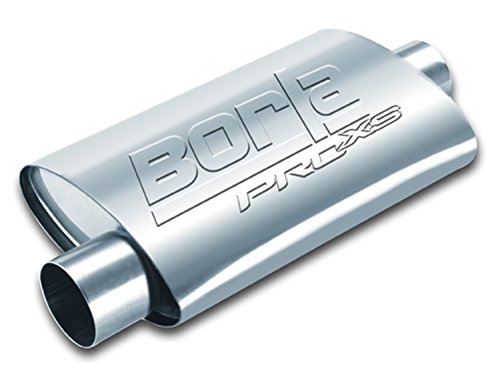 |
BORLA 40359 ProXS Universal Performance Muffler 3" OffsetBorla | Also great | T-304 stainless steel universal performance muffler | $128.99
Price as of 12 Oct 2026
|
View |
 |
EVIL ENERGY Cold Air Intake Compatible for 2014-2018 ChevyEVIL ENERGY | Upgrade pick | Cold air intake compatible with Chevy Silverado 1500 | $129.99
Price as of 12 Oct 2026
|
View |
Use this table to split power parts from sound-first parts. The biggest gains usually come from cutting restriction where pressure is highest, especially before the turbo or at the exhaust manifold on naturally aspirated engines.
Fitment, catalyst legality, and tuning need to be part of the decision. A mod that sounds aggressive but leaves wheel horsepower flat is a poor buy.
How we chose
We ranked each upgrade by horsepower return per dollar, not by exhaust volume or appearance. That means a part could rank low even if it sounds better.
We also weighed fitment quality, emissions impact, and whether a tune is needed to realize the gain. A mod that needs extra labor or legal compromises has a lower real-world return.
Finally, we separated naturally aspirated, turbocharged, and daily-driver use cases. The best answer changes with engine layout.
| Modification type | Typical gain range | Tune requirement | Emissions risk | Sound change | Best-fit use case |
|---|---|---|---|---|---|
| Axle-back exhaust | 0-5 hp, often 0 on stock NA cars | No | Low, but local noise rules still matter | Noticeable louder tone, little flow change | Drivers who want sound and small weight savings |
| Cat-back exhaust | 2-10 hp on many street cars; often modest without supporting mods | Usually no on NA, sometimes helpful on turbo | Low if catalyst stays stock | Moderate to strong | Balanced street build, mild flow improvement |
| Header or exhaust manifold | 5-20 hp on many NA engines, sometimes more with tuning | Often helpful, especially with long-tubes | Medium to high if catalyst relocation or removal is involved | Moderate to strong | NA engines that need real power gain |
| Downpipe | 10-40+ hp on turbo cars, depending on factory restriction and tune | Often yes | High if uncatted; medium with catted versions | Strong, sharper turbo sound | Turbo builds chasing the biggest exhaust-side gain |
| High-flow catalytic converter | 3-15 hp depending on factory restriction and engine output | Sometimes | Varies by state and application | Small to moderate | Owners who want better flow without a full catalyst delete |
Cat-back exhaust: best for balanced street gains
- Features a 70 millimeter piping diameter
- Includes a titanium tip design
- Designed specifically for Honda Civic Si Sedan
A cat-back replaces the exhaust from the catalytic converter rearward. That means it usually improves flow less than a header or downpipe, but it can still be the right move when you want a cleaner path, a better tone, and a part built for a specific chassis like the Honda Civic Si sedan.
For a stock naturally aspirated car, the horsepower gain is usually modest. On many applications the result is measured in low single digits unless the rest of the setup already supports more airflow.
The Invidia N1 cat-back for the Civic Si uses 70 mm piping and a titanium tip. Based on the spec sheet and owner feedback, that makes it more of a balanced street upgrade than a pure power play.
The drawback is simple: a cat-back rarely outruns a header or turbo downpipe for horsepower return. If the main goal is wheel horsepower, it can be an expensive way to get a small gain.
Axle-back exhaust: best for sound-first buyers
An axle-back replaces only the muffler or rear section. That makes it the smallest horsepower change of the common exhaust upgrades, because most of the system’s restriction remains upstream.
This is the right choice when you want a deeper or louder note without changing the rest of the exhaust. Weight savings can matter a little, especially if the stock muffler is heavy, but the power gain is usually tiny.
A common first-timer mistake is installing a shiny cat-back on a turbo sedan with a clogged downpipe and then expecting a noticeable horsepower jump. The sound changes immediately. The horsepower change often does not.
The drawback is obvious: for the money, an axle-back usually loses to a cat-back, header, or downpipe when the goal is actual horsepower.
Header or exhaust manifold: best for naturally aspirated power
Headers matter because they improve scavenging on naturally aspirated engines. Better scavenging helps the next intake charge enter the cylinder, and that is where real exhaust-side horsepower comes from on many NA setups.
That is why headers usually outrun rear-only upgrades. A well-matched header and catalytic setup can produce far more gain than an axle-back or cat-back, especially when the factory manifold is restrictive.
Picture a 3.5-liter V6 with a small factory manifold and tight bends. A better header can help across the rev range, while an oversized rear pipe alone may only make the exhaust louder and the low-end softer.
The drawback is fitment and legality. Header design must match the engine layout, oxygen sensor placement, and emissions rules. On some vehicles, long-tube headers create catalyst or check-engine complications.
Downpipe: best for turbo horsepower gains
On turbocharged engines, the restriction before the turbo matters most, and the downpipe sits right in that critical path. Reducing backpressure there often produces the largest single exhaust-side gain a turbo car can see.
That is why downpipes usually beat cat-backs by a wide margin on horsepower return. High-flow or catted versions are common because they lower restriction while keeping some emissions hardware in place.
Tuning often becomes necessary after a downpipe, especially on modern turbo cars that monitor boost, fueling, and catalyst behavior closely. Without a tune, the car may run poorly, throw codes, or leave power on the table.
The drawback is legal risk. An uncatted downpipe can be a poor choice in states with strict inspections, and even catted versions can change compliance depending on the application.
High-flow catalytic converter: best for keeping flow while staying cleaner
A high-flow catalytic converter lowers restriction compared with a stock catalyst while still cleaning exhaust gas better than a straight pipe. That makes it one of the few exhaust parts that can sit between power and emissions priorities.
How much horsepower it adds depends on how restrictive the factory catalyst is. On a heavily choked turbo car, the gain can be meaningful. On a mild NA setup, the change may be small.
State law and application determine the real answer here. Some high-flow units are marketed as EPA compliant, but installation still has to match the vehicle, the inspection rules, and the OBD readiness behavior.
The drawback is that poor matching can trigger a check-engine light or cause readiness problems. If the converter volume, cell count, or sensor placement is wrong, the car may not be happy.
What exhaust upgrades actually add horsepower?
The upgrades that reliably add horsepower are the ones that reduce restriction where exhaust flow is most limited: headers on naturally aspirated engines, downpipes on turbo engines, and high-flow catalytic converters when the stock catalyst is a choke point. Rear sections alone usually add the least.
That ranking changes with the engine layout. A turbo car can respond strongly to a downpipe because the turbine cares about upstream pressure. A naturally aspirated engine usually needs better scavenging from the manifold or header before the exhaust system becomes a real power source.
Dyno testing is the cleanest way to verify the result. A wheel-horsepower baseline, the correction method, and the same gear on the same dyno matter more than a seat-of-the-pants pull.
Say your turbo sedan picks up a louder note from a cat-back but shows almost no change on a corrected dyno sheet. That is not a failure of the dyno. It is a sign that the factory downpipe was the real bottleneck.
Is a cat-back worth more power than an axle-back?
Yes, a cat-back usually has more power potential than an axle-back because it changes more of the system after the catalyst. The gain is still modest on many stock cars, but the extra pipe length and mid-section change give it a better chance to matter.
An axle-back mainly changes sound and rear-section weight. A cat-back can improve flow balance, but it still does not equal the horsepower return of a header on an NA car or a downpipe on a turbo car.
If the budget only allows one rear-half upgrade, choose the cat-back when you care about both tone and a possible small gain. Choose the axle-back only when sound is the main goal.
Do headers make more power than a cat-back exhaust?
Usually yes, especially on naturally aspirated engines. Headers affect exhaust scavenging at the point where cylinder emptying matters most, while a cat-back only changes the path after the catalyst and often leaves the main restriction in place.
That difference is why headers tend to rank higher on horsepower return per dollar. They are also more sensitive to engine layout, tube length, collector design, and emissions hardware than a cat-back.
For many stock NA cars, a cat-back is mostly a sound mod with modest flow change. A header is the part that more often moves the dyno needle.
How much horsepower can a high-flow catalytic converter add?
It can add a little or quite a bit, depending on how restrictive the stock catalyst is. On a mild street car, the gain may be only a few horsepower. On a turbo setup with a very tight factory converter, the change can be much larger.
The real number depends on the vehicle, the catalyst location, and whether the rest of the exhaust is also restrictive. It also depends on whether the new converter matches the oxygen sensor strategy and the tune.
The safest way to judge it is with a before-and-after dyno pull using the same correction method. Without that, claims about a high-flow catalyst can swing from accurate to exaggerated very quickly.
Will a bigger exhaust hurt low-end torque?
It can, if the pipe is oversized for the engine’s displacement and power level. Too much diameter lowers exhaust velocity, and lower velocity can weaken scavenging and torque at lower rpm, especially on naturally aspirated engines.
A common rule of thumb is to size for the actual airflow demand instead of buying the largest tube that fits. For many street cars, 2.25 to 2.5 inches works better than jumping straight to 3 inches, while high-output turbo builds may justify larger sizes.
Suppose a small-displacement four-cylinder gets a 3-inch exhaust on a mostly stock setup. The car may sound louder, but the low-end can feel softer because the system is too large for the engine’s flow rate.
The drawback of smaller piping is the opposite problem: too little diameter can choke high-rpm power. The right answer is matched sizing, not maximum size.
Do I need a tune after exhaust upgrades?
Often yes after meaningful airflow changes, and especially on turbo cars. A tune can adjust fueling, boost, ignition timing, and throttle behavior so the engine takes full advantage of the lower restriction.
For a simple rear-section change, a tune is usually unnecessary. For headers, downpipes, and some high-flow catalysts, a tune can be the difference between a small improvement and a proper gain with clean drivability.
Whether it is mandatory depends on the vehicle’s calibration strategy and the part. If the engine management is sensitive to catalyst efficiency, airflow modeling, or boost control, the tune matters more than the hardware alone.
What exhaust mods are best for naturally aspirated vs turbo cars?
Naturally aspirated cars usually benefit most from headers or exhaust manifolds, then from careful pipe sizing and a supporting tune. Turbo cars usually benefit most from a downpipe, then from a matching tune and only later from rear sections.
That difference comes down to where restriction hurts most. On NA engines, scavenging and velocity matter. On turbo engines, pressure before the turbine is the key limitation.
For a daily-driven NA car, a cat-back can still make sense if you want a better note and low-risk installation. For a turbo car, spending on a cat-back before the downpipe is often the wrong order.
Can exhaust upgrades improve horsepower without making the car obnoxiously loud?
Yes, but the part choice matters. A high-flow catalytic converter, a well-sized cat-back with resonators, or a header paired with a quiet rear section can add power while keeping volume under control.
Axle-backs and straight-through mufflers are more likely to increase drone than horsepower. If you want mild sound and real gains, look for resonated systems, correct pipe diameter, and a setup that matches the engine’s flow demand.
The drawback is that quieter systems sometimes give up a little top-end flow. The tradeoff is usually worth it for a daily driver, because comfort and drivability matter after the dyno sheet is filed away.
Which one should you buy?
Start with the restriction that limits your engine type. For a turbo car, that is usually the downpipe. For a naturally aspirated car, it is usually the header or manifold. For a daily driver where legality matters, a high-flow catalytic converter or well-sized cat-back is often the most sensible middle ground.
If the budget is tight, do not buy rear-only parts first for horsepower. Buy the part that addresses the factory choke point, then add a tune if the engine management needs it.
For a mild sound change with little hassle, choose an axle-back or a restrained cat-back. For the best horsepower return, choose header work on NA cars and downpipe work on turbo cars before you spend on the rear of the system.
When emissions rules are strict, the order changes again. A legal high-flow catalyst with proper fitment can be a smarter purchase than an uncatted part that risks inspection failure and a check-engine light.
Frequently asked questions
What exhaust upgrades actually add horsepower?
Headers on naturally aspirated engines, downpipes on turbocharged engines, and well-matched high-flow catalytic converters are the main exhaust upgrades that reliably add horsepower. Cat-backs and axle-backs usually have smaller gains unless the factory system is unusually restrictive or other mods are already in place.
Is a cat-back worth more power than an axle-back?
Usually yes. A cat-back changes more of the exhaust path and has a better chance of reducing restriction, while an axle-back mostly changes sound and rear-section weight. The power difference may still be small, so the choice often comes down to how much noise you want.
Do headers make more power than a cat-back exhaust?
On most naturally aspirated engines, yes. Headers improve scavenging at the engine side of the system, which is where horsepower gains are most likely to happen. A cat-back is usually a smaller flow change and is often bought more for sound than for measurable power.
How much horsepower can a high-flow catalytic converter add?
There is no fixed number. On a mildly restricted setup the gain may be only a few horsepower, while a choked turbo application can see much more. The exact result depends on the stock catalyst, the replacement part, and whether the rest of the exhaust is also restrictive.
Will a bigger exhaust hurt low-end torque?
It can if the diameter is too large for the engine. Oversized piping lowers exhaust velocity, which can weaken scavenging and low-rpm torque, especially on naturally aspirated engines. The safer approach is to size the system to the engine’s actual airflow, not to the biggest tube available.
Do I need a tune after exhaust upgrades?
Not always, but often after meaningful flow changes. Rear-section parts usually do not need one. Headers, downpipes, and some high-flow catalytic converters often work better with a tune because fueling, boost, and timing may need adjustment for the new flow path.