Why a Catalytic Converter Smells Like Rotten Eggs
Rotten-egg exhaust usually means the engine is running rich or misfiring, which sends extra sulfur into the catalytic converter. If the smell is brief and hot, the converter is more often the victim than the source. Ignoring it can overheat the converter, trigger a check-engine light, and leave you with a repair that can cost far more than the original fault. This guide explains the sulfur smell, the signs that point to converter damage versus an engine problem, and what to inspect first.
Why the smell matters


A sulfur odor from the tailpipe is a diagnosis clue, not a verdict. Hydrogen sulfide is the rotten-egg gas behind the smell, and exhaust odor can come from the converter, a rich fuel mixture, misfires, oxygen sensor concerns, or an exhaust leak.
The catalytic converter is designed to turn carbon monoxide, hydrocarbons, and nitrogen oxides into less harmful exhaust gases. It can smell when it is overheated, overloaded, or internally restricted. A brief odor after a hard pull can mean something different from a steady smell with rough running, poor fuel economy, or a flashing warning light.
When the odor can be normal and when it points to trouble
A short sulfur smell after acceleration, highway driving, or a hot shutdown can happen when the converter is working hard and hot. Short trips and stop-and-go traffic can make the odor easier to notice because the exhaust system may not stay hot enough for long enough to clear the smell quickly.
The line between normal and trouble is the symptom cluster. A mild odor by itself is less urgent than odor plus rich running, misfire, loss of power, or a flashing check engine light.
Can a catalytic converter smell like rotten eggs?
Yes. A catalytic converter can smell like rotten eggs when it is processing sulfur compounds poorly, when it is overheated, or when it has begun to break down internally. The smell is not proof that the converter is bad, but it does mean the exhaust system deserves a real diagnosis.
How a hot or overloaded converter creates sulfur odor
When the engine runs rich, extra fuel reaches the converter. The converter has to process that extra load, and heat rises fast. That can push sulfur compounds toward hydrogen sulfide, which is the gas associated with the rotten-egg odor.
A converter can also become restricted internally. That restriction can leave the exhaust treated badly enough to smell and may later cause power loss. In that case, the converter may be the damaged part, but the original cause is often upstream.
When internal restriction or damage becomes the concern
Think about damage when the smell comes with reduced acceleration, a lazy throttle response, or a steady power drop on hills. A restricted converter can choke exhaust flow. That tends to show up as drivability problems, not odor alone.
A bad converter is more likely when the smell started after a long period of rich running or misfires, or after another repair that changed exhaust flow. It is less likely if the odor disappears quickly and no other symptoms appear.
What else causes a sulfur smell?
Several faults can create the same odor. A rich fuel mixture can put too much fuel into the exhaust. Misfires can send unburned fuel there too. Oxygen sensor faults can distort the fuel mixture, and an exhaust leak can let odor escape before the converter has done its job.
Rich fuel mixture and excess fuel in the exhaust
A rich fuel mixture means there is too much fuel relative to air. It can create odor, poor fuel economy, rough running, and black soot at the tailpipe. It can also strain the converter because the exhaust is carrying more unburned fuel than it should.
Fuel trim data helps here. If the engine computer is adding or removing a lot of fuel to compensate, the issue may be with fueling, air metering, or sensor input rather than the converter itself.
Misfire and unburned fuel reaching the converter
Misfires can overheat the catalytic converter. Unburned fuel goes into the exhaust, then burns where it should not. That can damage the converter and, if the converter becomes restricted, lead to power loss.
Misfire symptoms usually include rough running, hesitation, or a flashing check engine light. A flashing light needs faster attention because active misfires can damage the converter.
Exhaust leak and sensor fault checks
An exhaust leak can produce odor and can exist alongside corrosion or damaged hardware. It should be checked before any converter replacement, especially if the car recently had exhaust work.
Oxygen sensors can also mislead diagnosis if they are faulty or reading badly. They are part of the scan-data picture, not a part to ignore. A sensor fault can mimic converter problems well enough to send the repair in the wrong direction.
Rotten egg smell triage table
| Symptom pattern | Most likely cause | Urgency | First diagnostic check |
|---|---|---|---|
| Smell only, no drivability change | Brief sulfur odor from normal converter loading or a mild exhaust issue | Schedule soon | Check for stored codes and inspect for exhaust leaks |
| Smell plus rich running signs | Rich fuel mixture sending extra fuel into the exhaust | Prompt diagnosis | Review fuel trim data and look for black soot or poor fuel economy |
| Smell plus misfire or flashing CEL | Misfire overheating the converter | Stop driving and diagnose now | Read misfire codes and freeze-frame data before more driving |
| Smell after highway driving | Hot converter under heavy exhaust load | Monitor closely, then test if repeated | Check whether the odor fades quickly or returns with power loss |
| Smell after recent exhaust work | Leak, damaged hanger, corrosion, or disturbed hardware | Schedule soon | Inspect joints, clamps, and hangers before replacing parts |
How to read the warning signs
The check engine light matters most when it is flashing. A flashing light usually means an active misfire that can damage the converter. Stored diagnostic trouble codes and freeze-frame data can help show when the fault happened and what the engine was doing at the time.
Rough idle, hesitation, power loss, and poor fuel economy are common companion symptoms. These point away from a simple odor complaint and toward a problem in the engine, fuel system, ignition system, or exhaust flow.
Why smell after acceleration or highway driving matters
The odor may be more noticeable after acceleration, highway driving, or a hot shutdown. Those drive conditions load the exhaust system and can push a weak converter, a rich mixture, or a misfire problem into a range where the smell becomes obvious.
Say your compact sedan smells fine around town, then reeks of sulfur after a long uphill merge. That pattern points more toward heat and exhaust load than toward a random cabin odor. If the smell appears only after that kind of driving, the next check should focus on codes, trims, and exhaust condition.
Short trips and stop-and-go traffic
Short trips and stop-and-go traffic can make symptoms more noticeable because exhaust parts do not always reach stable operating temperature. That can let odor linger after the car moves back into traffic or sits at a light.
Picture a commuter car that smells on the first cold start, then gets worse after ten minutes of idling in traffic. That pattern does not prove converter failure. It does mean the exhaust and fueling system need inspection before the smell is dismissed.
How diagnostics separate the cause
Good diagnosis separates converter failure from the engine fault that may be feeding it. Shores Automotive-style testing reviews fault codes, fuel trims, oxygen sensor behavior, misfire counts, and freeze-frame details. Exhaust testing can also include leaks, restrictions, damaged hangers, corrosion, and an overheating converter.
-
Scan codes first.
Read stored and pending trouble codes before clearing anything. Freeze-frame data shows engine load, speed, and temperature when the fault set, which helps connect the smell to a specific drive condition. -
Check fuel trim data.
Look for trim numbers that point rich or lean. This is one of the fastest ways to tell whether the engine is overfueling, underfueling, or reacting to a sensor problem. -
Compare oxygen sensor behavior.
Watch upstream and downstream sensor signals with scan data. Strange switching, stuck readings, or a mismatch between sensors can point to sensor faults, converter problems, or both. -
Inspect for exhaust leaks.
Check joints, clamps, flex sections, and hangers before replacing the converter. A leak can create odor and can also distort sensor readings, which leads to the wrong repair. -
Confirm misfire history.
Review misfire counts and current drivability. If the engine has active misfires, fix that first so the converter is not damaged again after the repair.
A common first-timer mistake is replacing the converter after a single odor event and skipping the upstream checks. That can leave the real fault in place, and the new converter may fail for the same reason.
Is it safe to keep driving?
If the smell is brief and there are no drivability symptoms, you can usually schedule repair soon instead of stopping immediately. If the smell comes with a flashing check engine light, rough running, or power loss, stop driving now and diagnose the fault before more distance.
When to stop driving now
Stop driving if the check engine light is flashing, the engine is misfiring badly, or the car loses power under light throttle. Those signs mean unburned fuel may be entering the converter and overheating it.
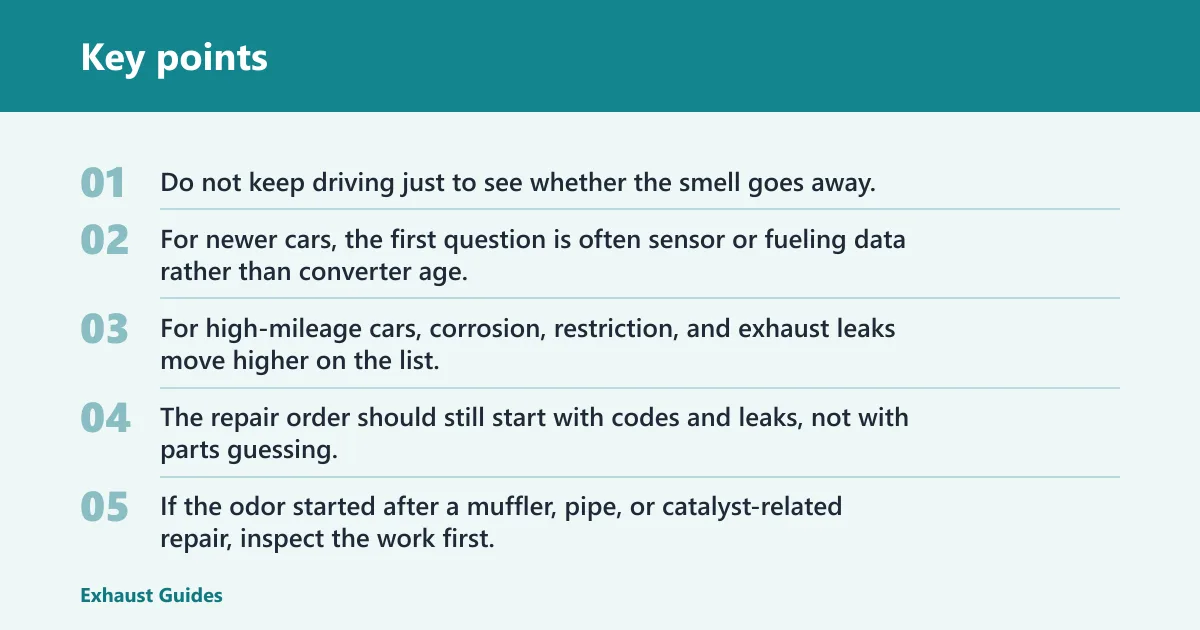
Do not keep driving just to see whether the smell goes away. That can turn a fueling or ignition fault into a converter replacement.
When to schedule repair soon
If the smell shows up only after acceleration or highway driving, and the car still drives normally, schedule diagnosis soon. That is especially true if fuel economy has dropped or if the odor returns more than once.
For newer cars, the first question is often sensor or fueling data rather than converter age. For high-mileage cars, corrosion, restriction, and exhaust leaks move higher on the list. The repair order should still start with codes and leaks, not with parts guessing.
How recent exhaust work changes the next check
If the odor started after a muffler, pipe, or catalyst-related repair, inspect the work first. A loose clamp, damaged gasket, or misaligned hanger can create odor and let hot exhaust escape in the wrong place.
That does not rule out converter damage, but it makes the repair history part of the diagnosis. Recent exhaust work plus a new odor is a strong reason to inspect before replacing anything else.
Frequently asked questions
Why does a catalytic converter smell like rotten eggs?
A catalytic converter can smell like rotten eggs when sulfur compounds in exhaust are not being processed well, when the converter is overheated, or when it is internally restricted. Hydrogen sulfide is the gas behind the odor. The smell points to a problem in the exhaust system, but not always to a bad converter.
Why would a catalytic converter smell like rotten eggs?
It would smell that way if the engine is running rich, misfiring, or feeding the converter more sulfur and unburned fuel than it can handle. A brief odor after a hard drive can be heat-related. A steady odor with codes or poor running deserves diagnosis right away.
What else besides the catalytic converter can cause a rotten egg smell
A rich fuel mixture, misfires, oxygen sensor faults, and exhaust leaks can all cause the same smell. That is why odor alone is not enough. Fuel trim data, misfire counts, and leak checks help separate a converter problem from an engine or exhaust problem.
Is it safe to keep driving if the exhaust smells like sulfur?
It depends on the rest of the symptoms. If the smell is brief and the car drives normally, you can usually schedule repair soon. If the check engine light flashes, the engine runs rough, or power drops, stop driving and diagnose the fault before the converter is damaged further.
Why does the smell get worse after acceleration or highway driving?
Acceleration and highway driving load the exhaust system and heat the converter. That can make a rich mixture, misfire, or weak converter more obvious. The odor often appears after those conditions because hydrogen sulfide and other exhaust compounds are more noticeable when the system is hot.
Can a rich fuel mixture or misfire damage the catalytic converter?
Yes. A rich fuel mixture can overload the converter, and misfires can send unburned fuel into it. That extra heat can damage the converter and, if restriction follows, lead to power loss. A flashing check engine light is the warning sign that needs faster attention.