Are Mufflers And Catalytic Converters The Same Thing? Essential
Mufflers and catalytic converters are definitely not the same thing. They are two separate, vital parts of your car’s exhaust system, each with a unique and crucial job: the muffler quiets the sound, while the catalytic converter cleans the toxic fumes before they leave your tailpipe.

QPCRAP
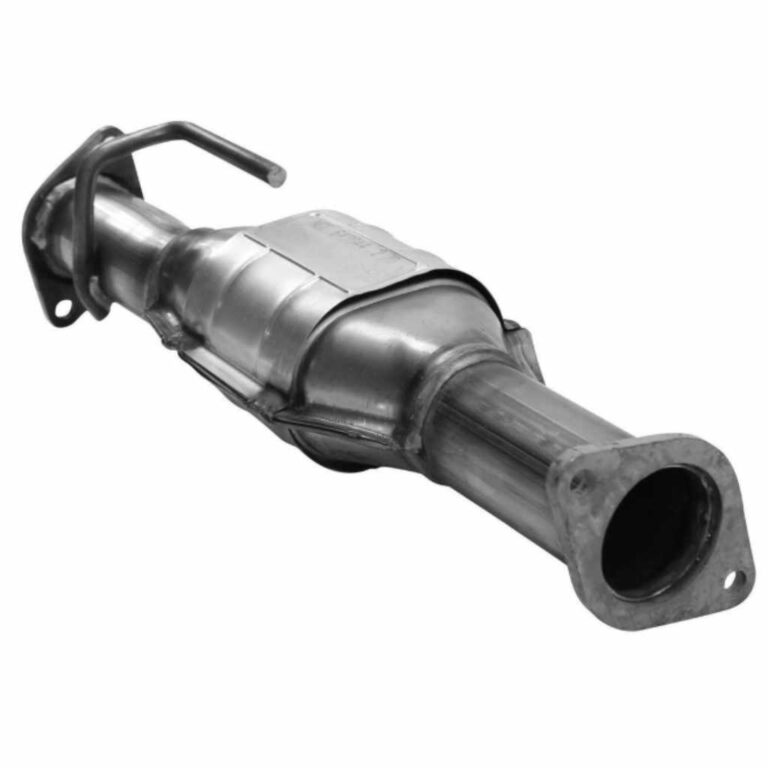
QPCRAP Catalytic Converter Exhaust Compatible with Toyota…
- Fitment: Compatible with Toyota 4Runner 1999-2000 equipped with the 3.4L V6 engine and listed SR5 or Limited trim
- Complete Exhaust Coverage: Includes two catalytic converter assemblies, one rear muffler assembly, and three exhaust pipes, provid…
- Bolt-On Style Connections: uses flanged connection points, pipe sections, and exhaust clamps to support a straightforward replacem…
As an Amazon Associate I earn from qualifying purchases.
Have you ever looked under your car and felt overwhelmed by all the strange metal pipes and boxes? It is very common to mix up the muffler and the catalytic converter. They both sit along the exhaust line, but they do completely different jobs for your safety and the environment. If one breaks, your car might sound loud or smell funny. Understanding the difference is the first step to keeping your vehicle running smoothly. This guide will break down exactly what each part does, using simple words and clear steps so you feel confident about your car’s health. Let’s explore these two essential exhaust components.
Why Understanding Your Exhaust System Matters
Your car’s exhaust system is more than just a pipe to the back. It’s a carefully designed system that manages high-temperature gases, reduces noise, controls pollution, and helps your engine breathe efficiently. When you hear strange noises or a check engine light comes on, knowing if the issue is with the muffler or the catalytic converter can save you time and money at the repair shop.
The Three Main Jobs of the Exhaust System
- Noise Control: Reducing the loud popping and rumbling from the engine combustion.
- Fume Management: safely directing hot, harmful gases away from the engine and passengers.
- Emission Cleaning: Converting dangerous pollutants into less harmful substances before they exit the tailpipe.

What is a Muffler? The Noise Canceler
Think of the muffler as your car’s built-in speaker volume control. Its primary and almost exclusive job is to make your ride quiet and comfortable. When the engine burns fuel, it creates high-pressure sound waves—loud explosions. Without a muffler, your car would sound like a race car or a small airplane taking off!
How the Muffler Works
Inside the muffler, there are chambers, baffles (small walls), and tubes. The sound waves enter the muffler and are forced to bounce around these internal structures.
- Reflection: Sound waves hit these metal walls, causing them to cancel each other out.
- Absorption: Some mufflers use special packing material (like fiberglass) to absorb the sound energy, turning the noise into very gentle heat.
Because the muffler deals only with sound, it does not clean the exhaust fumes. It gets very hot, but its main focus stays on acoustics.
Signs Your Muffler Needs Attention
If the muffler is damaged—perhaps rusted through or punctured—you will almost immediately notice.
- Loud, Deep Rumbling: This is the classic sign. It sounds much louder than normal, especially when accelerating.
- Hissing or Popping Noises: Smaller holes or leaks can make strange noises that weren’t there before.
- Smell of Exhaust Inside the Cabin: While rare with a muffler leak, severe damage can let fumes get pulled into the car cabin, which is a safety concern.
What is a Catalytic Converter? The Fume Cleaner
The catalytic converter, often called the “Cat,” is the unsung hero when it comes to keeping our air clean. Unlike the muffler, which manages sound, the catalytic converter manages chemistry. It is arguably the most important part of modern exhaust systems for environmental reasons.
The Scientific Job of the “Cat”
When fuel burns in your engine, it creates three main types of nasty pollutants:
- Carbon Monoxide ($text{CO}$): A colorless, odorless, poisonous gas.
- Unburned Hydrocarbons ($text{HC}$): Fuel vapors that escape without burning completely; a major cause of smog.
- Nitrogen Oxides ($text{NOx}$): Gases that contribute to acid rain and respiratory problems.
The catalytic converter cleans these pollutants using precious metals, which act as catalysts—substances that speed up a chemical reaction without being used up themselves. These metals, usually platinum, palladium, and rhodium, are coated on a honeycomb structure inside the converter shell.
The Two Stages of Conversion
Modern cars usually have a “three-way” catalytic converter that performs two main chemical jobs:
| Stage | Chemical Process | What It Cleans |
|---|---|---|
| Reduction Catalyst (Stage 1) | Removes Oxygen | Nitrogen Oxides ($text{NOx}$) converted into harmless Nitrogen ($text{N}_2$) and Oxygen ($text{O}_2$). |
| Oxidation Catalyst (Stage 2) | Adds Oxygen | Carbon Monoxide ($text{CO}$) and Hydrocarbons ($text{HC}$) converted into Carbon Dioxide ($text{CO}_2$) and Water ($text{H}_2text{O}$). |
While $text{CO}_2$ is a greenhouse gas, it is far less immediately toxic to breathe than $text{CO}$ or $text{HC}$. This chemical cleanup is mandatory for all new vehicles according to environmental protection standards set by agencies like the U.S. Environmental Protection Agency ($text{EPA}$).
Signs Your Catalytic Converter is Failing
Because the converter is dealing with intense heat and chemical reactions, it can sometimes fail or become clogged.
- “Check Engine” Light: This is the most common sign. The car’s sensors detect inefficient cleaning.
- Smell of Rotten Eggs: This sulfur smell comes from unburned fuel passing through the converter, causing a build-up of hydrogen sulfide.
- Reduced Engine Power: If the internal honeycomb structure melts or breaks apart, it restricts exhaust flow, making your engine feel sluggish or weak.
- Overheating: A clogged converter can get extremely hot, sometimes glowing dull red under the car—this is dangerous and requires immediate shutdown.
Putting It All Together: Muffler vs. Catalytic Converter: Key Differences
Now that we know their separate functions, let’s clearly see how they are different. They are adjacent parts in the exhaust line, but their purpose, internal structure, and cost are vastly different.
Visual Identification Quick Guide
If you are lying on your back looking under the car, here is how to tell which is which:
| Feature | Muffler | Catalytic Converter |
|---|---|---|
| Primary Function | Quiets loud engine noise. | Cleans toxic exhaust gases. |
| Appearance (General) | Often large, oval, or rectangular metal chamber at the very end of the exhaust system. | Usually a smaller cylinder or oval box located closer to the engine (before the muffler). |
| Internal Structure | Chambers, baffles, and sound-dampening packing. | Ceramic honeycomb structure coated with precious metals. |
| Typical Failure Symptom | Loud noise or exhaust leak. | Check Engine Light or foul/rotten egg smell. |
Exhaust Flow: Where They Sit
The exhaust gases follow a specific path from the engine to the atmosphere. This sequence is key to understanding their relationship:
- Exhaust Manifold/Headers: Gases leave the engine.
- Oxygen Sensors: Sensors monitor gas composition before and after the converter.
- Catalytic Converter: Gases are chemically cleaned.
- Resonator (Optional): Further noise reduction.
- Muffler: Final noise cancellation.
- Tailpipe: Cleaned, quieted gases escape.
Notice that the catalytic converter comes before the muffler in the flow path. This is because the chemical reaction inside the converter needs the exhaust gases to be very hot to work effectively, so placing it closer to the engine makes sense.
Can You Replace One Without Affecting the Other?
Yes, in most cases, you can replace a failed muffler without touching the catalytic converter, and vice versa. However, there are important caveats, especially regarding the converter.
Replacing a Muffler
Replacing a muffler is usually straightforward. It is often bolted or welded between two pipes. Since it only manages sound, its failure does not usually trigger major computer issues.
Tools You Might Need for a Muffler Replacement:
- Safety glasses and gloves (always!).
- Jack and jack stands (for safe access underneath).
- Wrenches or socket set (to undo bolts).
- Penetrating oil (to loosen rusty hardware).
- Hacksaw or reciprocating saw (if cutting rusted pipes).
- New muffler assembly and appropriate clamps/hangers.
Replacing a Catalytic Converter (The Sensitive Part)
Replacing a catalytic converter is more complex, often because it is tied directly into the engine’s emission monitoring system.
If you replace the converter, you must ensure the new part is the correct specification for your vehicle. Using a cheap, non-OEM (Original Equipment Manufacturer) part, especially in areas with strict emissions testing (like California), can cause you to fail inspection immediately because the computer won’t recognize its chemical output efficiency. For more information on the importance of correct component matching and catalytic converter regulations, you can refer to resources from the Specialty Equipment Market Association (SEMA) on compliance standards.
Furthermore, because the converter impacts engine efficiency, replacing it often requires checking the oxygen sensors located around it to ensure the engine computer (ECU) is reading data correctly.
Safety First: Exhaust Leaks and Carbon Monoxide
Whether it’s a cracked muffler or a failing converter, any significant exhaust blockage or leak poses a real safety risk. High levels of carbon monoxide ($text{CO}$) can build up inside your car cabin if the exhaust system integrity is compromised, or if the converter stops cleaning the fumes effectively.
Immediate Safety Checklist for Exhaust Issues:
- Never run your car in an enclosed space, like a garage, even with the door open, for more than a few minutes.
- If you smell exhaust fumes strongly inside the car while driving, pull over immediately and exit the vehicle.
- If your catalytic converter has melted or broken internally, do not drive until it is replaced. The lack of airflow can damage other engine components.
Common Beginner Misunderstandings
It is easy to confuse these components because, visually, they are both thick metal containers on the exhaust line. Here are the most common mix-ups beginners make:
Misunderstanding 1: “If my car is loud, I need a new Cat.”
Reality Check: Loudness is almost always a muffler or exhaust pipe issue, not a catalytic converter issue. The cat is designed to handle chemistry, not noise dampening. If it’s loud, check the muffler first.
Misunderstanding 2: “A bad Cat will make my car shake.”
Reality Check: A bad catalytic converter usually causes performance issues (sluggishness) because the exhaust flow is restricted. Shaking or vibration is more often caused by a failed muffler mount, a damaged driveshaft, or an engine miss, though an extreme clog in the Cat can indirectly lead to engine roughness.
Misunderstanding 3: “Both parts are expensive because they use rare metals.”
Reality Check: While catalytic converters are expensive due to the platinum/rhodium core (which is why they are often stolen), mufflers are generally much cheaper because they are made primarily of steel and use simple internal baffling.
Maintenance Tips to Help Both Parts Last Longer
Taking good care of your engine and driving habits goes a long way in protecting both your muffler and your catalytic converter.
Tips for Protecting Your Catalytic Converter:
Since the Cat relies on clean-burning fuel, engine health is paramount for its longevity.
- Fix Engine Misfires Immediately: If an engine is misfiring, raw, unburned fuel gets dumped into the exhaust system. This fuel ignites inside the Cat, causing it to overheat and melt the internal honeycomb structure.
- Use the Correct Oil: Some engine oils contain additives that can coat the catalyst material, slowly poisoning the converter’s ability to clean fumes. Always use the grade recommended in your owner’s manual.
- Don’t Ignore Coolant Leaks: Excessive coolant leaking into the combustion chamber can also contaminate the converter.
Tips for Protecting Your Muffler:
The muffler fails mostly due to external factors (weather and roads).
- Address Minor Rust Early: If you spot bubbling paint or surface rust on the muffler shell, addressing it with rust converter paint can prevent small holes from forming.
- Regular Inspections: When you get an oil change, ask the technician to tap the muffler lightly with a rubber mallet to check for hollow, weak spots caused by internal rust.
- Mind Potholes: Hitting large potholes or driving through deep water can damage the rubber hangers that support the muffler, causing excess stress on the metal joints.

Frequently Asked Questions (FAQ) About Mufflers and Converters
Q1: Can I legally drive my car if the muffler has a hole in it?
A: Generally, yes, if the hole is small and you are not making excessive noise, but it is unsafe and often illegal in noise-restricted zones. You must fix any exhaust leak promptly to prevent carbon monoxide entry.
Q2: Will replacing my catalytic converter improve my car’s performance?
A: If your old converter was severely clogged and restricting exhaust flow, yes, replacing it will restore lost power. However, replacing a functional converter will not noticeably increase horsepower.
Q3: Why is my catalytic converter so much more expensive to replace than my muffler?
A: The catalytic converter contains expensive, rare earth minerals like platinum, palladium, and rhodium, which are necessary for the chemical conversion process. Mufflers are mainly steel and cost less to manufacture.
Q4: Does the muffler affect my gas mileage?
A: A healthy muffler does not change fuel economy. However, if the muffler is damaged or leaking severely near the engine, it can sometimes disrupt the backpressure dynamics slightly, leading to a very small, usually unnoticeable, loss in efficiency.
Q5: How long should a catalytic converter last on average?
A: If the engine is running well, a catalytic converter should last the lifetime of the vehicle, often exceeding 150,000 miles. Failure is most often caused by poor engine maintenance (misfires), not just age.
Q6: Can I just weld a patch over a rusted muffler?
A: You can try, especially for small cracks. However, because mufflers operate under intense heat and vibration, patches often fail quickly. It’s usually better to replace the entire muffler section if the rust is widespread.
Q7: Do diesel trucks have catalytic converters?
A: Yes, modern diesel engines use different versions of emissions control devices, including Diesel Oxidation Catalysts ($text{DOC}$) and Diesel Particulate Filters ($text{DPF}$), which serve a similar purpose to the catalysts in gasoline cars but are specialized for diesel soot.
A Final Word of Encouragement
You now have a solid understanding of the difference between your car’s muffler and its catalytic converter. You know that the muffler tackles the sound waves, while the catalytic converter bravely fights off toxic emissions using chemistry.
Keep an eye out for the classic signs: loud noises point to the muffler, and rotten egg smells or a check engine light often point toward the catalytic converter. By understanding these two distinct components, you are better equipped to listen to your car, identify issues early, and confidently talk to your mechanic. Maintaining a healthy exhaust system ensures your drive is quiet, safe, and clean for everyone on the road. Happy driving!
Related pick: Check today's price on Amazon