Catalytic Converter vs Scr
SCR is not the same as a catalytic converter: a catalytic converter cleans exhaust from gasoline engines, while scr uses diesel exhaust fluid to cut NOx in diesel exhaust, and they are not interchangeable. Mixing them up can trigger fault codes, failed inspections, and expensive parts replacement. This guide explains how each system works, which vehicles use it, and when replacement is possible.
| Decision factor | catalytic converter | scr | Winner |
|---|---|---|---|
| Main function | Reduces CO, HC, and NOx together in one exhaust device. | Targets NOx specifically, with NOx conversion up to 90%. | tie |
| Typical engine type | Catalytic converters are commonly used on gasoline engines, especially passenger cars and light trucks. | Primarily diesel engines, including diesel passenger cars, pickups, and heavy-duty vehicles. | tie |
| Exhaust location | Close to the engine, where it can reach operating temperature quickly. | Downstream in the exhaust stream, after DEF injection and often with a DPF ahead of it. | tie |
| Reductant used | No separate liquid refill; the catalyst works from heat and exhaust chemistry. | Uses DEF, an aqueous urea solution injected before the SCR catalyst. | catalytic converter |
| Service burden | Mostly sensor faults, substrate damage, or theft risk from precious metals. | DEF refills, nozzle or injector faults, NOx sensor faults, and possible DPF interaction. | catalytic converter |
| Swap or retrofit potential | Not a legal or practical substitute for SCR on a diesel system. | Not a drop-in replacement for a gasoline catalytic converter. | tie |
What a catalytic converter does
A three-way catalytic converter is the standard exhaust aftertreatment on many gasoline engines. It reduces carbon monoxide, hydrocarbons, and NOx at the same time, and under optimal conditions it can reach conversion efficiencies exceeding 95%. It uses platinum, palladium, and rhodium on a ceramic honeycomb substrate that lets exhaust flow through the core. (Wikipedia)
Why gasoline engines need light-off temperature
A catalytic converter does little until it heats up. CarExpert says it needs at least 300°C to work, which is why cold starts produce more emissions than a warmed-up engine. That also explains why the converter is placed close to the engine: it needs heat quickly, not a long run through the exhaust pipe.
The precious-metal load matters to owners for two reasons. These metals raise replacement cost. They also make theft a real risk on some vehicles, because platinum, palladium, and rhodium have scrap value.
How the comparison resolves
Main function
Use catalytic converter when the job is broad cleanup on a gasoline engine. Use scr when the key problem is NOx on a diesel engine. SCR is especially important for diesel applications where traditional catalytic converters are limited, so the two systems solve related but different problems.
Engine type
Ordinary catalytic converters are mainly for gasoline engines. SCR is specifically for diesel vehicles and industrial engines. That split is the first ownership rule: gasoline cars usually start with a catalytic converter, while diesel vehicles usually need SCR as part of a larger aftertreatment system.
Service burden
A catalytic converter usually has no refill routine, but it can fail from substrate melting, contamination, or sensor issues. SCR adds DEF refills and more parts that can trigger warning lights, including the dosing system and NOx sensors. That extra hardware means more service points, and better NOx control on diesel exhaust.
Swap or retrofit limits
SCR is not a replacement for a gasoline catalytic converter, and a catalytic converter is not a replacement for SCR on a diesel. The system has to match the engine, exhaust temperature profile, and emissions strategy. A swap that ignores those limits can cause a check engine light, failed readiness monitors, or a legal problem during inspection.
How SCR works with DEF
SCR uses DEF, an aqueous urea solution, injected into the exhaust before the SCR catalyst. Heat breaks the urea down into ammonia, and that ammonia reacts with NOx in the catalyst to form nitrogen and water. KUS says this can cut NOx emissions by up to 90%.
DEF is not optional on a working SCR system. The tank needs ongoing refills, and the system depends on sensors to meter fluid and confirm that NOx is being reduced. If the tank runs low or a sensor fails, the vehicle may set a fault code and limit performance or refuse certain operating states, depending on the calibration.
Suppose a diesel pickup starts showing a DEF warning after a long highway trip and then later throws an SCR efficiency code. That points to a service issue in the dosing or sensing system, not a missing catalytic converter. The fix is usually to inspect the DEF level, injector, and NOx sensors before replacing expensive parts.
Which vehicles use each system?
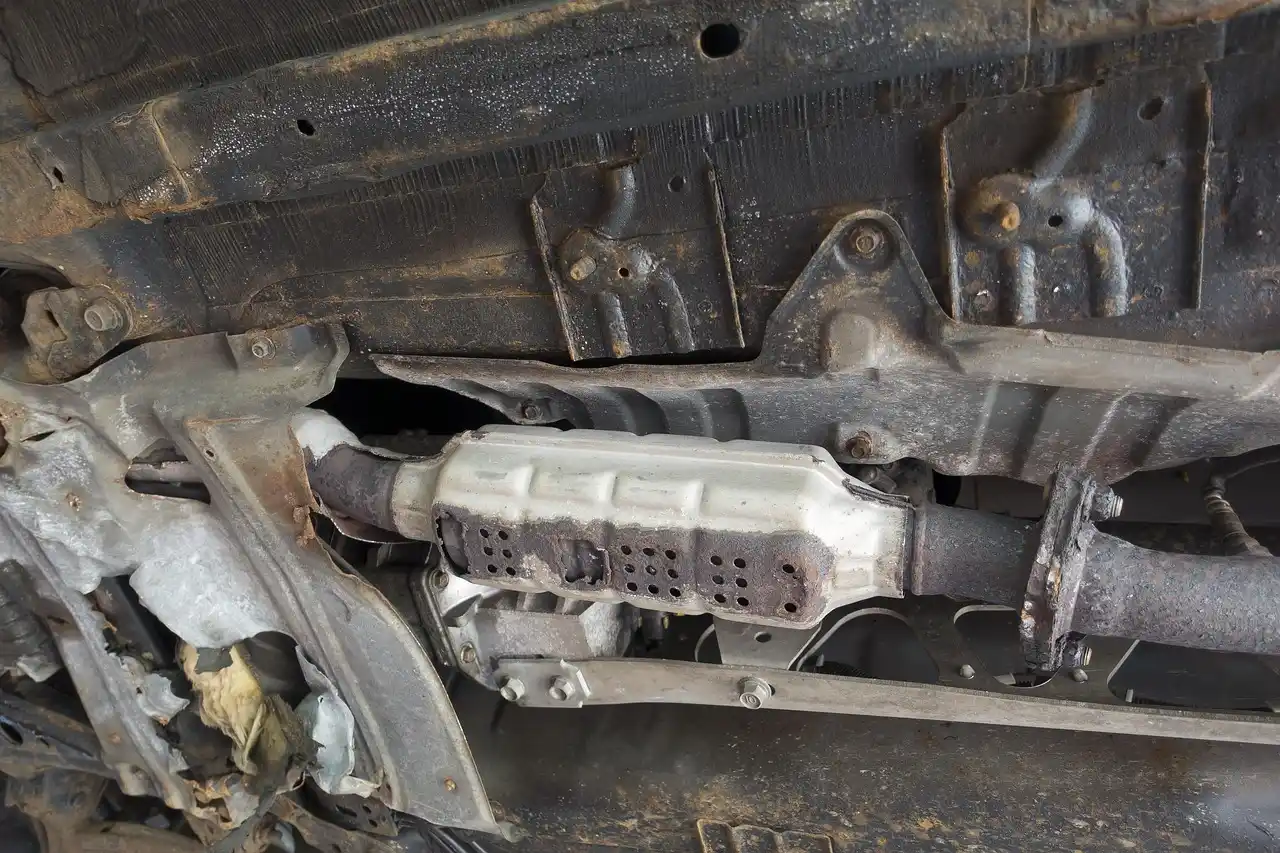
Gasoline passenger cars and light trucks usually rely on catalytic converters, often the three-way type. Diesel passenger cars, pickups, and heavy-duty trucks usually use SCR, and many also use a diesel particulate filter. Those systems work together because the DPF handles soot while SCR targets NOx.
Emission regulations pushed both systems into wider use. The Clean Air Act, EPA Tier 3, Euro VI, and China VI are commonly cited emissions standards that set tighter exhaust targets. Manufacturers responded with more specialized aftertreatment instead of relying on one device to do everything.
Picture a diesel van with a DPF upstream and SCR downstream. If the owner tries to treat the SCR as a normal catalytic converter, the diagnosis goes wrong fast: the DPF may be full, the DEF system may be empty, or the NOx sensors may be reporting poor conversion. The fault is in the system design, not a missing gasoline-style converter.
Failure modes and service differences
Owners usually notice a catalytic converter problem as a loss of power, a rattling substrate, a sulfur-like smell, a check engine light, or an emissions test failure. SCR problems more often show up as DEF warnings, reduced NOx conversion, countdown messages, or sensor-related fault codes. The warning pattern matters because the repair path is different.
The first thing that tends to fail is not always the catalyst itself. On catalytic converters, upstream engine faults can overheat or poison the substrate, while theft can remove the unit entirely. On SCR systems, DEF quality, DEF freezing management, injector clogging, or NOx sensor failure often appears before the catalyst is damaged.
Repair complexity also differs. A catalytic converter replacement can be straightforward on some cars but expensive because of precious-metal content and integrated sensor bungs. SCR repairs can involve the tank, heater, pump, injector, lines, and sensors, so diagnosis matters before parts are swapped.
Choose catalytic converter if… / Choose scr if…
Choose catalytic converter if you own a gasoline vehicle, need broad reduction of CO, HC, and NOx, or are dealing with a light-duty emissions system that depends on quick warm-up. It is also the right fit when you are replacing a damaged gasoline aftertreatment unit and the vehicle never used DEF.
Choose scr if you own a diesel vehicle, need aggressive NOx control, or have a truck that already uses DEF and a DPF. It is the correct choice when the vehicle was calibrated for diesel aftertreatment and the emissions system depends on injected urea and downstream sensors.
Frequently asked questions
What is the difference between a catalytic converter and SCR?
A catalytic converter is the exhaust cleanup device most gasoline engines use to reduce CO, HC, and NOx together. SCR is a diesel-focused NOx reduction system that uses DEF and a separate dosing setup. They solve different emissions problems and are not interchangeable.
Is an SCR the same as a catalytic converter?
No. SCR is a type of emissions catalyst, but it is not the same part owners mean when they say catalytic converter. In practice, the systems differ in engine type, location, reductant, and service needs, so a diesel SCR system cannot replace a gasoline converter, or vice versa.
Which cars use catalytic converters vs SCR?
Gasoline cars and light trucks usually use catalytic converters, especially three-way units. Diesel passenger cars, pickups, and heavy-duty vehicles usually use SCR, often with a DPF upstream. The engine type is the fastest way to tell which system belongs on the vehicle.
How does SCR work with DEF?
DEF is injected into the exhaust ahead of the SCR catalyst. Heat turns the urea in DEF into ammonia, and the catalyst uses that ammonia to convert NOx into nitrogen and water. Because the system depends on fluid supply and sensors, low DEF or sensor faults can trigger warning lights.
Can a diesel use a normal catalytic converter instead of SCR?
Usually no. Diesel exhaust and diesel calibration are built around different temperatures and emissions targets, so a gasoline-style catalytic converter is not a substitute for SCR. Many diesel systems also pair SCR with a DPF, so removing SCR leaves the aftertreatment chain incomplete.
Are catalytic converters necessary?
For vehicles built with them, yes. Removing or bypassing one can cause inspection failure and legal trouble.