Are Diesel Catalytic Converters Worth Essential Value?
Yes, diesel catalytic converters are essential because they legally clean harmful exhaust gases like NOx and soot, improving air quality and preventing costly fines. While they have scrap value, their main worth is in keeping your diesel vehicle street-legal and compliant with environmental standards.

MotorPower Care
MotorPower Care DPF Foam Cleaner — Diesel…
- PROFESSIONAL-GRADE DPF & CATALYTIC CONVERTER FOAM CLEANER — Trusted by thousands of diesel specialists. This German-engineered spr…
- NO REMOVAL REQUIRED — Clean through the O2 sensor or temperature sensor port using the included long-reach nozzle. Spray, soak 20-…
- WORKS ON DIESEL, GAS & HYBRID VEHICLES — Unlike fuel additives that only work on mild buildup, this direct-spray foam penetrates a…
As an Amazon Associate I earn from qualifying purchases.
As a fellow driver, you might hear whispers about needing to replace or even remove a diesel catalytic converter (Cat). It’s easy to feel lost when talking about complex exhaust parts. You worry about cost, performance, and whether you even need this part installed. Many drivers ask: “Are diesel catalytic converters worth the maintenance and replacement cost?” I understand this concern completely! These parts seem mysterious and expensive. But don’t worry; we are going beyond the confusion today. I will walk you through exactly what your diesel Cat does, why it matters for your wallet and the air we breathe, and clarify if they hold any real value. By the end of this guide, you’ll know precisely if keeping your diesel Cat is the smart choice for your truck or car.
What Exactly Is a Diesel Catalytic Converter and Why Do I Have One?
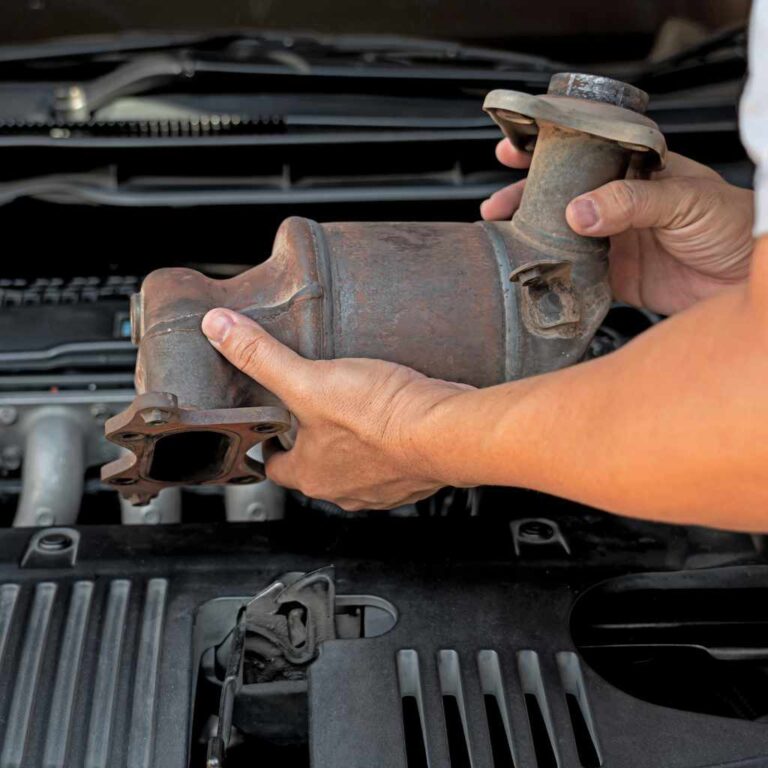
Think of your diesel engine’s exhaust system as a journey. The raw, dirty gases created during combustion need cleaning before they exit under your truck. The catalytic converter is the critical cleaning station on this journey. Without it, your diesel vehicle releases significant amounts of pollutants directly into the air.
The Big Job: Cleaning Diesel Emissions
Unlike gasoline engines, diesel engines produce different kinds of harmful gasses. The diesel catalytic converter uses special precious metals (like platinum and palladium) coated on a ceramic honeycomb structure inside its casing. When hot exhaust gases flow over these metals, a chemical reaction happens that cleans the gasses.
Here are the three main pollutants diesel Cats target:
- Nitrogen Oxides (NOx): These gasses contribute to smog and acid rain. The Cat converts them into harmless nitrogen and oxygen.
- Carbon Monoxide (CO): A colorless, odorless, poisonous gas. The converter changes this into less harmful carbon dioxide.
- Hydrocarbons (HC): Unburned fuel vapors that contribute to smog. They are converted into water vapor and carbon dioxide.
It’s important to know that modern diesels often have two main components working together: the Diesel Oxidation Catalyst (DOC) and the Diesel Particulate Filter (DPF). While they are technically different, they work in tandem as part of the overall emission control system. The DOC usually comes first and handles most of the gasses, while the DPF traps the black soot.
The Legal Requirement: Staying Street Legal
The most immediate and practical reason your diesel Cat is worth having is legality. In the United States and many other countries, strict laws govern vehicle emissions. Governing bodies like the Environmental Protection Agency (EPA) mandate that certain vehicles use these emission control devices. The EPA sets national standards to ensure cleaner air for everyone.
If your vehicle was manufactured to include a catalytic converter, removing it or tampering with it is illegal for road use. Law enforcement and state inspection stations check for these components. If you fail an emissions test because the Cat is missing or malfunctioning, you face:
- Failing the required state inspection.
- Potentially facing large fines from environmental agencies.
- Difficulty selling the vehicle later.

Decoding Diesel Cat Value: Is It About Scrap Metal or Function?
When people ask if diesel catalytic converters are “worth anything,” they usually mean one of two things: their resale value as scrap metal or their functional value to the vehicle owner. The answer involves both!
1. Scrap Value: The Precious Metals Inside
Yes, diesel catalytic converters inherently hold value due to the precious metals used in their construction. These metals—primarily Platinum (Pt), Palladium (Pd), and sometimes Rhodium (Rh)—are expensive commodities on the world market.
However, the amount and mix of these metals vary significantly depending on the age and type of the converter. Newer, heavy-duty diesel converters often have different compositions than older models or passenger car Cats, impacting their immediate scrap worth.
Factors Affecting Scrap Metal Worth
The price you get for selling an old Cat isn’t fixed. It depends on several dynamic factors:
- Current Commodity Prices: When platinum prices rise globally, your old Cat is worth more.
- Converter Size and Type: Larger diesel Cats (especially from big rigs or larger trucks) generally hold more material and command higher prices than small passenger vehicle Cats.
- Condition: If the ceramic substrate inside is intact, recyclers pay more. If it’s completely melted, damaged, or missing, the value drops significantly.
- Market Fluctuations: Scrap yards constantly adjust buy rates based on demand and current recycling costs.
A Beginner Tip on Selling Scrap: If you are replacing a Cat, shop around! Different scrap recyclers have different rates for the same unit. Never settle for the first offer you receive.
2. Functional Value: Keeping Your Truck Running Right
For the average diesel owner, the functional value of the catalytic converter far outweighs the scrap metal value. This is the essential worth you asked about. Its primary job is enabling your engine management system to keep running smoothly and legally.
Performance and Engine Efficiency
When a Cat works correctly, it causes very little back pressure. Good flow equals good performance. A clean, functioning Cat allows your engine to breathe easily, which helps maintain the horsepower and torque you paid for.
Conversely, a clogged or failing Cat severely restricts exhaust flow. This causes:
- Significant loss of acceleration and power.
- Engine misfires or rough idling.
- Increased fuel consumption (wasted money!).
- The Check Engine Light (CEL) illuminating due to sensor readings.
Safety Note: Severe clogging can lead to excessive heat buildup in the exhaust system, posing a potential fire hazard under extreme conditions.
To help compare the two main components often found in modern diesel exhaust systems, here is a quick breakdown:
| Component | Primary Function | Essential Value |
|---|---|---|
| Diesel Oxidation Catalyst (DOC) | Oxidizes CO and Hydrocarbons. Helps regenerate the DPF. | Allows engine to run cleaner and manage DPF cycles. |
| Diesel Particulate Filter (DPF) | Traps and burns off soot (particulate matter). | Crucial for meeting PM (soot) emission standards and avoiding legal fines. |
| Catalytic Converter (General Term/SCR System) | Converts dangerous NOx into harmless nitrogen (in SCR systems). | Mandatory for low NOx compliance and legality on newer diesels. |
Diagnosing a Failing Diesel Catalytic Converter
How do you know if this essential part is failing and needs replacement? You don’t want to replace a perfectly good part, but you certainly don’t want to drive with a failing one.
Common Symptoms of Cat Failure
Often, failure isn’t just about the internal catalyst matrix breaking down; it can also be about being “poisoned” or simply reaching the end of its effective lifespan. Watch out for these clear warning signs:
- Check Engine Light (CEL): This is the first sign. The engine computer monitors the oxygen sensors before and after the Cat to ensure it’s cleaning the exhaust effectively. If the front sensor reads similarly to the back sensor, the computer assumes the Cat is not working.
- Reduced Engine Performance: Sudden sluggishness, especially under load (like towing or going uphill), often signals a clog or significant restriction inside the Cat.
- Sulfur or Rotten Egg Smell: If the Cat can’t convert hydrogen sulfide efficiently, you might smell rotten eggs coming from the tailpipe—a classic sign of a struggling converter.
- Excessive Heat Under the Vehicle: A heavily restricted catalyst can cause exhaust temperatures to increase dramatically after the Cat housing, potentially making the area under the truck hotter than normal.
- Engine Won’t Start or Stalls: In severe cases of complete blockage, the exhaust gas cannot escape, building up pressure that prevents the engine from drawing in fresh air to combust fuel.
Testing the Converter’s Health
If you suspect failure, professional testing is the best route. A trusted mechanic will use smart tools to check the flow and temperature differential.
Here are the common diagnostic steps:
- Code Reading: Scanning the On-Board Diagnostics (OBD-II or OBD-10 for heavy-duty) system pulls codes like P0420 (Catalyst System Efficiency Below Threshold).
- Backpressure Test: This involves temporarily installing a gauge into the exhaust stream (before and after the Cat) to measure pressure drop. High pressure indicates a blockage.
- Temperature Test: Safely measuring the exhaust gas temperature entering and exiting the Cat. A healthy Cat should be significantly hotter on the exit side because the chemical reaction generates heat. A small or negative difference suggests it’s not working.
The Cost-Benefit Analysis: Replacing vs. Ignoring
This is where we get to the heart of “Are they worth it?” For modern diesels, ignoring a necessary replacement is a high-risk, low-reward strategy.
Why Replacement is Usually the Smarter Move
When you look at the cost of a new, compliant diesel catalytic converter—which can be substantial—it’s tempting to look for cheaper, off-road alternatives. However, consider the long-term costs of not replacing it:
| Scenario | Initial Cost | Long-Term Risks | Overall Worth |
|---|---|---|---|
| Replacement (with OEM/EPA-compliant part) | High initial purchase and installation. | Low. Vehicle operates legally and reliably. Minimal risk of future fines. | Essential. Guarantees uptime and compliance. |
| Ignoring/Removing (Off-Road Use Only) | Zero to low (cost of deletion pipe). | High risk of immediate failure on smog check. Potential for large EPA fines for tampering. Engine performance suffers due to improper DPF regeneration cycles. | Not worth it if driven on public roads. |
The “Delete” Debate (A Necessary Warning)
Some owners facing huge replacement bills opt to “delete” the converter and DPF—meaning they remove the components and often reprogram the engine computer (ECM) to ignore the missing parts.
While this sounds cheaper upfront and may promise slightly better fuel economy or performance initially, be crystal clear on the implications:
- It makes your vehicle non-roadworthy. This is illegal in all 50 states for street-driven vehicles.
- It voids warranties on emission components.
- It significantly increases smog and pollution output.
As an automotive guide focused on safe and responsible maintenance, I strongly urge against these modifications unless you are operating the vehicle strictly on private, closed-course property (like a dedicated farm or construction site where emissions laws don’t apply). For everyday driving, the essential value of the functional Cat is non-negotiable.
Maintenance Tips to Extend Your Diesel Cat’s Life
If you invest in a new, expensive replacement Cat, you want it to last as long as possible. The lifespan of a catalytic converter is often determined by how well the rest of the engine is running. You can proactively protect this investment!
Preventing Catalyst Poisoning
Catalyst poisoning happens when impurities enter the exhaust stream and coat the precious metal surfaces, preventing the chemical reactions from occurring. Once poisoned, the Cat usually cannot be recovered and must be replaced.
Key contaminants to avoid:
- Excessive Oil Burning: If your engine is burning too much oil (often due to worn piston rings or valve seals), the oil ash coats the catalyst honeycomb, effectively suffocating it. Keep oil levels correct and address underlying engine leaks.
- Antifreeze Leaks: Coolant (ethylene glycol) is devastating to the Cat’s efficiency. A blown head gasket that leaks coolant into the exhaust will destroy the catalyst quickly.
- Fuel Additive Misuse: Using non-approved fuel additives or excessive amounts of certain fuel treatments can leave behind deposits that coat the catalyst surfaces.
Maintaining Proper Engine Health
The environment inside the Cat needs the exhaust gas to be at the correct temperature and composition. Excellent engine maintenance directly supports Cat health.
Actionable Maintenance Checks:
- Regular Oil Changes: Use the correct diesel-specific oil for modern engines, which often have lower sulfur content to protect emission systems.
- Oxygen Sensor Replacement: If your upstream (pre-Cat) O2 sensor fails, it sends bad data to the computer, causing too much fuel to be injected. This overheats and melts the Cat. Replacing aging O2 sensors proactively is preventative maintenance!
- Follow DPF Regeneration Procedures: For newer diesels, ensure your truck regularly completes its forced or automatic DPF regeneration cycle. If soot builds up excessively, the DPF can cause temperatures to spike, leading to thermal failure of the DOC directly ahead of it. This is a common failure point for trucks used only for short city trips.

Frequently Asked Questions (FAQs) for Diesel Owners
Let’s clear up some of the most common questions new diesel owners have about their exhaust systems.
Q1: How long should a diesel catalytic converter last?
A: If maintained well, a modern diesel catalytic converter or DOC assembly should last 10–15 years or 150,000 to 250,000 miles. However, severe engine problems like excessive oil burning can cause premature failure much sooner.
Q2: Can I clean a clogged diesel catalytic converter instead of replacing it?
A: Sometimes a mild clog (often caused by soot buildup in the DPF section) can be corrected via a professional forced regeneration service. However, if the internal catalyst material is chemically poisoned or melted, cleaning is usually ineffective, and replacement is necessary.
Q3: If my truck is older and doesn’t have a DPF, does the Cat still matter?
A: Yes. Even older diesel engines use a DOC to control CO and hydrocarbons. If your vehicle came from the factory with a Cat, you must have one installed and functioning to pass state inspections and remain legal for road use.
Q4: What is the difference in value between a gasoline and a diesel catalytic converter?
A: Diesel catalytic converters, especially those designed to handle heavy particulates and NOx reduction (like SCR systems), often contain a different makeup of precious metals than standard gasoline converters. Generally, large, modern diesel Cats can hold high scrap value, but their functional replacement cost is also very high.
Q5: Will removing my diesel Cat increase my gas mileage?
A: Removing the Cat technically reduces exhaust backpressure, which could slightly improve flow efficiency. However, if you remove the Cat on a modern truck, the ECM will often trigger warning lights and force the engine into a “limp mode” to protect the engine, severely hurting performance and potentially fuel economy.
Q6: Are aftermarket “universal” diesel catalytic converters as good as OEM ones?
A: Aftermarket converters vary widely. While some high-quality aftermarket units meet EPA standards, cheaper options may use less precious metal, leading to lower long-term efficiency and quicker failure. OEM parts are guaranteed to meet design specifications, offering the safest route for compliance.
Conclusion: The Essential Value of Your Diesel Cat
We’ve covered a lot of ground, moving from emissions science to scrap metal pricing. To bring it all together: Yes, your diesel catalytic converter is absolutely worth its essential functional value.
If your vehicle is driven on public roads, the Cat is not merely a component; it is a legal necessity. Its primary worth lies in controlling toxic emissions, ensuring you avoid heavy fines, and keeping your engine operating within its designed parameters for longevity and reliability. While the scrap value provides a small consolation prize should it fail, relying on that scrap value over the functional necessity is a path fraught with legal and technical trouble for the everyday driver.
Maintain your engine properly, use quality fuel, and address small issues before they turn into massive overheating or poisoning problems. By treating your exhaust system with the respect it deserves, you safeguard your investment, protect the air, and ensure many happy, compliant miles ahead in your diesel truck or SUV. Keep those exhaust gasses clean, and your engine will thank you!
Related pick: Check today's price on Amazon