When to Replace a Flex Pipe Instead of Patching
Replace a flex pipe when the braid is split, the bellows are cracked, or the leak sits in the bellows itself; patching is only a short stopgap for a tiny pinhole in sound metal. Ignored damage can trigger loud exhaust leaks, exhaust gas under the car, failed emissions, and a repair that fails again fast. This guide shows which damage patterns can be patched, which ones need a new flex pipe, and what to inspect before you buy parts.
Flex pipe damage patterns


A flex pipe is the braided exhaust section that soaks up engine movement and vibration. It usually sits near the front of the exhaust under the vehicle, so it takes heat, road spray, and engine motion at the same time. That location is why small damage can turn into a larger leak quickly.
Braid-only wear
Outer braid wear by itself is the least severe case. If the outer weave is frayed but the inner tube still seals and the pipe is not rusted thin, a temporary patch may buy time. The key is that the metal underneath still has enough sound material to hold a sleeve, clamp, or other stopgap.
Inner liner failure
A split inner tube is a different problem. The leak is no longer cosmetic; exhaust is escaping through the working wall of the flex pipe. Once the inner liner is cracked or split, a patch on the outside rarely lasts because the pressure and movement keep working the same weak spot.
Rust-through, tearing, and collapse
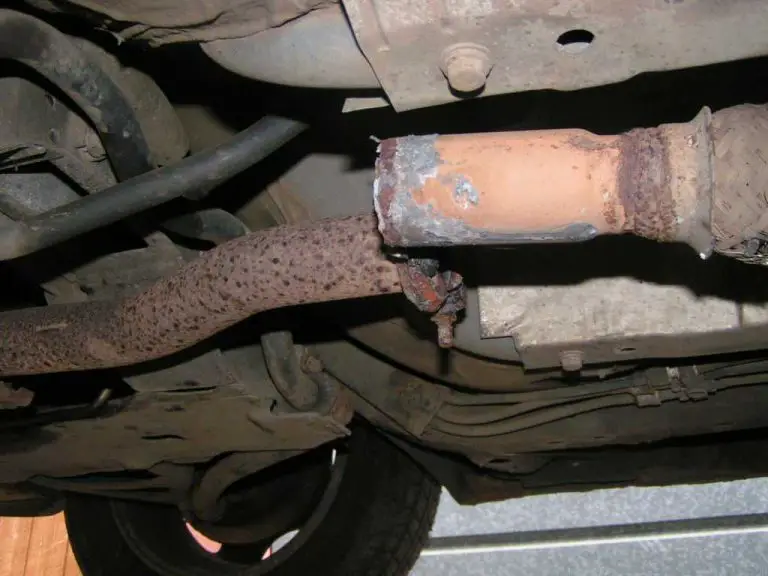
Rust-through, torn bellows, collapsed sections, and repeated splits point to a flex pipe that has reached the end of useful repair. If the pipe is thin, oval, crushed, or missing material, there is often nothing dependable for a clamp or sleeve to grip. In that case, replacement is the reliable fix.
Can you patch a flex pipe?
You can patch a flex pipe only when the leak is small, localized, and surrounded by otherwise solid pipe. A patch is a short stopgap, not a lasting fix, and it works best when the damage is on the outer braid or at a tiny pinhole away from major corrosion. If the inner tube is split, replacement is the safer call.
When a patch is only a stopgap
A temporary patch makes sense when the pipe has one small leak, the surrounding metal is sound, and the exhaust section still holds its shape. That may mean a clamp-on sleeve, a wrap, or a sealant made for exhaust heat. These can cut noise and fumes, but they do not restore a damaged flex section for long.
When a sleeve or clamp can work
An exhaust clamp or sleeve needs enough straight, round, solid pipe on both sides of the leak. It also needs the correct diameter match. A clamp works best when it can compress evenly; a sleeve is usually better when you need a broader sealing surface. If the pipe is crushed, heavily corroded, or irregular, the seal is unreliable and the clamp will often leak again. That is why fit matters as much as the part itself.
When a patch will fail again
A patch usually fails again if the braid is torn open, the inner liner is split, or the pipe keeps moving because a hanger or mount is broken. Excessive engine movement can reopen the same crack even after a clean repair. If the cause is still present, the fix is temporary by design. PVC or water-pipe patching methods are not the same as exhaust repair and should be excluded here.
When replacement is the right call
Replace the flex pipe when the leak is part of a larger material failure. Repeated leaks after patching, rusted sections near the leak, or damage that has spread from the braid into the inner tube are all signs that the pipe is no longer repairable in a lasting way. A new flex section is the better value when the old one is failing in more than one place.
Repeated leaks after repair
If the same area has already been patched and failed again, the pipe is telling you that the material is too tired for another temporary fix. The cost of a second patch plus labor can come close to the price of replacement without giving a dependable result. At that point, replacement usually saves time and repeat work.
Poor pipe condition near the leak
Even a small leak calls for replacement when the surrounding pipe is rusted thin, pitted, or beginning to separate from the flex section. Welding thin rusted metal often leaves new pinholes nearby. Welding equipment can help when the metal is clean, thick enough, and the joint can be prepped well; it is not suitable when the pipe is paper-thin, badly pitted, crushed, or too close to fragile material to make a durable seam.
No solid section for a mechanical repair
If there is not enough straight pipe for a clamp or sleeve to grip, skip the mechanical repair. That includes crushed, oval, or heavily corroded pipe. A repair method that depends on clamping pressure cannot work well on distorted metal, because the seal cannot stay even as the exhaust heats and moves.
Flex pipe repair decision table
| Damage pattern | Likely root cause | Leak location | Inspection risk | Legality or inspection likelihood by position | Rough repair cost range | Do not drive threshold | Expected lifespan | DIY realistic? | Correct action |
|---|---|---|---|---|---|---|---|---|---|
| Small pinhole, outer braid intact | Minor corrosion or a tiny stress crack | Farther downstream under the vehicle | Lower, unless visible during inspection | More likely to pass than an upstream leak if there is no visible soot or smell | Lowest-cost temporary repair | Strong exhaust smell in cabin or loud ticking that suddenly worsens | Short-term, often weeks to a few months | Yes, if pipe is straight and solid | Patch |
| Frayed braid with sound inner liner | Heat cycling, vibration, or early fatigue | Farther downstream under the vehicle | Moderate if smoke, noise, or soot is obvious | May still fail inspection if the leak is visible or noisy | Low to moderate temporary repair | Any fumes entering the cabin or a leak that spreads quickly | Short-term, varies with pipe movement | Sometimes | Sleeve or clamp, then plan replacement |
| Split inner tube with intact outer braid | Internal fatigue, movement, or heat damage | Near catalytic converter or O2 sensors | High, because sensor readings can be skewed | Higher failure risk when the leak is upstream or near emissions hardware | Mid-range if welded; temporary repair is usually poor value | Check engine light, strong fumes, or rough running that starts with the leak | Poor for patching; replacement is longer-lasting | Only if you can cut and weld safely | Weld-in replacement |
| Rust-through, torn bellows, or collapsed section | Advanced corrosion or structural failure | Any location | High, especially if visible exhaust leak is present | High failure risk almost anywhere on the pipe | Usually better handled as a permanent repair | Do not drive if fumes are entering the cabin or the pipe is hanging loose | Patch is unreliable; replacement is the durable fix | No, not as a lasting repair | Full exhaust section replacement |
| Repeated leak after prior repair | Underlying movement, rust, or poor material quality | Same spot or nearby | High if leak returns before inspection | Higher likelihood of failure regardless of position | Temporary fix can become poor value quickly | If the leak returns immediately or gets louder under load | Very short for another patch | Usually not worth it | Replacement |
How does leak location change the fix?
Leak location changes both the repair choice and the risk. A leak near the catalytic converter or O2 sensors can affect sensor readings, drivability, and diagnostic codes. A leak farther downstream is less likely to skew fuel-trim readings, but it can still fail inspection if it is visible, noisy, or smells strongly.
Near the catalytic converter
Upstream leaks close to the catalytic converter deserve more caution. Exhaust pulled in from outside can confuse upstream sensor data and may trigger a check engine light if the leak is close enough to the sensors. If the flex pipe is damaged in this zone, replacement is usually the better fix because a weak patch can keep changing the readings.
Near O2 sensors
When the leak is near an oxygen sensor, even a small gap matters. The engine control system may read extra oxygen that is not actually in the exhaust stream, which can affect drivability and emissions monitors. Upstream sensors are the ones that most affect fuel control, while downstream sensors are more tied to catalyst monitoring. In that situation, a temporary patch may quiet the leak but still leave the vehicle with readiness or code issues.
Farther downstream under the vehicle
A downstream leak under the vehicle is less likely to disturb sensor feedback, but it still matters for safety and inspection. Exhaust fumes can enter the cabin at stops or under certain wind conditions. If the pipe is sound enough, a sleeve or clamp may be acceptable briefly; if not, replacement is cleaner and more durable.
What affects cost and repair lifespan?
Patching costs less up front, but replacement is usually better value when the flex pipe is degraded, leaking near sensors, or already exposed for access. Labor often matters more than the part itself. If the exhaust must be cut down, aligned, and welded anyway, a permanent repair may cost only modestly more than multiple temporary fixes.
Parts and labor comparison
A patch uses cheaper parts: clamps, wraps, sealant, or a short sleeve. A replacement flex pipe costs more because it involves a new section and often more labor. The price gap shrinks when the old section is already out of the way, because setup time is a large part of the bill.
Access, rust, and alignment
Access controls the repair method. Tight clearance, rusted fasteners, and poor pipe alignment can turn a simple-looking leak into a larger job. Welding also depends on clean metal and safe removal. If the surrounding pipe is thin, the weld may hold less well than a properly fitted replacement section.
Inspection and emissions risk
Visible exhaust leaks can fail inspection, and temporary patches may not meet local emissions or safety rules in some areas. Requirements vary by state or region. If the vehicle is due for inspection soon, a patch that only quiets the noise may still fail if fumes, soot, or visible leakage remain.
-
Confirm the leak location.
Start the engine from cold and listen for ticking, then look for soot marks and smell exhaust near the leak. A leak close to the catalytic converter or O2 sensors is often more likely to cause codes or readiness problems than one farther downstream.
-
Check the pipe condition.
Inspect the flex braid, inner tube area, and nearby pipe for rust-through, splits, collapse, or tearing. If the metal is thin or distorted, skip a patch and plan replacement. A sleeve generally works only on straight, solid pipe with the right diameter.
-
Choose the repair type.
Use a patch only for a small localized leak on sound material. Use a clamp or sleeve only when the pipe is round and strong enough to seal. Choose a weld-in replacement when the flex section itself has failed or when nearby pipe is still in decent condition.
-
Inspect the cause.
Check hangers, mounts, and engine movement before closing the job. If a broken hanger or excessive movement caused the crack, the new repair may fail the same way. Fixing the support issue matters as much as the pipe repair.
Say your flex pipe has a 1-inch split in the outer braid, but the inner tube still looks intact and the pipe is round. A clamp sleeve may quiet it for a short time. If that same split is paired with rust flakes and a nearby hanger that is torn loose, replacement is the better call.
Suppose the leak is 8 inches from the front of the exhaust, just ahead of the O2 sensor, and the cold start is louder than usual. Even a small leak there can skew readings. A temporary wrap may reduce noise, but it is not the best fix if inspection or emissions monitors matter soon.
When should I replace a flex pipe instead of patching it?
Replace it when the braid is split, the inner liner is damaged, the pipe is rusted thin, or the leak keeps returning after repair. Replacement is also the better choice when the leak sits near the catalytic converter or O2 sensors, because a weak patch can keep causing code and inspection problems.
Can you patch a flex pipe or does it usually fail again?
You can patch a flex pipe, but it usually fails again if the damage involves the inner tube, heavy corrosion, or ongoing engine movement. Patches work best as short-term fixes on otherwise sound pipe. They are far less dependable when the flex section itself has already begun to break apart.
How do I know the flex pipe is too damaged to repair?
If the pipe is collapsed, torn, rust-through is visible, or the damage includes both the braid and the inner liner, it is too damaged for a lasting patch. Also treat crushed, oval, or heavily corroded pipe as non-repairable for clamp or sleeve work. Those shapes cannot seal reliably.
Is a flex pipe repair legal for emissions or inspection?
It depends on local rules, but visible exhaust leaks often fail inspection, and temporary repairs may not meet emissions or safety standards. A patch that cuts noise is not always enough for compliance. If the leak is near sensors or the catalytic converter, a proper replacement is safer for passing checks.
How long does a flex pipe patch last compared with replacement?
A patch may last weeks or a few months on a small, isolated leak, but it is not a long-life repair. A replacement flex pipe is often the lasting fix when the section is worn, cracked, or rusted. The exact life depends on pipe condition, mount health, and access to a correct repair.
Can I drive with a leaking flex pipe until I can replace it?
You may be able to drive a short distance, but it is risky. Exhaust fumes can enter the cabin, noise can rise quickly, and an upstream leak can affect sensor readings or trigger a check engine light. Avoid long trips, and do not ignore a strong exhaust smell inside the vehicle.
How much does flex pipe replacement cost compared with patching?
Patching costs less at the start because it uses simpler parts and less labor. Replacement costs more because the pipe section must be cut out, aligned, and often welded in. If the exhaust is already apart or the pipe is badly rusted, replacement can be the better value despite the higher bill.
Replacing a flex pipe usually means cutting out the failed section, fitting a new matching part, and welding or clamping it in place. The job depends on safe access, correct alignment, and solid nearby pipe. A weld-in repair is best when the remaining metal is strong and the fit can be made clean; a clamp-style repair is better only when there is enough straight pipe to seal evenly. If the surrounding section is thin or badly corroded, replacing a larger exhaust section may be smarter.
A pipe patch works only on a small, localized leak in sound metal. Clean the area, choose a sleeve or wrap that matches the pipe diameter, and confirm the pipe is round enough to seal. This guide is for exhaust flex pipe repair, not PVC or water-pipe patching. It is a temporary repair, so inspect it again soon and plan replacement if the leak returns.