Exhaust Tips and Mufflers Guide: Fit, Sound, Materials
Choose an exhaust tip that roughly matches your tailpipe size for a proper fit; in most setups, the tip changes sound only a little, while the muffler does most of the work for volume and tone. Miss the fit or expect too much from the tip, and you can end up with a rattle, a melted bumper edge, or money spent chasing a sound a tip alone will never produce. This guide covers tailpipe measurement, tip length and clearance, clamp-on versus weld-on fit, material choices, and when a muffler swap is the real answer.
Exhaust tip vs muffler: what each part actually changes


Where the tip sits in the system and why its effect is limited
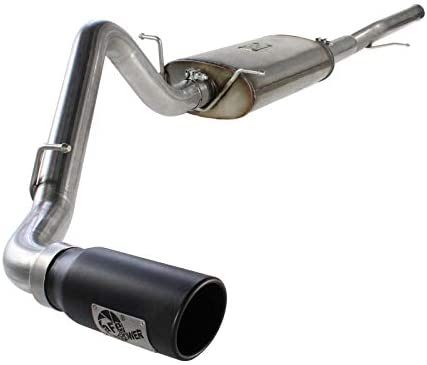
An exhaust tip is the piece at the end of the tailpipe. Since it sits at the very end, its effect stays small compared with the parts upstream that shape pressure pulses, absorb sound, and route the gas flow.
The rule is simple: tips do not add measurable power in any way you will feel. Outlet size is mostly a visual choice, and larger outlets can shift the note a little deeper, but tip-only sound changes stay minor.
What the muffler changes that a tip cannot
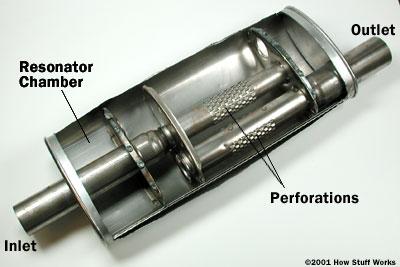
The muffler changes the exhaust note in a way a cosmetic end piece never will. Internal chambers, perforated tubes, packing, and case size decide how much volume drops and which frequencies get absorbed or bounced back.
That is why a stock-muffler car with a new tip often sounds almost the same from the driver’s seat. A muffler delete, resonator delete, or full cat-back changes the system itself. A tip only nudges the final character at the exit.
When a tip swap makes sense and when a muffler change is the real fix
A tip swap makes sense when the goal is fit, looks, corrosion resistance, or a very small final-tone shift. It also helps when the factory outlet sits too far under the bumper and leaves soot on the valance.
A muffler change is the real fix when the owner wants a big change in loudness, a deeper idle, less drone, or better control of rasp. Tips can tweak the sound a little at the exit. The muffler and the full pipe routing shape the result much more.
What size exhaust tip fits my tailpipe?
The tip that fits is the one whose inlet diameter matches your tailpipe outside diameter. That fit rule matters more than outlet size. I always measure the tailpipe before buying, because the outlet is mostly about appearance and only changes final tone a little.
Match tip inlet diameter to tailpipe outside diameter
The inlet must match the existing pipe size. More exactly, the fitment rule is to measure tailpipe outside diameter, then buy a tip with the same inlet size. That number decides whether the part clamps, slips, or welds on correctly.
Many buyers stare at the big visible outlet and ignore the hidden inlet. That is how you get the usual problems: loose clamp fit, soot streaks, vibration, or a tip that will not slide over the pipe at all.
How much size mismatch is acceptable by mounting type
Clamp-on tips are the least forgiving. Even a small mismatch can leave the clamp fully tightened before the tip is actually secure, and that is where rattles start. Slip-on tips can handle slight variation if the design allows it, but only if the joint still seats squarely and the clamp lands on solid round pipe.
Welded tips can cover the widest range because a fabricator can trim, sleeve, or adapt the joint. Even then, a bad size match leaves ugly weld transitions, heat marks, and a tip that sits off-center under the bumper.
Inches, millimeters, and avoiding a wrong order
Tailpipe and tip sizing may be listed in inches or millimeters. That is where many buyers slip up. Measure first, then compare the listing carefully instead of guessing from a rounded number on a product page.
If the vehicle uses metric sizing and the tip listing is in inches, convert the number before ordering and compare it to the actual measured outside diameter. The rule does not change: match the inlet to the pipe OD, not to a hopeful “universal” fit.

How do I measure an exhaust tip inlet correctly?
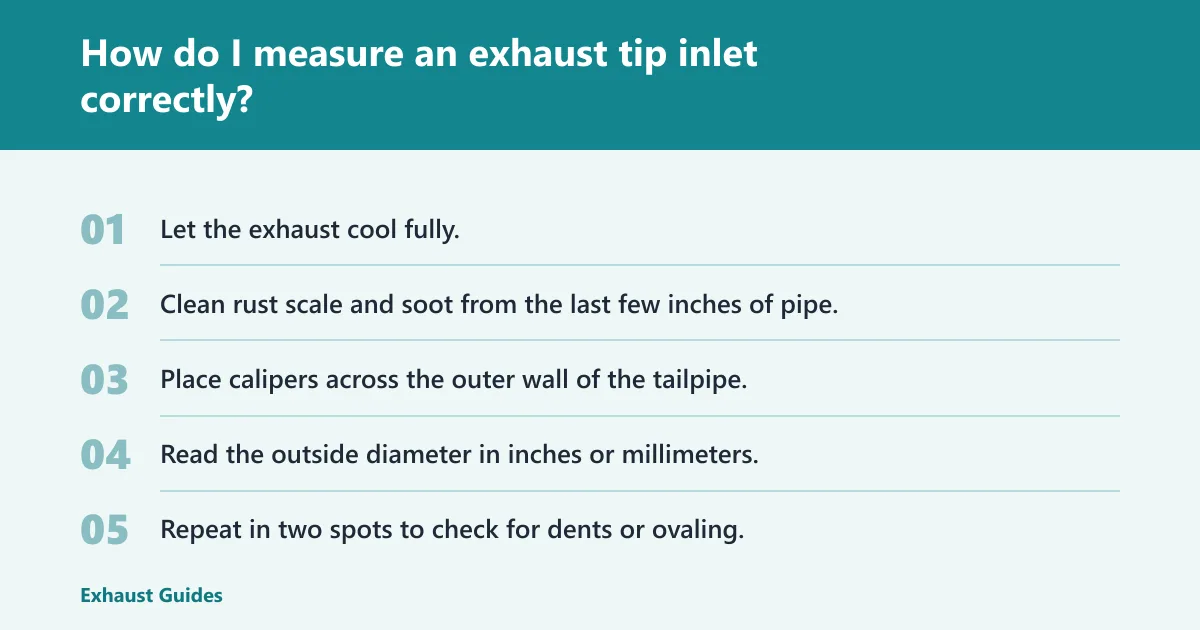
Measure the tailpipe outside diameter, not the hole inside the pipe, because the inlet has to fit over the pipe’s outer size. Exhaust pipe size should be measured with calipers if possible. Then check tip length, outlet width, bumper cut-out room, projection past the bumper, and clamp location.
Use calipers on the tailpipe outside diameter
Calipers are the right tool here because exhaust pipe size should be measured with calipers if possible. I have seen too many tape-measure guesses go wrong, and a dirty tailpipe gives rough numbers when the part may only allow a small tolerance window.
- Let the exhaust cool fully.
- Clean rust scale and soot from the last few inches of pipe.
- Place calipers across the outer wall of the tailpipe.
- Read the outside diameter in inches or millimeters.
- Repeat in two spots to check for dents or ovaling.
If the pipe is crushed, flared, or cut crooked, measure farther forward on a round section. That gives you a truer sizing number for the inlet.
Measure outlet size, overall length, and wall style
After the inlet, measure how much visual change the rear of the car can take. The article suggests a subtle outlet is 0.5 to 1 inch larger. A bold outlet is 1.5 to 2 inches larger. Those outlet numbers are style guides, not fitment rules.
Overall length matters more than many product pages admit. A longer tip can move the outlet farther from the bumper, which can reduce soot marks on some setups. It can also put hot metal closer to a shin, a trailer hitch, or the edge of a plastic valance.
Dual-wall tips add a thicker finished edge and a more upscale look, but that wall design is mainly cosmetic. It will not behave like a muffler. It may slightly change the final note at the exit, though far less than the muffler does.
Check bumper cut-out clearance, projection, and clamp location
Look at the bumper opening from straight behind and from below. The tip needs side clearance, vertical clearance, and enough room for movement when the exhaust rocks under load.
Clamp location is easy to miss. Some tips put the clamp body close to the bumper cut-out or suspension, and that part becomes the first thing to hit over bumps. On a low car, the clamp can also end up as the lowest part of the rear exhaust and scrape.
Projection matters too. A tip tucked too far in can trap soot and heat under the bumper. A tip that sticks out too far can look awkward and may put more heat on trailer gear or anyone standing behind the car.
Fitment worksheet and failure-risk checklist
Measurement worksheet
| Item | Vehicle measurement | Tip option A | Tip option B | Failure risk to watch |
|---|---|---|---|---|
| Tailpipe OD | Measure with calipers; record in in/mm | Inlet must match exactly | Inlet must match exactly | Loose fit, clamp slip, rattling |
| Inlet size | Match to tailpipe OD | Check clamp range or weld prep | Check clamp range or weld prep | Leak marks, vibration, crooked install |
| Outlet size | Choose for look first | Subtle: 0.5 to 1 inch larger | Bold: 1.5 to 2 inches larger | Oversized look, bumper crowding, soot spread |
| Tip length | Check total length and visible projection | Shorter tip | Longer tip | Bumper heat, soot on valance, shin contact |
| Bumper cut-out clearance | Check top, sides, and lower edge | Centered fit | Tight fit | Melted trim, vibration contact, heat marks |
| Clamp location | Mark where clamp body will sit | Clear of bumper | Near bumper edge | Rattle, scrape, hard-to-tighten fastener |
| Material | Choose by climate and use | 304 stainless steel | 409 or mild steel | Rust progression, staining, upkeep load |
How to use the worksheet before ordering
Fill in the vehicle measurements first. Then compare two or three candidate tips side by side. I have watched good-looking listings lose fast once clamp placement, bumper room, and winter corrosion are written down.
Add a simple pass or fail note for each risk column. If one option keeps flagging rattling, rust, soot, or heat exposure, it is already telling you how the install will age.
Failure modes buyers usually miss
Rattling usually comes from a loose inlet match, a clamp bottoming out, or a heavy long tip hanging off a short section of pipe. Vibration shows up when the tip sits too close to the bumper or when the exhaust swings on soft hangers.
Rust moves fastest at seams, clamp areas, and chipped coatings. Condensation can sit inside a tip on short-trip vehicles and speed up staining or corrosion. Soot buildup gets worse when the outlet is tucked under the bumper or when the engine already runs rich. Heat exposure matters most with plastic valances, close bumper cut-outs, and long idling.
Do exhaust tips actually change the sound?
Yes, but only a little. An exhaust tip can slightly affect the final tone at the end of the system, while the muffler and piping shape the sound much more than the tip. On a stock setup, most changes are minor and easier to hear outside the car than from the driver’s seat.
What changes are realistic on a stock muffler setup
On a stock muffler car, expect small shifts in sharpness, depth, or the way the note exits behind the vehicle. The page says larger outlets can create a slightly deeper tone. That is real, but it is nowhere near a muffler swap.
A resonated tip can soften or reshape frequencies. That can take a little edge off a buzzy note or trim some higher-frequency crackle at the tail end. It does not replace a quieter muffler.
How outlet diameter, length, and turndown angle shape the final note
Outlet diameter mainly changes the character at the very exit. Bigger outlets can sound a touch deeper behind the car. Smaller or tucked tips can sound a little sharper because the sound energy exits in a tighter path.
Length changes where the note exits relative to the bumper. A longer tip that clears the valance can reduce some reflected harshness from under the car. A turndown exhaust tip points downward, directs exhaust toward the ground, and can reduce sharpness heard behind the vehicle.
Why muffler design matters far more than the tip
The muffler sets the baseline volume and tone. If the owner compares changes honestly, outlet size, tip length, and wall design matter far less than the muffler. A muffler delete or resonator delete will usually be noticeable. A tip change may barely register.
That matters at purchase time. A cosmetic part should not be expected to fix drone, cure rasp, or add a strong cold-start bark.
Will a bigger exhaust tip make my car louder?
A bigger exhaust tip can make the sound seem a little deeper or more present behind the vehicle, but it usually does not make the car much louder in any meaningful way. On most stock muffler setups, the change is minor and often hard to notice from the cabin.
Louder versus deeper versus sharper
Buyers often report “louder” when what they really mean is “deeper” or “less tucked under the car.” The outlet size is described as mostly a style choice, and any sound shift is usually a small change in perceived character.
The article suggests a subtle outlet is 0.5 to 1 inch larger and a bold outlet is 1.5 to 2 inches larger. That helps frame appearance. It does not mean the larger option creates a dramatic jump in volume.
When the change is barely noticeable
With a stock muffler, stock resonator, and factory rear piping, the driver may notice almost nothing at cruise. Outside the car, a listener standing behind the bumper may hear a slight change in depth or sharpness.
On modified systems, a larger tip can make an existing loud exhaust seem a touch fuller at the exit. The tip is still reacting to the sound produced upstream.
What is the best exhaust tip material for daily driving?
For daily driving, 304 stainless steel is the top pick because it offers excellent rust resistance and high heat tolerance. 409 stainless steel works when budget matters, and mild steel only makes sense when low upfront cost matters more than long-term upkeep and rust risk.
304 stainless steel exhaust tip
Stainless steel is described as the best material choice, and 304 stainless steel is called the gold standard for daily drivers. That lines up with what I have seen in real use because 304 resists rust very well and handles heat without trouble.
For snowy regions, salted roads, frequent washing, and year-round use, 304 is the safest recommendation. It also stays presentable longer when the tip is a visible styling piece.
409 stainless steel exhaust tip
409 stainless steel is positioned as a budget option. It has good corrosion resistance and costs less than 304, which makes it a sensible middle ground for many drivers.
The tradeoff is finish aging. In harsh climates, 409 may eventually show surface rust. That does not always mean structural failure, but it does change the appearance and asks for more upkeep.
Mild steel exhaust tip
Mild steel is often described as affordable but more prone to rust. That is the honest version. If the coating chips, rust can spread fast, especially around welds and clamp points.
Mild steel can work on a fair-weather project or a low-budget short-term fix. It is a poor match for a daily driver in wet, salty, or coastal conditions unless the owner accepts regular cleaning and repainting.
When carbon fiber tips beat stainless steel
Carbon fiber exhaust tips deliver superior visual impact but demand careful verification of heat ratings to avoid discoloration or delamination. The article outlines specific scenarios where the aesthetic premium justifies the cost over standard stainless steel, identifying who benefits most from this upgrade. It provides a direct comparison against black stainless and burnt tips, helping you decide if the look matches your vehicle’s overall stock or modified appearance. If your priority is daily driving durability over show value, stainless remains the smarter financial choice. Explore carbon fiber tip value to see which specific specs and use cases make this material worth the extra investment for your car.
What exhaust tip style looks best on my car?
The best-looking tip is the one that matches the vehicle’s bumper opening, ride height, and exhaust layout without looking oversized or tucked away. Style should follow fit. Outlet shape, wall thickness, and cut angle matter, but they only work when inlet size, length, and clearance are right.
Single-wall and dual-wall tips
Single-wall tips look leaner and more mechanical. Dual-wall tips look heavier and more finished because the outer edge is thicker. That dual-wall design is mainly cosmetic, so buy it for appearance rather than for a major sound change.
Dual-wall works well on modern sedans, SUVs, and factory-style valances. Single-wall often suits older cars, simpler rear bumpers, and builds where a thinner edge looks more honest.
Straight-cut, angle-cut, rolled-edge, and slash-cut choices
Straight-cut tips fit cleanly on cars with a square bumper opening or visible twin-exit layout. Angle-cut or slash-cut tips can follow a bumper line better on cars where the tailpipe sits at a slight angle.
Rolled-edge styles soften the look and can suit stock-bodied street cars. Sharper cut styles fit better on trucks, tuners, and more aggressive rear bumpers. The key is to match the body shape, not chase the largest outlet that will physically fit.
Turndown tips for trucks, diesels, hidden exits, and rear sound control
Turndown exhaust tips are useful when the owner wants to hide the outlet, keep the rear bumper cleaner, or direct sound and soot downward. They are common on trucks and some diesels with larger tailpipes.
Rear-exit tips usually look cleaner on polished street trucks and SUVs where the tip is part of the styling. Turndowns make sense on work trucks, lowered pickups with tight bumper space, and vehicles where a visible tip would sit awkwardly under the body.
Choosing the right exhaust tip style for sport motorcycles
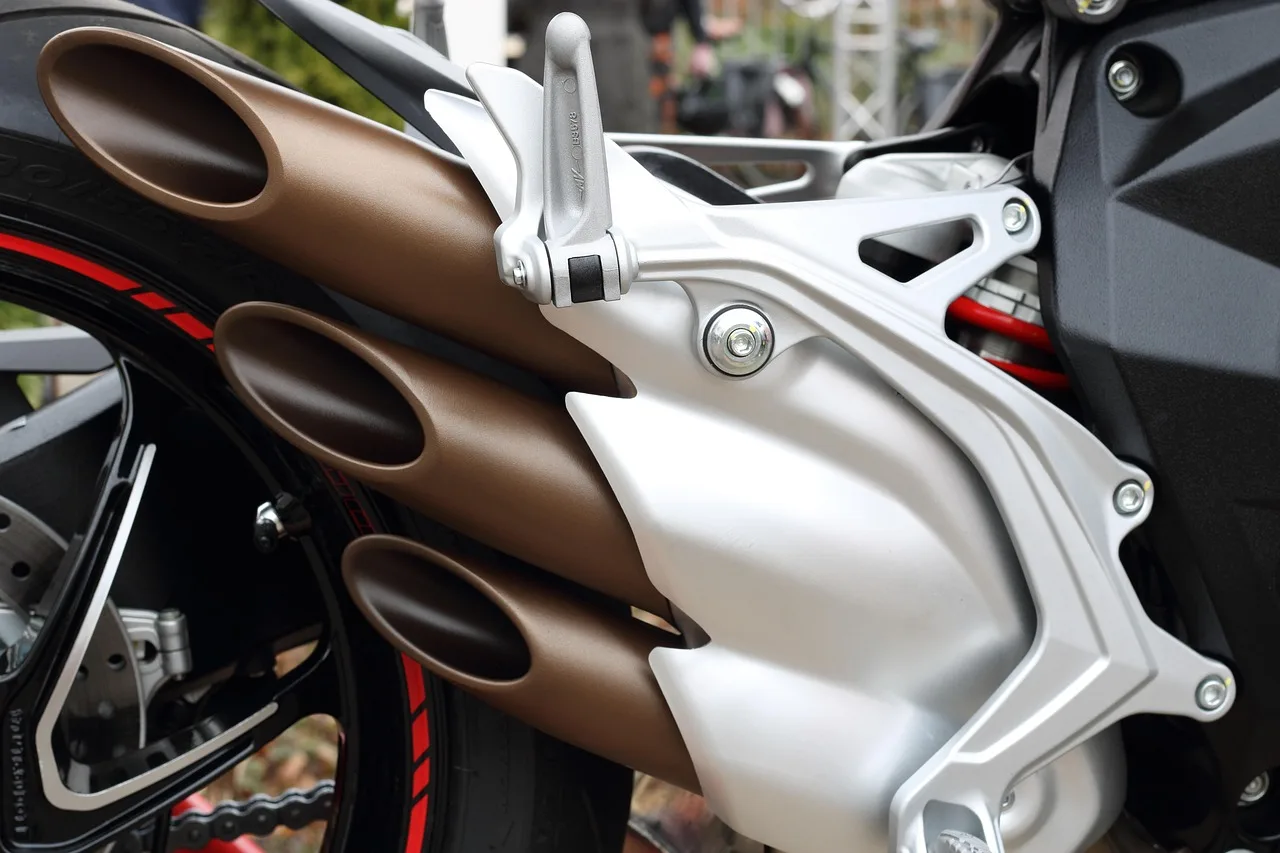
If you ride a sport bike, exhaust tip shape matters as much as diameter: the right style can help preserve cornering clearance, keep noise more controlled, and avoid fitment headaches. The supporting guide breaks down the most practical options for sport motorcycles, including slash-cut, rolled edge, straight-cut, fishtail, and revolver designs, and explains how each one affects sound, appearance, maintenance, and legal compliance.
Use this sport motorcycle tip styles guide to compare the tradeoffs before you buy. It is especially useful if you want a sharper exhaust note without choosing a tip that looks good but creates clearance or inspection problems.
Choosing the right tip finish for white cars
On a white car, the best exhaust tip finish depends on the look you want to match. Black-coated tips suit darker trim and a more modern, stealthy rear end, polished stainless is the safest all-around choice for a clean OEM-plus look, chrome works best when the car already has bright trim, and burnt titanium adds a sharper, performance-focused contrast. The finish matters because it can either tie the rear end into the rest of the car or make the tips look like an afterthought.
The full white car tip finish guide breaks down each option by wheel color, trim, and overall style so you can choose a finish that looks intentional instead of mismatched.
Are resonated exhaust tips quieter than regular tips?
Sometimes, but only a little. A resonated tip can soften or reshape certain frequencies, which may take the edge off a buzzy or raspy exhaust note. It is a minor sound-refinement part, not a substitute for a quieter muffler or a properly sized resonator.
Where resonated tips help
Resonated tips are most helpful when the system already sounds acceptable and only needs a small trim at the very end. They can take a slight sting out of high-frequency noise, especially on some four-cylinder or small-displacement setups.
They can also help on an otherwise mild aftermarket axle-back where the owner wants a calmer exit note without redoing the whole system.
Where they do very little
If the car has a muffler delete, a resonator delete, or a loud straight-through muffler, a resonated tip will not bring the system back to stock-like behavior. It may alter the edge of the sound, but it will not solve cabin drone or major volume complaints.
That is the gap many buyers miss. Tip-only changes are small. Muffler and resonator changes alter the system itself.
Installation choices: clamp-on, slip-on, or welded
Decision matrix for mounting method
| Mounting type | Best for | Main advantage | Main downside | Watch for |
|---|---|---|---|---|
| Clamp-on | Easy home install, stock tailpipes, reversible setups | No welding needed | Most sensitive to inlet mismatch | Clamp bottoming out, rattles, crooked alignment |
| Slip-on | Cleaner fit where the joint seats properly | Can install quickly with secure clamp placement | Still depends on good pipe condition | Oval pipe ends, leaks, movement under load |
| Welded | Long or heavy tips, custom exits, modified systems | Most secure and clean-looking | Harder to reverse later | Poor weld quality, heat discoloration, off-center tip |
Best use case for each option
Clamp-on works for straightforward stock tailpipes in good condition. Slip-on is suitable when the pipe end is round and straight and the clamp can sit on full material. Welded is the best answer for custom bumper openings, heavy stainless tips, or any setup where movement control matters most.
Common install mistakes
The first mistake is buying by outlet only. The second is clamping onto a rusty, flared, or crushed tailpipe. The third is setting the tip visually straight while the exhaust is hanging cold, then finding bumper contact once the system expands and moves hot.
Another common miss is support. Long or heavy tips can act like a lever on the tailpipe. If the hangers are soft, the system can swing and tap the bumper or hitch.
Final alignment checks
Before tightening fully, center the tip in the cut-out, then check side and top clearance. Shake the exhaust by hand and look for contact. Confirm the clamp body clears nearby plastic and suspension parts.
After the first heat cycle, recheck alignment, soot pattern, and fastener tightness. A tip that moves even a little when hot is already warning you about future rattles.
Frequently asked questions
Can an exhaust tip fit around my bumper cut-out?
It can, if the tip has enough side, top, and bottom clearance and the clamp body does not interfere with the bumper edge. Check projection too. A tip tucked too far in can leave soot and heat under the bumper, while a tip too close can cause vibration contact or heat damage.