Best Exhaust Tip Styles for Muscle Cars (2026): We Compared
The best exhaust tip style for muscle cars depends on rear valance width, bumper cutout shape, and how much cleanup you want. For many cars, a 3.5- to 4.5-inch round or slash-cut tip may fit a wide range. Pick wrong, and the rear can look pinched, busy, or unfinished, while polished finishes add upkeep and black coatings can stain or dull. This guide compares tip shapes, finishes, fitment, sound expectations, and maintenance burden in a muscle-car matrix.
Quick comparison
| Product | Badge | Best for | Price | ||
|---|---|---|---|---|---|
 | Upower Dual Exhaust Tip 3 Inch Inlet 3" outlet 9.5" LongUpower | Our pick | 3×3 inch · Polished · Dual Wall | $42.99 Price as of 20 Oct 2026 | View |
 | LCGP Bolt On Diesel Exhaust Tip 4", 6" outlet 15" LongLCGP | Budget pick | 4×6 inch · Black · Bolt On | $36.99 Price as of 20 Oct 2026 | View |
 | Dsycar Universal Stainless Steel 1.5" – 2.25" Inlet ExhaustDsycar | Also great | 1.5-2.25 inch · Chrome · Adjustable | $11.99 Price as of 20 Oct 2026 | View |
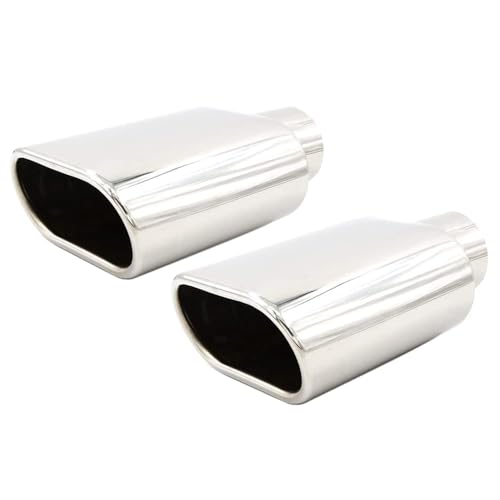 | Exhaust Tip 2.5" Inlet Square 5.5×3" Outlet 9" LongRP Remarkable Power | Upgrade pick | 2.5 inch · Square · 316L Steel | $42.99 Price as of 20 Oct 2026 | View |
Use the table below to separate looks from actual fitment needs. The right tip should match the body lines first, then the tailpipe diameter, then your tolerance for cleaning and finish wear.
How we chose
The choices below are based on rear-end proportion, outlet shape, finish upkeep, and how much installation work each style usually requires. Sound claims stay modest, because exhaust tips usually change tone less than mufflers or axle-back systems.
Fitment matters more than most listings admit. A good tip clears the bumper or valance, matches the hanger path, and does not sit too close to painted or plastic trim.
Maintenance belongs in the decision too. Stainless steel is the practical default for durability and cost control, while chrome, polished, and black finishes each bring a different cleaning load.
Rolled edge tips: best for classic muscle
A rolled edge tip is the safest visual match for classic muscle-car proportions. The finished rim adds visual bulk at the outlet, which works well on older rear valances that look too plain with a thin pipe end.
It fits cars that want a period-correct look better than sharp, modern bodywork. On a stock muffler or axle-back setup, a rolled edge tip usually reads as a styling part first and a sound part second.
Why the rim looks period-correct
The rolled edge softens the exit line and makes the outlet look finished rather than cut off. That matters on square-tailed classics and muscle cars with simple rear fascia designs.
Best rear-end shapes and valances
Choose rolled edge tips when the rear opening is wide, plain, or centered around a single outlet. They also work well when the bumper cutout is small and you want the tip to fill more of the visual gap without going oversized.
Fitment notes for stock and axle-back setups
On stock mufflers, check tailpipe length and the angle of the exit before ordering. On axle-back systems, rolled edge tips often fit cleanly if the final outlet line stays parallel to the valance and leaves enough heat clearance.
Black-coated tips: best for modern stealth
Black-coated tips suit dark paint, newer muscle cars, and builds that want a quieter visual rear end. The finish makes the outlet recede instead of stand out, which helps when the valance already carries a lot of trim detail.
That finish can wear faster than stainless or chrome. Scratches, chips, and heat-related dulling are easier to notice on black-coated surfaces, especially around the exit edge.
Best on dark paint and newer muscle cars
Black-coated tips work well on modern Mustangs, Camaros, and Challengers with angular body lines. The finish usually blends with diffuser-style valances and black trim packages better than bright metal does.
Scratch and coating-wear tradeoffs
Black coatings can show abrasion at the clamp area and soot around the outlet edge. If the car sees frequent cleaning, tight garage parking, or road debris, expect the finish to need more care than bare stainless.
When black looks too muted
On bright paint or a classic chrome-heavy car, black may disappear too much. If the rear bumper already looks visually heavy, a black tip can make the outlet seem smaller instead of more purposeful.
Polished stainless tips: best for daily drivers
Polished stainless is the most practical default for a daily-driven muscle car. It gives a mirror-like look, stays corrosion resistant, and holds up well when the owner wants long service life without constant recoating or repainting.
It is also a common OEM-plus upgrade because it looks clean without looking overdone. The tradeoff is obvious: swirl marks, soot, and water spotting show up quickly on a bright surface.
Why stainless is the practical default
Stainless steel is the common aftermarket material for a reason. It combines durability, corrosion resistance, and better scratch resistance than softer decorative finishes, which makes it a strong match for year-round driving.
Soot and swirl-mark visibility
Polished surfaces make cleanup easy to see. That helps owners who like a detailed finish, but it also means every wash, towel pass, and winter commute can leave visible marks if care is rushed.
Clamp-on versus weld-on choice
Clamp-on polished tips are easier for a quick cosmetic change, but they can need retightening and only work inside the correct size range. Weld-on polished tips look cleaner and stay put better, though they need fabrication and more exact alignment.
Resonated tips: best for a mild tone change
Resonated tips are for owners who want a subtle sound change, not a new exhaust note. The resonator can slightly deepen the tone and may help with mild drone control, but the effect is limited compared with mufflers or full systems.
That makes them a better match for restrained builds than for anyone chasing a major sound shift. If the car already has an aggressive exhaust, a resonated tip is more about refinement than volume.
What the resonator can and cannot do
A resonated tip can smooth the last part of the exhaust path and make the note a touch deeper. It does not replace muffler design, and it will not turn a quiet stock system into a loud one.
Where it may help with drone
On some muffler-delete setups, a resonated tip can soften the edge of cabin boom. The change is modest, though, so the main benefit is usually tone cleanup rather than true drone elimination.
Best fit on muffler-delete setups
Resonated tips are most useful when the rest of the system is already loud enough and you want a little polish at the tail end. They are less useful on a stock muffler, where the muffler itself still controls most of the sound.
Muscle car exhaust tip style matrix

This matrix separates visual effect from sound expectations and fitment effort. It also shows where each style fits best across stock muffler, axle-back, and muffler-delete setups.
| Style | Visual effect | Expected sound change | Fitment difficulty | Maintenance level | Best use case |
|---|---|---|---|---|---|
| Rolled edge | Traditional, finished rim, more visual bulk at the outlet | Usually minor | Low to moderate | Medium | Classic muscle looks; best with stock muffler or axle-back |
| Angle-cut | Aggressive line that follows performance bodywork | Usually minor | Moderate | Medium | Performance builds; good where exit angle matches the valance |
| Dual wall | Thicker, more finished appearance | Usually minor | Moderate | Low to medium | OEM-plus styling and daily-driver upgrades |
| Resonated | Depends on outer shape; often subtle | Subtle deepening; limited effect overall | Moderate | Low to medium | Mild drone control on louder setups; best with muffler-delete |
| Black powder-coated | Stealthy, sportier, blends with dark trim | Usually minor | Low to moderate | High | Modern muscle cars and dark paint; stock muffler or axle-back |
| Polished stainless | Mirror-like, traditional, bright rear accent | Usually minor | Low to moderate | High | Daily drivers and OEM-plus builds; best with stock muffler or axle-back |
| Chrome | Bright reflective finish, show-style appearance | Usually minor | Low to moderate | High | Show cars and garage-kept builds where water marks are acceptable |
| Burnt titanium-look | Heat-colored, performance-coded visual effect | Usually minor | Moderate | Medium | Modern performance styling; best when the rear fascia already looks aggressive |
| Slash-cut | Angled finish that looks fast even at idle | Usually minor | Moderate | Medium | Performance builds and tighter bumper openings |
| Square / rectangular | Distinct, modern, more technical appearance | Usually minor | Moderate to high | Medium | Custom exits and modern muscle cars with wide valances |
For stock mufflers, favor rolled edge, polished stainless, or black-coated tips that keep the rear simple. For axle-back systems, angle-cut, slash-cut, or dual-wall styles usually look intentional without demanding heavy fabrication. For muffler-delete setups, resonated or larger dual tips can help the rear look finished when the system is already visually exposed.
Upower dual exhaust tip: best for polished dual-outlet builds
This tip fits owners who want a cleaner, more finished rear-end look with a traditional polished stainless appearance. The manufacturer lists a 3-inch inlet and 3.5-inch outlet on this dual-wall, slant-angle design, and the 304 stainless construction should suit daily-driver use well.
What stands out is the weld-on format and the broader outlet shape, which can help a muscle car look more planted at the rear. The drawback is installation effort: weld-on fitment is cleaner, but it is not the easy swap that a clamp-on tip offers.
LCGP bolt-on diesel exhaust tip: best for easy black styling
This is the easiest pick for owners who want a black-coated outlet without fabrication work. The bolt-on setup is simple, the powder coating gives a stealth look, and the rolled angle-cut shape can suit a modern muscle car that wants a stronger rear visual line.
The honest drawback is upkeep. Black coatings can show wear and scratches, and the oversized 4-inch by 6-inch styling may look heavy on smaller valances or on cars with tight bumper cutouts.
Dsycar universal chrome exhaust tip: best for cheap chrome trim
This is a budget choice with a bright chrome-plated finish and a broad inlet range of about 1.5 to 2.25 inches, which can help when the tailpipe size is smaller or less standard. It is a quick visual upgrade for a driver who wants more shine without paying for a full custom piece.
The drawback is clear: chrome shows water spots, soot, and scratches more easily than bare stainless. The smaller outlet also means it may look modest on larger muscle-car rear openings.
RP Remarkable Power square exhaust tip: best for custom rear exits
This is the strongest choice for a custom look and a more geometric rear exit. The 2.5-inch inlet and square 5.5×3 inch outlet make it a fit for owners who want a distinct shape rather than the usual round outlet, and the 316L stainless construction adds corrosion resistance.
The drawback is fitment complexity. Square tips demand more attention to bumper and valance clearance, and a shape this specific can look out of place on a classic car that wants softer lines.
Which one should you buy?
If you want the safest all-around look, start with polished stainless or rolled edge. If the car is a dark modern build, black-coated tips usually blend best. If the goal is easy DIY fitment, clamp-on wins; if the goal is the cleanest custom exit, weld-on is better.
For budget buyers, the Dsycar chrome tip gives the lowest entry cost and the easiest cosmetic change. For show-focused builds, polished stainless or chrome reads cleanest, though both need regular wipe-downs.
For low-maintenance street cars, stainless steel is the practical default, and a polished or dual-wall finish is easier to live with than chrome or black coating if the car sees weather. For custom rear exits, match the outlet shape to the valance first, then verify inlet diameter before ordering.
Say your Challenger has a wide rear valance but the tailpipe exits sit close to the bumper cover. A large dual-wall tip can look right, but only if it clears the plastic by a safe margin and does not force the outlet into the diffuser edge.
Suppose your Camaro has a muffler-delete setup and the tailpipe ends 1 inch short of the cutout. A resonated or longer slash-cut tip may tidy the rear visually, but the pipe still needs proper alignment before any finish choice matters.
Frequently asked questions
What are exhaust tips?
Exhaust tips are the visible outlet pieces at the end of the tailpipe. On muscle cars, they are usually chosen for appearance first, with only small changes to tone unless the tip is resonated or shaped to alter the final exhaust path.
Do exhaust tips make a difference in sound?
Yes, but the change is usually minor. The guide says exhaust tips can offer a slight rumble to exhaust, and the better-known effect is a subtle tone shift rather than a major volume jump. Mufflers, resonators, and cat-back systems change sound much more.
What size exhaust tip fits a muscle car muffler or tailpipe?
Match the inlet diameter to the tailpipe OD or ID exactly as the tip maker specifies. Consumer tips commonly sit around 1.5-3 inches at the inlet, and a loose clamp-on fit can rattle or slip if the size range is wrong.
Should I choose black, polished, chrome, or carbon-fiber-look exhaust tips?
Choose black for a stealth look, polished stainless for the most balanced daily-driver choice, and chrome for the brightest show-style finish. Carbon-fiber-look tips are mostly a cosmetic cue; the real decision is whether you want easy maintenance, strong contrast, or a more traditional rear end.
Do rolled edge or resonated exhaust tips sound different?
Resonated tips can make a slight tone change and may help with mild drone, while rolled edge tips are mainly a visual choice. The shape alone rarely transforms the exhaust note, so any difference will be small compared with a muffler or axle-back system.
Can exhaust tips improve performance or reduce backpressure?
Usually not in any meaningful way. Tips are mainly a style upgrade, and any performance effect is minor at best. One clearly documented example is the Corsa Performance Sport Cat-Back Exhaust System, which is described as reducing backpressure; that kind of change comes from the system, not the tip alone.
How do I match an exhaust tip to dual or quad rear exits?
For dual exits, spacing and symmetry matter more than the tip shape itself. For quad styling, check bumper or valance clearance carefully, because four-tip layouts can crowd the opening and make hanger alignment more difficult on muscle cars with tight rear packaging.
Where to buy exhaust tips
Buy from retailers that list the inlet and outlet size clearly, along with the mounting style and material. The most useful listings show whether the tip is clamp-on or weld-on, plus the finish and shape, so you can compare fitment before ordering.
Do exhaust tips make a difference?
They do, but mostly in appearance. Sound change is usually slight, and the biggest differences come from shape, resonation, and how the tip sits relative to the bumper opening. If your goal is more volume or deeper tone, start with mufflers or the full exhaust system.