What Size Exhaust Tip Works Best on a Muffler Delete?
For a muffler delete, match the tip inlet to the tailpipe outside diameter as closely as possible, then size the outlet to the bumper opening; smaller cars often use a smaller outlet, many trucks and performance cars use a medium-to-larger outlet, and larger tips only make sense if the rear opening has enough room. A poor fit can rattle, look too short or too stubby, and leave heat or soot too close to the bumper. This guide explains how to choose inlet, outlet, and tip length so the part fits cleanly and looks right for the rear opening.
What an exhaust tip changes on a muffler delete
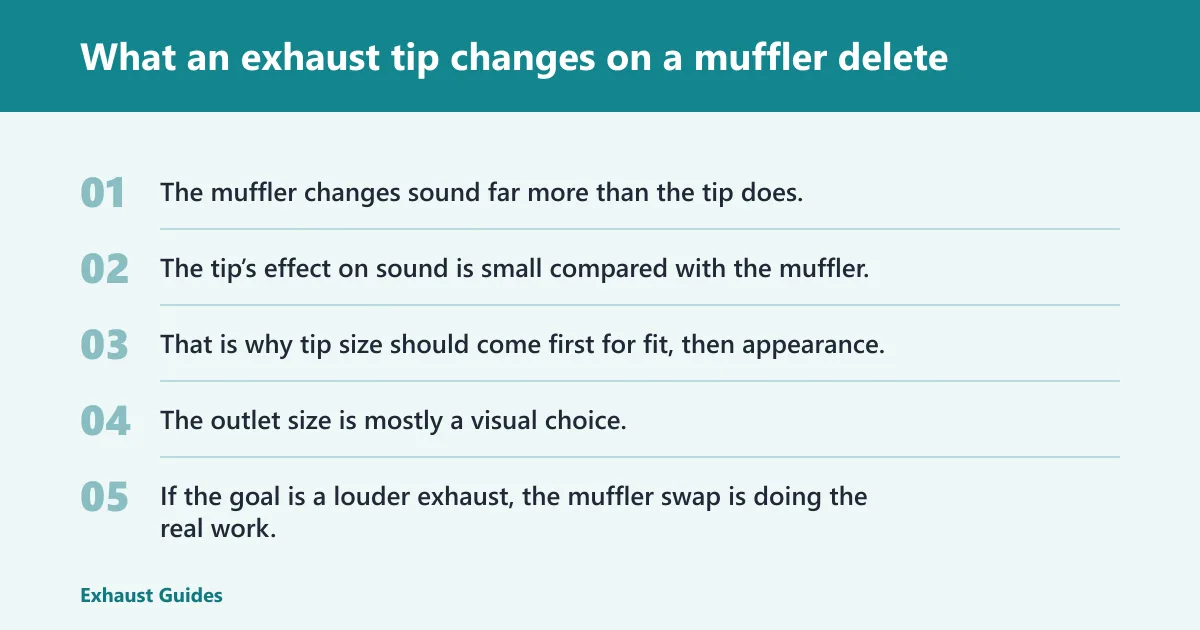


The muffler changes sound far more than the tip does. The tip’s effect on sound is small compared with the muffler, and a muffler delete causes a significant increase in exhaust volume before any tip goes on.
That is why tip size should come first for fit, then appearance. The outlet size is mostly a visual choice, though a larger outlet can slightly change the final tone and often looks more natural on a muffler-delete setup.
What changes the most
If the goal is a louder exhaust, the muffler swap is doing the real work. A tip can clean up the rear opening, hide a short factory outlet, and change how the tail end looks, but it will not turn a mild delete into a major sound change.
What a bigger outlet actually does
A bigger outlet mainly changes proportion. On a compact car, a large polished tip can look oversized and obvious; on a truck or performance car, the same outlet can look properly scaled. The right look depends on the bumper opening and the size of the vehicle.
Should the exhaust tip inlet match the tailpipe size?
Yes. The tip inlet should match the tailpipe outside diameter, not the inner hole. Fitment matters more than outlet size, and the usual rule is simple: choose a tip that matches your tailpipe size for a proper fit.
Clamp-on tips are the least forgiving of size mismatch. Slip-on tips can handle slight variation if the design allows it. Welded tips can cover the widest range, but a poor match can still leave the tip off-center or visually crooked.
Why inlet match comes first
The inlet is the part that actually mounts to the pipe. If it is oversized, the tip may clamp unevenly, move under vibration, or sit at an angle. If it is too tight, it may not seat fully, which can create rattles or a crooked exit.
Fitment by mounting style
- Clamp-on exhaust tip: least forgiving of mismatch; depends on clamp pressure for retention.
- Slip-on exhaust tip: can tolerate slight variation, but must seat squarely on a proper round pipe.
- Weld-on exhaust tip: widest adaptation range; a fabricator can trim or sleeve to fit.
Say your tailpipe is 2.25 inches outside diameter and you order a 2.5-inch clamp-on tip because the outlet looks better. It may tighten, but the inlet still does not fit correctly. The result can be a tip that sits crooked, leaves a small exhaust leak at the seam, or rattles when the engine shakes at idle.
How to measure the tailpipe the right way
Measure the tailpipe outside diameter, not the inner opening. Use calipers if possible, because they are more accurate than a tape measure and help catch ovaling, dents, and slightly crooked cuts before you order the tip.
- Clean the tailpipe so rust and soot do not distort the reading.
- Measure the outer wall across the widest point with calipers.
- Check more than one spot if the pipe looks oval or dented.
- Compare the reading in inches and millimeters before ordering.
- Confirm whether the pipe is round enough for a slip-on tip to seat properly.
Why calipers matter
A tailpipe that measures close to 2.5 inches by eye may actually be 63.5 mm, 60 mm, or a slightly distorted size from prior contact or welding. That small difference matters most on clamp-on and slip-on tips, where fit depends on a clean, square seat.
Inches and millimeters
Many exhaust tips are sold in both inches and millimeters. Ordering the wrong unit is a common mistake, especially when shopping online. If a listing says 2.5 inches, that is about 63.5 mm; a pipe listed as 60 mm is slightly smaller and not the same size.
What tip outlet and length look best on a muffler delete?
The best-looking outlet depends on the vehicle and the bumper opening. Outlet diameter is mostly a visual choice, and tip length matters because it sets how far the exit projects past the bumper, which affects heat, soot, and clearance.
For compact cars, a smaller outlet often looks cleaner. For most trucks and performance cars, a 4- to 5-inch outlet usually looks proportional. Larger than that can work, but only if the rear opening is large enough and the tip does not hang awkwardly past the valance.
How outlet size changes proportion
A larger outlet can help a muffler-delete setup look finished instead of unfinished. It also helps if the factory outlet sits too far under the bumper, because the tip can move the exit into a more visible position.
How length affects clearance
Tip length should fit the available room behind the bumper cutout. Too short, and the exhaust can sit tucked under the bumper, which looks unfinished and may leave soot closer to trim. Too long, and the tip can extend too far, increasing the chance of heat damage or contact on bumps.
Picture a rear-exit sedan with a shallow valance opening. A long 12-inch tip with a large polished outlet may look aggressive on paper, but if it extends well past the bumper, it can leave dark soot marks on the trim or sit close enough to melt nearby plastic.
Fit and proportion table for common muffler-delete setups
The right tip depends on the pipe, the body style, and how much rear clearance the vehicle gives you. Use this table as a practical starting point, then verify the actual tailpipe outside diameter before buying.
| Common muffler-delete setup | Recommended inlet match | Suggested outlet range | Typical tip length | Most likely clearance or rattle risk |
|---|---|---|---|---|
| Stock round tailpipe with rear bumper cutout | Match the measured outside diameter exactly | 3.5–4 inches | 6–9 inches | Too much projection can leave soot on the valance |
| Single-wall aftermarket pipe with rear-exit packaging | Match the pipe OD; verify roundness with calipers | 4–5 inches | 8–12 inches | Rattle risk rises if the inlet is oversized or the seat is not square |
| Compact car with small valance opening | Exact inlet match to the tailpipe OD | 3.5–4 inches | 5–8 inches | Big outlets may look stubby or crowd the bumper opening |
| Truck with larger rear opening | Exact inlet match; stainless steel is a strong choice | 4.5–6 inches | 8–14 inches | Long tips can hang low and hit debris or driveway lips |
| Dual-exit setup with uneven spacing | Match each side separately, not by eye | 4–5 inches | 6–10 inches | Off-center spacing can make one tip look crooked or too short |
| Vehicle with short bumper clearance or tucked tips | Match the tailpipe OD and confirm square seating | 3.5–4.5 inches | 4–7 inches | Heat, soot, and melting risk increase if the tip extends too far past the bumper |
How to read the table
The table is built around fit and proportion, not a universal size. If the pipe is small and the bumper opening is tight, choose a smaller outlet and shorter body. If the vehicle has a deeper rear opening, a larger outlet can look right without appearing oversized.
Can a too-large tip rattle or sit crooked after a muffler delete?
Yes. A too-large tip can rattle, sit crooked, or shift after installation, especially with clamp-on hardware. Oversized inlets, oval or dented tailpipes, and a poor seat are the most common causes of a tip that moves or looks off-center.
When fit is wrong, the problems show up at the back of the car first. You may see soot streaks on the bumper, hear a metallic buzz at idle, or notice the tip pointing slightly down because the clamp pulled harder on one side than the other.
Common failure cases
- Oversized inlet: the tip clamps unevenly and can shift.
- Oval tailpipe: a round tip may not seat flat.
- Dented outlet: the tip grips one side more than the other.
- Too much projection: heat and soot move closer to the bumper.
- Poorly aligned weld: the tip ends up visibly off-center.
How poor fit turns into damage
Problems often begin as cosmetic issues and end as clearance issues. If the tip sits too close to plastic trim, heat can discolor the bumper edge. If the exit is too tucked, soot builds on the bodywork. Either case points to a tip that was sized for looks without enough regard for placement.
Frequently asked questions
What size exhaust tip works best on a muffler delete?
The best size is the one that fits the tailpipe exactly and looks proportionate to the rear opening. As a broad starting point, 3.5–4 inches suits many compact cars, 4–5 inches suits most trucks and performance cars, and larger outlets work only when the bumper cutout can visually support them.
Should the exhaust tip inlet match the tailpipe size?
Yes. The inlet should match the tailpipe outside diameter, not the inner opening. That fit rule matters more than outlet size, especially with clamp-on tips, which are the least forgiving of mismatch. Measuring with calipers is the safest way to avoid a wrong-size order.
How do I measure an exhaust tip for a muffler delete?
Measure the tailpipe outside diameter with calipers if possible. Check for roundness, dents, and ovaling before you order. Then compare the measurement in inches and millimeters, because many tips are sold in both units and a small conversion error can mean poor fitment.
Does a bigger exhaust tip make a muffler delete louder?
Only slightly. The muffler is doing most of the sound-changing work, and the tip’s effect on sound is small compared with that. A larger outlet may shift the tone a little, but the bigger change comes from the delete itself, not the tip size.
How much bumper clearance do I need for an exhaust tip?
You need enough room for the tip to project past the bumper without touching trim or trapping heat near plastic. The exact clearance depends on vehicle design, but the safest approach is to confirm the rear opening, tip length, and exit angle before buying. Short rear clearance calls for shorter tips.
Is clamp-on or weld-on better for a muffler delete tip?
Weld-on tips give the widest adaptation range and are often the best choice when the pipe is slightly unusual or needs trimming. Clamp-on tips are easier to install but least forgiving of mismatch. Slip-on tips sit between the two if the pipe is round and the seat is square.