Best Exhaust Tip Styles for Lifted Trucks
For most lifted trucks, start with an angle-cut or rolled-edge stainless tip. It keeps the rear view proportional, clears the bumper area better than bulky shapes, and looks finished without hanging too low. Sound changes are usually small, and fitment matters more than shine.
Why angle-Cut dual-Wall Tips fit lifted trucks


Top pick: angle-cut dual-wall stainless
Angle cut is one of the most popular truck choices, and dual wall gives the outlet a fuller look without changing the exhaust path much. On a lifted truck, that pairing reads cleaner from behind than a plain straight tube, especially when the bumper sits high above the pipe.
Why this style fits lifted proportions
Lifted trucks leave more open space between the road and the rear bumper, so a small tip can look lost. A larger outlet with a slanted face or a rolled edge fills that space better, while still avoiding the overdone look that a huge bright tip can create on a modest lift.
What you get from this guide
This guide ranks tip styles by stance, tailpipe location, and rear clearance first. It also separates cosmetic choices from fitment choices, so you can decide whether a corner exit, tucked exit, or wider outlet looks right before you decide on finish, sound, or mounting method.
Quick picks by truck setup
Lift height, bumper shape, and tailpipe route change the right tip fast. A tall rear bumper, a corner-exit diesel pipe, or a tucked single outlet all change what looks balanced and what risks scraping, rattling, or pointing soot at the wrong surface.

- Tall lift with open rear view: angle-cut dual-wall, stainless, clamp-on or bolt-on.
- Lower lift with tucked tailpipe: rolled edge or single wall, shorter overall length, no-drama fit.
- Diesel with corner exit: slant or dual outlet, black powder-coated finish if you want less glare.
- Blackout look: matte black finish on a single wall or dual wall tip.
- Brighter rear view: polished finish on stainless or chrome-plated steel, with more upkeep.
Tall lift with rear bumper clearance
When the bumper sits high and the tailpipe exits straight back, a larger angle-cut or dual-wall tip usually looks best. It fills the space below the bumper without needing an oversized overall length that could hang too far rearward or catch road debris.
Lower lift with tucked tailpipe
If the pipe is tucked close to the bumper, choose a rolled-edge or single wall tip with a modest profile. That keeps the rear end from looking crowded and reduces the chance of the tip sticking out farther than the body line.
Diesel truck with corner exit
Corner-exit diesel trucks often look best with a slant or dual outlet tip because the outlet direction matches the pipe layout. A plain round tip can look small against larger rear tires, while a wider outlet better matches the visual mass of the truck.
Black finish for a low-contrast look
Powder-coated steel and matte black finish work well when you want the tip to disappear into the rear end instead of drawing attention. That can be a good choice on dark paint, black bumpers, or trucks with smoked trim and black wheels.
Polished finish for a brighter rear view
Polished finish and chrome-plated steel put more visual focus on the exhaust. That suits lifted trucks with clean rear steps, exposed tow hardware, or bright trim, but it also shows soot and water marks faster than darker finishes.
Which exhaust tip shape looks best on a lifted truck?
Angle-cut and dual-wall tips usually fit lifted trucks best because they match the taller stance without looking clumsy. Rolled edge gives a cleaner factory-style finish, while slant and dual outlet styles suit wider rear proportions and trucks that already have a strong visual footprint.
Dual wall for a fuller outlet look
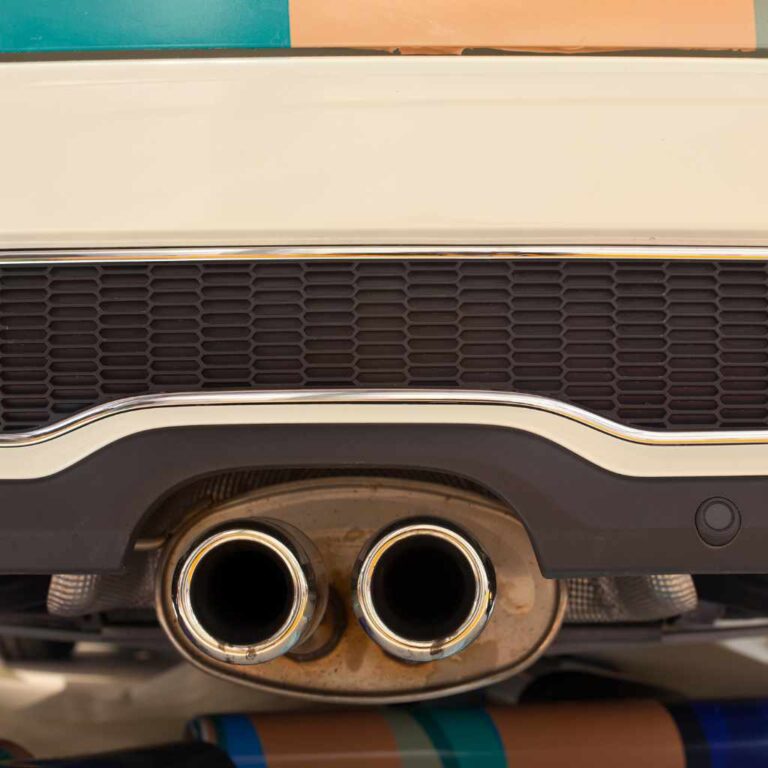
Dual wall tips have two layers of tubing, so the outlet looks more finished and substantial. On a lifted truck, that extra visual depth helps a short rear overhang or tall bumper appear intentional rather than bare.
Angle cut for a more directional profile
Angle cut tips slope the opening in a way that looks purposeful on trucks with lift, larger tires, and higher rear bodies. Because angle cut is one of the most popular truck choices, it is a safe default when you want a clean look without going extreme.
Rolled edge for a cleaner factory-style finish
Rolled-edge tips use a thick, inward-curved edge. That rounded lip softens the look of the outlet and tends to suit lifted trucks that still aim for a factory-plus appearance rather than a showier custom rear end.
Slant and dual outlet tips for wider rear proportions
Slant tips add direction, while dual outlet tips spread the visual mass across more width. On a wide-stance truck, that can look more balanced than one large round outlet, especially when the tailpipe sits off to one side or the rear bumper is visually tall.
Which tip styles fit rear-clearance problems?
When clearance is tight, choose the style that keeps the outlet away from the bumper, hitch, spare tire, and suspension travel path. Turndown, single wall, and some tucked corner-exit layouts usually solve those problems better than long, shiny tips that sit far back.
Turndown exit when bumper space is tight
Turndown exit tips point downward toward the ground. That makes them useful when the bumper, hitch, or spare tire leaves little room for a rear-facing outlet, though the tradeoff is more road spray, more soot on nearby surfaces, and a less finished rear view.
Single wall when you want less visual bulk
Single wall tips are the most common type, and they keep the rear end visually lighter than dual-wall or oversized polished designs. They work well when the truck already looks wide from tire and lift height and does not need extra visual weight at the outlet.
Corner-exit layouts for offset tailpipes
A corner-exit layout can look better than a centered large tip when the pipe exits near one side of the truck. That setup follows the truck’s actual exhaust routing, so the tip feels integrated instead of forced into the centerline.
Fitment risks near hitch, spare tire, and suspension parts
Check the hitch, spare tire, rear axle travel, and any step bumper brackets before buying. A tip that looks fine on paper can rattle, sit too close to the body, or direct heat and soot toward components if the overall length and outlet angle are wrong.
How do you choose size and fitment?
Start with the measured tailpipe diameter, then check outlet diameter, overall length, and how far the tip extends past the body. A good fit should match the pipe, clear surrounding parts, and look proportional to the rear tires and bumper height.
Match inlet diameter to tailpipe diameter
The inlet diameter should match the tailpipe diameter before anything else. A common truck tip size example is a 4-inch inlet and 6-inch outlet, and another common truck tip example is a 5-inch inlet and 7-inch outlet. Measure first; guesswork leads to loose fitment or unnecessary reducers.
Check outlet diameter against bumper height and tire size
On a lifted truck, a larger outlet can look right because the body sits higher above the road. But if the outlet gets too large for the rear end, it can look cartoonish or crowd the bumper. The visual target should match tire width, bumper height, and tailpipe position together.
Use overall length to avoid sticking too far past the body
Overall length matters because a long tip can extend beyond the rear body line and become vulnerable to scraping or contact on departure angles. One listed tip uses a 15 inches long body, and that size may suit some setups while feeling long on others.
When dual outlet sizing matters
Dual outlet sizing matters when one outlet would look too narrow for the truck’s rear width. One listed tip uses a 2.5-inch inlet and dual 3.5-inch outlets, and the Upower weld-on dual outlet tip has two 3.5-inch outlets. That style works best when the rear view needs extra width, not extra length.
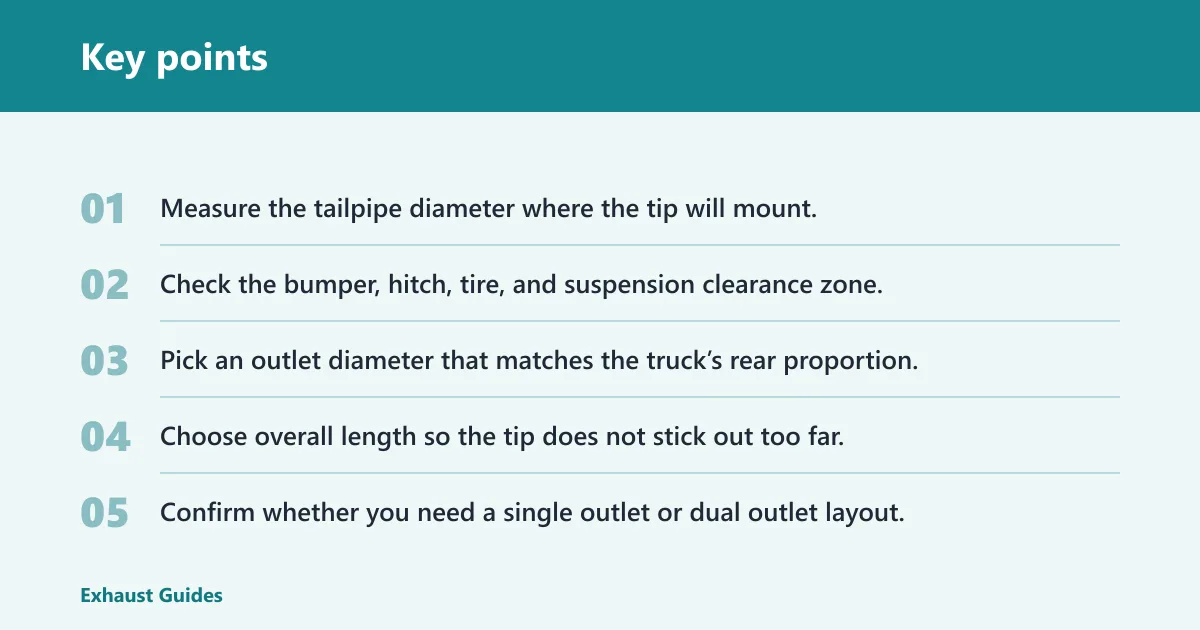
- Measure the tailpipe diameter where the tip will mount.
- Check the bumper, hitch, tire, and suspension clearance zone.
- Pick an outlet diameter that matches the truck’s rear proportion.
- Choose overall length so the tip does not stick out too far.
- Confirm whether you need a single outlet or dual outlet layout.
Say your truck has a 4-inch tailpipe and a high rear bumper on a 6-inch lift. A 4-inch inlet with a 6-inch outlet usually looks balanced, while a very short outlet can disappear under the bumper and a very long one can look awkward or hang too low.
Suppose the pipe exits near the right rear corner and the spare tire sits close behind it. A slant or corner-friendly single wall tip can clear the tire better than a wide dual outlet shape, and it is less likely to collect soot on the underside of the bumper.
Exhaust tip decision matrix
This matrix ties style to the truck’s actual layout. It keeps the decision grounded in stance, pipe location, and clearance, which matters more than a polished finish on its own.
| Truck height and stance | Tailpipe location | Best tip style | Fitment risk | Sound effect | Maintenance level |
|---|---|---|---|---|---|
| Tall lift, wide rear tires | Center rear | Angle cut dual wall | Medium if outlet is too long | Usually subtle | Medium |
| Moderate lift, tucked bumper | Center rear | Rolled edge single wall | Low | Usually subtle | Low |
| Lifted diesel, corner exit | Rear corner | Slant or dual outlet | Medium near tire and hitch | Can feel a little deeper | Medium to high |
| High clearance, off-road use | Downward exit | Turndown exit | Low for bumper contact, higher for soot | Muffled sound | High |
| Blackout build | Any | Matte black finish, single or dual wall | Depends on length | Usually cosmetic | Medium |
Materials, finish, and mounting basics
Stainless steel is the most durable common material, chrome looks good but needs more upkeep, and powder-coated steel is useful when you want a darker look. Mounting method matters too: bolt-on and clamp-on are easier DIY options, while weld-on is more permanent.
Stainless steel versus chrome-plated steel
Stainless steel is often considered a strong all-around choice for rust and corrosion resistance. Chrome-plated steel gives a bright finish, but it needs more attention to keep water spots and staining under control, especially on trucks that see wet roads or winter use.
Powder-coated steel and matte black finish
Powder-coated steel and matte black finish work well when you want the tip to blend into the truck instead of standing out. They are especially useful on lifted diesel trucks with dark wheels, because the finish reduces glare and keeps the rear end visually quieter.
Polished finish maintenance
Polished finish looks sharp, but it shows soot buildup, water marks, and polishing haze faster than darker coatings. If you choose polished, plan on regular cleaning rather than assuming the shine will stay bright on its own.
Bolt-on, clamp-on, and weld-on installation
Bolt-on and clamp-on styles are presented as easier DIY options, and they are often the first choice when you want no welding required. Weld-on tips are described as more permanent, which can be useful if you want a cleaner, fixed position and do not expect to remove the tip often.
Hardware included and no welding required
Check whether hardware included means all clamps, bolts, and brackets are in the box. That matters because a tip can look simple but still need extra hardware for a secure fit. If the listing says no welding required, confirm that the mounting points match your pipe before buying.
Frequently asked questions
What are the best exhaust tip styles for lifted trucks?
For most lifted trucks, angle cut, dual wall, and rolled edge are the best starting points because they balance the taller stance without looking oversized. If the pipe is offset or tight to the body, slant, single wall, or turndown may fit better than a large bright outlet.
Do exhaust tips make a difference on a truck?
Yes, but mostly in appearance and fitment, with only modest sound changes on many setups. The biggest practical difference is how the tip lines up with the bumper, how much clearance it leaves, and whether it looks proportionate to the lift, tires, and rear overhang.
Do larger exhaust tips change sound on lifted trucks?
Larger tips can sometimes deepen tone a little, but the change is usually small compared with the muffler, pipe layout, and engine type. On lifted trucks, the visible size often changes more than the actual volume, so do not buy a tip for a major sound shift.
Should I choose a polished or black exhaust tip?
Choose polished if you want a brighter rear view and do not mind regular cleaning. Choose black if you want the tip to blend in and hide soot better. Polished draws attention; black lowers contrast and often looks cleaner on dark or off-road builds.
Will a resonated exhaust tip reduce drone?
A resonated tip may soften tone a bit and can help reduce drone in some setups, but it is not a cure-all. If the truck already drones because of pipe length, muffler choice, or engine resonance, the tip may make only a small difference compared with those parts.
How do you choose the right size exhaust tip for your truck?
Start with the measured tailpipe diameter, then choose an inlet that matches it and an outlet that suits the rear proportions of the truck. Check overall length too, because a long tip can create clearance problems even when the diameter is correct.
Are clamp-on exhaust tips easier to install?
Yes. Clamp-on and bolt-on styles are usually easier because they do not require welding, and they are easier to remove later if the fit is off. Weld-on tips are more permanent, which helps if you want a fixed position and a cleaner finished look.