3 Best Exhaust Tips for Sport Bikes (2026): Research Shows
For sport motorcycles, the best exhaust tip styles are short, angled slash-cut or round canister tips with removable dB killers. Skip oversized cannon-style outlets if you need cornering clearance, lower drone, and easier inspection compliance. Pick the wrong shape and you can lose lean-angle clearance, add a hard edge to the noise, or end up with a tip that fails local sound or emissions checks. This guide compares tip styles by sound character, fitment, clearance, maintenance, and legality so you can choose with fewer tradeoffs.
Best exhaust tip styles for sport motorcycles

- Real carbon fiber and titanium alloy construction
- Universal slip-on design for various sport bikes
- Includes complete accessories and mounting hardware
The right style depends on your bike’s tail layout and the result you want. If you want the least hassle, start with a straight-cut or rolled-edge tip on a model-specific slip-on. If you want a sharper note and a more aggressive look, a compact slash-cut is usually safer than a long decorative outlet. Very short pipes can make the bike harsh and loud while giving you less control over the sound.
Quick comparison
| Product | Badge | Best for | Price | ||
|---|---|---|---|---|---|
| PACEWALKER Motorcycle Slip On Muffler, 2" Universal CarbonPACEWALKER | Our pick | 2" · Carbon Fiber · Universal Slip-On | $49.99 Price as of 23 Oct 2026 | View |
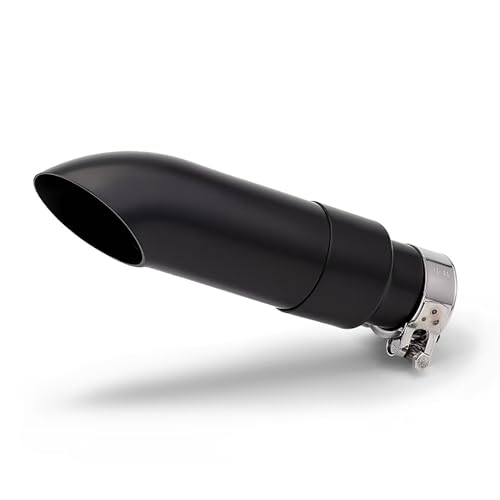 | Motorcycle Exhaust Muffler Tip Fits Honda Rebel 300 500Generic | Also great | Stainless Steel · Deep Rumble · DIY Tip | $49.99 Price as of 23 Oct 2026 | View |
 | Tesmirror Baking Paint Universal Motorcycles Slash CutTesmirror | Budget pick | Retro Style · Slash Cut · Universal Fit | $54.99 Price as of 23 Oct 2026 | View |
This section is the fast filter. Use it to rule out styles that create clearance problems on your bike, then narrow the choice by sound and maintenance tolerance.
Remember that louder sound is not better sound. On a sport bike, the right tip usually gives you a cleaner tone at idle and less drone at steady rpm, not maximum volume.
How we chose
The comparison below weighs fitment first, then sound, then ownership burden. That order matters on sport motorcycles because bodywork, rearset position, tire clearance, and passenger peg brackets can all limit what fits cleanly.
Each style is judged on six practical points: sound character, visual impact, clearance risk, install difficulty, maintenance burden, and best-fit rider use case. The table also separates shape from finish, since black or chrome changes upkeep and appearance, not the basic geometry of the tip.
Most motorcycle exhaust tips are designed for a specific exhaust type. That means a style that looks right on one bike can fit poorly on another if the mid-pipe diameter, clamp position, or bracket location is wrong.
| Style | Sound character | Visual impact | Typical clearance risk | Install difficulty | Maintenance burden | Best-fit rider use case |
|---|---|---|---|---|---|---|
| Slash-cut | Sharper, louder edge; often feels more aggressive | Sporty and angled without looking oversized | Medium on bikes with tight tail plastics | Moderate; angle must align with the hanger and mid-pipe | Medium; soot and heat marks show faster on bright finishes | Riders who want a stronger note and a cleaner race-inspired look |
| Rolled edge | Usually smoother and less abrasive than a hard-cut outlet | Finished and restrained | Low to medium, depending on outlet length | Low to moderate | Low; the edge is less prone to looking rough after heat cycling | Daily riders who want a tidy look without a loud visual statement |
| Straight-cut | Direct, often crisp; can turn sharp if the can is short | Simple and technical | Low if compact; medium if the tip protrudes far rearward | Low; one of the easiest shapes to align | Low; simple edges are easy to wipe down | Riders who want easy fitment and a no-nonsense finish |
| Fishtail | Can spread the note, but often adds more style than control | Highly visible and old-school | High on sport motorcycles, especially near tail plastics | Moderate to difficult | Medium to high; shape and finish are both attention magnets | Style-first builds where appearance matters more than compact packaging |
| Revolver | Can feel louder at the outlet and more abrupt at the rear | Strong visual cue with a pronounced outlet | Medium to high, depending on bodywork and tail angle | Moderate; alignment and support matter | Medium; openings and edges collect soot | Riders who want a louder-looking rear end without moving to a full system |
| Short round canister | Often sharp and loud unless a baffle is used | Compact and motorsport-like | Low to medium if the can sits close to the bike | Low to moderate | Medium; short cans show discoloration faster near the outlet | Riders who want the sportiest packaging and are willing to manage sound |
Slash-cut: best for sharper sound and a sportier look
A slash-cut tip is a strong choice when you want a sharper sound and a more aggressive rear view without going oversized. On sport motorcycles, that angled exit can look right on a compact muffler, and shorter mufflers often sound sharper and louder, which is why this style is common in performance-oriented slip-ons.
Sound and appearance
A slash-cut outlet tends to push the visual focus outward and upward. That suits a sport bike better than a long decorative end cap because the shape echoes the bike’s forward-canted bodywork. The sound change is usually more about edge and volume than about a deep bass note.
Do slash-cut exhaust tips change sound on motorcycles? Yes, but mostly by changing how the exhaust exits and how the tip length affects tone. The tip alone will not transform the whole exhaust note. A short slash-cut can make the bike feel sharper and louder, while a longer canister behind it usually keeps more control in the tone.
Clearance and heat checks
Slash-cut tips can work well if they stay close to the tail and do not point into plastics or a side bag. Check rear-bodywork clearance, passenger peg brackets, and any luggage support before buying. A tip that looks fine in photos can still sit too close to a fender edge or inner panel.
Suppose a sport bike has just 20 mm of space between the rear outlet and the right-side tail plastic. A slash-cut that angles outward may still clear the body, but if the clamp rotates during installation, the edge can sit too near the panel and leave heat marks over time.
Where it fits best
This style fits best on riders who want a sportier tone without a long, flashy outlet. It is less appealing if your priority is low maintenance or a quieter highway ride. Add a baffle if you want to keep the tone from getting harsh on steady throttle.
Rolled edge: best for a cleaner finished look
A rolled-edge tip is a good middle ground. It gives the rear of the bike a tidy finish, usually without the extra visual aggression of a hard-angle cut. For a sport motorcycle, that can be the right call if you want the bike to look complete rather than loud.
Tone and volume expectations
Rolled edge tips usually sound smoother than a hard, short outlet. They do not guarantee quiet operation, but they often avoid the brittle edge that very short pipes can add. Longer mufflers usually give a deeper, more controlled tone, and a rolled edge works better with that goal than a very abrupt cut.
A baffle helps here. It can reduce harshness, change tone, and trim volume enough to make highway riding less tiring. If your bike drones at a steady rpm, the baffle is often the first part to consider before changing the whole exhaust.
Maintenance and corrosion resistance
Rolled edges are easy to keep presentable because the surface transitions are simple. Stainless steel resists corrosion better than plain steel, while chrome and black coating change the care routine. Chrome shows fingerprints and heat tint sooner; black coating hides soot better but can show scuffs at the lip.
Finish matters, but it does not change fit. Use the finish to match your maintenance tolerance, not to solve a clearance problem.
Best-fit rider use case
This is a strong choice for riders who want a polished look and manageable upkeep. It suits commuters, weekend riders, and anyone who wants a modest sound change without chasing maximum volume. If you need a track-style visual cue, it may feel too restrained.
Straight-cut: best for simple fitment and minimal fuss
Straight-cut tips are common because they are easy to package and easy to align. On sport bikes, that matters. A straight outlet often keeps the silhouette compact, which helps with tail clearance and makes clamp alignment less stressful during installation.
Why it is common on sport bikes
A straight-cut exit matches the clean lines of many sport motorcycle mufflers. It does not force an aggressive angle that can conflict with tail plastics or a high-mounted rear wheel hugger. For many riders, that makes it the safest style to buy when the fitment chart is thin.
F1 slip-on exhaust replaces the muffler section while keeping the original headers. That is where straight-cut tips often appear: on a slip-on can that changes the rear sound and look without touching the header layout.
Mounting and clamp alignment
Fitment still matters. Check model-specific clearance, header or mid-pipe compatibility, mounting hardware, and clamp alignment before you order. A straight-cut tip is easier to line up than a complex shape, but the wrong clamp angle can still leave the outlet crooked or leaking.
A common first-timer mistake is tightening the clamp before checking the hanger. If the can is pulled slightly off-axis, the outlet can sit too close to the plastic tailpiece and create a rattle at certain rpm.
When to avoid it
A straight-cut tip is not the best choice if you want the bike to sound more refined at highway speed and the can is already short. In that setup, the note can turn abrupt. If your goal is a deeper tone, a longer muffler is usually the better starting point.
Fishtail: best for style-first builds
Fishtail tips are usually a niche choice on sport motorcycles. They draw attention fast, but that attention can work against the tight, functional look most sport bikes wear best. The style may fit a custom build, but it often looks out of place on a modern supersport.
Why it is usually a niche choice on sport motorcycles
Fishtail shapes are more common in other motorcycle segments. Harley-Davidson lists fishtail end caps, along with slash cut and revolver styles, but that does not make them the best answer for a sportbike. Many motorcycle exhaust tips are designed for a specific type of motorcycle exhaust, and sportbike packaging is usually tighter.
That means a fishtail can become a fitment problem before it becomes a style win. The longer, flared profile can crowd rear plastics, hang too far rearward, or simply look mismatched next to a narrow tail section.
Clearance and bodywork concerns
Clearance risk is the main issue. A fishtail can extend beyond the tidy rear envelope that sport motorcycles need for cornering and close-in bodywork. If the bike carries luggage, the risk rises again because soft bags and mounting frames can sit close to the outlet.
If you want the look, measure twice against the tail, hanger, and rear wheel arc. If the tip projects farther back than the stock muffler end, assume the contact risk goes up until proven otherwise.
Who should skip it?
Skip fishtail tips if you commute in traffic, ride in the rain, or care about a low-drama install. They also make less sense if you expect simple maintenance. A sport motorcycle usually benefits more from compact packaging than from a decorative outlet that needs extra checking after each heat cycle.
Revolver: best for riders who want a louder visual cue
Revolver-style tips create a strong rear-end statement. They can signal performance at a glance, but they do not automatically improve the sound in a cleaner way. On a sport motorcycle, that visual punch is useful only if the rest of the bike can support it without fitment issues.
Visual impact versus practical tradeoffs
Harley-Davidson also lists revolver style end caps, but the same visual logic does not always translate well to a sport bike. A revolver shape can look busy against sharp fairings and small tail sections. If the outlet already sits near the edge of the bodywork, the style can feel oversized.
It can also complicate inspection and noise checks if the design encourages a louder, more open exit. Shorter mufflers often sound sharper and louder, so a revolver tip on a short canister can add more volume than some riders expect.
Heat, drone, and maintenance notes
Because the outlet is visually prominent, any heat discoloration shows quickly. Chrome can tint gold or blue, and black coating can dull or mark near the lip. If the exhaust is very short, drone at steady rpm is more likely to become noticeable as well.
A baffle can help, but it cannot fix every setup. If the base pipe is too short, the bike may still feel harsh on the highway even after the insert goes in.
Fitment limits on sport motorcycles
This style needs careful checking of mounting hardware and outlet direction. A revolver tip that works on one machine may point the wrong way on another because sport motorcycles vary in subframe shape, muffler length, and peg location. That is why model-specific compatibility matters more than the shape name alone.
Black or chrome: which finish works better?
Black usually suits a sport motorcycle better if you want the exhaust to disappear into the bike’s lines. Chrome works if you want the outlet to stand out. The better finish depends on how much cleaning you want to do, how quickly you mind heat marks, and whether you prefer a stealth look or a brighter one.
Stainless steel, chrome, and black coating
- Crafted from durable, corrosion-resistant stainless steel
- Engineered to produce a deep and throaty rumble
- Upgrades your bike with a sportier custom look
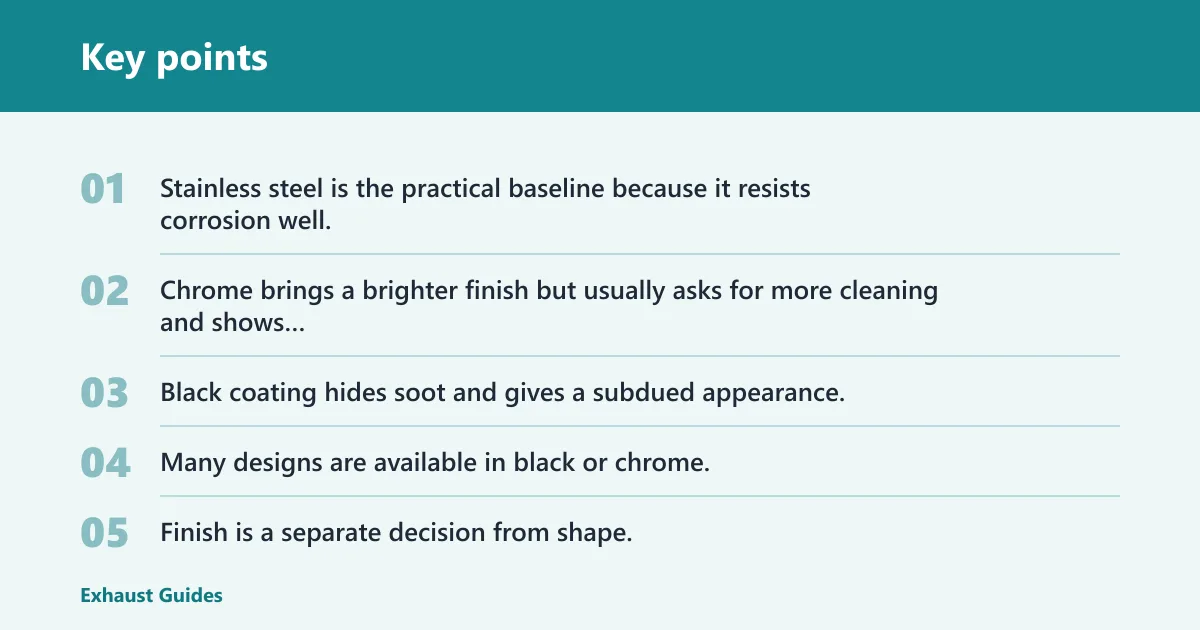
Stainless steel is the practical baseline because it resists corrosion well. Chrome brings a brighter finish but usually asks for more cleaning and shows discoloration sooner. Black coating hides soot and gives a subdued appearance, which works well when the bike already has aggressive bodywork and a dark frame.
Many designs are available in black or chrome, and some listed exhaust tips even include bronze options. Finish is a separate decision from shape, so do not let a color choice hide a poor fit or a weak mount.
Heat discoloration and cleaning
Sport motorcycle exhausts run hot. That heat can change the finish at the outlet, especially on short tips. Bright finishes show the change fast, while black often hides it better but can still mark if the pipe sits too close to bodywork or if soot builds up around the lip.
Cleaning is simpler on straight and rolled edges because the surface is easy to reach. Fishtail and revolver shapes demand more attention at the corners and internal edges.
Which finish suits a sport bike?
Black suits most sport bikes when you want the tail section to stay visually tight. Chrome suits riders who want the tip to read as a design feature. For riders who want low upkeep, stainless or black usually makes more sense than a bright polished surface.
Which one should you buy?
Choose the style that fits your bike layout first, then decide how much sound and maintenance you want to live with. For most sport motorcycles, a compact slash-cut, straight-cut, or rolled-edge tip is the safest starting point. Avoid very short or oversized shapes if your bike already runs hot, carries luggage, or has tight tail plastics.
For daily riding, buy a straight-cut or rolled-edge tip with a baffle. That keeps the note manageable and lowers the chance of drone at steady rpm. For weekend sound, a compact slash-cut is usually the better balance of tone and fit. For the least maintenance, black or stainless on a simple shape is easier to keep clean than chrome on a decorative outlet.
If you plan to move to a full exhaust later, do not overspend on a complex end cap now. F2 full exhaust systems replace headers and muffler together, so a tip that only works with one muffler setup can become a dead end. F1 slip-on exhausts are the easier entry point and usually cost less, but larger flow changes can still call for tuning.
For a quick filter, use this checklist:
- Measure tail clearance, rear wheel space, and any luggage contact points.
- Confirm header or mid-pipe compatibility with your exact model.
- Check whether the mount uses stock hardware or needs a new hanger or clamp.
- Pick the sound target: deeper and controlled, or sharper and louder.
- Choose a finish based on upkeep: black for low-visibility, chrome for shine, stainless for practicality.
- Decide whether you want a baffle to limit harshness and reduce highway drone.
- Check local sound and emissions rules before ordering.
Picture a rider on a supersport with tight tail plastics and a short commuter route. A compact straight-cut or rolled-edge tip will usually cause fewer problems than a decorative fishtail. The same bike used for weekend canyon runs might justify a slash-cut if the rider wants a sharper note and can accept more attention to heat and noise.
Frequently asked questions
What are exhaust tips?
Exhaust tips are the visible outlet section at the end of the exhaust. On motorcycles, they affect appearance and can alter the way sound exits, but they are not the same as the whole exhaust system. Fitment depends on the muffler, mid-pipe, and mounting points, not just the tip shape.
What types of exhaust tips work best on sport motorcycles?
- Fits multiple pipe sizes with included reducers
- Made from high-grade steel with chrome plating
- Precision cast for straightforward DIY installation
Compact straight-cut, rolled-edge, and short slash-cut tips usually work best because they fit tighter packaging and keep the bike’s lines clean. Very long or decorative shapes often create more clearance risk than benefit. The best choice depends on the tail shape, the mount, and how much sound change you want.
Which exhaust tip style sounds louder on a sportbike?
Shorter mufflers and short tips usually sound louder, and shorter mufflers often sound sharper as well. That does not mean they sound better. If the bike already drones at cruise, a louder tip can make the problem worse rather than more exciting.
Do slash cut exhaust tips change sound on motorcycles?
Yes, but the effect is modest compared with changing muffler length, baffling, or the whole exhaust. A slash-cut tip often adds a sharper edge and can make the bike feel more aggressive. On a short canister, that can also make the sound harsher if there is no baffle.
Are black or chrome exhaust tips better for a sport motorcycle?
Black is usually better if you want the exhaust to blend in and hide soot. Chrome is better if you want a brighter visual accent. Stainless steel is the low-drama option. The right finish depends on cleaning habits, heat discoloration tolerance, and the bike’s overall color scheme.
How do I choose the right exhaust tip for my bike?
Start with model-specific compatibility, then check clearance, sound target, and maintenance tolerance. Confirm whether the tip is meant for your exhaust diameter and hanger position. If you ride often at steady rpm, choose a style that can accept a baffle so the bike stays comfortable on longer trips.
Will a short exhaust tip make my sportbike drone?
It can. A very short pipe can make the bike harsh and loud while reducing useful control of the sound, and that often raises the chance of drone at steady rpm. A baffle or a longer muffler usually helps more than changing the finish or moving to a flashier outlet shape.
Where to buy exhaust tips for motorcycles?
Buy from the motorcycle brand’s parts catalog, a known exhaust maker, or a seller that lists exact fitment by model and year. Avoid generic listings that do not name the pipe diameter, mount type, or compatible bike family. That is the fastest way to end up with a tip that looks right but fits poorly.
What are exhaust tips?
Exhaust tips are the final outlet piece at the end of the exhaust. On sport motorcycles, they affect sound character, rear clearance, and appearance. They are best treated as a fitment decision, not a pure styling add-on, because the wrong shape can cause heat, rattle, or inspection trouble.