Do Smaller Resonators Make Music Louder: Proven & Simple
A smaller resonator changes your car’s exhaust sound, making it feel louder and more aggressive by allowing more engine noise to pass through. It works by targeting and reducing specific annoying frequencies (drone), so a smaller one is less effective at silencing them. This results in a sportier tone without the harshness of a full resonator delete.

Deering
Deering Artisan Goodtime Two 5-String Banjo
- Rich Brown Stain
- Made In U.S.A.
- 3-Ply Violin Grade Maple Rim
As an Amazon Associate I earn from qualifying purchases.
Have you ever listened to a car with a deep, satisfying exhaust note and wondered how to get that sound for your own ride? You’re not alone. Many drivers want to upgrade their exhaust, but the world of mufflers, pipes, and resonators can feel confusing. One of the most common questions I hear is about resonators and how their size affects the sound.
It’s easy to get lost in technical terms. You might worry about making your car too loud, creating an annoying drone on the highway, or choosing the wrong part. Don’t worry, I’m here to help. We’re going to break it all down in simple, easy-to-understand terms. In this guide, I’ll explain exactly what a resonator does and how changing its size can transform your car’s voice.
What Is a Resonator? The Simple Explanation
Think of a resonator as a specific type of silencer for your exhaust system. But unlike a muffler, which is designed to quiet down everything, a resonator has a very specific job. Its main purpose is to cancel out a narrow range of sound frequencies that create an unpleasant humming or “droning” noise, especially when you’re cruising at a steady speed on the highway.
Imagine you’re in a room with a loud, annoying hum from a refrigerator. The resonator is like a special device that targets only that hum, making it disappear without affecting the other sounds in the room, like the TV or a conversation. For your car, it gets rid of the boring drone while letting the nice, rumbly parts of the engine sound pass through.
It’s essentially a sound-tuning tool built right into your exhaust pipe, usually looking like a small, round or oval can. Its goal is to make your ride more comfortable and enjoyable by eliminating the most irritating exhaust noises.
How Does It Actually Work? The Science Made Easy
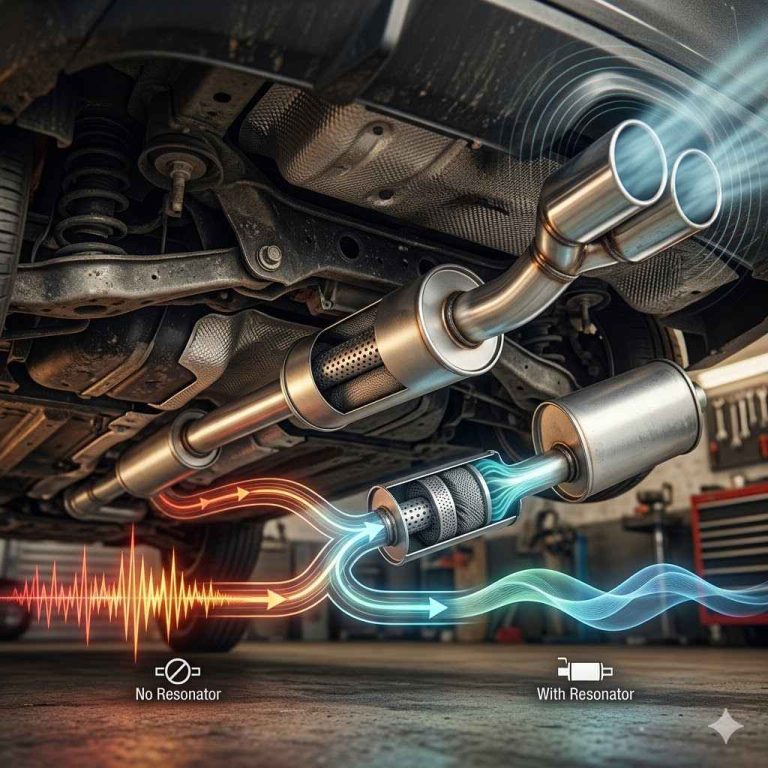
Sound travels in waves. The annoying drone you hear from an exhaust is just a sound wave at a specific frequency. A resonator is basically an empty chamber that is designed to fight this wave.
Here’s a simple breakdown:
- Exhaust sound waves enter the resonator.
- Inside the resonator, some of these waves bounce off the walls.
- The resonator is designed so that these bounced waves travel back and meet the incoming waves perfectly out of sync.
- When these opposite waves collide, they cancel each other out. This is called destructive interference.
The result? The specific frequency that causes drone is eliminated, or at least greatly reduced, before the sound ever leaves your tailpipe. The size and shape of the resonator are carefully engineered by the car manufacturer to target the exact drone frequency of your specific engine.

The Big Question: Do Smaller Resonators Make Music Louder?
Yes, in a way, they do. But it’s more accurate to say that a smaller resonator changes the tone and character of the exhaust, which our ears often perceive as being louder.
A factory resonator is built to be highly effective at canceling drone. It has a large internal volume and specific dimensions to do its job perfectly. When you replace it with a smaller resonator, you are essentially reducing its ability to cancel out those sound waves. The smaller chamber isn’t as good at creating the opposing waves needed to silence the drone.
Because the smaller resonator is less effective, more of those raw sound frequencies from the engine are allowed to pass straight through the exhaust system. This adds more depth, aggression, and volume to the final exhaust note. So, while the overall decibel level might only increase slightly, the sound becomes much more noticeable and sporty because the frequencies that were once being silenced are now audible.
Smaller Resonator vs. Resonator Delete: Which Is Right for You?
Once you decide to change your resonator, you’ll face a common choice: install a smaller, performance-oriented resonator or remove it entirely (a “resonator delete”). They sound similar, but they produce very different results.
What a Smaller Resonator Does
A smaller resonator is the middle-ground option. It’s a compromise. You are reducing the amount of sound cancellation, which allows more of the engine’s natural voice to come through. It makes the exhaust note deeper and more aggressive than stock, but it still provides some drone control. This is often the perfect choice for a daily driver, giving you a great sound when you accelerate without being overly loud or annoying on long trips.
What a Resonator Delete Does
A resonator delete is the most extreme option. It involves cutting the resonator out completely and welding a straight piece of pipe in its place. This removes all of its sound-tuning properties. The result is a much louder, raspier, and more raw exhaust note. While some people love this aggressive sound, it almost always introduces a significant amount of highway drone, which can become very tiring on long drives.
Here’s a table to help you compare the two options:
| Feature | Smaller Resonator | Resonator Delete |
|---|---|---|
| Sound Level | Moderately louder, more aggressive tone. | Significantly louder, often raspy. |
| Drone Level | Some drone may be present, but greatly reduced compared to a delete. | High potential for loud, constant drone at cruising speeds. |
| Sound Quality | Often described as a “tuned” or “refined” aggressive sound. | A raw, untamed, and sometimes harsh sound. |
| Best For | Daily drivers who want a better sound without sacrificing comfort. | Enthusiasts who prioritize maximum volume over comfort. |
| Cost | Slightly more expensive due to the cost of the new part. | Generally cheaper, as you only pay for labor and a piece of pipe. |
Don’t Forget the Muffler’s Role!
It’s important to remember that the resonator is only one part of your car’s exhaust system. The muffler plays an equally important role in shaping the final sound.
If the resonator is a specialist that targets drone, the muffler is a generalist that reduces overall volume. The muffler contains a series of chambers, baffles, and perforated tubes designed to slow down and cool the exhaust gases. This process dissipates sound energy across a wide range of frequencies, making the entire exhaust note quieter.