Does a Mamba Exhaust Need Resonators
When folks start looking at custom car parts, a common question pops up: Does a Mamba Exhaust Need Resonators? It can seem a bit confusing for someone new to this. You see different exhaust setups, and it’s not always clear why one has resonators and another doesn’t. This guide will make it super simple.

Dynomax
Dynomax Race Bullet 24250 Exhaust Resonator
- COMPATIBILITY – Universal fit, check product dimensions
- GET THE RIGHT PART -- Before purchasing, research to ensure that the part will fit your vehicle; enter all vehicle information (ye…
- Designed for vehicles with limited space
As an Amazon Associate I earn from qualifying purchases.
We’ll break down exactly what resonators do and if your Mamba exhaust system needs them to sound and perform just right. Get ready for clear answers that are easy to follow.
Understanding Exhaust Resonators
This section will explain what exhaust resonators are and how they work. We’ll look at their main job in making your car’s exhaust sound better. You’ll learn why they are a part of many exhaust systems and what they do to change the noise your car makes.
We will also cover how these parts can affect the overall performance of your vehicle’s exhaust system.
What Is a Resonator
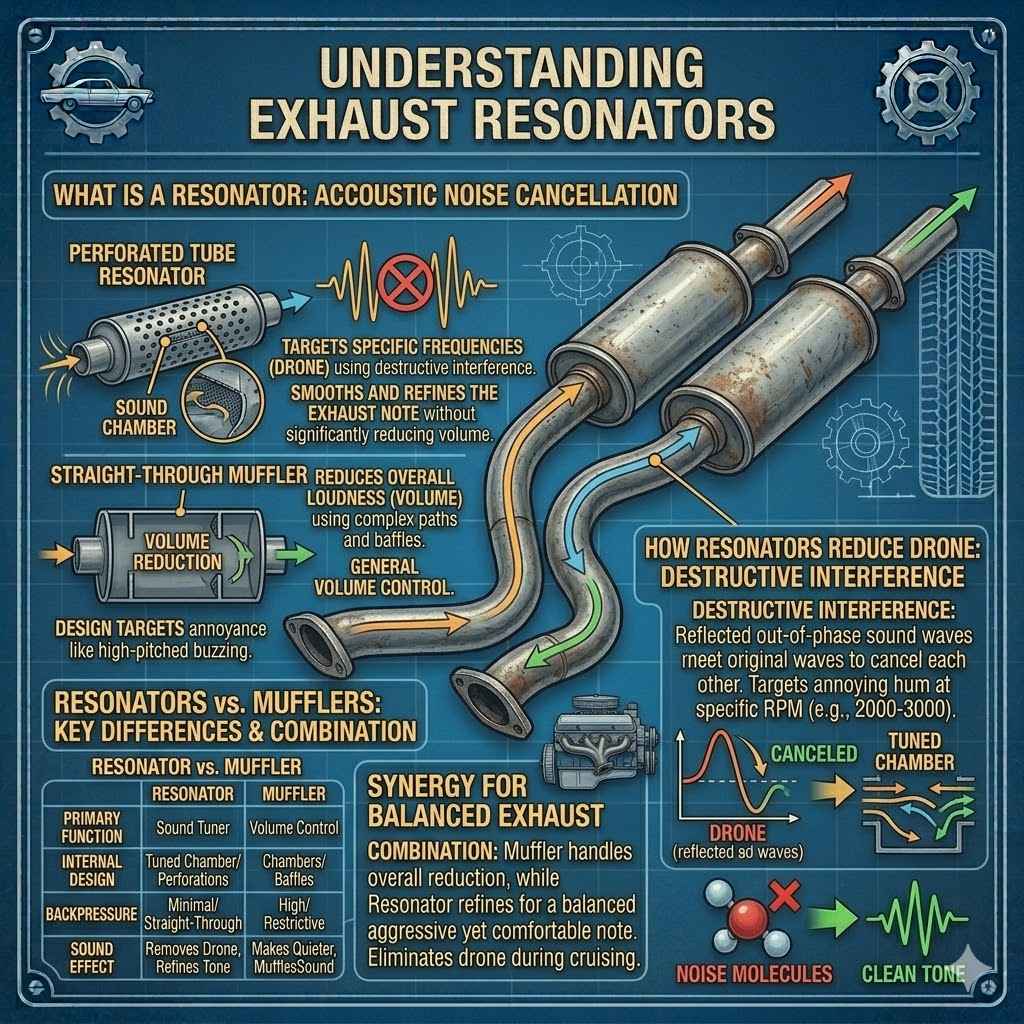
A resonator is a special chamber within a car’s exhaust system. Its primary purpose is to cancel out specific sound frequencies. Think of it like a noise-canceling headphone for your exhaust.
It works by using the principles of acoustics. Sound waves enter the resonator, and internal baffling or chambers cause these waves to interfere with themselves. This interference reduces certain pitches, especially the annoying, raspy drones that many people find unpleasant.
Unlike mufflers, which are designed to reduce overall sound volume, resonators are more about fine-tuning the exhaust note. They target particular sound waves to smooth out the sound. This means they can make an exhaust sound deeper and more refined without necessarily making it quieter overall.
They help to get rid of that high-pitched buzzing sound you might hear at certain engine speeds.
The design of a resonator can vary quite a bit. Some are simple straight-through tubes with perforations, while others have complex internal chambers. The length and volume of these chambers are carefully calculated to cancel specific sound frequencies.
This scientific approach is what allows them to effectively alter the exhaust’s tone and eliminate unwanted noise.
How Resonators Work to Reduce Drone
Drone is that persistent, annoying hum you hear inside the car when the engine is at a certain RPM. It’s a resonance frequency that the exhaust system amplifies. Resonators are designed to combat this specific issue.
They use a phenomenon called destructive interference. When a sound wave enters the resonator, it’s reflected off the internal surfaces. These reflections create new sound waves that are out of phase with the original waves.
When these out-of-phase waves meet the original waves, they cancel each other out. This effect is most pronounced for the frequencies that cause drone. By precisely tuning the resonator’s dimensions, manufacturers can target and eliminate these irritating frequencies.
This leaves a cleaner, more pleasant exhaust sound without making the exhaust excessively loud.
It’s important to note that resonators don’t completely silence the exhaust. They modify the sound. A properly designed resonator can make an aggressive exhaust sound more refined, removing the harshness.
It’s like turning down the treble on a stereo while keeping the bass. The goal is to create a more enjoyable driving experience by eliminating specific, bothersome sounds.
The effect of a resonator can be quite noticeable. Cars with aftermarket exhausts often benefit greatly from adding a resonator, especially if they want to maintain a civilized sound for daily driving. Without one, some performance exhausts can become unbearably loud and create a constant, irritating drone inside the cabin.
Resonators Versus Mufflers
Resonators and mufflers are both parts of the exhaust system that deal with sound, but they do different jobs. A muffler’s main goal is to make the exhaust quieter overall. It does this by using chambers and baffles that force the exhaust gases to take a longer, more complex path.
This process reduces the speed and energy of the sound waves, thus lowering the noise level. Think of a muffler as a general volume control for your exhaust.
A resonator, on the other hand, is more of a sound tuner. It targets specific frequencies, particularly those that cause annoying drone. Resonators typically use a straight-through design with an internal chamber or perforated tube.
This allows exhaust gases to flow more freely than through a muffler, minimizing any performance restriction. They are less about reducing overall loudness and more about shaping the tone and eliminating specific unwanted sounds.
Many performance exhaust systems use a combination of both resonators and mufflers. The muffler handles the overall noise reduction, while the resonator refines the sound, removing the drone. This allows for an exhaust that is both satisfyingly aggressive when you accelerate and comfortable for cruising.
The synergy between these two components is key to achieving a balanced exhaust note.
In some cases, a well-designed resonator can even offer a slight performance gain over a restrictive muffler, as it offers less backpressure. However, this gain is usually minimal and secondary to its sound-modifying function. The primary benefit of a resonator is acoustic refinement.
The Mamba Exhaust System Explained
In this part, we will break down what a Mamba exhaust system is. We will look at how it is designed and what kind of sound it is meant to produce. Understanding the basics of a Mamba exhaust will help us figure out if resonators are something you should think about adding or if they are already part of the system.
This will give you a clearer picture of how Mamba exhausts are built.
What Is a Mamba Exhaust
A Mamba exhaust system is a type of aftermarket exhaust designed to improve the sound and performance of a vehicle. These systems are often known for their distinctive sound profile, which can range from aggressive to deep and throaty depending on the specific model and vehicle application. Mamba exhausts are built with performance in mind, aiming to reduce backpressure and allow the engine to breathe more freely.
The materials used in Mamba exhausts are typically high-quality stainless steel to ensure durability and resistance to corrosion. The construction often involves larger diameter piping and smoother bends compared to factory exhaust systems. This design choice helps to increase exhaust gas flow efficiency.
This can lead to slight improvements in horsepower and torque, especially when combined with other engine modifications.
When people choose a Mamba exhaust, they are usually looking for a more engaging and sporty sound experience. The brand often focuses on creating an exhaust note that is noticeable and adds character to the vehicle. However, the intensity and specific tone of this sound can be influenced by various factors within the exhaust system itself, including the presence or absence of resonators.
Mamba systems come in various configurations. Some might be a cat-back system, meaning it
Typical Mamba Exhaust Sound Profile
Mamba exhaust systems are generally engineered to produce a more assertive and audible exhaust note than stock systems. The sound is often described as deep, with a pronounced growl under acceleration. Unlike some generic aftermarket exhausts, Mamba aims for a sound that is both powerful and refined, avoiding excessive raspiness or shrillness in most applications.
They strive for a tone that complements the vehicle’s performance capabilities.
The specific sound profile can vary significantly depending on the vehicle model. For example, a Mamba exhaust on a V8 engine will sound different from one on a four-cylinder engine. However, the general characteristic of a Mamba exhaust is a richer, fuller sound.
This is achieved through the design of the piping, the diameter, and the internal construction of the muffler component itself. They often focus on a powerful, noticeable rumble.
One of the common desires among Mamba exhaust owners is to achieve a specific sound that is exciting during spirited driving but not overly intrusive during everyday commuting. The absence or presence of a resonator plays a huge role in achieving this balance. Without resonators, the exhaust note can be louder and potentially exhibit more drone.
With them, the sound is typically smoother and more controlled.
It’s not uncommon for enthusiasts to seek a balance between aggressive sound and daily drivability. Mamba exhausts, in their standard configurations, often strike a good compromise. However, personal preferences for exhaust sound are highly subjective.
What one person finds exciting, another might find too loud or unpleasant, which is where the decision about resonators often comes into play.
Mamba Exhaust Configurations and Resonators
Mamba exhaust systems are offered in various configurations, and whether they include resonators depends heavily on the specific product. Some Mamba systems are designed as “muffler delete” or “straight-pipe” setups, which intentionally omit resonators and mufflers to produce the loudest possible sound. These are often chosen for track use or by individuals who prioritize maximum exhaust volume.
Conversely, many Mamba cat-back or axle-back systems are designed with an integrated muffler that helps control the overall sound level. Within these more refined systems, the inclusion of resonators is common. These resonators are strategically placed to tune the exhaust note, eliminating the common drone frequencies that can make an otherwise great-sounding exhaust unpleasant for daily driving.
They are part of the engineered sound.
When purchasing a Mamba exhaust, it is crucial to check the product description carefully. Manufacturers will typically specify whether a system includes resonators or is designed to be a muffler-only or resonator-delete setup. If a system is advertised as having a more refined or sportier sound without being excessively loud, it is highly probable that it incorporates resonators as part of its design.
Some Mamba exhaust kits might also offer optional components. For instance, you might find that a base system comes without resonators, but an optional resonator delete pipe or a resonator addition kit is available. This allows users to customize the sound further to match their personal preferences and driving conditions.
The choice often comes down to how much noise and what kind of tone you are looking for.
Does a Mamba Exhaust Need Resonators
Now we get to the core question: Does a Mamba Exhaust Need Resonators? This section will directly address this common query. We will explore the factors that influence whether a Mamba exhaust performs and sounds best with resonators. You’ll learn about the benefits and drawbacks of having them and how to decide what’s right for your specific setup and goals.
We will break down this decision point clearly.
Factors Influencing the Need for Resonators
Several factors determine whether your Mamba exhaust system would benefit from resonators. The primary consideration is the desired sound. If you want a deep, aggressive exhaust note without the annoying drone at highway speeds, resonators are usually necessary.
They act as sound conditioners, smoothing out the aggressive tones and eliminating unwanted frequencies that can become overwhelming.
The specific Mamba exhaust model also plays a significant role. Some Mamba systems are designed with resonators integrated into the kit to achieve a particular sound profile. Others might be marketed as “muffler deletes” or “straight pipes,” implying they are intended to be used without resonators for maximum volume and a raw sound.
Always check the product details for the specific Mamba exhaust you have or are considering.
Your personal preference is key. Are you looking for a subtle performance enhancement with a slightly sportier sound, or do you want your car to announce its presence from a mile away? If you prefer a more refined sound that’s pleasant during long drives, resonators are a good idea.
If you are aiming for the loudest, most raw exhaust note possible, you might choose to omit them.
Vehicle type can also influence the decision. A sports car might benefit from a louder, more aggressive sound, while a luxury sedan might require a more muted, refined tone. The engine size and configuration also affect the natural exhaust sound.
A larger engine will produce more significant exhaust pulses that might require more aggressive sound management, often through resonators.
Benefits of Adding Resonators to a Mamba Exhaust
Adding resonators to a Mamba exhaust system offers several significant benefits, primarily centered around sound quality and driving comfort. The most prominent advantage is the reduction of exhaust drone. Drone is that irritating, low-frequency hum that can occur at certain engine RPMs, especially on the highway.
Resonators are specifically designed to cancel these frequencies, making your car much more pleasant for daily driving and long trips.
Furthermore, resonators can help to smooth out the exhaust note, giving it a deeper, more rounded tone. Instead of a raspy or buzzy sound, the exhaust will sound fuller and more refined. This creates a more sophisticated and premium exhaust note that many enthusiasts appreciate.
It turns a potentially harsh sound into a pleasing rumble.
Resonators can also prevent the exhaust from sounding overly loud or obnoxious in everyday situations. While you still get the sportier sound under acceleration, the drone and excessive noise at cruising speeds are minimized. This can be important for maintaining a good relationship with neighbors or for vehicles that need to be quieter in residential areas.
In some cases, the addition of resonators might even offer a minor performance benefit by improving exhaust scavenging, although this is usually secondary to their acoustic function. The primary outcome is a more enjoyable and comfortable driving experience with a more controlled and refined exhaust sound. It helps achieve the desired Mamba exhaust sound without the downsides.
When Might You Skip Resonators
There are specific scenarios where omitting resonators from a Mamba exhaust system might be the preferred choice. The most common reason is the desire for maximum exhaust volume and an aggressive, raw sound. If your goal is to have the loudest possible exhaust note, straight-piping or using a “muffler delete” setup that bypasses resonators entirely will achieve this.
This is often sought after for track cars or by individuals who want their vehicle to be heard.
Another reason to skip resonators is for pure performance. While mufflers can sometimes create significant backpressure, resonators generally create less. In a highly tuned race application where every bit of airflow matters, removing any potential restriction, including resonators, might be considered.
However, for most street applications, the performance difference is negligible compared to the sound impact.
Some people simply prefer the unadulterated sound that a Mamba exhaust produces without any sound-dampening components. They might enjoy the immediate, unfiltered exhaust note, even if it includes some level of drone. This is a matter of personal taste and what kind of auditory feedback the driver desires from their vehicle.
It is also worth noting that some Mamba exhaust systems are specifically engineered to be loud and aggressive without resonators, and adding them might dampen the intended sound too much. If a Mamba system is designed as a resonator-delete from the factory, adding resonators might fundamentally alter its characteristic sound in a way the manufacturer did not intend. Always check the product’s design intent.
Comparing Mamba Exhausts With and Without Resonators
To truly understand the difference, let’s look at a comparison. Imagine two identical cars, both fitted with a Mamba exhaust system. The first car has the Mamba exhaust with its original muffler and added resonators.
The second car has the same Mamba muffler but no resonators, essentially a straight-pipe setup from the muffler back.
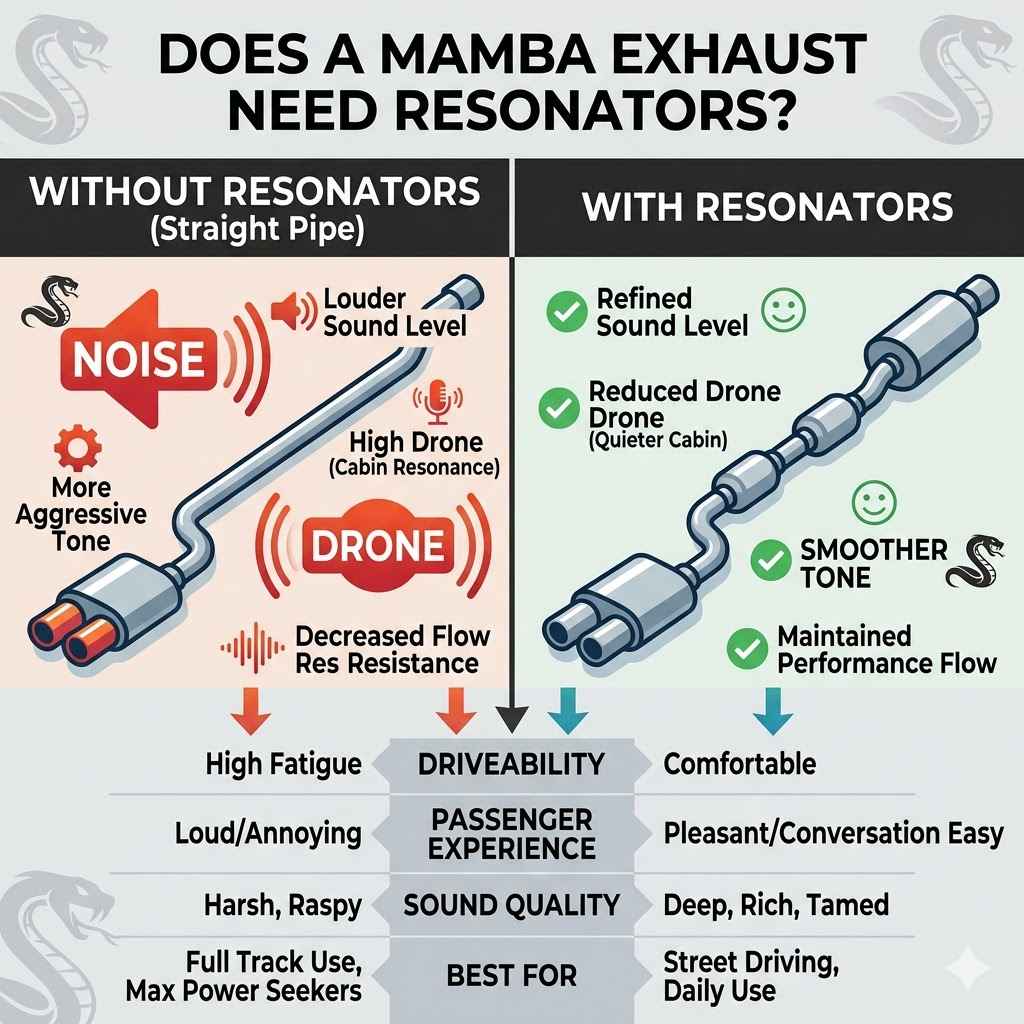
Car 1 (With Resonators): During normal city driving, the sound is a pleasant, deep rumble. It’s noticeable but not overwhelming. When you accelerate hard, you get a strong, sporty growl.
Cruising at highway speeds, the cabin is relatively quiet; the drone is minimal to non-existent. The exhaust sounds refined and performance-oriented.
Car 2 (Without Resonators): In the city, this car will be significantly louder. Every acceleration will produce a much more aggressive, louder roar. At highway speeds, a distinct drone will likely fill the cabin.
This sound might be exciting for some, but it can become fatiguing on longer drives. The sound is raw and unfiltered.
Here’s a simple table to highlight the key differences:
| Feature | Mamba Exhaust With Resonators | Mamba Exhaust Without Resonators |
|---|---|---|
| Sound Volume | Moderate to Loud | Very Loud to Extreme |
| Sound Tone | Deep, Smoother, Refined | Aggressive, Raspy, Raw |
| Drone | Minimal to None | Significant |
| Highway Comfort | High | Low |
| Performance (Typical) | Slight improvement | Potentially slightly more improvement (negligible for street) |
As you can see, resonators play a crucial role in taming the sound and making it more livable for everyday use. Without them, the Mamba exhaust experience becomes much more intense, which may or may not be what the driver is looking for.
Installation and Customization Options
In this section, we will discuss how to put resonators on your Mamba exhaust if you decide you want them. We will cover different ways you can customize your exhaust sound. This will include looking at pre-made kits and options for custom work.
You will learn about what is involved in changing your exhaust to include or exclude resonators.
Adding Resonators to an Existing Mamba Exhaust
If you have a Mamba exhaust system that currently does not have resonators and you find the sound too harsh or drony, adding them is often a viable option. The most straightforward way to do this is by purchasing a universal resonator from an automotive parts supplier. These resonators are designed to be welded into the existing exhaust piping.
The process involves cutting a section out of your exhaust pipe and then welding the universal resonator into place. This requires welding equipment and knowledge. If you are not comfortable with welding, you can take your vehicle to an exhaust shop.
They can often install universal resonators quickly and affordably. They can also help you choose the right size and type of resonator for your needs.
Another option is to look for specific Mamba exhaust upgrade kits. Some manufacturers offer resonator add-on kits for their popular exhaust systems. These kits are designed to bolt or weld directly onto your existing Mamba setup, making installation simpler and ensuring a perfect fit.
Always check with Mamba or your exhaust shop to see if such kits are available for your specific model.
When selecting a universal resonator, consider its dimensions and flow-through design. A straight-through perforated core resonator is usually preferred for performance applications as it minimizes backpressure. The overall diameter and length of the resonator will also influence its sound-dampening capabilities.
Custom Exhaust Shop Solutions
For those who want a more tailored solution, a custom exhaust shop can be invaluable. These professionals can design and fabricate a custom exhaust system or modify your existing Mamba setup precisely to your specifications. They have the expertise to understand acoustic principles and can help you achieve the exact sound you are looking for.
A custom shop can fabricate custom resonator chambers that are specifically tuned for your Mamba exhaust and vehicle. They can experiment with different lengths, volumes, and internal designs to eliminate specific drone frequencies without significantly impacting exhaust flow or overall volume. This offers a level of customization that off-the-shelf parts cannot match.
When you visit a custom exhaust shop, be prepared to describe the sound you want. Explain your current setup, what you like about it, and what you dislike (e.g., too much drone, too raspy). They can then recommend options, such as adding specific types of resonators, altering muffler packing, or even fabricating an entirely new system that incorporates resonators from the start.
The cost for custom work can be higher than using universal parts, but it often results in a superior and more personalized outcome. It’s a great option if you have a specific sound in mind or if your vehicle has a particularly challenging exhaust note to manage. They have the tools and experience to do it right.
Resonator Delete Pipes
Resonator delete pipes are components designed to replace the factory or aftermarket resonators in an exhaust system. Their purpose is simple: to create a straight path for exhaust gases, bypassing the resonator chamber entirely. This is a popular modification for those seeking to increase exhaust volume and achieve a more aggressive sound from their Mamba exhaust system.
These pipes are typically made from stainless steel and are designed to be a direct fit replacement for the original resonator. Installation usually involves unbolting the resonator and bolting the delete pipe in its place. In some cases, minor cutting or welding might be required, depending on the specific exhaust system and the design of the delete pipe.
While resonator delete pipes offer a significant increase in exhaust loudness and a more raw tone, they also come with downsides. The most notable is the introduction or amplification of exhaust drone. Without the sound-dampening effect of the resonators, the unwanted frequencies can become very pronounced, especially at cruising speeds.
This can make daily driving uncomfortable and fatiguing.
It’s important to consider your local noise regulations before installing resonator delete pipes. Many areas have laws against excessively loud exhaust systems. A vehicle that is too loud can result in fines or citations.
Therefore, it is essential to be aware of these laws and to consider whether the increased volume is worth the potential legal consequences.
Factors to Consider for Mamba Exhaust Customization
When customizing your Mamba exhaust, think about your primary goals. Are you aiming for a deeper sound, more volume, less drone, or a combination of these? Your objectives will guide your choices regarding resonators, mufflers, and other exhaust components.
Consider your vehicle’s typical use. If it’s a daily driver, comfort and manageable noise levels are likely important. If it’s a track-only car, maximum performance and sound might be the priority.
The balance you strike will depend on how and where you drive your car.
Budget is also a factor. Universal parts and DIY installations are generally more affordable than custom fabrication or high-end performance exhaust kits. Decide how much you are willing to spend to achieve your desired sound and performance characteristics.
Finally, consult with experienced professionals. Exhaust shop technicians can offer invaluable advice based on their experience with various vehicle makes and models. They can help you understand the trade-offs involved in different exhaust configurations and ensure that any modifications are performed safely and effectively.
Performance and Sound Considerations
This section will look at how resonators affect the performance of your Mamba exhaust. We will also explore how they change the sound. You will learn if resonators help your car go faster or if they can slow it down.
We will also talk more about the actual sound you can expect with and without resonators on your Mamba system.
Impact of Resonators on Engine Performance
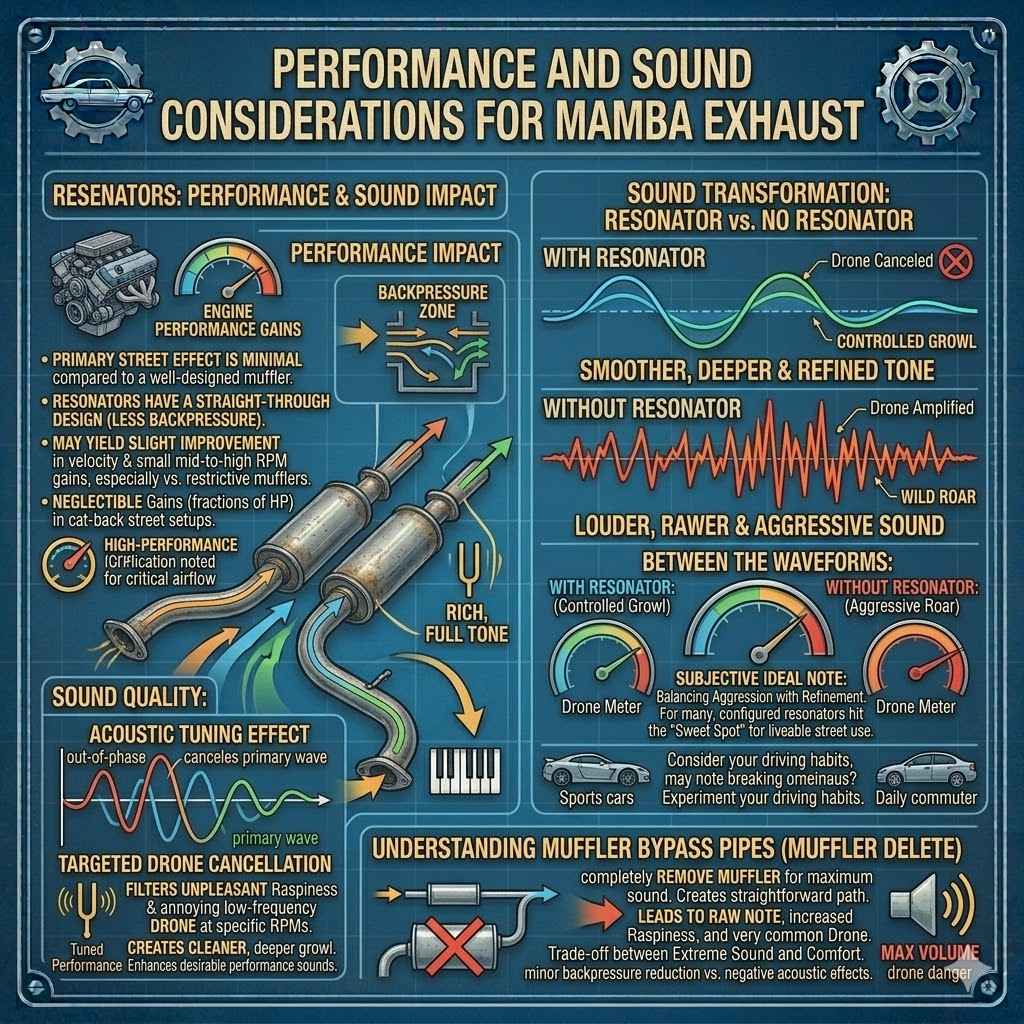
The impact of resonators on engine performance is a subject of much debate, but for most street applications, the effect is minimal, especially when compared to a well-designed muffler. Resonators are primarily designed for acoustic tuning, not for restricting exhaust flow. They typically feature a straight-through design with a perforated inner tube, allowing exhaust gases to pass through with relatively little resistance.
In contrast, mufflers are designed to baffle and slow down exhaust gases to reduce noise, which can introduce backpressure. Resonators, by offering a less restrictive path, can actually help to reduce some of the backpressure that a muffler might create. This can lead to a very slight improvement in exhaust gas velocity and potentially a small gain in horsepower or torque, particularly in the mid-to-high RPM range.
However, it is important to manage expectations. For typical Mamba exhaust systems, especially cat-back or axle-back configurations intended for street use, the performance gains from adding or removing resonators are usually negligible. The gains are often measured in fractions of a horsepower and might not be noticeable during regular driving.
The primary benefit of resonators remains their acoustic effect.
In high-performance or racing applications, where every bit of airflow is critical, removing resonators might offer a marginal advantage. But for the average driver, focusing on the sound modification aspect of resonators is far more relevant. The gains in performance are typically outweighed by the changes in sound quality and comfort.
The design of the Mamba exhaust system itself, including pipe diameter, bends, and muffler design, will have a far greater impact on performance than the presence or absence of resonators. Resonators are a fine-tuning component for sound, not a major performance limiter or enhancer for most vehicles.
Achieving the Ideal Exhaust Note
Achieving the ideal exhaust note with a Mamba system often involves balancing aggression with refinement. Resonators play a key role in this balance. Without them, a Mamba exhaust will sound louder and more raw.
This can be desirable for those who want a very aggressive, attention-grabbing sound, but it often comes with noticeable drone.
With resonators, the sound becomes smoother and deeper. The harsh, raspy tones are filtered out, and the annoying drone frequencies are canceled. This results in a more refined and sophisticated exhaust note that is still sporty and audible when you accelerate.
It’s the difference between a wild roar and a powerful, controlled growl.
The ideal note is subjective, depending on individual preferences. Some drivers prefer the loud, uninhibited sound of a straight-pipe setup, even with the drone. Others prioritize a deep, resonant tone that enhances the driving experience without becoming intrusive.
Mamba exhausts, when configured with resonators, often hit a sweet spot for many enthusiasts, offering a satisfying performance sound that is still livable.
To achieve your ideal note, consider your vehicle and your driving habits. A sports car might benefit from a more aggressive sound, while a daily commuter might prefer a quieter, more refined tone. Experimentation, perhaps through listening to sound clips online or talking to other owners, can help you decide whether resonators are right for your Mamba exhaust.
The Role of Resonators in Sound Quality
Resonators are critical in shaping the quality of the exhaust sound. They act as acoustic filters, selectively removing specific sound frequencies that can be unpleasant. The most common target is the low-frequency drone that occurs at certain RPMs, which can be incredibly irritating inside the cabin.
By canceling these drone frequencies, resonators allow the more desirable sounds of the exhaust – the deeper tones, the growls, and the higher-pitched sports car notes – to come through more clearly. They help to create a cleaner, more focused exhaust note. Without resonators, these desirable sounds can be masked or distorted by the annoying drone and raspiness.
Think of it like tuning a musical instrument. A piano has hammers and strings, but it’s the soundboard and the resonant cavities within the piano that give it its rich, full tone. Resonators serve a similar purpose for an exhaust system, adding depth and character while removing unwanted noise.
The effectiveness of a resonator depends on its design and how it is integrated into the exhaust system. A well-designed resonator can dramatically improve the overall sound quality, making the exhaust more enjoyable to listen to both inside and outside the car. It transforms a raw noise into a tuned performance sound.
Understanding Muffler Bypass Pipes
Muffler bypass pipes, often referred to as muffler deletes, are components that completely remove the muffler from the exhaust system. Instead of routing exhaust gases through the muffler’s chambers, the bypass pipe creates a straight, unobstructed path from the resonator (or catalytic converter) directly to the tailpipe. This modification results in a significant increase in exhaust noise.
The primary goal of installing a muffler bypass pipe is to achieve the loudest possible exhaust sound. By eliminating the noise-dampening effect of the muffler, the exhaust note becomes much more aggressive and raw. This is a popular modification for drivers who want their vehicle to have a strong, noticeable presence.
However, removing the muffler has consequences beyond just increased volume. It often leads to a much rougher exhaust note, with increased raspiness and, very commonly, significant exhaust drone at cruising speeds. Since the muffler is the primary component responsible for reducing overall sound levels, its removal can make the exhaust uncomfortably loud for daily driving.
While muffler bypass pipes can sometimes offer a minor performance increase by reducing backpressure, this gain is often overshadowed by the negative acoustic effects. Many automotive enthusiasts find that while the initial thrill of a loud exhaust is appealing, the constant drone and loudness can quickly become tiresome. It’s a trade-off between extreme sound and driving comfort.
Frequently Asked Questions
Question: Do all Mamba exhaust systems come with resonators
Answer: No, not all Mamba exhaust systems come with resonators. Some Mamba systems are designed without resonators to produce a louder, more aggressive sound, while others include resonators as part of their engineered sound profile. It is important to check the specific product description for the Mamba exhaust you are interested in.
Question: Will adding resonators make my Mamba exhaust quieter
Answer: Yes, adding resonators will generally make your Mamba exhaust quieter by reducing specific frequencies, especially drone. While they won’t significantly lower the overall volume like a muffler does, they smooth out the sound and eliminate harshness, making it more pleasant and less intrusive at cruising speeds.
Question: Can I install resonators myself
Answer: Installing resonators can be a DIY project if you have welding equipment and experience. You would typically cut a section of your exhaust pipe and weld in a universal resonator. However, for a cleaner installation or if you lack welding skills, taking it to an exhaust shop is recommended.
Question: Will resonators affect my car’s performance
Answer: For most street cars, the impact of resonators on performance is minimal. They are designed to tune sound, not restrict flow significantly. In some high-performance applications, they might offer a very slight improvement by reducing backpressure compared to a restrictive muffler, but this is usually not a noticeable gain for typical drivers.
Question: What is exhaust drone
Answer: Exhaust drone is an irritating, persistent humming sound that can be heard inside the car at certain engine speeds, especially on the highway. It’s a resonance frequency that the exhaust system amplifies. Resonators are designed to cancel out these specific frequencies, reducing or eliminating drone.
Final Thoughts
When considering Does a Mamba Exhaust Need Resonators?, the answer depends on your sound preference. Resonators smooth out the aggressive Mamba exhaust note, reduce drone, and enhance driving comfort. If you want a refined, deeper tone for daily use, adding them is a smart choice.
For maximum loudness and a raw sound, you might skip them. Your ideal Mamba exhaust experience is achievable with the right configuration.
Related pick: Check today's price on Amazon